ACK: One Runway, One FBO, No Margin for Error
Nantucket Memorial Airport (ACK) operates a single Runway 6/24, measuring 6,303 feet long and 150 feet wide. That length accommodates every light jet and midsize jet on the market without restriction. Super-midsize aircraft like the Challenger 350 and Citation Sovereign operate comfortably. Heavy jets above the Gulfstream G450 class require specific performance analysis based on temperature and passenger load, though the G550 has landed at ACK routinely.
The airport sits at 48 feet elevation on the southeastern end of Nantucket, surrounded by conservation land and residential neighborhoods. It has no parallel taxiway for most of the runway's length, which means aircraft that land must back-taxi on the active runway to reach the ramp. During peak arrival periods on Friday afternoons in July, this creates a bottleneck that can add 15-20 minutes to ground operations.
Nantucket is not an airport problem. It is a scheduling problem. The runway works. The ramp works. The weather works 85% of the time. But every private jet in the Northeast wants to arrive between 3 PM and 6 PM on Fridays, and the infrastructure was not built for simultaneous demand.
Nantucket Jet: The Island's Only FBO
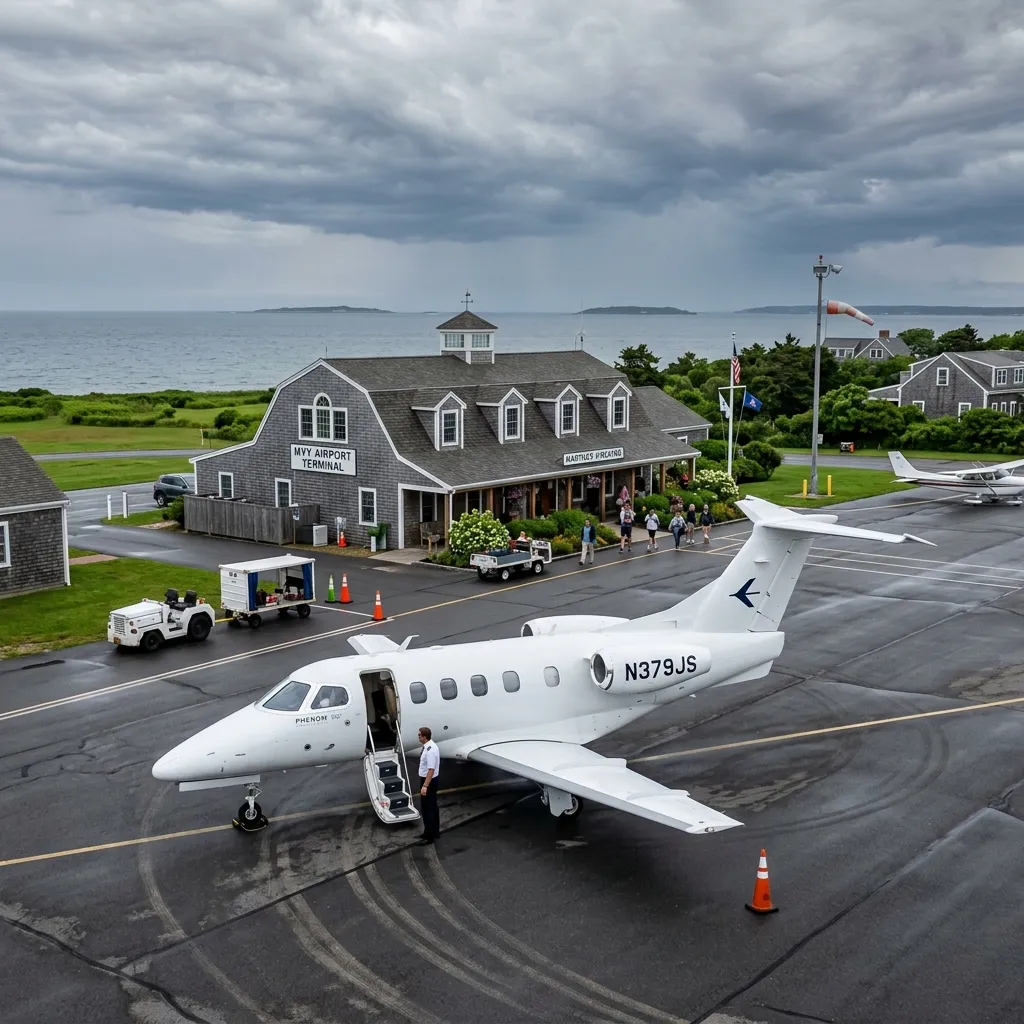
Nantucket Jet (formerly ACK Air) operates the sole fixed-base operation on the island. The facility includes a small terminal building, covered waiting area, rental car coordination, and ground handling for all private aircraft. It is not Signature or Atlantic. It is a single-location operator that handles every private arrival on the island, from Mustangs to Gulfstreams.
Fuel pricing at ACK runs $7.50 to $8.50 per gallon for Jet-A during summer, meaningfully higher than mainland airports like Teterboro ($6.00-$6.50) or Westchester County ($6.20-$6.80). The premium reflects island logistics: all aviation fuel arrives by barge, and storage capacity constrains supply during peak weekends. Ramp fees are typically $100-$200 and waived with a minimum fuel purchase.
Ramp Congestion and Overnight Parking
The ACK ramp reaches capacity on major summer weekends. During Fourth of July, Nantucket Wine Festival, and the last two weeks of August, overnight parking requires advance arrangement. Aircraft that cannot be accommodated on the ramp must reposition to Hyannis (HYA, 28 nm northwest) or Martha's Vineyard (MVY, 24 nm southwest) and return for passenger pickup. That repositioning adds $1,200-$2,500 in flight cost plus crew standby charges.
Fog: The Variable That Rewrites Every Schedule
Nantucket's defining operational challenge is fog. The island sits in the convergence zone of warm Gulf Stream waters and cold Labrador Current, creating persistent marine fog that can reduce visibility to below IFR minimums for hours or, in some cases, days. June and July are the foggiest months, with the airport reporting IFR or LIFR conditions on roughly 15-20% of summer mornings.
ACK has an ILS approach to Runway 24 (ILS/DME 24) with a decision altitude of 300 feet and visibility minimum of 3/4 mile. Aircraft equipped for Category I ILS approaches can reach ACK when conditions allow. But when visibility drops below CAT I minimums, there is no CAT II or CAT III approach available. The airport closes to all traffic until conditions improve.
- Morning fog pattern: Typical summer fog forms overnight and burns off by 10 AM to noon. Scheduling arrivals after noon reduces fog-related delays by approximately 70%.
- Socked-in days: Two to four times per summer, fog persists all day. Charter clients should have a diversion plan to Hyannis or Providence, both within 30 minutes of flight time.
- Pilot judgment: Experienced ACK pilots monitor offshore buoy data and Nantucket AWOS frequency (118.325 MHz) to time approaches during brief visibility improvements between fog banks.
- Departure fog: Morning departures are occasionally delayed 1-3 hours. Build buffer into Sunday departure schedules.
The practical advice: never book a time-critical connection through ACK. If you must be in New York by 6 PM on Sunday, schedule your Nantucket departure for noon, not 3 PM. The island rewards patience and punishes rigidity.