What the King Air 350 Costs Per Hour
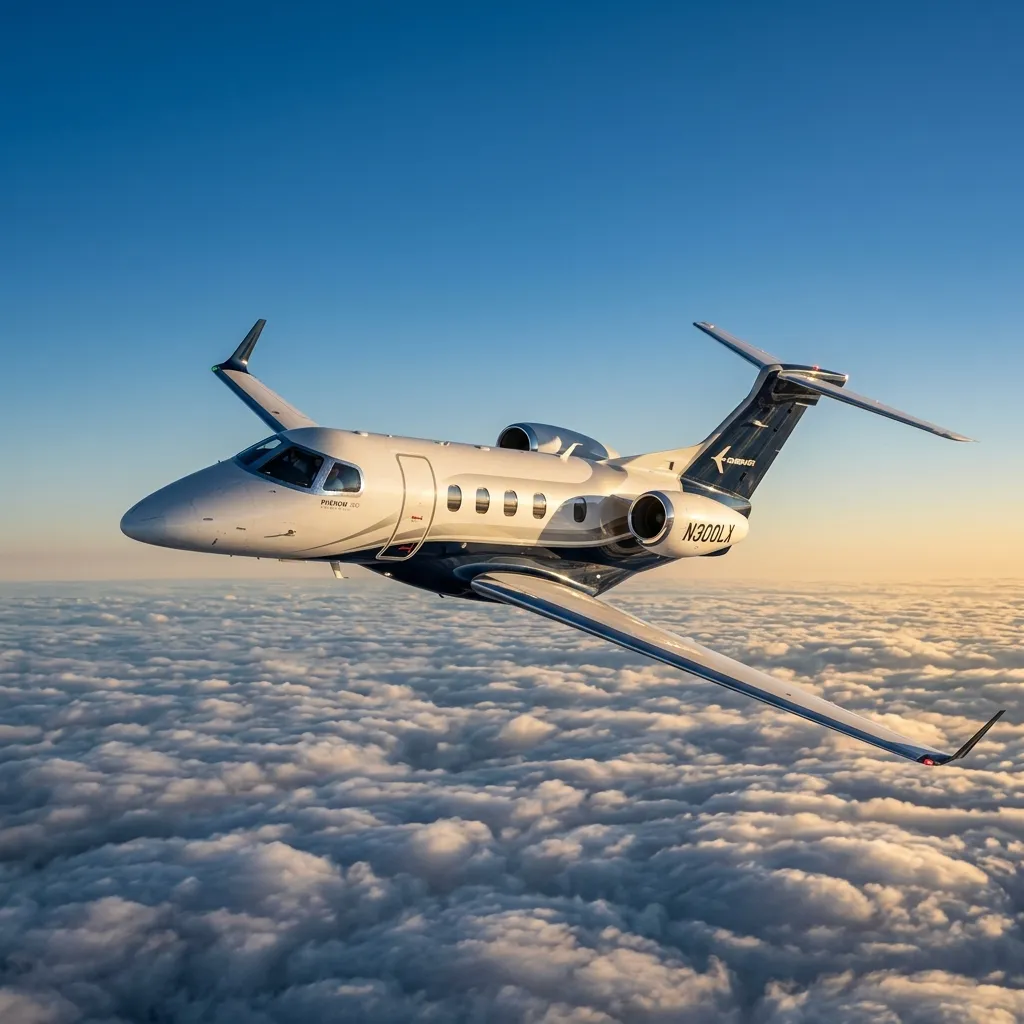
A King Air 350 charters for $1,800 to $2,600 per flight hour. That's 25-40% less than a light jet like the Phenom 300 and roughly half the cost of a midsize jet. On a 500-mile trip (about 1.5 hours of flight), you're looking at $2,700 to $3,900 one-way before Federal Excise Tax.
The two Pratt & Whitney PT6A-60A engines burn about 90 gallons per hour combined. At $5.75 per gallon, fuel cost is roughly $520 per flight hour. Compare that to 160 gallons per hour on a Phenom 300 or 450 gallons on a G650. The King Air's fuel efficiency is one of the primary reasons it remains the most chartered turboprop in the Western Hemisphere.
When a Turboprop Beats a Jet
The King Air 350 is slower than every jet in the charter fleet. At 312 knots max cruise, it's 100 knots behind a CJ3 and 200 knots behind a G650. On paper, that's a disadvantage. In practice, it's irrelevant on a surprising number of missions.
Flights under 500 miles
On a 300-mile trip, a King Air 350 takes about 1 hour 10 minutes. A light jet takes about 50 minutes. After you factor in taxi, climb, and descent (which are similar for both), the real-world time difference is 15-20 minutes. The King Air saves $800-$1,400 on the charter cost. That's a $4,000-$7,000 per hour premium for 15 minutes of saved time.
Short and unpaved runways
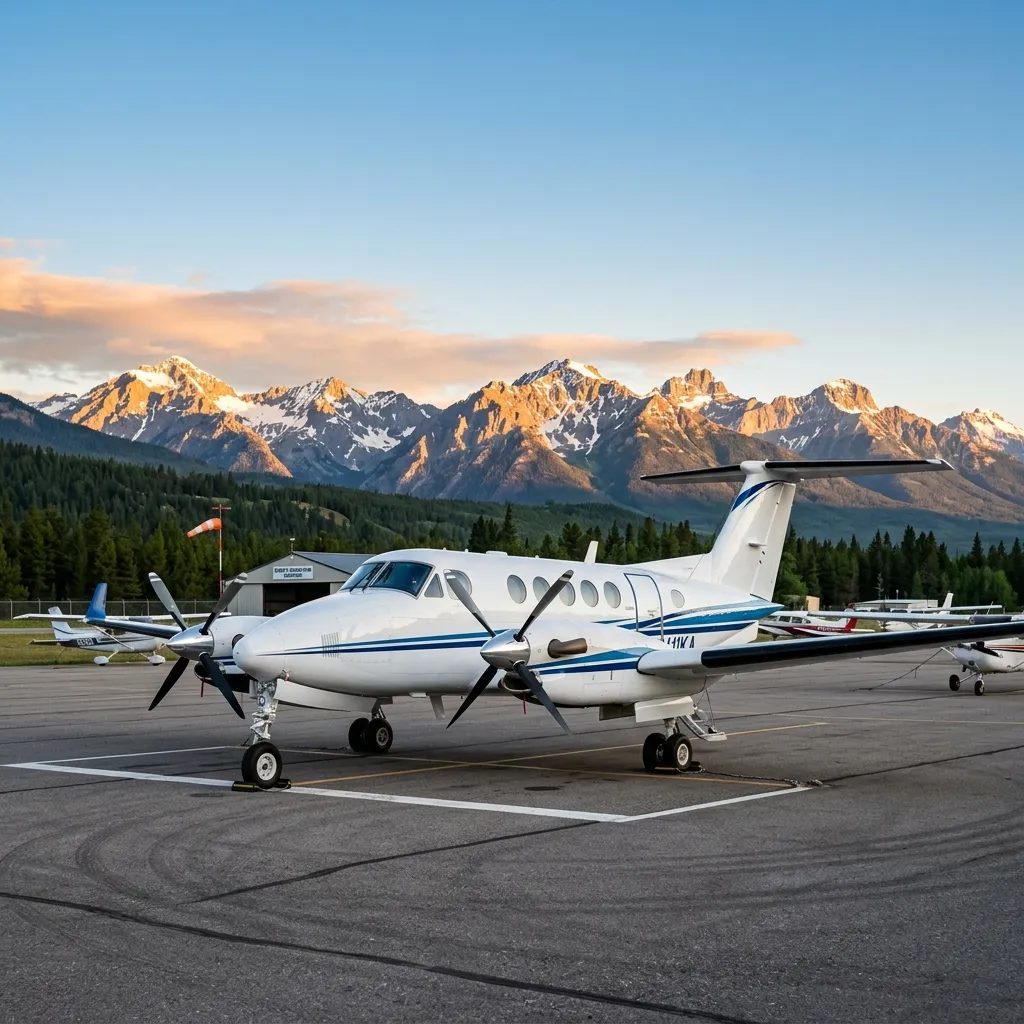
The King Air 350 needs 3,300 feet of runway. Most light jets need 3,000-3,500 feet, but the King Air can operate on grass, gravel, and unpaved strips that no jet can touch. Rural properties, ranch airstrips, island destinations with short runways; the King Air goes where jets cannot. Aircraft like N116TT and N137FL operate these types of missions regularly.
Multi-stop itineraries
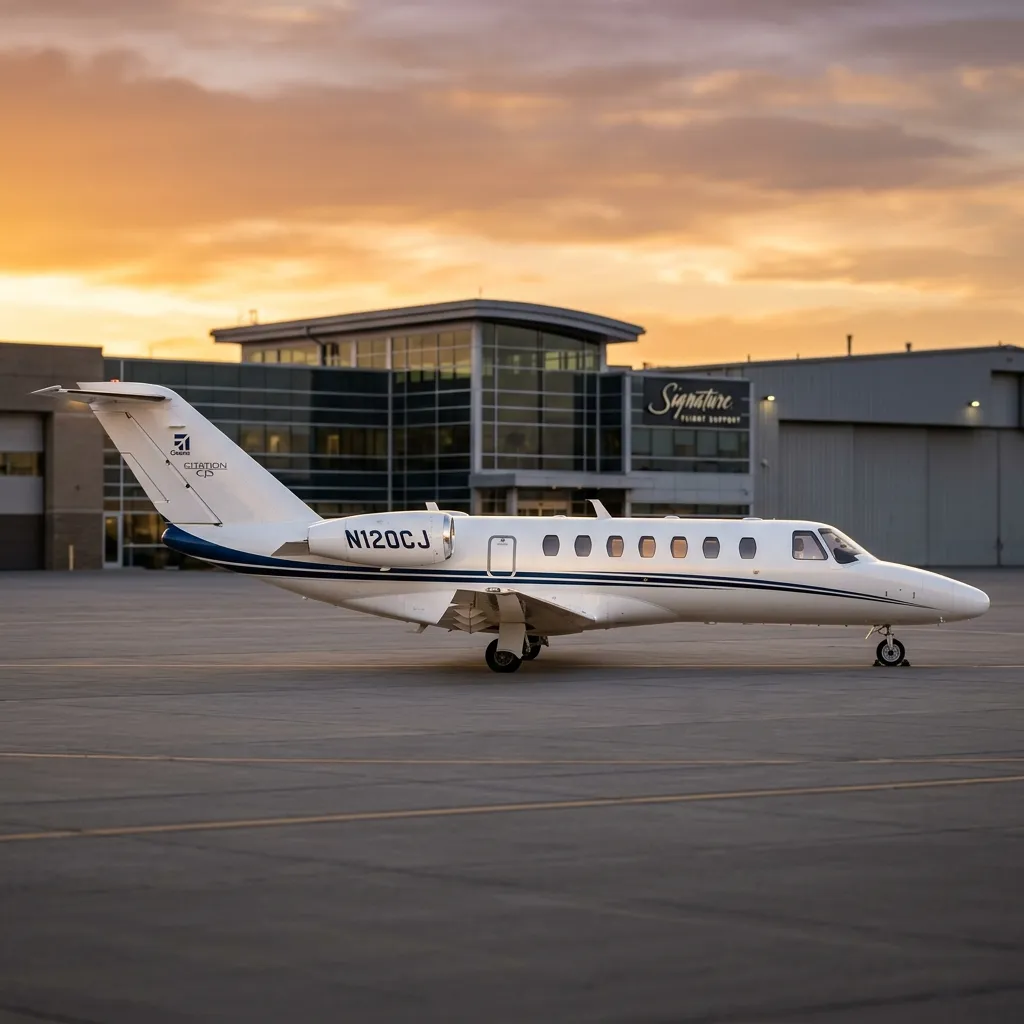
If your trip involves 3-4 stops in one day across a regional area (visiting facilities, properties, or clients), the King Air's lower hourly rate compounds. A four-leg day in a King Air 350 costs $7,200-$10,400. The same day in a CJ3 costs $8,800-$12,000. In a Phenom 300, $9,600-$13,600. The King Air saves 20-30% on multi-leg days.
The King Air 350 is the aircraft you charter when the mission is about access, not speed. If the destination has a 4,000-foot runway surrounded by mountains, the King Air is not the backup option. It is the only option.
The Cabin: Bigger Than You Think
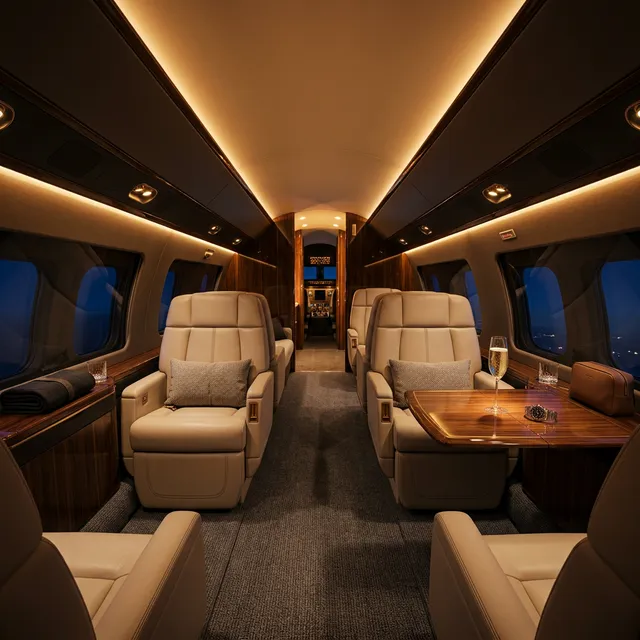
The King Air 350 cabin is 19.2 feet long, 4.5 feet wide, and 4.8 feet tall. Those numbers make it narrower than a CJ3 (4.8 ft wide) but longer (19.2 vs 15.7 ft). The result is a cabin that seats 9-11 passengers in a double-club configuration with a center aisle you can move through without turning sideways.
Headroom is limited. At 4.8 feet, anyone over 5'8" is ducking. This is the King Air's primary comfort trade-off. The cabin feels like a working space, not a lounge. Fold-down tables, power outlets, and good lighting make it functional for business travel, but no one is stretching out on a divan.
Baggage capacity is 71 cubic feet in the aft compartment, plus additional nose storage on some configurations. That handles standard luggage for a full passenger load. Oversized gear (hunting equipment, large presentation materials) fits but reduces passenger seating.
Noise level is the other consideration. Turboprops are louder than jets at cruise. Modern King Air 350s and 350i models have improved sound insulation, but you'll still hear the props. Noise-canceling headphones are worth bringing on flights over 90 minutes.
Get a King Air 350 Quote
Tell us your route. We'll tell you whether a turboprop or jet makes more sense for the mission.
Request a Quote →Where the Savings Come From
The King Air 350's cost advantage over jets is structural, not just the hourly rate. Every line item in the operating cost is lower:
- Fuel: ~$520/hr vs. $1,000-$1,200/hr for a light jet. The PT6A engines are among the most fuel-efficient powerplants in business aviation. On a 2-hour flight, the King Air saves $960-$1,360 in fuel alone.
- Maintenance: ~$350-$500/hr in reserves. Pratt & Whitney's PT6A is the most produced turbine engine in aviation history. Parts availability is global, turnaround times are short, and MRO shops that service PT6As exist at nearly every regional airport.
- Insurance: ~$80-$120/hr. Hull values on the King Air 350 range from $1.5M-$5M depending on year and configuration. Lower hull value means lower insurance premiums compared to jets valued at $4M-$15M.
- Landing fees: 30-50% lower than jets at most airports. Turboprops are classified differently in fee schedules at many FBOs and airports, resulting in meaningfully lower ramp, handling, and landing charges.
- Crew: ~$150-$250/hr. King Air pilots are plentiful. Training pipelines are established. Crew costs are lower than jet-rated pilots, who command premium salaries.
The net result: a King Air 350's total direct operating cost is roughly $1,100-$1,500 per flight hour. The charter rate of $1,800-$2,600 gives operators a healthy margin while delivering significant savings to the client versus any jet alternative.
Fleet Depth: Why You Can Always Find One
Beechcraft has produced over 900 King Air 350 variants since 1990. The U.S. Part 135 charter fleet includes hundreds of active King Air 350s, making it one of the most available charter aircraft in the country. On any given day, you can source a King Air 350 within a few hours' positioning of almost any airport in the continental U.S.
Fleet density is highest in Texas, Florida, the Southeast, and the Mountain West. These regions combine short-to-medium haul routing with airports that benefit from the King Air's short-field capability. Operators in the Rockies particularly favor the King Air 350 for its performance at high-altitude airports where density altitude limits jet operations.
The King Air 360, Beechcraft's current production successor, is entering the charter fleet but has not displaced the 350 in meaningful numbers. The 350's lower acquisition cost and identical cabin dimensions keep it dominant in the Part 135 market. Most operators see no compelling reason to upgrade when the 350 continues to generate strong utilization and revenue.
Beyond Charter: Medevac and Utility
The King Air 350 is the most common air ambulance platform in North America. Its cabin length accommodates a full stretcher, medical equipment, and a 2-3 person medical team while maintaining enough range to cover most regional medevac missions nonstop. If you need to charter a medevac flight, the King Air 350 is almost always the aircraft that shows up.
Medevac charter rates are typically 20-40% higher than standard passenger charter ($2,200-$3,600/hr) due to specialized equipment, on-call crew requirements, and the urgency premium. The aircraft's ability to land at small community hospitals with short runways makes it irreplaceable in this role.
Government agencies, survey companies, and cargo operators also charter King Air 350s for missions that require endurance, flexibility, and access to austere airfields. The aircraft's versatility is its defining characteristic. It does nothing spectacularly, but it does everything reliably. In the survey and mapping sector alone, the King Air 350 is the platform of choice for aerial photography, geological surveys, and environmental monitoring across North America. These operators value the aircraft's stable slow-flight characteristics, long endurance, and ability to operate from forward staging bases that lack jet-grade infrastructure.