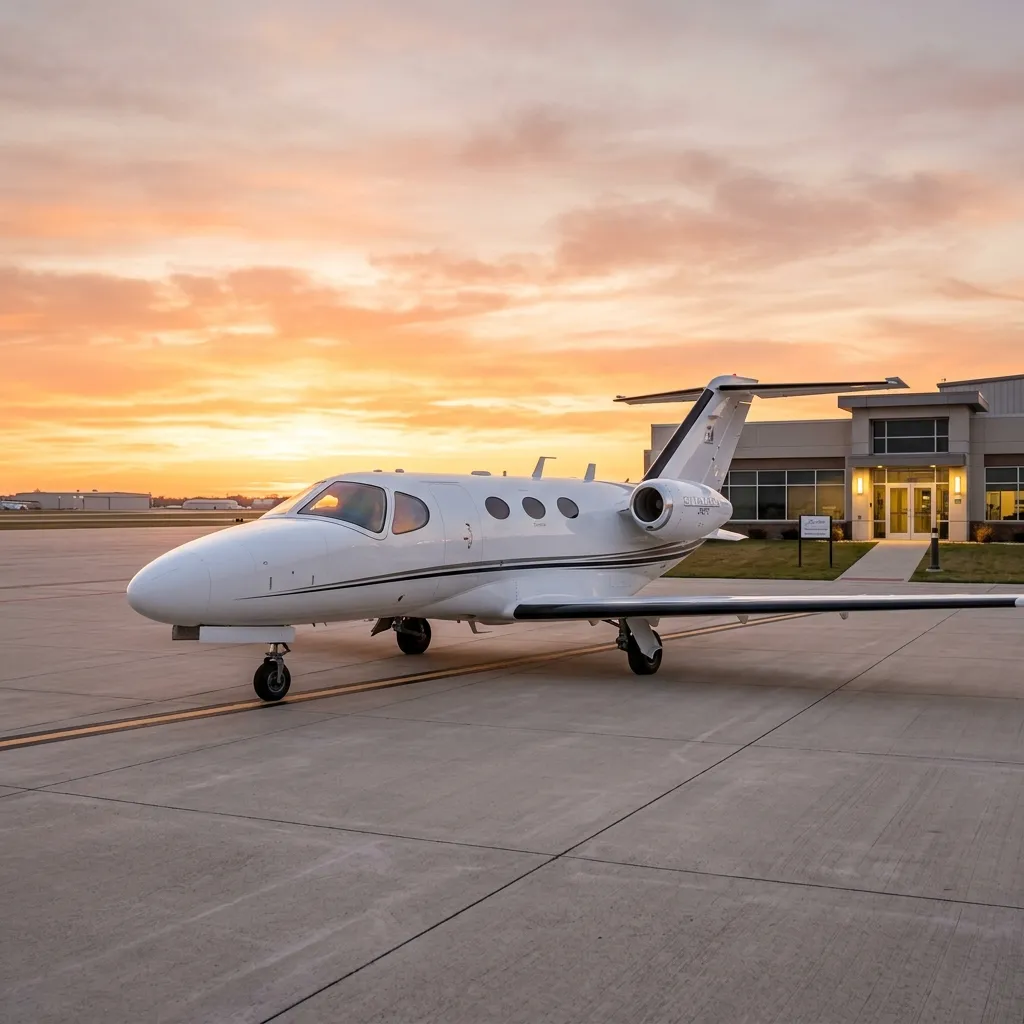
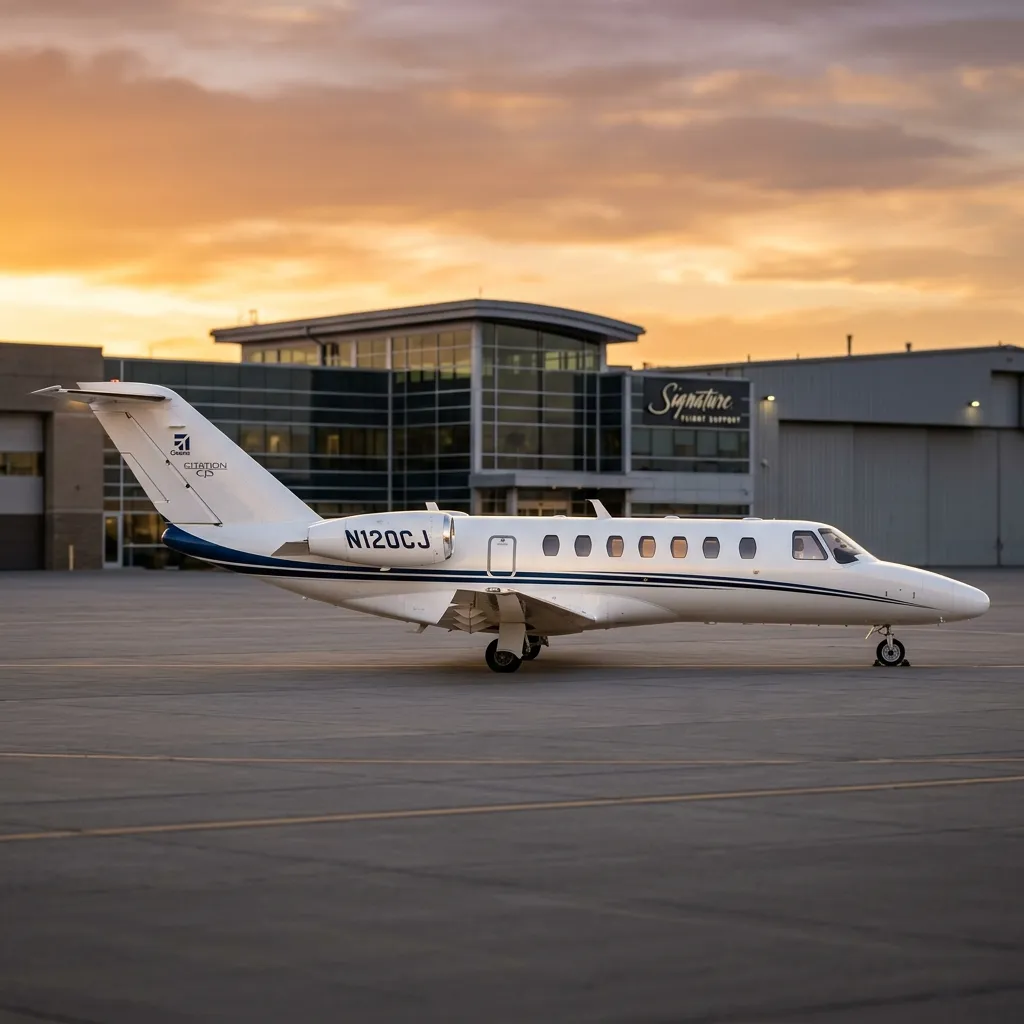
Mustang Charter Rates: The Lowest Jet Price in the Market
The Citation Mustang charters for $2,100-$2,800 per flight hour in 2026, depending on operator, region, and demand period. This positions it approximately $900-$1,200 per hour below the Citation CJ3 ($3,000-$3,600/hr) and $700-$1,000 below the King Air 350 turboprop ($2,400-$3,000/hr). No other type-certificated jet in the U.S. charter fleet offers a lower hourly rate.
A typical mission profile illustrates the pricing: New York (Teterboro) to Nantucket (ACK), 190 nm, approximately 0.9 flight hours. Charter cost: $1,890-$2,520 plus Federal Excise Tax (7.5%). Boston to Washington Dulles (IAD), 400 nm, approximately 1.5 hours. Charter cost: $3,150-$4,200 plus FET. These numbers make the Mustang genuinely competitive with premium commercial airline pricing for groups of 3-4 passengers.
$2,100-$2,800
Hourly Charter Rate
Where the Money Goes: Fuel, Crew, and Maintenance
The Mustang's low charter rate reflects its low operating cost. Direct operating cost runs approximately $1,100-$1,300 per flight hour:
| Cost Component | Per Flight Hour | % of Direct Cost |
|---|
| Fuel (100 gph × $5.75) | $575 | 46% |
| Maintenance Reserves | $280-$350 | 25% |
| Crew (prorated) | $250-$350 | 24% |
| Insurance (prorated) | $50-$75 | 5% |
| Total Direct Cost | $1,155-$1,350 | 100% |
| Charter Rate (retail) | $2,100-$2,800 | — |
| Operator Margin | $750-$1,450 | — |
The Mustang burns approximately 100 gallons of Jet-A per hour at economy cruise (340 ktas). At $5.75/gal average FBO pricing, fuel cost is $575 per flight hour. This is the lowest fuel burn of any jet in the charter fleet. The Phenom 300 burns 135 gph ($776/hr). The CJ3 burns 130 gph ($748/hr). Even the King Air 350 turboprop burns 100 gph at the same rate, but cruises 30 knots slower.
The Mustang's operating economics create a narrow but real market: short-haul missions (under 600 nm) for 2-4 passengers where the speed advantage over turboprops matters but the budget does not justify a CJ3 or Phenom 300. Outside that envelope, the aircraft's cabin limitations and range restrictions push clients to larger, more capable jets.
The Cabin: What $2,400 Per Hour Actually Buys
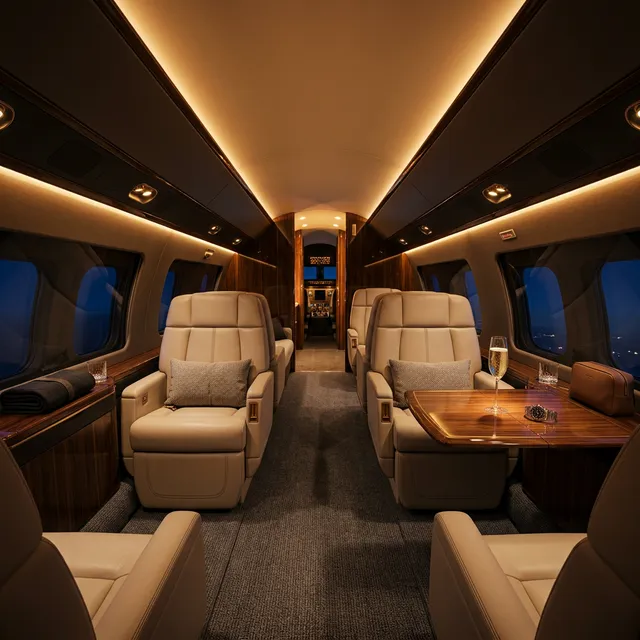
The Mustang's cabin is the smallest of any jet in the U.S. charter fleet. Key dimensions: 10 feet long, 4 feet 6 inches wide, and 4 feet 6 inches tall. Four passengers sit in a club-four configuration with facing seats. A fifth seat exists in some configurations but it sits in the entry area and is generally impractical for trips over 30 minutes.
Standing headroom is zero for anyone over 5 feet 6 inches. The lavatory is a belted seat-style emergency facility with a curtain divider, not an enclosed compartment. Baggage capacity is 57 cubic feet in an external nose-mounted compartment, accommodating 3-4 standard carry-on bags. Full-size suitcases or golf bags will not fit.
- Acceptable for: 2-3 passengers on trips under 2 hours. Business travelers who need speed and privacy but not cabin workspace. Couples or small groups connecting to resort destinations within 600 nm.
- Marginal for: 4 passengers with any luggage beyond small bags. Trips over 2.5 hours where the cramped cabin produces fatigue. Passengers over 6 feet tall who will find the headroom restrictive.
- Not acceptable for: Groups of 5+. Trips requiring full-size luggage. Passengers who need to work during flight (no tables, limited electrical outlets). Any mission over 900 nm without a fuel stop.
Need a Mustang Quote?
Tell us your routing and we will find the closest available Mustang or comparable very light jet.
Request a Quote →The Mustang cruises at 340 ktas (391 mph) at FL 410, with a maximum certified ceiling of 41,000 feet. Maximum range with 4 passengers and NBAA IFR reserves is 1,150 nm. With 2 passengers, range extends to approximately 1,270 nm. Takeoff distance over a 50-foot obstacle is 3,110 feet at sea level, placing the Mustang in the same runway-access category as light jets like the CJ3.
The practical range limitation matters most on East Coast to Florida routings. Teterboro to Miami (1,030 nm) is achievable with 2-3 passengers and light luggage. With 4 passengers and bags, effective range compresses to approximately 950-1,000 nm, requiring a fuel stop at a mid-point like Jacksonville or Savannah. For this reason, operators often recommend the CJ3 or Phenom 300 for TEB-MIA with 4 passengers, despite the $900-$1,200/hr higher cost.
The Mustang is certified for single-pilot operations, and most Part 135 operators fly it with one pilot on shorter legs and two pilots on flights exceeding 2 hours. Single-pilot operations reduce crew costs but do not change the charter rate, which is set by the operator regardless of crew configuration.
Fleet Status: A Discontinued Model With Declining Availability
Cessna (now Textron Aviation) produced 479 Citation Mustangs between 2006 and 2017. The model was discontinued when Textron introduced the Citation M2, a larger single-pilot jet that addressed the Mustang's cabin and range limitations. Approximately 340 Mustangs remain on the U.S. registry as of 2026. Of those, roughly 120 are enrolled in Part 135 charter programs.
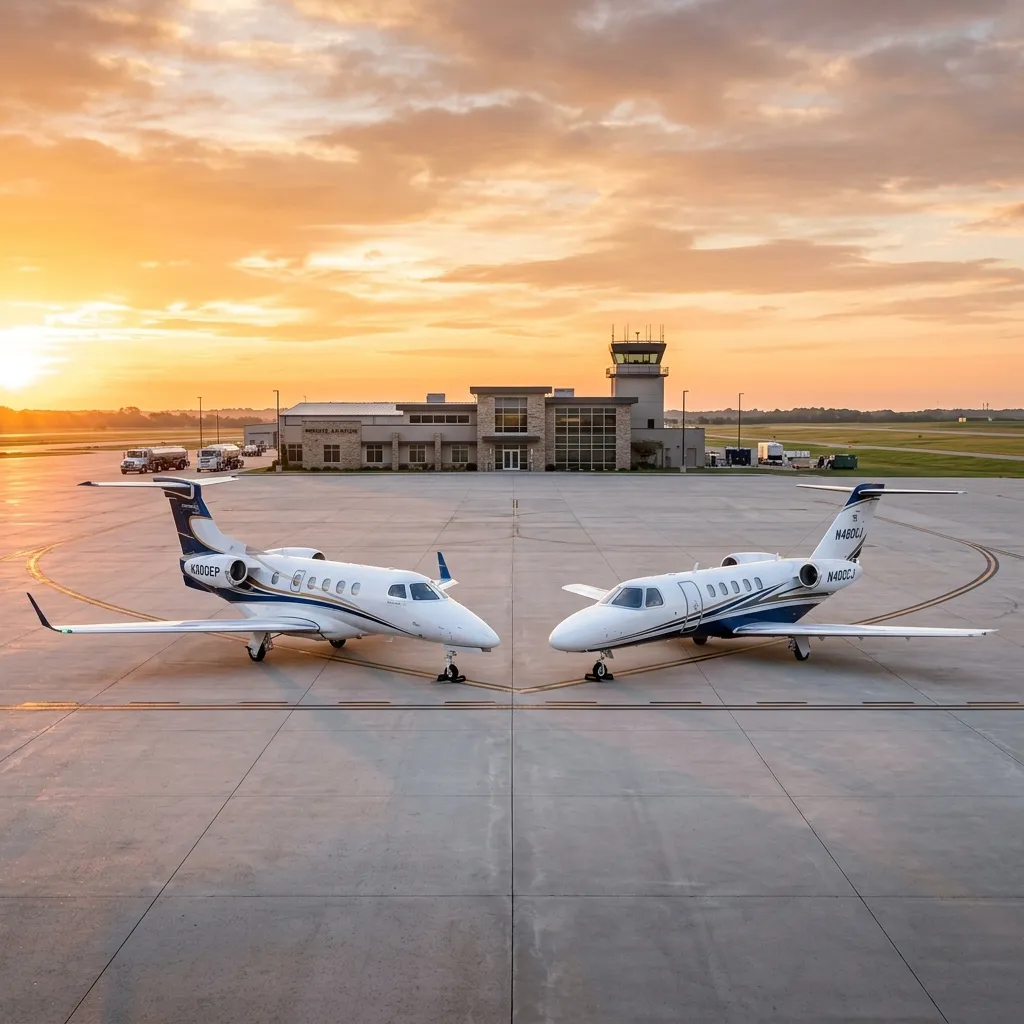
Charter availability is concentrated in the Northeast (New York, New Jersey, Connecticut), Florida, Texas, and California. The Mustang is uncommon in the Midwest and Mountain West, where operators prefer the King Air 350's short-field capability or the Phenom 300's longer range for the greater distances between population centers.
As the fleet ages (the newest Mustangs are now 9 years old), charter availability will decline as aircraft transition from Part 135 service to private ownership or training roles. Operators increasingly replace retiring Mustangs with Citation M2s or Phenom 100EVs, which offer slightly larger cabins and updated avionics at comparable operating costs.
When the Mustang Is the Right Call
The Citation Mustang makes economic sense in specific, well-defined scenarios:
- Short Northeast corridor hops: New York to Nantucket, Boston, Martha's Vineyard, or the Hamptons (via East Hampton). Missions under 250 nm where the Mustang's 40-60 minute flight time replaces 4-6 hours of driving or unreliable commercial connections.
- Budget-conscious first-time charters: For passengers who want to experience private aviation without the $5,000-$8,000 price point of a midsize jet. A 1-hour Mustang charter at $2,400 provides the FBO experience, the time savings, and the privacy at a fraction of the cost.
- Repositioning legs and empty legs: Mustang empty legs are among the cheapest in the charter market, sometimes available at $1,200-$1,800/hr (40-50% off retail). For flexible travelers, monitoring empty leg availability on the Mustang fleet yields genuinely affordable private jet access.
- Island hopping in the Caribbean: Short overwater hops between Bahamas, Turks and Caicos, and Puerto Rico where the Mustang's range is sufficient and the cost advantage over a CJ3 saves $1,000-$2,000 per leg.
The Mustang does not try to be a Phenom 300. It does not need to be. It is the entry point. For missions under 600 nm with 2-3 passengers and light bags, it delivers private jet speed and the FBO experience at the lowest jet price in the market. Anything beyond that mission profile, choose a larger aircraft.