PC-12 Charter Rates in 2026
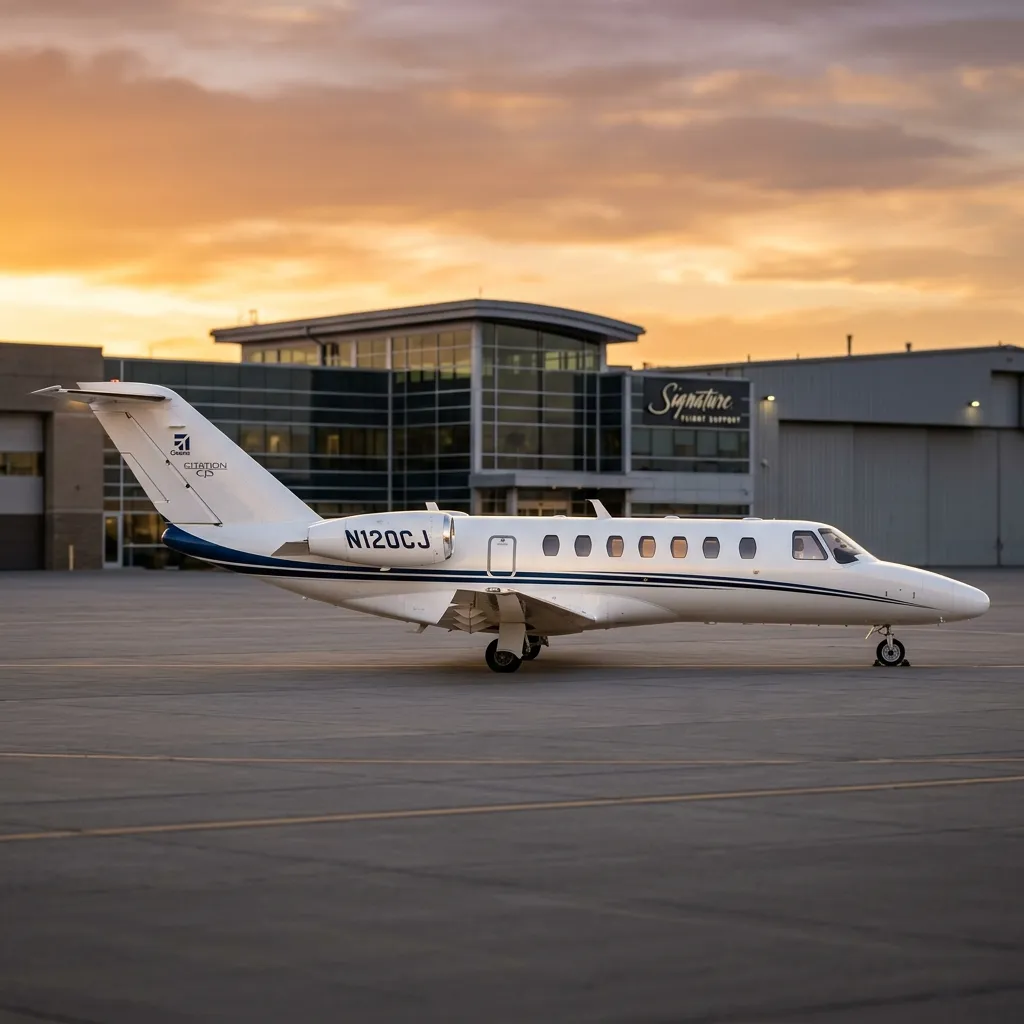
A Pilatus PC-12 charters for $1,200 to $1,800 per flight hour in 2026. That is 50-65% less than a Citation CJ3 ($2,400-$3,500/hr) and 55-75% less than a Learjet 45 ($2,800-$3,800/hr). The cost difference is structural: one Pratt & Whitney Canada PT6A-67P engine burning 70 gallons per hour versus two jet engines burning 120-160 gallons per hour combined. On a 2-hour flight from Westchester County to Nantucket, total charter cost runs $2,400 to $3,600 before repositioning fees and applicable taxes.
Fuel cost at 70 gallons per hour and $5.75 per gallon comes to approximately $403 per flight hour, representing 22-34% of the total charter rate. The single-engine configuration eliminates the redundancy cost that jets carry. One engine to maintain, one set of hot sections, one overhaul cycle. The PT6A-67P has a 3,600-hour TBO with overhaul costs around $350,000-$450,000, significantly lower than the $800,000-$1,100,000 per engine that light jet operators budget for TFE731 or Williams FJ44 overhauls.
2,650-Foot Takeoff: Where the PC-12 Goes That Jets Cannot
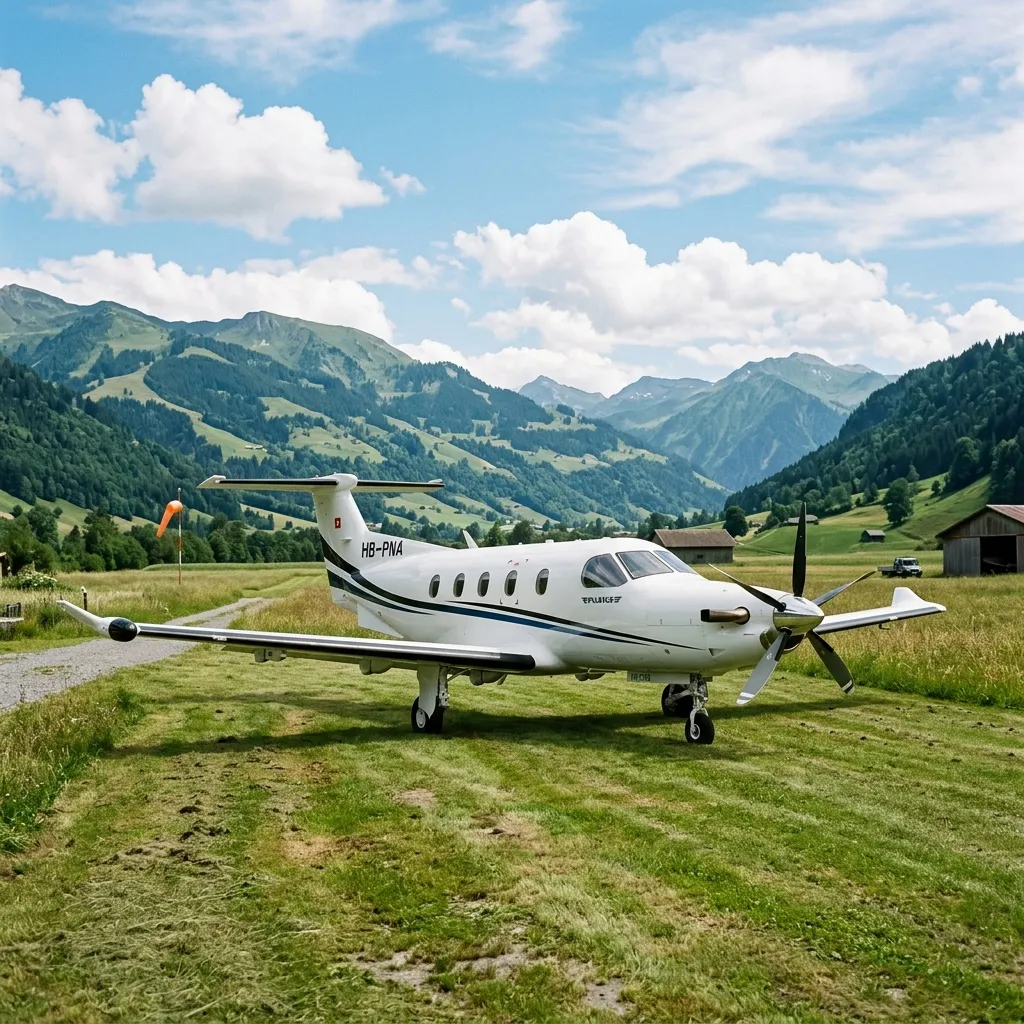
The PC-12's defining advantage is airport access. With a 2,650-foot takeoff roll at sea level, it operates from runways that exclude every jet in this charter cost series. The CJ3 needs 3,180 feet. The Learjet 45 needs 4,350 feet. The difference is not academic. It opens hundreds of airports that jets cannot use.
- Nantucket (ACK): 6,303 ft runway. Both PC-12 and light jets operate here, but during fog and low ceilings, the PC-12's approach category allows lower minimums at some airports.
- Stowe, VT (MVL): 3,600 ft runway. Accessible to the PC-12 year-round. Most jets cannot safely operate from 3,600 feet, especially in winter with contaminated surfaces.
- Shelter Island, NY / Elizabeth Field (0B8): 2,200 ft grass. PC-12 territory exclusively. No jet can operate here.
- Telluride, CO (TEX): 7,111 ft runway at 9,078 ft elevation. The PC-12's turboprop engine handles density altitude better than turbofan engines. At Telluride's elevation, the PC-12 maintains performance margins that some light jets cannot match.
- Remote fishing/hunting lodges. Gravel strips in Alaska, Montana backcountry, Canadian outposts. The PC-12 is certified for unpaved runway operations. No business jet carries this certification.
PlaneSense, the largest PC-12 fractional operator in North America, reports that 30% of their missions go to airports with runways under 4,000 feet. Those are missions that zero light jets and zero midsize jets can serve. The PC-12 does not compete with jets on speed; it competes by reaching destinations that jets cannot.
The Cargo Door Advantage: Not Just Passengers
The PC-12 features a 53-inch by 52-inch cargo door on the left rear fuselage, a detail that no other aircraft in this charter cost series offers. That door transforms the PC-12 from a passenger transport into a utility platform. With the rear seats removed, the cabin becomes a flat-floor cargo hold capable of carrying oversized equipment, medical stretchers, or specialty gear that cannot fit through a standard jet cabin door.
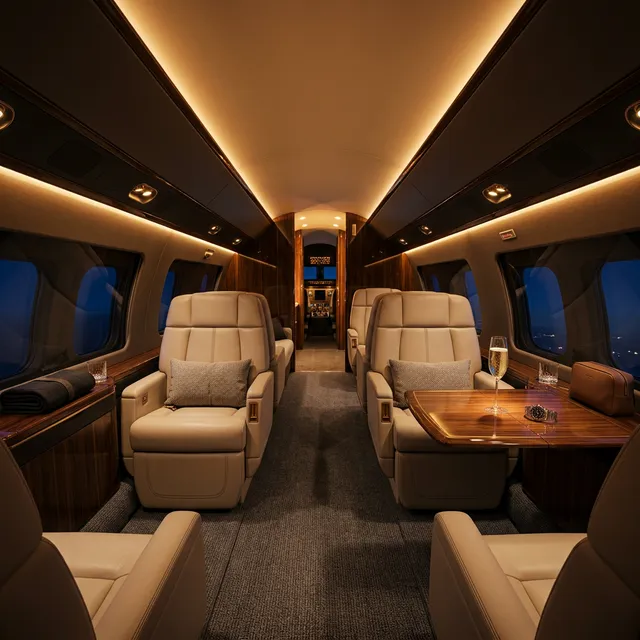
The passenger cabin itself measures 16.9 feet long, 5.0 feet wide, and 4.8 feet tall. Club seating for 6 in the forward section with 3 additional seats aft is the standard charter configuration. The cabin is pressurized to 5.9 psi differential, maintaining a 10,000-foot cabin altitude at FL280. That is higher than the 6,000-foot cabin altitude on a G550, but for flights under 3 hours at lower altitudes, the difference is negligible for most passengers.
The PC-12 cabin is wider than a Phenom 100 and taller than a Citation Mustang. At $1,200-$1,800 per hour, it delivers more interior volume per dollar than any aircraft on the charter market.
Get a PC-12 Quote
Need to reach an airport with a short or unpaved runway? Tell us the destination and we source the right turboprop.
Request a Quote →The Single-Engine Question: Safety Record vs. Perception
Charter clients ask about single-engine safety more than any other question. The data answers clearly. The PT6A engine family has accumulated over 400 million flight hours since 1963 with an in-flight shutdown rate below 1 per 100,000 flight hours. That rate is comparable to individual engines on twin-engine jets. The difference: when one engine fails on a twin, you have a second. When the single PT6A fails on a PC-12, you glide.
The PC-12's glide ratio is approximately 16:1 clean configuration. At FL280, an engine failure gives the pilot roughly 45 nautical miles of glide distance to locate a suitable landing site. The aircraft's low-speed handling characteristics and short-field capability mean that pastures, highways, and unimproved strips all become viable emergency landing options. The PC-12's accident rate per 100,000 flight hours is statistically indistinguishable from twin-engine turboprops in the same size category.
Part 135 single-engine IFR certification
The FAA certifies the PC-12 for single-engine IFR operations under Part 135, the commercial charter regulation. This certification requires demonstrated reliability thresholds, enhanced crew training, and specific equipment requirements. Not every single-engine aircraft qualifies. The PC-12's certification reflects its engineering, engine reliability history, and operational track record over three decades of commercial service.
PC-12 vs. King Air 350: One Engine or Two
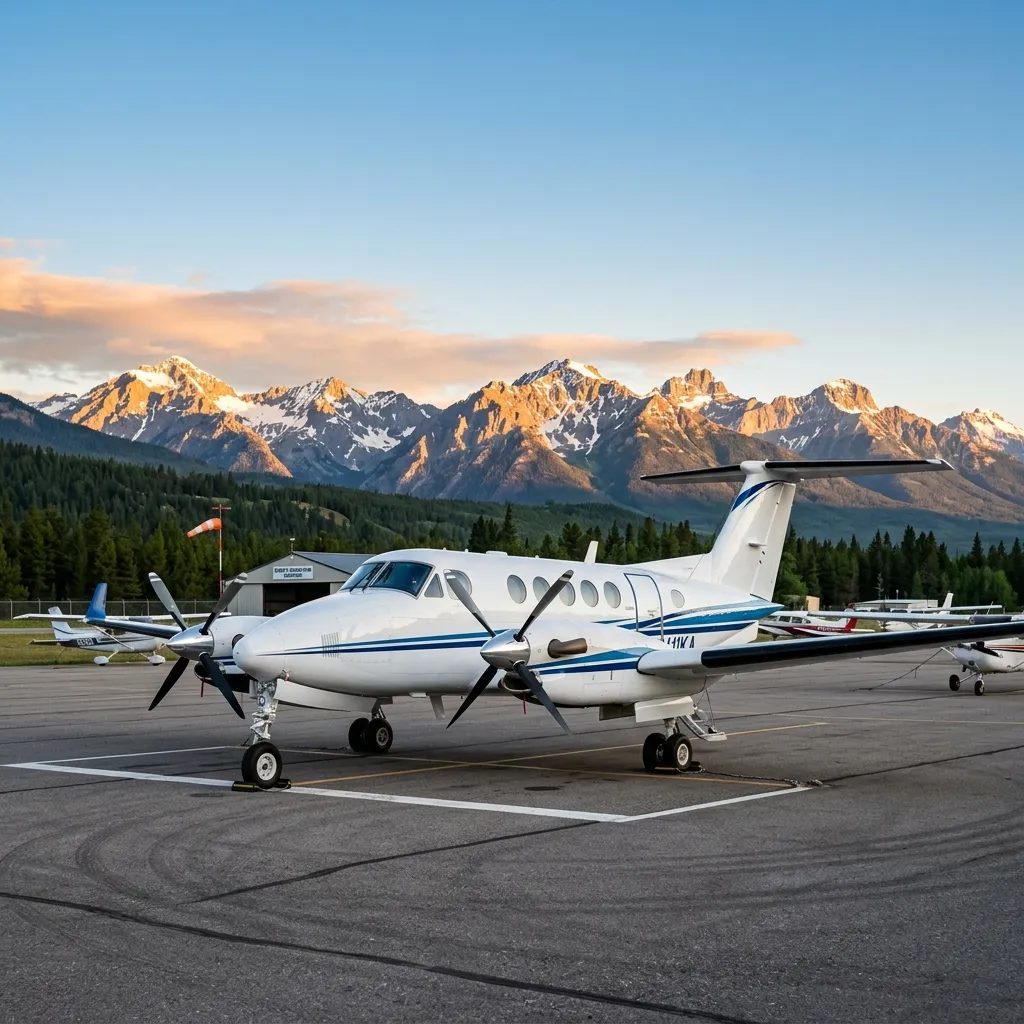
The King Air 350 is the PC-12's direct competitor in the turboprop charter segment. They target the same mission profile but with fundamentally different philosophies. The comparison:
| Specification | Pilatus PC-12 NGX | King Air 350 |
|---|
| Charter Rate (2026) | $1,200-$1,800/hr | $2,200-$3,200/hr |
| Engines | 1x PT6A-67P (1,200 SHP) | 2x PT6A-60A (1,050 SHP each) |
| Max Cruise Speed | 285 kts | 312 kts |
| Range (NBAA IFR) | 1,845 nm | 1,806 nm |
| Takeoff Distance | 2,650 ft | 3,300 ft |
| Passengers | 9 | 11 |
| Cabin Length | 16.9 ft | 19.2 ft |
| Unpaved Runway Certified | Yes | No |
| Cargo Door | 53" × 52" | None |
| Fuel Burn | 70 gal/hr | 120 gal/hr |
The King Air 350 wins on speed (312 kts vs. 285 kts), range (1,806 nm vs. 1,845 nm is essentially a draw), passenger count (11 vs. 9), and the psychological comfort of twin engines. The PC-12 wins on hourly cost ($1,200-$1,800 vs. $2,200-$3,200), runway access (2,650 ft vs. 3,300 ft), and unpaved strip capability.
For 4-6 passengers on routes under 1,000 nm with standard paved runways, the choice comes down to budget and comfort. Saving $800-$1,400 per flight hour is meaningful over a multi-leg trip. For missions requiring backcountry access, the PC-12 has no alternative in its class. For missions where twin-engine redundancy is a stated client requirement, the King Air 350 is the only option regardless of cost.
Booking the PC-12: Operator Landscape and Availability
The PC-12 charter fleet divides into two segments. PlaneSense operates the largest fractional PC-12 fleet in North America (approximately 50+ aircraft) and makes excess capacity available for charter. Independent Part 135 operators run smaller fleets of 1-5 aircraft, often owner-managed. PlaneSense rates tend to sit at the higher end of the $1,200-$1,800 range due to fleet consistency and newer aircraft (NGX models). Independent operators, particularly those with older NG-era aircraft, price toward the lower end.
Seasonal demand patterns
PC-12 charter demand spikes during island season (May-October for Nantucket, Martha's Vineyard, Block Island) and ski season (December-March for Vermont, New Hampshire backcountry strips). During these peaks, hourly rates can push to $2,000-$2,200 per hour, a 15-25% premium over base rates. Booking 2-3 weeks ahead during shoulder seasons (April, November) provides the best combination of availability and pricing.
When to step up to a jet
For missions over 1,500 nm or with more than 6 passengers, the PC-12's speed penalty becomes significant. A 1,500 nm trip takes approximately 5 hours 45 minutes in a PC-12 versus 3 hours 30 minutes in a CJ3. At 7+ passengers, the cabin density on a 4+ hour flight pushes toward midsize jet territory. The PC-12 excels on short-to-medium routes where its cost and airport access advantages outweigh the speed differential.