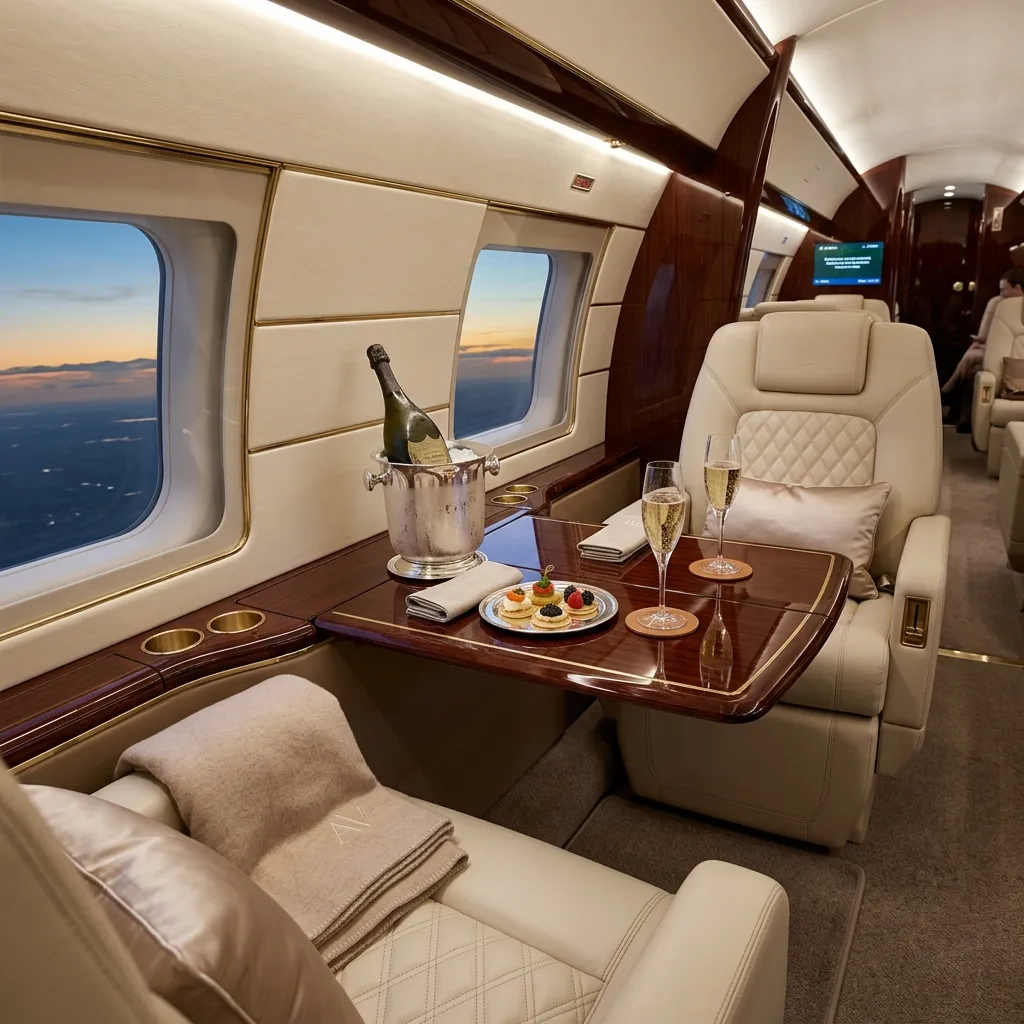
Interior of a large-cabin business jet with leather seats and walnut veneer showing the cabin experience

Private Jet Etiquette: What the Crew Expects You to Know

Charter crews fly 600-800 hours per year and interact with 200-400 unique passenger groups. There is no published manual. Nobody at the FBO will correct you. But the crew notices everything, from when you arrive to what you leave behind on the aircraft. These are the unwritten rules that separate passengers who understand the operation from passengers experiencing it for the first time.

In This Article

When to Arrive at the FBO How to Interact With the Flight Crew Tipping the Flight Crew: Standards and Expectations Cabin Conduct: The Unwritten Rules Catering: What to Request and When Deplaning: What to Do and What to Leave Frequently Asked Questions

When to Arrive at the FBO

The FBO-to-wheels-up sequence takes 8-12 minutes at a well-run charter operation. Part 135 crews average 600 hours per year and interact with 200-400 unique passenger groups. Arrive 10-15 minutes before your scheduled departure time. That is the operational reality, not a suggestion. Unlike commercial aviation, which requires 60-90 minutes of check-in, security, and boarding, the process is: walk into the terminal, confirm your name, walk to the aircraft, sit down, depart.

$100-$200
Standard Crew Tip (Per Pilot)
15 min
Arrive Before Departure
98%
No-Smoking Aircraft
10 min
FBO to Wheels-Up

Arriving 30-45 minutes early is unnecessary and creates an awkward wait in the FBO lounge while the crew completes their preflight. Arriving late, on the other hand, cascades through the operation. A 15-minute late arrival can mean a lost departure slot at busy airports like Teterboro, a missed weather window, or crew duty time constraints that force the flight to reschedule entirely.

In commercial aviation, early is expected. In private aviation, on time is early.

How to Interact With the Flight Crew

The captain and first officer will greet you at the aircraft door or inside the FBO. A brief introduction and handshake is standard. The captain will provide a short briefing: estimated flight time, expected weather, cruise altitude, and any anticipated turbulence. Listen to it. The briefing is not a formality; it contains information that affects your flight experience.

During the flight, the cockpit door is typically open on business jets (unlike commercial aircraft, which lock cockpit doors under TSA regulation). Passengers are welcome to visit the cockpit during cruise, particularly on longer flights. Ask before entering. A pilot descending through 18,000 feet on an approach is not available for conversation.

What Not to Do

  • Do not ask the crew to deviate from the flight plan to fly over a landmark or circle a destination. ATC clearances are not negotiable requests. Deviations require coordination that may not be possible.
  • Do not open the cockpit door during takeoff or landing. The sterile cockpit rule (below 10,000 feet, crew communication is limited to flight duties) applies to charter operations under FAR 135.100.
  • Do not hand the crew your bags. On most charter flights, the crew loads baggage into the external compartment before passengers arrive. If you are carrying additional items, place them where the crew directs. Pilots are not porters, though most will help without complaint.
  • Do not assume the crew eats your catering. Crew meals are arranged separately. If you want to offer, ask. Most crews appreciate the gesture but have dietary and duty-time considerations around inflight meals.

Tipping the Flight Crew: Standards and Expectations

Tipping charter flight crews is customary but not required. The standard range is $100-$200 per pilot for domestic flights and $200-$500 per pilot for international or multi-day trips. Cash in an envelope is the most common method. Some passengers hand tips directly; others leave envelopes at the FBO front desk addressed to the crew.

Crews do not expect tips on every flight. Regular charter clients who fly the same operator monthly often tip at the holidays ($500-$1,000 per crew member in December) rather than per trip. First-time charter clients who tip are remembered. First-time clients who do not tip are not judged. The gesture signals awareness, not obligation.

  • Short domestic flight (under 2 hours): $50-$100 per pilot is generous.
  • Transcontinental or multi-leg day trip: $100-$200 per pilot is standard.
  • International or overnight trip: $200-$500 per pilot reflects the extended duty.
  • Flight attendant (if present): $100-$300 depending on trip length and service level.
  • Holiday tip for regular crew: $500-$1,000 per crew member.

Your Next Charter

We handle the logistics. You handle the experience.

Request a Flight

Cabin Conduct: The Unwritten Rules

The cabin is a shared space, even when you are the only charter client. The aircraft flies its next mission within hours of yours, and the condition you leave it in determines the crew's between-flight workload.

Smoking

Smoking (including e-cigarettes and vaping) is prohibited on approximately 98% of charter aircraft. The remaining 2% that permit smoking are typically older, owner-configured aircraft where the owner smokes. If your charter agreement does not explicitly state smoking is permitted, it is not. The aircraft's smoke detectors will activate, and the cleaning fee ($500-$2,000) will appear on your invoice.

Alcohol

Alcohol is available on most charter flights. Many operators stock the aircraft with a basic selection (wine, spirits, mixers) as part of the standard service. Premium catering requests (specific vintages, champagne brands) require 24-48 hours advance notice. The crew is not responsible for serving drinks on flights without a dedicated flight attendant, though many pilots will prepare the cabin before departure and point passengers to the refreshment center.

Intoxicated passengers are a crew concern. Under FAR 91.17, the pilot-in-command has authority to refuse boarding to any passenger whose intoxication level could affect safety. This rule is rarely invoked, but it exists, and professional crews will not hesitate to apply it.

Catering: What to Request and When

Most charter operators arrange catering through FBO-affiliated catering services or third-party providers. Standard catering (deli platters, fruit, snacks, beverages) is included in many charter packages or costs $150-$500 per flight. Premium catering (hot meals, specific restaurant orders, dietary accommodations) runs $500-$2,000+ and requires 48-72 hours advance notice.

  • Request catering at least 24 hours before departure for standard selections. Same-day catering requests are possible but limit options to what the FBO's catering partner has available.
  • Specify dietary restrictions clearly: 'Gluten-free' and 'no shellfish' are actionable instructions. 'Healthy options' is not. The more specific the request, the better the result.
  • Bring your own food if you prefer. There is no restriction on bringing outside food and beverages aboard a charter aircraft. Many passengers bring takeout from a favorite restaurant to the FBO.
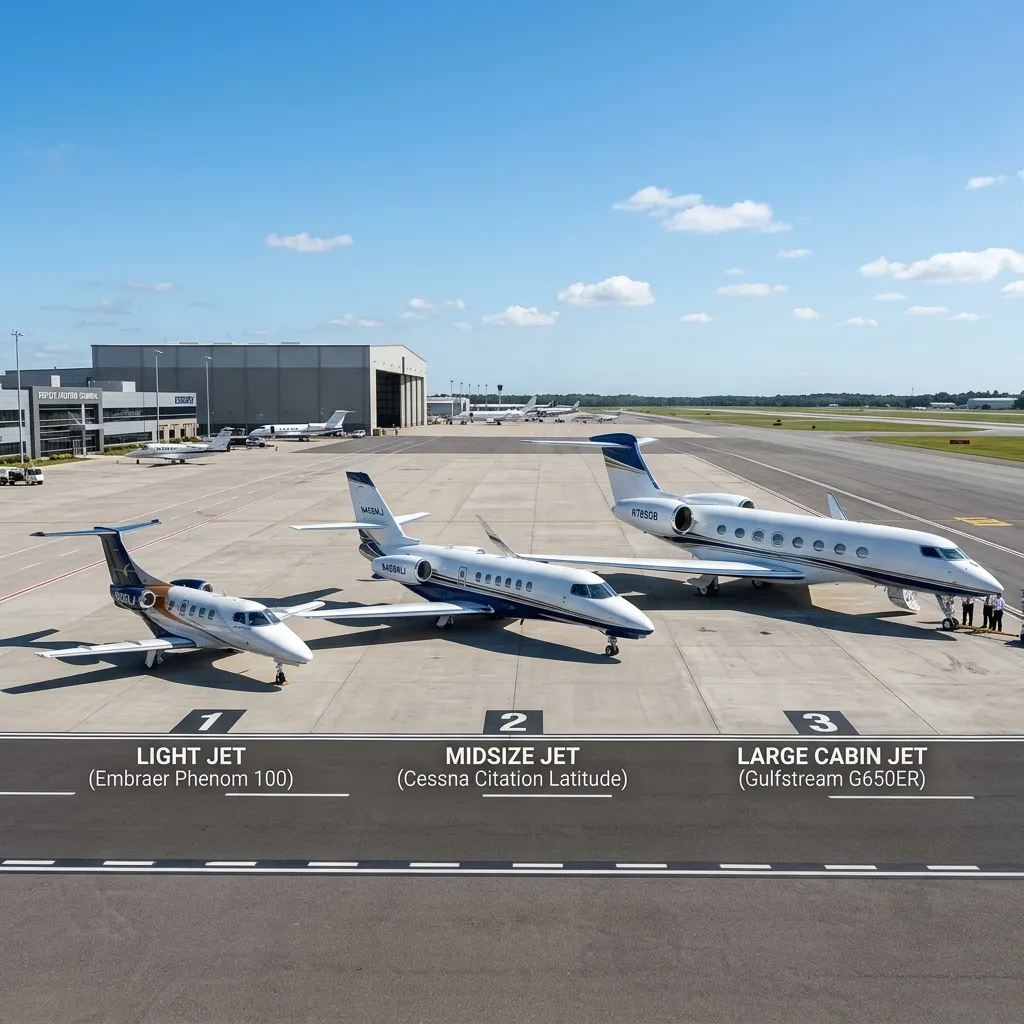
  • Expect limitations on heating. Light jets and VLJs do not have galleys with ovens. Hot food arrives pre-heated in insulated containers and stays warm for approximately 60-90 minutes.

Deplaning: What to Do and What to Leave

When the aircraft parks at the destination FBO, the crew opens the door and typically stands to see passengers off. A brief thank-you to the captain and first officer is the expected courtesy. If you are tipping, this is the moment.

Leave the cabin in the condition you would leave a hotel room: personal items collected, obvious trash gathered, and nothing left behind. The crew will clean the aircraft before the next flight, but returning a cabin that looks intentionally trashed signals something about the passenger that no tip amount corrects.

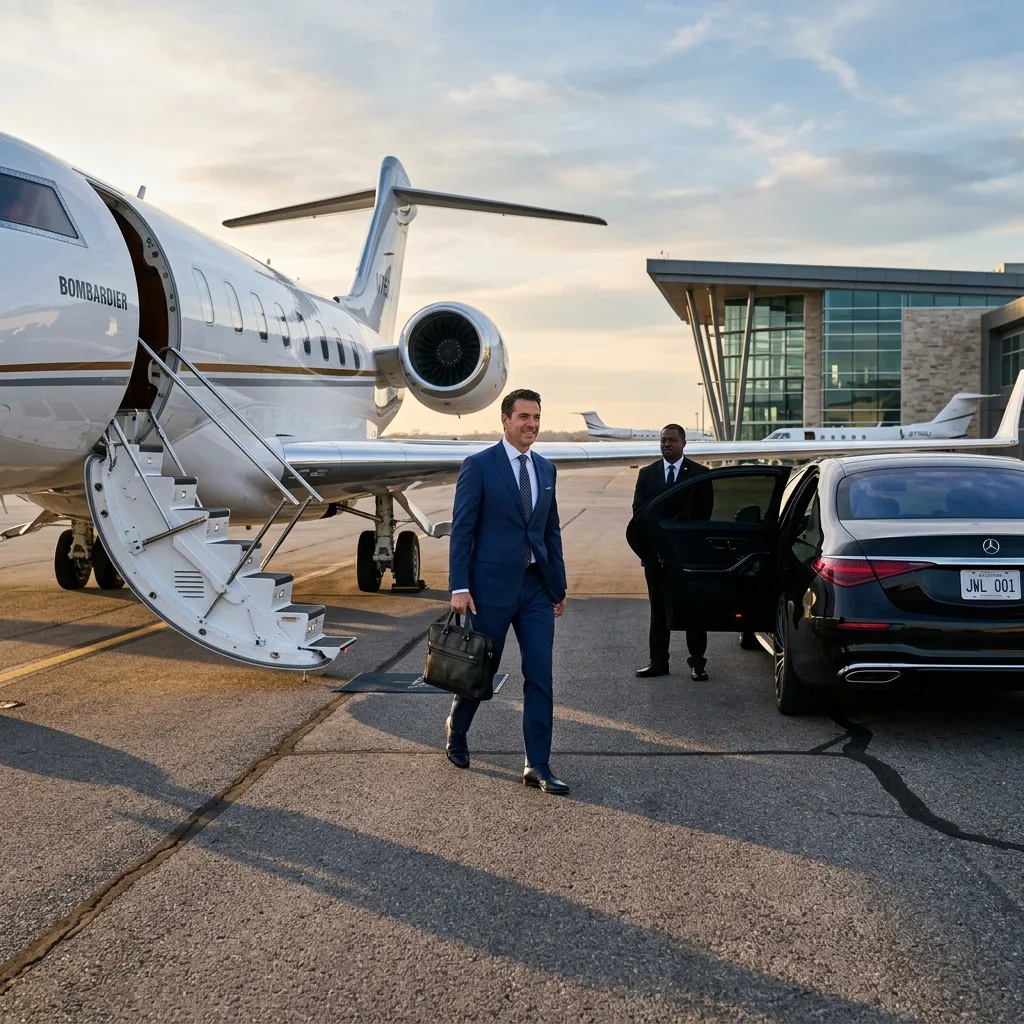
Your ground transportation should be arranged before landing. The FBO will have your car, sedan, or SUV waiting on the ramp when the aircraft door opens. Walking out of the FBO terminal to 'find a ride' is the clearest signal that the passenger is new to private aviation. It is not a problem; it is simply avoidable with one phone call 30 minutes before landing.

Brian Galvan

Written By

Brian Galvan

Founder, The Jet Finder ยท Private Aviation Operations & Technology

Former Director of Technology at FlyUSA (Inc. 5000 fastest-growing private jet company). Decade of hands-on experience across Part 135 operations, charter sales, fleet management, and aviation data systems.

LinkedInRead Full Profile →
Common Questions

Frequently Asked Questions


7 questions about private jet etiquette and expectations

Yes. Children are welcome on charter flights, and the charter environment is significantly more accommodating than commercial. Car seats can be installed on most business jet seats using the aircraft's existing seat belt systems. Crew members will help secure car seats if asked. Children under two are not required to have a separate seat, though most parents request one for safety. There is no additional charge for children occupying a seat within the aircraft's passenger capacity.

Yes. Dogs and cats ride in the cabin on most charter flights, not in a cargo hold. Operators may charge a $200-$500 cleaning fee to cover post-flight cabin detailing. Large dogs are expected to remain on the floor or in a crate; small dogs and cats are typically allowed on laps or seats. Notify the operator at booking so the crew can prepare the cabin with protective coverings if needed.

No dress code exists. Charter passengers wear everything from suits to shorts depending on the trip. The crew does not judge attire. Business travelers flying to meetings dress for the meeting. Families heading to a ski vacation dress for the destination. The only practical guidance: wear shoes you can quickly remove and replace if you want to keep the cabin carpet clean.

No. There is no requirement to power off personal electronic devices during any phase of a charter flight. Business jet avionics are shielded against consumer electronic interference. Passengers routinely make phone calls, send texts, and use laptops from gate to gate. Wi-Fi connectivity (if equipped) is available at all altitudes. The crew may ask you to pause a conversation briefly during the safety briefing.

Inform the crew. Minor damage (a coffee spill on the carpet, a scuff on a side panel) is handled through the operator's normal cabin maintenance. Major damage (a torn seat, a broken window shade mechanism, liquid spilled on avionics controls) may result in a repair charge billed through the charter agreement. Honesty is appreciated; crews deal with cabin wear daily and do not escalate minor incidents.

Not every jet has Wi-Fi. Most charter-configured aircraft built after 2015 are equipped with broadband connectivity (Gogo, Viasat, or SmartSky). Older aircraft may have Gogo air-to-ground systems that support email and basic browsing but not streaming video. If connectivity is important to your flight, confirm Wi-Fi capability and speed tier with the operator at booking. Aircraft equipped with Ka-band satellite systems provide the fastest inflight internet.

Modern business jet cabins maintain noise levels of 55-65 decibels at cruise altitude, comparable to a quiet office or restaurant conversation. Older jets (Learjet 35, Hawker 800) run louder at 68-75 decibels. Passengers on flights exceeding 3 hours sometimes appreciate noise-canceling headphones, particularly in the aft cabin where engine noise is most perceptible. The crew can adjust airflow from the environmental control system if cabin noise becomes noticeable.

Continue Reading

Related Articles


Your Next Mission

Ready to Fly?


Whether you need a charter quote or want to explore aircraft options, our team is here.

Contact Us