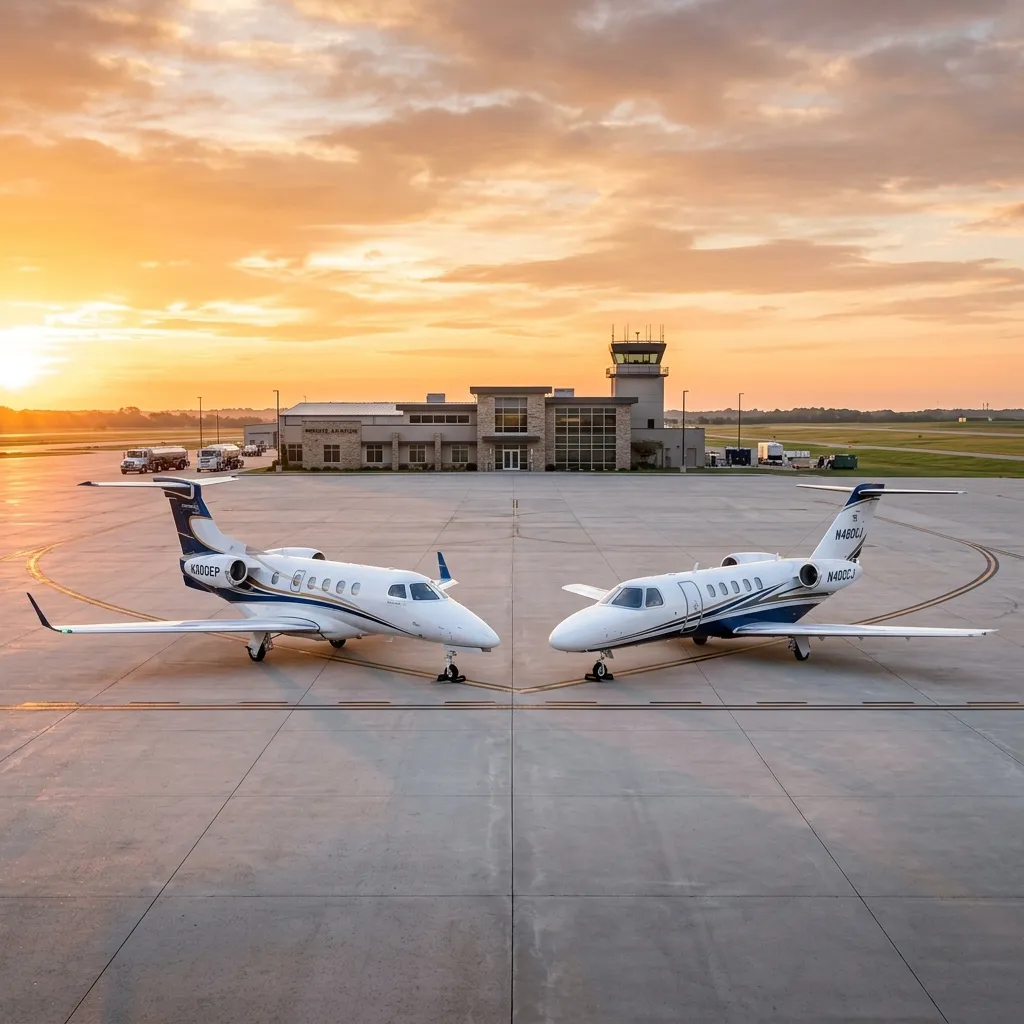
Day Trip by Private Jet: Schedule, Logistics, and Efficiency

What a Day Trip by Private Jet Actually Looks Like

A detailed breakdown of a private jet day trip. Eliminate overnight stays. Execute a 1,200-mile multi-city itinerary and return home for dinner.

In This Article

The Ultimate Efficiency Multiplier 06:00 Local Time: The Departure Sequence 07:30 Local Time: In-Flight Productivity 09:00 Local Time: First Destination Arrival 13:00 Local Time: Second Departure and Midday Operations 15:00 Local Time: Second Destination and Afternoon Strategy 18:30 Local Time: The Return Leg Cost-Benefit Analysis: Time vs Capital Frequently Asked Questions

The Ultimate Efficiency Multiplier

Executing a 1,200-mile itinerary across three cities in a single day is a logistical impossibility on commercial airlines. The calculus fails the moment you factor in security checkpoints, gate holding times, and hub-and-spoke routing constraints. For corporate executives and high-net-worth individuals, the private jet day trip is not an exercise in indulgence. It is a strictly calculated deployment of capital designed to recover the most finite asset in existence: time. By eliminating hotel overnights, unpredictable terminal delays, and rigid airline scheduling parameters, a properly planned private aviation itinerary collapses three days of commercial travel into fourteen seamless hours. This analysis breaks down the exact logistics, precise scheduling, and operational flow of a multi-leg day trip, demonstrating the concrete mechanics of time recovery.

The modern business landscape requires rapid deployment of leadership to multiple geographical markets without sacrificing operational tempo at headquarters. Private aviation allows for this by bypassing the bottlenecks of the public transportation network. When a team of five executives needs to conduct site visits in Atlanta, Dallas, and Chicago before returning to New York, commercial aviation dictates a three-day commitment. A private charter reduces that to a single duty day. The mathematical return on investment is immediately apparent when factoring the hourly valuation of top-tier executives. The modern business landscape requires rapid deployment of leadership to multiple geographical markets without sacrificing operational tempo at headquarters. Private aviation allows for this by bypassing the bottlenecks of the public transportation network. When a team of five executives needs to conduct site visits in Atlanta, Dallas, and Chicago before returning to New York, commercial aviation dictates a three-day commitment. A private charter reduces that to a single duty day. The mathematical return on investment is immediately apparent when factoring the hourly valuation of top-tier executives. The modern business landscape requires rapid deployment of leadership to multiple geographical markets without sacrificing operational tempo at headquarters. Private aviation allows for this by bypassing the bottlenecks of the public transportation network. When a team of five executives needs to conduct site visits in Atlanta, Dallas, and Chicago before returning to New York, commercial aviation dictates a three-day commitment. A private charter reduces that to a single duty day. The mathematical return on investment is immediately apparent when factoring the hourly valuation of top-tier executives.

Beyond mere time savings, the physical toll of travel is drastically reduced. Navigating massive international airports, standing in lines, and experiencing the compressed cabin environment of commercial airliners induces compounding fatigue. Business jets operate at lower cabin altitudes, offer superior environmental controls, and eliminate the stress of crowded terminals. The passengers arrive at their destinations ready to perform at optimal capacity. Beyond mere time savings, the physical toll of travel is drastically reduced. Navigating massive international airports, standing in lines, and experiencing the compressed cabin environment of commercial airliners induces compounding fatigue. Business jets operate at lower cabin altitudes, offer superior environmental controls, and eliminate the stress of crowded terminals. The passengers arrive at their destinations ready to perform at optimal capacity. Beyond mere time savings, the physical toll of travel is drastically reduced. Navigating massive international airports, standing in lines, and experiencing the compressed cabin environment of commercial airliners induces compounding fatigue. Business jets operate at lower cabin altitudes, offer superior environmental controls, and eliminate the stress of crowded terminals. The passengers arrive at their destinations ready to perform at optimal capacity.

06:00 Local Time: The Departure Sequence

The fundamental advantage of private aviation begins before the aircraft engines start. At an FBO (Fixed Base Operator), there are no check-in counters or TSA queues. The passenger arrives, steps out of their vehicle on the ramp, and boards the aircraft. The captain and first officer have already conducted their pre-flight inspections, verified weather routing, and ensured the catering is stowed correctly. The engines start within minutes of passenger boarding. This immediate departure sequence saves approximately two hours compared to a commercial terminal departure. The flight crew manages all ground coordination seamlessly, allowing the passengers to immediately begin working or holding confidential discussions in the secure environment of the cabin. The fundamental advantage of private aviation begins before the aircraft engines start. At an FBO (Fixed Base Operator), there are no check-in counters or TSA queues. The passenger arrives, steps out of their vehicle on the ramp, and boards the aircraft. The captain and first officer have already conducted their pre-flight inspections, verified weather routing, and ensured the catering is stowed correctly. The engines start within minutes of passenger boarding. This immediate departure sequence saves approximately two hours compared to a commercial terminal departure. The flight crew manages all ground coordination seamlessly, allowing the passengers to immediately begin working or holding confidential discussions in the secure environment of the cabin. The fundamental advantage of private aviation begins before the aircraft engines start. At an FBO (Fixed Base Operator), there are no check-in counters or TSA queues. The passenger arrives, steps out of their vehicle on the ramp, and boards the aircraft. The captain and first officer have already conducted their pre-flight inspections, verified weather routing, and ensured the catering is stowed correctly. The engines start within minutes of passenger boarding. This immediate departure sequence saves approximately two hours compared to a commercial terminal departure. The flight crew manages all ground coordination seamlessly, allowing the passengers to immediately begin working or holding confidential discussions in the secure environment of the cabin.

The true value of business aviation is not found in the air. It is found on the ground, in the hours recovered by bypassing commercial infrastructure entirely.

This precise orchestration is the result of intensive pre-flight planning by the charter operator or flight department. Before the passengers even arrive at the FBO, the crew has calculated weight and balance, filed the flight plan, checked all Notices to Airmen (NOTAMs), and verified the status of the destination airport. The passengers simply board and depart, oblivious to the complex logistics occurring behind the scenes. This precise orchestration is the result of intensive pre-flight planning by the charter operator or flight department. Before the passengers even arrive at the FBO, the crew has calculated weight and balance, filed the flight plan, checked all Notices to Airmen (NOTAMs), and verified the status of the destination airport. The passengers simply board and depart, oblivious to the complex logistics occurring behind the scenes. This precise orchestration is the result of intensive pre-flight planning by the charter operator or flight department. Before the passengers even arrive at the FBO, the crew has calculated weight and balance, filed the flight plan, checked all Notices to Airmen (NOTAMs), and verified the status of the destination airport. The passengers simply board and depart, oblivious to the complex logistics occurring behind the scenes.

07:30 Local Time: In-Flight Productivity

Once airborne, the cabin functions as an isolated, secure boardroom. The absence of public passengers ensures absolute confidentiality for sensitive corporate discussions, mergers, and strategic planning. Modern business jets are equipped with high-speed satellite internet connectivity, allowing continuous communication with terrestrial offices. The environmental control systems in modern aircraft also maintain a lower cabin altitude, significantly reducing fatigue. Passengers arrive at their first destination physically refreshed and mentally sharp, having bypassed the cognitive drain of commercial travel. Once airborne, the cabin functions as an isolated, secure boardroom. The absence of public passengers ensures absolute confidentiality for sensitive corporate discussions, mergers, and strategic planning. Modern business jets are equipped with high-speed satellite internet connectivity, allowing continuous communication with terrestrial offices. The environmental control systems in modern aircraft also maintain a lower cabin altitude, significantly reducing fatigue. Passengers arrive at their first destination physically refreshed and mentally sharp, having bypassed the cognitive drain of commercial travel. Once airborne, the cabin functions as an isolated, secure boardroom. The absence of public passengers ensures absolute confidentiality for sensitive corporate discussions, mergers, and strategic planning. Modern business jets are equipped with high-speed satellite internet connectivity, allowing continuous communication with terrestrial offices. The environmental control systems in modern aircraft also maintain a lower cabin altitude, significantly reducing fatigue. Passengers arrive at their first destination physically refreshed and mentally sharp, having bypassed the cognitive drain of commercial travel.

Cruising Altitudes and Routing

Operating at altitudes frequently exceeding 40,000 feet, business jets fly above commercial traffic and most adverse weather systems. This altitude capability allows for direct routing, further reducing block times. The flight crew maintains continuous communication with air traffic control, adapting the flight plan dynamically to ensure the most efficient arrival sequence. Operating at altitudes frequently exceeding 40,000 feet, business jets fly above commercial traffic and most adverse weather systems. This altitude capability allows for direct routing, further reducing block times. The flight crew maintains continuous communication with air traffic control, adapting the flight plan dynamically to ensure the most efficient arrival sequence. Operating at altitudes frequently exceeding 40,000 feet, business jets fly above commercial traffic and most adverse weather systems. This altitude capability allows for direct routing, further reducing block times. The flight crew maintains continuous communication with air traffic control, adapting the flight plan dynamically to ensure the most efficient arrival sequence.

  • High-speed satellite Wi-Fi ensures continuous global connectivity.
  • Lower cabin altitude reduces physiological fatigue significantly.
  • Absolute privacy allows for unsecured strategic conversations.
  • Direct routing above 40,000 feet avoids commercial congestion.

09:00 Local Time: First Destination Arrival

Descent and arrival into the first destination are characterized by precision. The aircraft touches down and taxies directly to the FBO ramp. A pre-arranged ground transportation vehicle is waiting on the tarmac. Passengers disembark and enter the vehicle in a matter of seconds. There is no waiting for baggage claim or navigating crowded terminals. The aircraft remains secured on the ramp while the passengers attend their morning meetings. The crew utilizes this ground time to monitor weather developments, adjust subsequent routing, and prepare the cabin for the next leg of the journey. Descent and arrival into the first destination are characterized by precision. The aircraft touches down and taxies directly to the FBO ramp. A pre-arranged ground transportation vehicle is waiting on the tarmac. Passengers disembark and enter the vehicle in a matter of seconds. There is no waiting for baggage claim or navigating crowded terminals. The aircraft remains secured on the ramp while the passengers attend their morning meetings. The crew utilizes this ground time to monitor weather developments, adjust subsequent routing, and prepare the cabin for the next leg of the journey. Descent and arrival into the first destination are characterized by precision. The aircraft touches down and taxies directly to the FBO ramp. A pre-arranged ground transportation vehicle is waiting on the tarmac. Passengers disembark and enter the vehicle in a matter of seconds. There is no waiting for baggage claim or navigating crowded terminals. The aircraft remains secured on the ramp while the passengers attend their morning meetings. The crew utilizes this ground time to monitor weather developments, adjust subsequent routing, and prepare the cabin for the next leg of the journey.

This capability to land at smaller regional or reliever airports is a major logistical advantage. Commercial airlines are restricted to major hub airports, which are often located far from the actual business centers or manufacturing facilities that executives need to visit. A private jet can access thousands of additional airfields, landing significantly closer to the final destination and eliminating hours of ground transportation time. This capability to land at smaller regional or reliever airports is a major logistical advantage. Commercial airlines are restricted to major hub airports, which are often located far from the actual business centers or manufacturing facilities that executives need to visit. A private jet can access thousands of additional airfields, landing significantly closer to the final destination and eliminating hours of ground transportation time. This capability to land at smaller regional or reliever airports is a major logistical advantage. Commercial airlines are restricted to major hub airports, which are often located far from the actual business centers or manufacturing facilities that executives need to visit. A private jet can access thousands of additional airfields, landing significantly closer to the final destination and eliminating hours of ground transportation time.

Need a Charter Quote?

Contact our team for a personalized quote.

Get a Quote

13:00 Local Time: Second Departure and Midday Operations

Following the conclusion of the morning engagements, the passengers return to the FBO. The departure process is identically swift. The aircraft is pre-flighted, and engines are started as soon as the cabin door is secured. Lunch is served in-flight, customized to exact passenger preferences. This eliminates the need to allocate ground time for dining. The aircraft proceeds to the second destination, maximizing every minute of the workday. The ability to dictate the schedule means that if a meeting runs late, the aircraft waits. There are no missed connections or rebooking fees. Following the conclusion of the morning engagements, the passengers return to the FBO. The departure process is identically swift. The aircraft is pre-flighted, and engines are started as soon as the cabin door is secured. Lunch is served in-flight, customized to exact passenger preferences. This eliminates the need to allocate ground time for dining. The aircraft proceeds to the second destination, maximizing every minute of the workday. The ability to dictate the schedule means that if a meeting runs late, the aircraft waits. There are no missed connections or rebooking fees. Following the conclusion of the morning engagements, the passengers return to the FBO. The departure process is identically swift. The aircraft is pre-flighted, and engines are started as soon as the cabin door is secured. Lunch is served in-flight, customized to exact passenger preferences. This eliminates the need to allocate ground time for dining. The aircraft proceeds to the second destination, maximizing every minute of the workday. The ability to dictate the schedule means that if a meeting runs late, the aircraft waits. There are no missed connections or rebooking fees.

In-flight catering is coordinated days in advance, ensuring dietary restrictions and preferences are met flawlessly. This allows the executives to conduct a working lunch at 40,000 feet, utilizing time that would otherwise be lost in a restaurant or airport terminal. The flight crew manages the service discreetly, maintaining the professional atmosphere of the cabin. In-flight catering is coordinated days in advance, ensuring dietary restrictions and preferences are met flawlessly. This allows the executives to conduct a working lunch at 40,000 feet, utilizing time that would otherwise be lost in a restaurant or airport terminal. The flight crew manages the service discreetly, maintaining the professional atmosphere of the cabin. In-flight catering is coordinated days in advance, ensuring dietary restrictions and preferences are met flawlessly. This allows the executives to conduct a working lunch at 40,000 feet, utilizing time that would otherwise be lost in a restaurant or airport terminal. The flight crew manages the service discreetly, maintaining the professional atmosphere of the cabin.

15:00 Local Time: Second Destination and Afternoon Strategy

Arrival at the second city follows the same frictionless protocol. Another dedicated vehicle transfers the passengers to their afternoon commitments. This multi-city capability is where the day trip concept proves its ultimate utility. Visiting two distinct geographical markets and returning home in a single day allows executives to maintain aggressive operational oversight without sacrificing personal time or extending corporate travel budgets to cover multi-day lodging and per-diem expenses. The efficiency multiplier is undeniable. Arrival at the second city follows the same frictionless protocol. Another dedicated vehicle transfers the passengers to their afternoon commitments. This multi-city capability is where the day trip concept proves its ultimate utility. Visiting two distinct geographical markets and returning home in a single day allows executives to maintain aggressive operational oversight without sacrificing personal time or extending corporate travel budgets to cover multi-day lodging and per-diem expenses. The efficiency multiplier is undeniable. Arrival at the second city follows the same frictionless protocol. Another dedicated vehicle transfers the passengers to their afternoon commitments. This multi-city capability is where the day trip concept proves its ultimate utility. Visiting two distinct geographical markets and returning home in a single day allows executives to maintain aggressive operational oversight without sacrificing personal time or extending corporate travel budgets to cover multi-day lodging and per-diem expenses. The efficiency multiplier is undeniable.

The flexibility to alter the itinerary dynamically is another critical advantage. If a new business opportunity arises in a neighboring state during the afternoon meeting, the passengers can instruct the flight crew to change the destination. The crew simply files a new flight plan, coordinates with the new FBO, and arranges fresh ground transportation while the passengers complete their current engagement. The flexibility to alter the itinerary dynamically is another critical advantage. If a new business opportunity arises in a neighboring state during the afternoon meeting, the passengers can instruct the flight crew to change the destination. The crew simply files a new flight plan, coordinates with the new FBO, and arranges fresh ground transportation while the passengers complete their current engagement. The flexibility to alter the itinerary dynamically is another critical advantage. If a new business opportunity arises in a neighboring state during the afternoon meeting, the passengers can instruct the flight crew to change the destination. The crew simply files a new flight plan, coordinates with the new FBO, and arranges fresh ground transportation while the passengers complete their current engagement.

18:30 Local Time: The Return Leg

As the business day concludes, the passengers return to the aircraft for the final leg. The cabin environment transitions from a workspace to a relaxation zone. Dinner can be served, and passengers can rest. The flight crew navigates the evening airspace, returning to the origin airport. Upon touchdown, the passengers' personal vehicles are often waiting directly on the ramp, completing the door-to-door transportation circuit. They arrive home in time for dinner, having executed a highly complex logistical operation that would have otherwise consumed the majority of a week. As the business day concludes, the passengers return to the aircraft for the final leg. The cabin environment transitions from a workspace to a relaxation zone. Dinner can be served, and passengers can rest. The flight crew navigates the evening airspace, returning to the origin airport. Upon touchdown, the passengers' personal vehicles are often waiting directly on the ramp, completing the door-to-door transportation circuit. They arrive home in time for dinner, having executed a highly complex logistical operation that would have otherwise consumed the majority of a week. As the business day concludes, the passengers return to the aircraft for the final leg. The cabin environment transitions from a workspace to a relaxation zone. Dinner can be served, and passengers can rest. The flight crew navigates the evening airspace, returning to the origin airport. Upon touchdown, the passengers' personal vehicles are often waiting directly on the ramp, completing the door-to-door transportation circuit. They arrive home in time for dinner, having executed a highly complex logistical operation that would have otherwise consumed the majority of a week.

The compounding effect of this efficiency over the course of a fiscal year is staggering. By reclaiming days of lost travel time every month, executives can dramatically increase their operational footprint, engage with more clients, and oversee more facilities, all while maintaining a sustainable work-life balance that prevents burnout. The compounding effect of this efficiency over the course of a fiscal year is staggering. By reclaiming days of lost travel time every month, executives can dramatically increase their operational footprint, engage with more clients, and oversee more facilities, all while maintaining a sustainable work-life balance that prevents burnout. The compounding effect of this efficiency over the course of a fiscal year is staggering. By reclaiming days of lost travel time every month, executives can dramatically increase their operational footprint, engage with more clients, and oversee more facilities, all while maintaining a sustainable work-life balance that prevents burnout.

Cost-Benefit Analysis: Time vs Capital

When evaluating the economics of a private jet day trip, the analysis must extend beyond the raw charter hourly rate. The true cost equation includes the value of executive time, the elimination of overnight hotel expenses, the preservation of confidentiality, and the physical well-being of the passengers. A multi-leg day trip often presents a compelling return on investment for corporations where leadership time is the most constrained resource. The capability to project presence across multiple markets rapidly is a distinct competitive advantage. When evaluating the economics of a private jet day trip, the analysis must extend beyond the raw charter hourly rate. The true cost equation includes the value of executive time, the elimination of overnight hotel expenses, the preservation of confidentiality, and the physical well-being of the passengers. A multi-leg day trip often presents a compelling return on investment for corporations where leadership time is the most constrained resource. The capability to project presence across multiple markets rapidly is a distinct competitive advantage. When evaluating the economics of a private jet day trip, the analysis must extend beyond the raw charter hourly rate. The true cost equation includes the value of executive time, the elimination of overnight hotel expenses, the preservation of confidentiality, and the physical well-being of the passengers. A multi-leg day trip often presents a compelling return on investment for corporations where leadership time is the most constrained resource. The capability to project presence across multiple markets rapidly is a distinct competitive advantage.

While the initial invoice for a multi-city charter may appear substantial, the hidden costs of commercial travel—including hotel rooms, per diems, lost productivity during layovers, and the opportunity cost of an executive being out of the office for three days instead of one—frequently tip the scale in favor of private aviation for mission-critical operations. While the initial invoice for a multi-city charter may appear substantial, the hidden costs of commercial travel—including hotel rooms, per diems, lost productivity during layovers, and the opportunity cost of an executive being out of the office for three days instead of one—frequently tip the scale in favor of private aviation for mission-critical operations. While the initial invoice for a multi-city charter may appear substantial, the hidden costs of commercial travel—including hotel rooms, per diems, lost productivity during layovers, and the opportunity cost of an executive being out of the office for three days instead of one—frequently tip the scale in favor of private aviation for mission-critical operations.

Brian Galvan

Written By

Brian Galvan

Founder, The Jet Finder · Private Aviation Operations & Technology

Former Director of Technology at FlyUSA (Inc. 5000 fastest-growing private jet company). Decade of hands-on experience across Part 135 operations, charter sales, fleet management, and aviation data systems.

LinkedInRead Full Profile →
Common Questions

Frequently Asked Questions


6 questions about chartering this aircraft

A well-orchestrated multi-city private jet day trip usually spans 12 to 14 hours. By eliminating commercial terminal delays and rigid schedules, an itinerary covering three different cities can be executed within a single operational duty day, allowing executives to return home by evening.

Yes. The aircraft operates strictly on your schedule. If a business meeting extends beyond the planned duration, the flight crew adjusts the departure time accordingly. You will never miss a flight or face rebooking penalties, ensuring absolute flexibility.

Catering is pre-arranged according to your specific requirements and loaded before departure. Meals are served in-flight between destinations, eliminating the need to stop at restaurants on the ground and thereby preserving valuable hours during the workday.

Under FAA Part 135 regulations, flight crews are subject to maximum duty and flight time limitations, typically a 14-hour duty day. For exceptionally long day trips exceeding these limits, an augmented crew or a swap to a rested crew at a midway point must be scheduled.

At most private aviation FBOs, ground transportation is coordinated directly to the aircraft ramp. The vehicle waits beside the plane, allowing you to step off the aircraft and into the car in seconds, entirely bypassing the terminal building.

Flight crews continuously monitor meteorological conditions throughout the day. If weather deteriorates at a planned destination, they will proactively coordinate with you to divert to a suitable alternate airport nearby or adjust the schedule to avoid the severe weather system entirely.

Continue Reading

Related Articles


Your Next Mission

Ready to Fly?


Whether you need a charter quote or want to explore aircraft options, our team is here.

Contact Us