The Hourly Rate
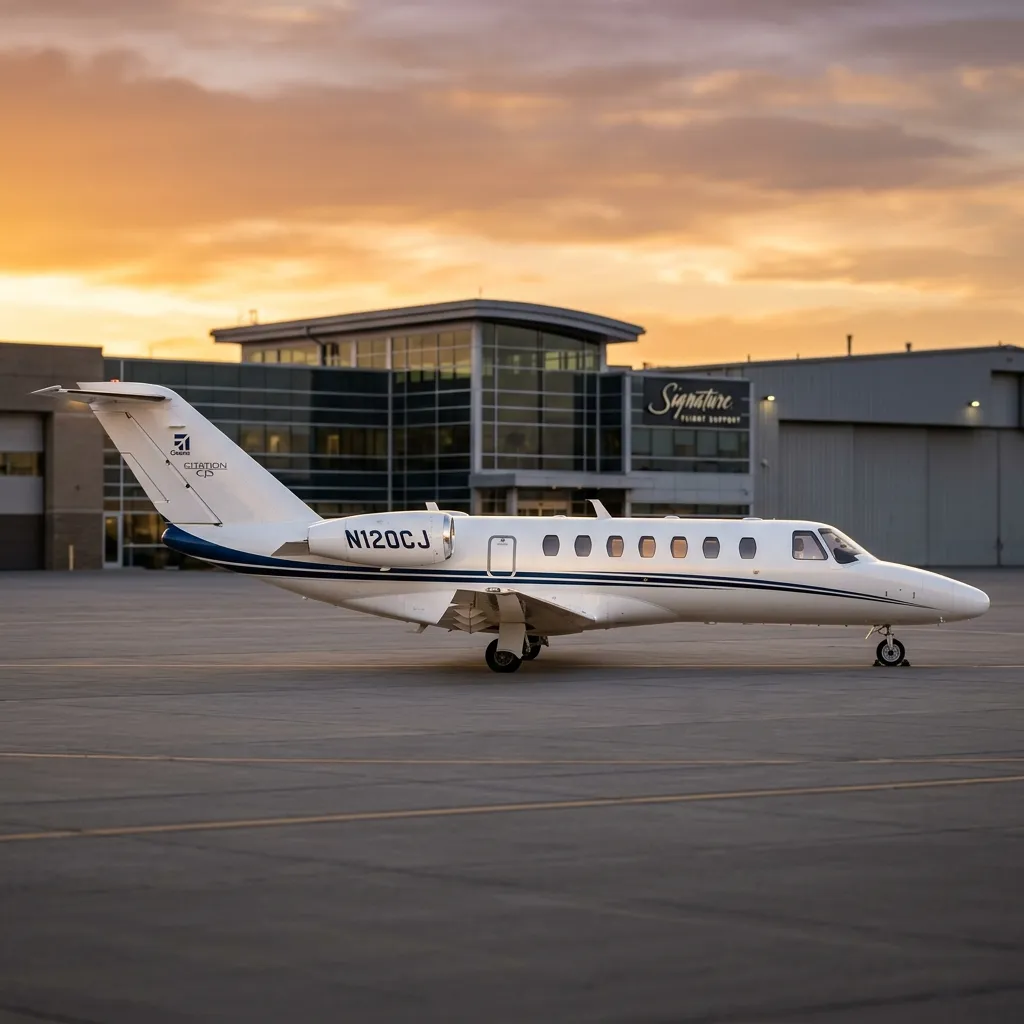
A Citation CJ3 charters for $2,200 to $3,000 per flight hour. That range depends on the operator, the market (peak season vs. off-peak), aircraft age, and whether you're booking a one-way or round trip. The CJ3+ variant, with its Garmin G3000 avionics upgrade, sometimes commands a slight premium.
For context, light jets as a category run $3,800 to $5,500 per hour at retail charter rates. The CJ3 sits at the lower end of that range because of fleet availability. There are hundreds of CJ3s on Part 135 certificates in the U.S., and competition among operators keeps pricing competitive.
The hourly rate is where the conversation starts, but it's not where it ends. Positioning fees, overnight charges, landing fees, and segment fees all factor into the final invoice.
One thing worth understanding: the CJ3's Williams FJ44-3A engines are among the most fuel-efficient in the light jet category. At 150 gallons per hour, the fuel component of that $2,200-$3,000 rate runs about $850-$1,000. The rest covers crew, maintenance reserves, insurance, and the operator's margin. Knowing this breakdown helps when comparing quotes from different operators.
What the Hourly Rate Covers
Most charter quotes on a CJ3 are "all-in" with a few exceptions. Here's what's typically bundled into the hourly rate:
- Two-pilot crew. The CJ3 is single-pilot certified, but Part 135 charter operations almost always fly with two pilots. Their salaries, per diem, and training costs are baked into the rate.
- Fuel. The CJ3 burns roughly 150 gallons per hour on the Williams FJ44-3A engines. At current Jet-A prices, that's about $850-$1,000 per flight hour in fuel alone.
- Insurance. Hull and liability coverage for the aircraft and passengers.
- Maintenance reserves. Every hour flown accrues a maintenance cost. On the CJ3, operators typically reserve $400-$600 per hour for scheduled and unscheduled maintenance.
What's Usually Extra
- Federal Excise Tax (FET). 7.5% on domestic flights. This is always added on top of the quoted rate.
- Landing and ramp fees. Varies by airport. Teterboro might charge $200-$500; a small regional airport might charge nothing.
- Overnight fees. If the crew stays overnight at your destination, expect $500-$1,500 for hotel and per diem.
- Catering. Basic snacks and drinks are often included. Full catering is extra, typically $30-$75 per person.
- De-icing. Seasonal, $500-$2,000 depending on conditions and aircraft size.
Route-by-Route Cost Estimates
The CJ3's range of 2,040 nautical miles means it covers most of the continental U.S. nonstop. Here are real-world estimates for common routes, assuming current market rates and standard conditions. These are one-way prices before FET.
| Route | Distance | Flight Time | Estimated Cost |
|---|
| New York → Washington DC | 215 nm | ~0h 55m | $3,500 - $4,800 |
| Chicago → Nashville | 400 nm | ~1h 25m | $5,200 - $6,800 |
| Dallas → Denver | 660 nm | ~2h 10m | $7,500 - $9,200 |
| Atlanta → Miami | 595 nm | ~1h 55m | $6,800 - $8,500 |
| Los Angeles → San Francisco | 340 nm | ~1h 10m | $4,500 - $5,900 |
| Boston → Nantucket | 105 nm | ~0h 35m | $3,000 - $4,200 |
These estimates assume the aircraft is already positioned at or near your departure airport. If the operator needs to fly the jet to you (a "positioning leg" or "deadhead"), that adds cost. A 200-mile repositioning might add $2,000-$3,500 to the trip. Some operators absorb positioning costs on popular routes to win repeat business; others pass them through at full hourly rate. Ask upfront.
Round trips are almost always cheaper per mile than two one-ways. The crew and aircraft are already at your destination, so there's no repositioning on the return leg. A round-trip New York to Miami on a CJ3 typically runs $14,000-$18,000 total, compared to $13,600-$17,000 if you booked two separate one-ways.
Get a CJ3 Charter Quote
Tell us your route and dates. We'll come back with a real number, not a range.
Request a Quote →When the CJ3 Is the Right Call (and When It Isn't)
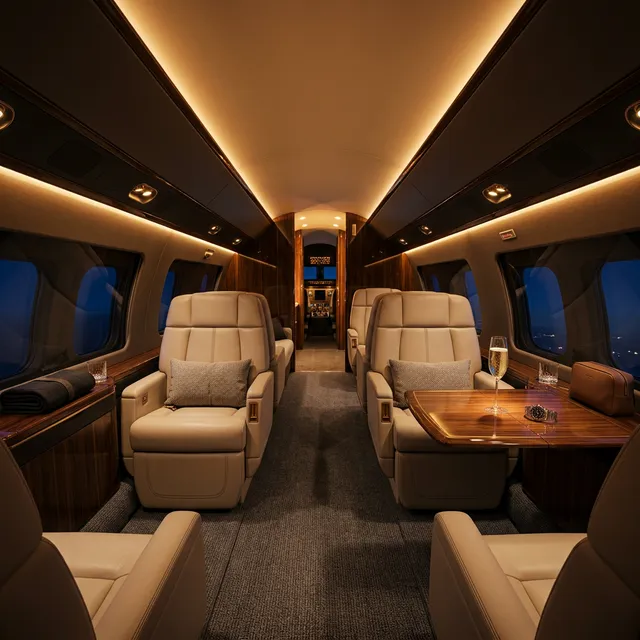
The CJ3 is built for 1-3 hour domestic legs with 4-6 passengers. That's its sweet spot. It handles New York to Chicago, Dallas to Denver, Atlanta to Miami without breaking a sweat. The 15.7-foot cabin gives passengers a stand-up aisle, enclosed lavatory, and room for golf bags in the 66-cubic-foot baggage compartment.
Choose the CJ3 When
- Your route is under 1,800 nm (coast-to-coast is possible but tight on fuel reserves)
- You have 4-6 passengers who value cabin comfort over cabin size
- Budget matters: the CJ3 is one of the most cost-effective light jets per seat-mile
- You need access to shorter runways (3,180 ft takeoff distance)
Consider Something Else When
- You're flying 7+ passengers. The CJ3 seats 9, but 7+ is tight with baggage. A midsize jet gives more room.
- Your route exceeds 2,000 nm nonstop. A fuel stop adds 45 minutes and landing fees.
- You need a flat-floor cabin. The CJ3 cabin height is 4.8 feet. Taller passengers will notice.
- International legs with customs. The CJ3 handles it fine, but a midsize jet offers more comfort on 3+ hour international sectors.
The most expensive jet is the one that doesn't fit your mission. A CJ3 on a 500-mile route saves $3,000-$5,000 over a midsize jet doing the same trip. Match the aircraft to the distance and passenger count.
Fleet Size and Availability
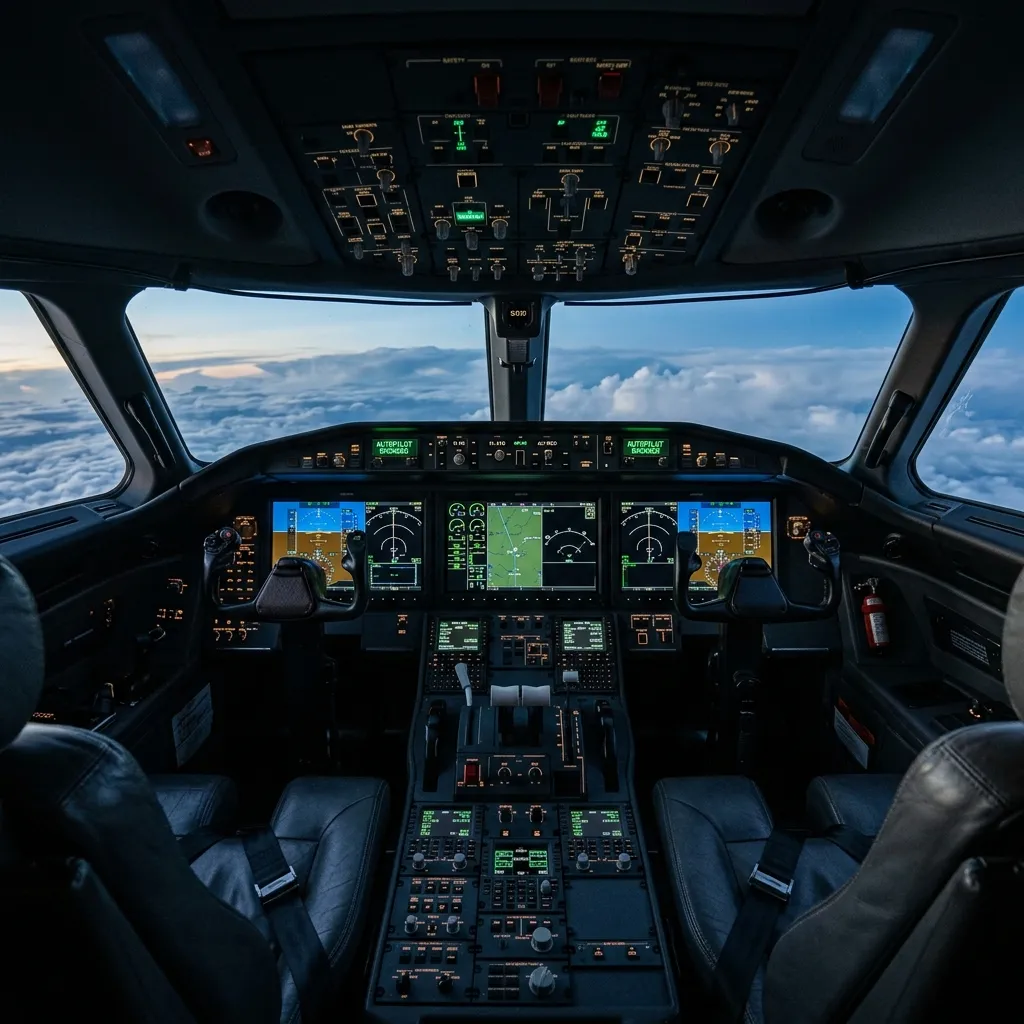
Cessna produced the CJ3 from 2004 to 2014, then transitioned to the CJ3+ with upgraded Garmin G3000 avionics. Between both variants, there are over 400 in the U.S. registry. A significant portion operate under Part 135 charter certificates, making the CJ3 one of the most available light jets in the charter market.
High availability works in your favor. More operators competing for your business means better pricing, more schedule flexibility, and a higher chance of finding an aircraft already positioned near your departure city. Aircraft like N100CB and N116AA are examples of CJ3s active in the Part 135 fleet.
The CJ3 fleet clusters around major metro areas: the Northeast corridor, South Florida, Texas, and Southern California. If you're departing from or near these regions, you're almost guaranteed an aircraft within a short positioning distance. Departures from smaller markets (think Omaha or Memphis) may require a longer deadhead, which adds to the total cost.
Peak demand periods (Thanksgiving, Christmas, Super Bowl weekend, March in Palm Beach) can tighten availability and push rates toward the high end of the range. Booking 2-3 weeks ahead during peak season is standard practice. Off-peak, you can often secure a CJ3 with 24-48 hours notice.
Empty Legs on the CJ3
An empty leg is a repositioning flight that an operator needs to fly anyway. If someone charters a CJ3 one-way from New York to Miami, the jet needs to get back to base. That return flight is an empty leg, and operators sell them at 25-50% off published rates.
The CJ3's popularity in the charter market means empty legs are relatively common, especially on high-traffic routes like the Northeast to Florida corridor, LA to Vegas, and Chicago to anywhere warm in winter. During snowbird season (November through March), the northbound empty legs out of Florida are some of the best deals in charter aviation.
The catch: empty legs are inflexible. The departure time, date, and route are fixed by the operator's schedule. Some operators allow minor routing adjustments (a different arrival airport in the same metro area), but the date and approximate time are locked. If your plans align, the savings are real. If you need schedule control, book a standard charter.
How to Find CJ3 Empty Legs
Most empty legs are listed 3-7 days before the flight. Some operators publish them on their websites; others share them only with brokers. Working with a charter advisory team gives you access to inventory across multiple operators simultaneously, which is the fastest way to match an empty leg to your schedule.