Where Runway Length Determines the Aircraft
Most business jet passengers never think about runway length. They book a flight, board the aircraft, and arrive at their destination. But at a select group of airports worldwide, the runway is the constraint that determines everything: which aircraft can operate, how many passengers it can carry, what time of day it can land, and sometimes whether the flight happens at all. These airports serve some of the most desirable destinations in private aviation, from Caribbean islands to Alpine ski resorts to remote fishing lodges.
The standard business jet requires 3,000-6,000 feet of runway depending on type, weight, temperature, and elevation. A Citation CJ3 needs 3,180 feet at sea level. A Gulfstream G550 needs 5,910 feet. When the available runway drops below 4,000 feet, the list of capable aircraft narrows sharply. Below 3,000 feet, only turboprops and a handful of purpose-designed jets can operate safely.
The 14 Shortest Runways Serving Private Jets
This list includes both genuinely short runways and runways that appear adequate on paper but are effectively shortened by elevation, slope, or approach obstacles. Telluride's 7,111-foot runway at 9,070 feet MSL performs like a 4,500-foot runway at sea level. Aspen's 7,006 feet at 7,820 feet elevation creates similar constraints. Mountain airports must be evaluated by density altitude performance, not published runway length.
St. Barths: The Gold Standard of Short-Runway Operations
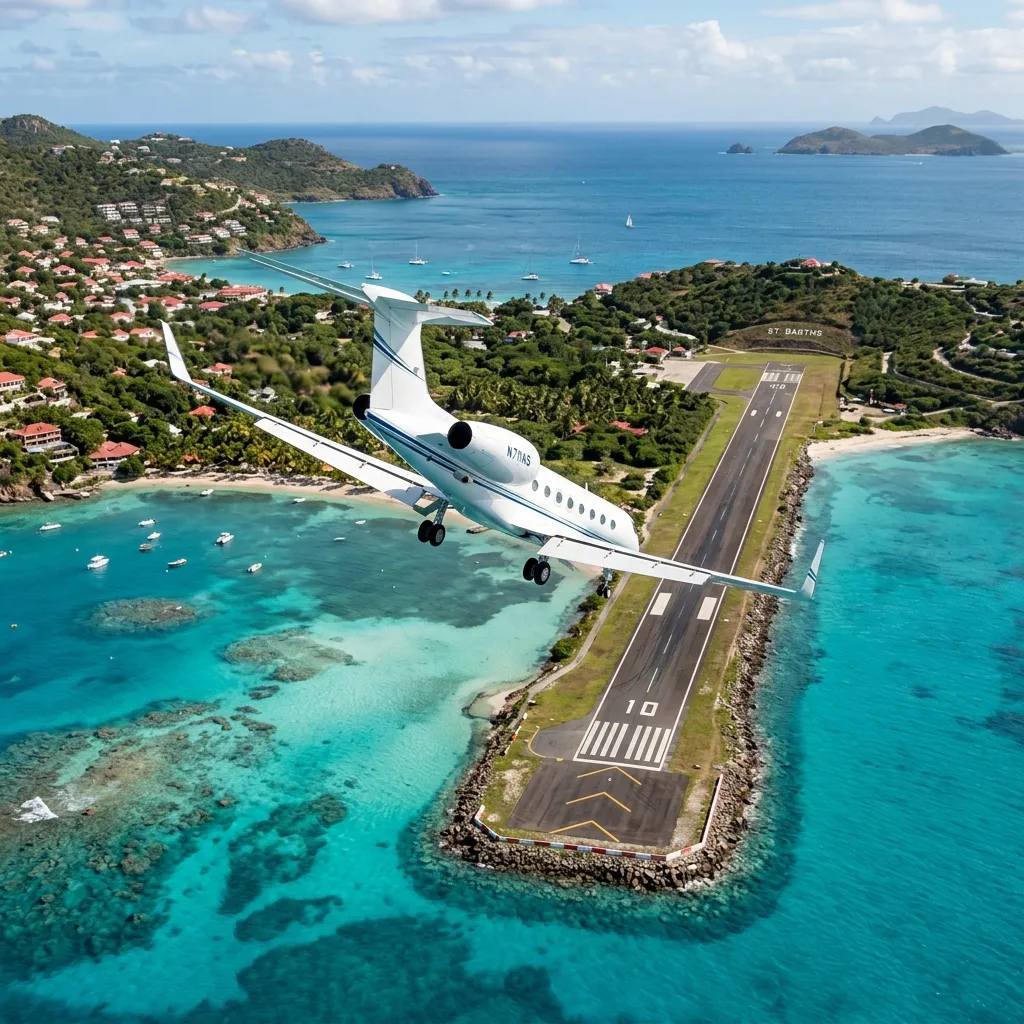
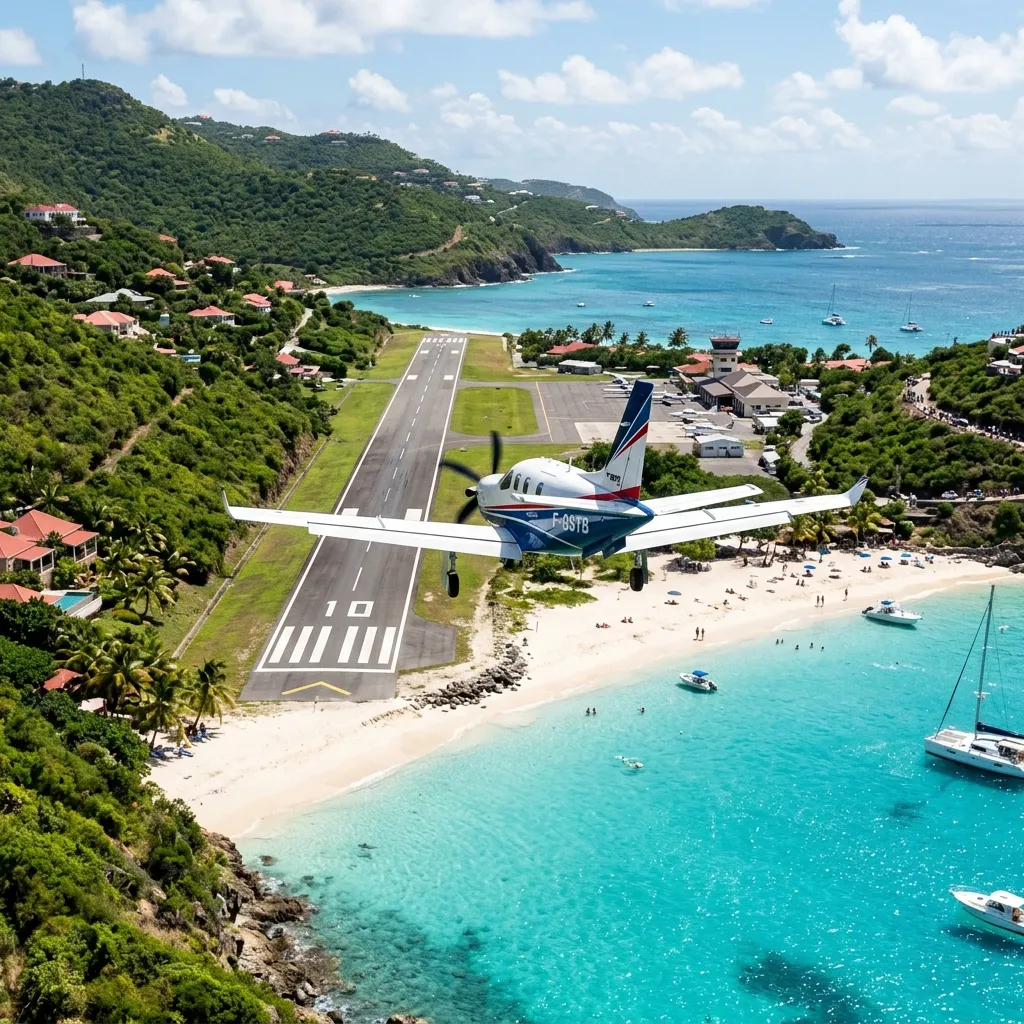
Gustaf III Airport (SBH) on St. Barths is the most iconic short-runway airport in private aviation. The 2,133-foot runway ends at a beach on one end and a hill on the other, with a steep downhill approach over a road (cars must stop for landing aircraft) that has become a social media phenomenon. Only pilots with specific St. Barths certification can operate into SBH, and the aircraft type list is extremely restricted.
The Pilatus PC-24, introduced in 2018, expanded jet access to St. Barths for the first time. Its 2,690-foot takeoff distance at sea level and robust landing gear (designed for unpaved runways) allow it to operate at SBH with 4-6 passengers. Before the PC-24, the only options were turboprops (PC-12, King Air 90, DHC-6) or helicopters from St. Martin. Charter demand for PC-24 service to St. Barths exceeds supply during the November-April season.
PC-24 charters to St. Barths from San Juan (SJU) or St. Martin (SXM) cost approximately $6,000-$9,000 one-way for the 35-minute flight. That pricing reflects the combination of limited aircraft supply, specialized pilot certification requirements, and extreme demand during Caribbean high season. Charter passengers who require a larger jet fly into St. Martin (Princess Juliana/SXM) and transfer to St. Barths by turboprop or ferry.
Need a Charter Quote?
Contact our team for a personalized quote.
Get a Quote →Jets Built for Short Runways
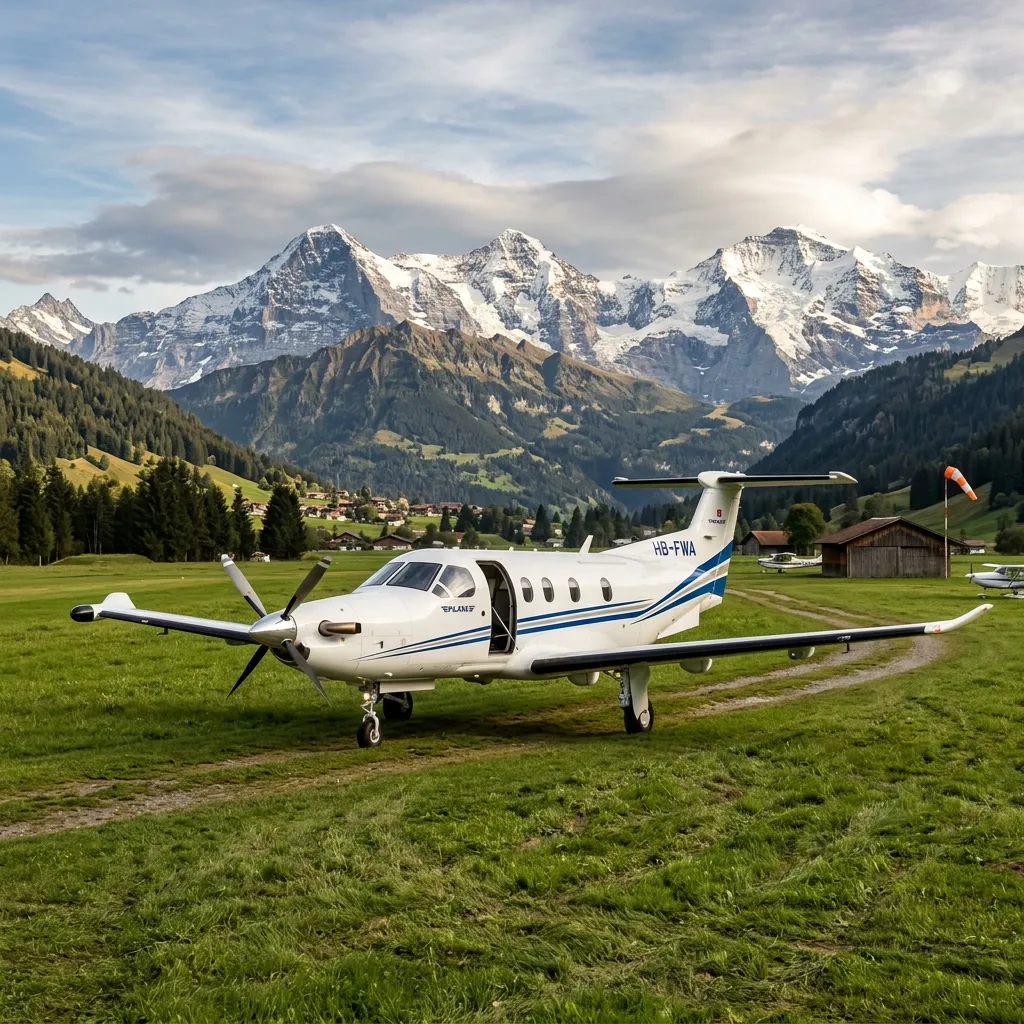
Several business jets are specifically engineered for short-field performance. The Pilatus PC-24 leads this category with a 2,690-foot balanced field length and certification for unpaved runway operations. It is the only business jet approved for dirt, gravel, and grass strip operations. Behind it, the Citation CJ3 (3,180 feet), Citation CJ4 (3,410 feet), and Phenom 300 (3,138 feet) represent the best short-field performers among conventional light jets.
The STOL Jet Conversation
The term STOL (Short Takeoff and Landing) is technically reserved for aircraft capable of operating in under 1,500 feet. No business jet meets this definition. The PC-24 comes closest in the jet world. True STOL capability in business aviation remains the domain of turboprops: the DHC-6 Twin Otter (1,200 feet), Kodiak 100 (985 feet), and STOL-modified King Air 90 (approximately 2,000 feet).
Several startups are developing electric or hybrid STOL-capable aircraft (Electra, Airflow), but none are expected to enter commercial service before 2028-2030. For now, passengers who need access to runways under 3,000 feet must accept turboprop or helicopter transportation.
London City Airport: Short Runway in a Major Market
London City Airport (LCY) is unique among short-runway airports because it serves a major financial center. Its 4,948-foot runway requires a 5.5-degree approach angle (nearly twice the standard 3 degrees), which most business jets are not certified to fly. The steep approach, combined with the short runway and surrounding obstacle environment, limits operations to specific aircraft types with demonstrated steep-approach capability.
The Dassault Falcon 900 series is the most common large-cabin jet at LCY, certified for the steep approach with payload restrictions. The PC-24 operates without restriction. The Embraer Legacy 500/600 and Citation Latitude are not LCY-certified. For charter passengers flying into London's financial district, LCY eliminates the 60-90 minute ground transfer from Luton or Farnborough, saving 2-3 hours of total trip time.
2,133 ft
St. Barths Runway
3,400 ft
Saba Airport Runway
PC-24
Best Short-Field Jet
What Charter Passengers Should Know
When your destination has a short or challenging runway, several factors change in the charter planning process. The aircraft selection narrows, which may increase cost because fewer competing operators serve the airport. Weight restrictions may limit passenger count, baggage, or fuel load. Weather restrictions may be more stringent than at standard airports. And pilot qualification requirements may add scheduling constraints.
- Always disclose the final destination airport during booking, even if it seems obvious. Operators need to verify aircraft compatibility before quoting.
- Expect weight restrictions at high-altitude or short-runway airports. A jet rated for 8 passengers at sea level may carry only 5-6 at a mountain airport.
- Build weather flexibility into your schedule. Short-runway and mountain airports close more frequently than standard airports.
- Ask about pilot experience at the specific airport. Some airports require specialized training or certification beyond standard type ratings.
- Consider a nearby larger airport with ground transfer if the aircraft you prefer cannot operate into the destination.