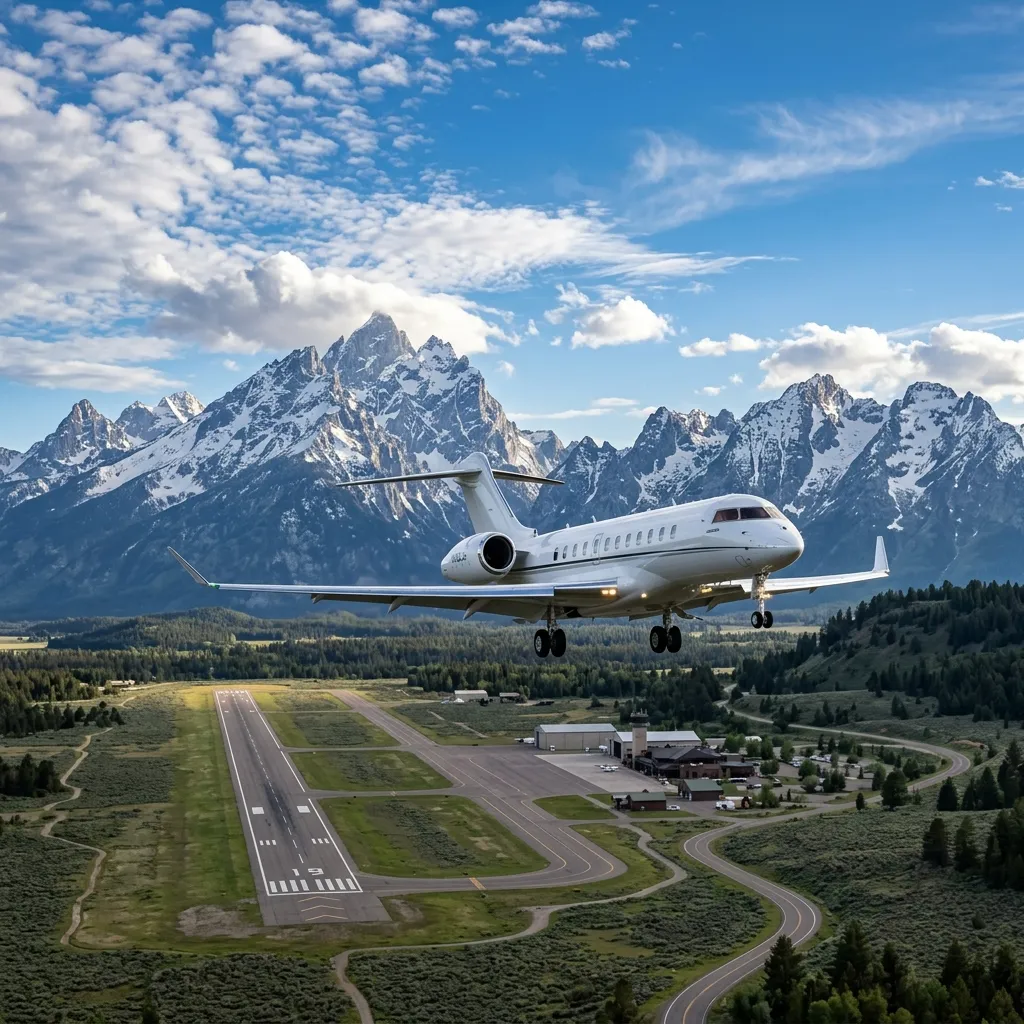
Small jet on approach to mountain airport with snow-covered peaks in background

Flying Private to Telluride: The Highest Commercial Airport in the United States

At 9,070 feet above sea level, Telluride Regional Airport is the highest commercial airport in the United States. Not every jet can get in.

In This Article

The Airport: Telluride Regional (TEX) Which Aircraft Can Actually Get In Seasonal Considerations and Weather Patterns The Montrose Alternative FBO Services and Ground Access Pricing: What a Telluride Charter Actually Costs Frequently Asked Questions

The Airport: Telluride Regional (TEX)

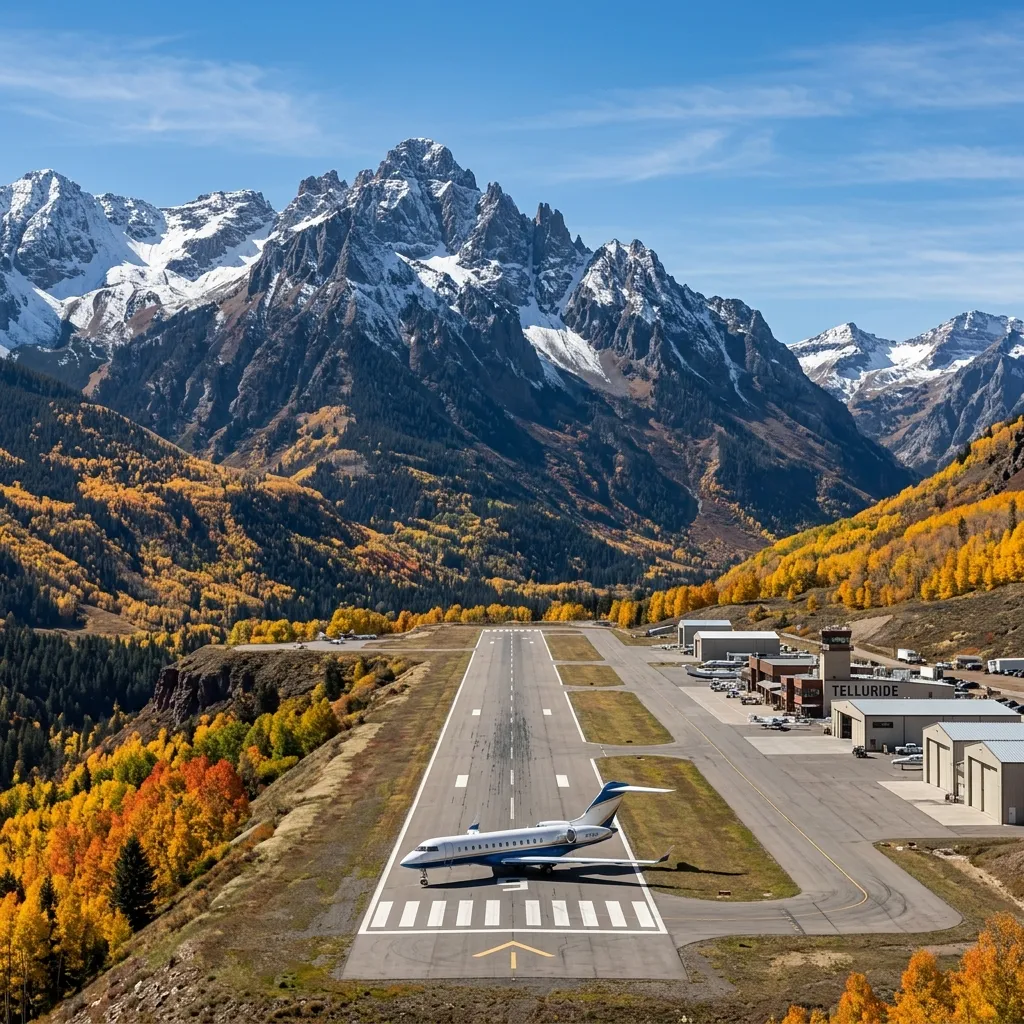
Telluride Regional Airport (KTEX) sits at 9,070 feet above sea level on a mesa top in the San Juan Mountains of southwestern Colorado. It is the highest commercial airport in the United States and one of the most operationally demanding destinations in business aviation. The single runway (09/27) measures 7,111 feet long, which sounds adequate until you factor in density altitude. On a standard summer day at 75°F, the density altitude exceeds 11,500 feet, effectively reducing available runway to the equivalent of approximately 4,500 feet at sea level.

The airport has no instrument approach with vertical guidance. The GPS approach (RNAV 09) has high minimums due to terrain, and circling approaches are prohibited at night. This means Telluride is a VFR-only destination in poor weather, and instrument-rated arrivals still require adequate ceiling and visibility to complete the visual segment. During winter storms, the airport closes entirely, sometimes for days.

Which Aircraft Can Actually Get In

The altitude and runway length impose hard limits on aircraft type. Not every business jet in the charter market can operate into Telluride safely, and some that technically can will do so with significant payload restrictions.

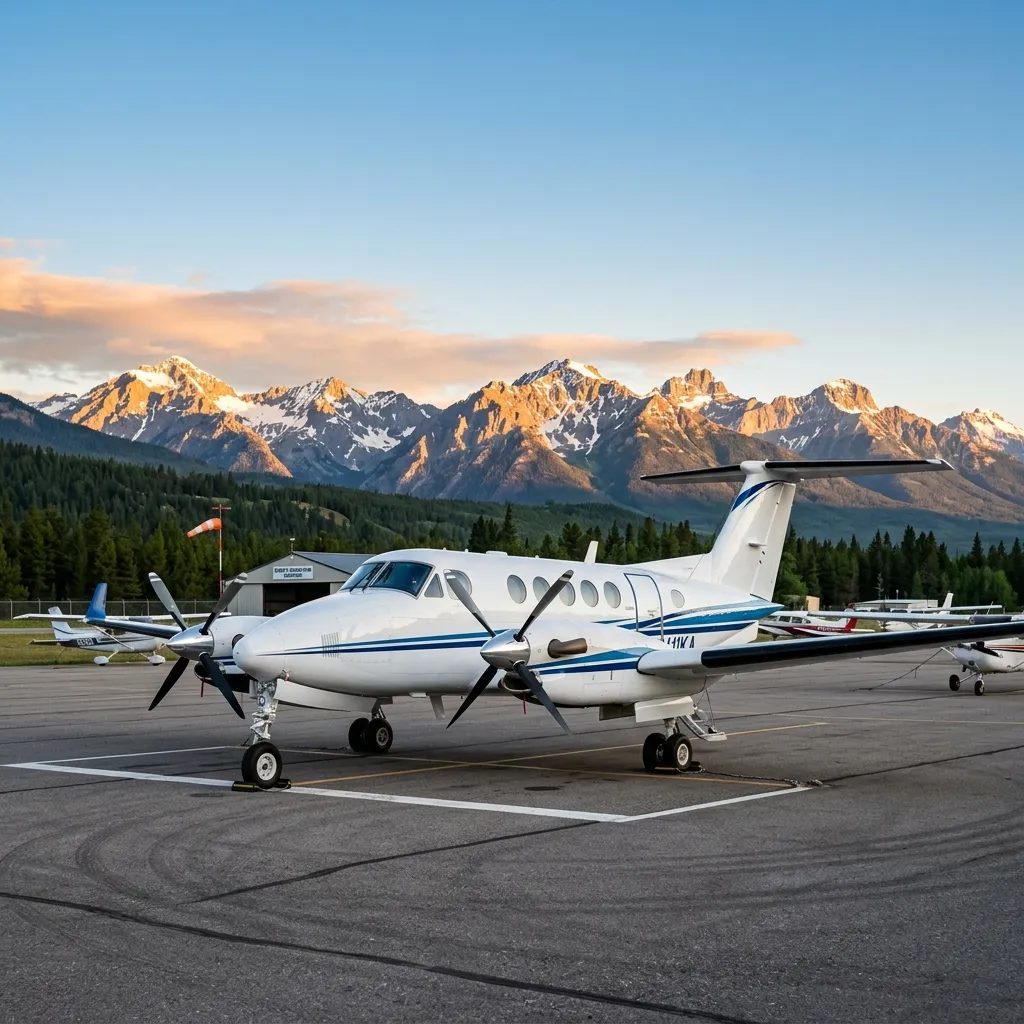
The King Air 350 and Pilatus PC-12 are the preferred aircraft for Telluride operations. Both are designed for high-altitude, short-field environments. Their turboprop engines maintain power density at altitude better than turbofans, and their lower approach speeds provide greater safety margins on the mesa-top runway. Light jets like the CJ3 and CJ4 can operate in but require experienced mountain-flying crews and are often weight-restricted to 4-6 passengers instead of their full 8-9 seat capacity.

Seasonal Considerations and Weather Patterns

Telluride's aviation weather follows two distinct patterns that charter passengers must understand when planning travel:

Winter (December through March)

Ski season is the peak demand period. The airport receives significant snowfall, and runway clearing operations can delay departures by 2-4 hours after overnight storms. Morning fog in the box canyon below the mesa occasionally reduces visibility below VFR minimums until 10-11 AM. The best departure windows are typically late morning through early afternoon. Afternoon mountain wave turbulence can make approaches uncomfortable and occasionally dangerous after 2-3 PM.

Summer (June through September)

Summer operations face a different challenge: density altitude. Afternoon temperatures routinely reach 75-85°F at the airport, pushing density altitude above 12,000 feet. Most operators restrict departures to before 11 AM during summer months to ensure adequate performance margins. The afternoon thunderstorm cycle in the San Juan Mountains produces reliable convective weather from 1 PM to 6 PM daily, often closing the airport to VFR traffic.

Experienced Telluride operators build weather contingencies into every booking. A 48-hour trip to Telluride should be planned with the understanding that departure could shift by 4-6 hours in either direction due to weather. Passengers with inflexible schedules should consider Montrose as the arrival airport with ground transportation to Telluride.

Need a Charter Quote?

Contact our team for a personalized quote.

Get a Quote

The Montrose Alternative

Montrose Regional Airport (MTJ) sits 65 miles north of Telluride at 5,759 feet elevation with a 10,000-foot runway and full IFR capabilities. Every business jet in the charter fleet can operate into Montrose without restriction. The ground transfer from Montrose to Telluride takes approximately 75-90 minutes via Highway 550 through the scenic Uncompahgre Valley.

9,070 ft
Airport Elevation
7,111 ft
Runway Length
TEX
FAA Identifier
6 NM
Distance to Town

Charter operators report that approximately 40% of Telluride-bound private jet passengers actually use Montrose, particularly those flying in heavy or ultra-long-range aircraft that cannot physically operate at TEX. The FBO at Montrose (West Star Aviation) arranges ground transportation and can have a vehicle waiting on the ramp when you arrive. During ski season, helicopter transfers from Montrose to Telluride are available at approximately $2,500-$3,500 per flight, cutting the transfer to 20 minutes.

FBO Services and Ground Access

Telluride Regional Airport has one FBO operation. Services are basic compared to major metropolitan airports: fuel (Jet-A), aircraft parking, and ground handling. There is no hangar space available for transient aircraft, meaning jets sit on the open ramp in all weather conditions. During winter, aircraft may require de-icing before departure, which adds 30-45 minutes and $1,500-$3,000 to the turnaround.

Ground transportation from the airport to Telluride town center takes approximately 10-15 minutes. The Mountain Village ski resort area is 15-20 minutes from the airport. Car services should be arranged in advance, particularly during holiday periods when the region's limited transportation infrastructure operates at capacity. The free Galloping Goose shuttle connects the airport to town but runs on a limited schedule.

  • No customs/immigration facility (international arrivals must clear elsewhere first)
  • No overnight crew accommodations at the airport (hotels in town only)
  • Ramp parking fees: $150-$300 per night depending on aircraft size
  • Fuel availability: Jet-A only, no avgas for piston aircraft

Pricing: What a Telluride Charter Actually Costs

The cost premium for flying directly into Telluride versus Montrose reflects the operational complexity and aircraft limitations:

The key cost driver for direct Telluride service is the limited aircraft selection. Turboprop charter rates are lower per hour than jet rates, but the restricted type pool means fewer competitive options. During peak ski weeks (Christmas, New Year, President's Day), Telluride charter rates spike 30-50% above baseline due to extremely limited aircraft availability in the Mountain West.

Brian Galvan

Written By

Brian Galvan

Founder, The Jet Finder · Private Aviation Operations & Technology

Former Director of Technology at FlyUSA (Inc. 5000 fastest-growing private jet company). Decade of hands-on experience across Part 135 operations, charter sales, fleet management, and aviation data systems.

LinkedInRead Full Profile →
Common Questions

Frequently Asked Questions


7 questions about flying private to Telluride

No. The G650's approach speed, landing distance requirements, and weight exceed what is operationally safe at TEX's 9,070-foot elevation with a 7,111-foot runway. Large-cabin jets (Challenger 350 and above) should use Montrose Regional Airport (MTJ), which has a 10,000-foot runway at 5,759 feet elevation. The 75-90 minute drive from Montrose to Telluride is the standard solution for heavy jet passengers.

The airport is technically open year-round, but operational access is weather-dependent. Winter storms can close the airport for 1-3 days at a time. Summer afternoon thunderstorms close it daily from approximately 1 PM to 6 PM. The most reliable operating windows are December through March mornings (post-snow clearing) and June through September mornings (before afternoon convective weather develops).

Experienced operators build weather contingency into Telluride bookings. Options include holding at the airport until conditions improve (typically a few hours), diverting to Montrose with ground transportation back to Telluride, or extending the stay by one day. Operators do not charge repositioning penalties for weather delays, though crew overnight costs and additional fuel may apply. Charter brokers familiar with mountain operations will set expectations during booking.

Two to three weeks minimum for Christmas and New Year's periods. The limited number of aircraft types capable of operating at TEX, combined with peak demand from Aspen, Vail, and Jackson Hole simultaneously, creates genuine scarcity. King Air 350s and PC-12s based in the Mountain West are booked weeks ahead during holiday periods. Off-peak winter weekdays require 5-7 days of lead time.

Yes. Several operators offer helicopter transfers between Montrose Regional Airport and Telluride Mountain Village or town center. The flight takes approximately 20 minutes and costs $2,500-$3,500 depending on helicopter type and passenger count. This option is popular with passengers arriving in large-cabin jets who want to avoid the 75-90 minute drive. Reservations should be made at least 48 hours in advance.

The King Air 350 is the most frequently chartered aircraft for direct Telluride access. Its turboprop engines perform well at altitude, the 4,800-foot balanced field length provides comfortable margins on TEX's runway, and it seats 8-9 passengers in a pressurized cabin. The Pilatus PC-12 is the second most common choice, preferred for groups of 6 or fewer. Together, these two types account for approximately 70% of charter operations at TEX.

TEX has a GPS RNAV approach to Runway 09, but the minimums are high (approximately 1,200 feet above ground level for straight-in) due to surrounding terrain. There is no precision ILS approach. In practice, pilots must transition to visual flight for the final approach segment. If cloud ceilings are below approximately 10,200 feet MSL, the airport is effectively closed for arrivals. This is why Montrose (with standard ILS approaches) serves as the all-weather alternative.

Continue Reading

Related Articles


Your Next Mission

Ready to Fly?


Whether you need a charter quote or want to explore aircraft options, our team is here.

Contact Us