Gustaf III Airport: The Most Demanding Runway in Private Aviation
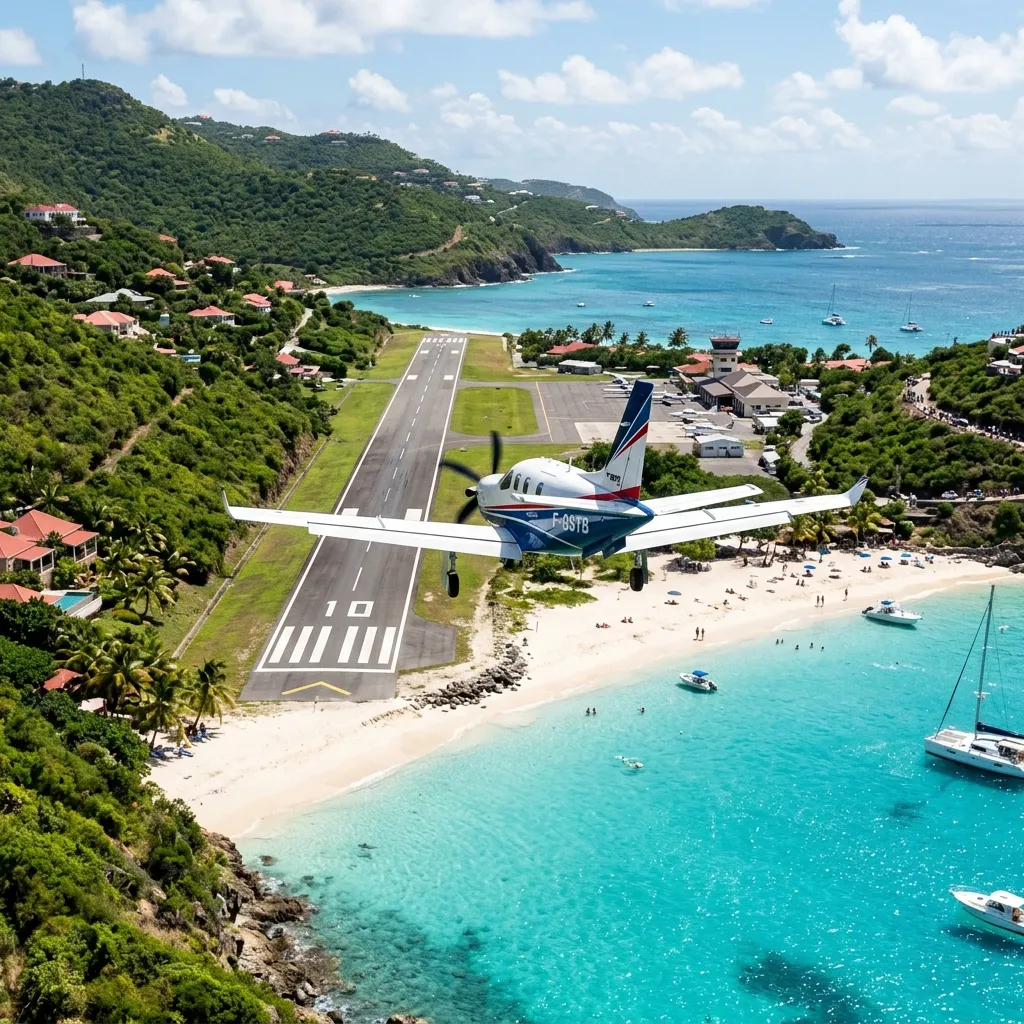
Gustaf III Airport (SBH) in St. Barthélemy has a single runway measuring 2,133 feet. That is 1,457 feet shorter than the minimum required for most light jets. The runway sits at 49 feet elevation, bracketed by a steep hilltop on one end and St. Jean Beach on the other. The approach over the hill, designated as Col de la Tourmente, requires a descent gradient that no standard instrument approach can accommodate. Every landing at SBH is visual, and every pilot who operates there must hold a special qualification issued by the French civil aviation authority (DGAC).
This is not a difficult airport in the way that Aspen or Telluride is difficult. Those airports have challenging terrain but adequate runway length. St. Barths has inadequate runway length by conventional standards, and the approach geometry makes it physically impossible for most business jets to operate there. The result is a filtering mechanism: only specific aircraft types, flown by specifically qualified crews, can reach the island directly.
Which Aircraft Can Land at SBH
The aircraft types approved for Gustaf III are limited by both runway performance and French regulatory restrictions. The DGAC maintains an approved aircraft list. In practice, the following types operate regularly into SBH:
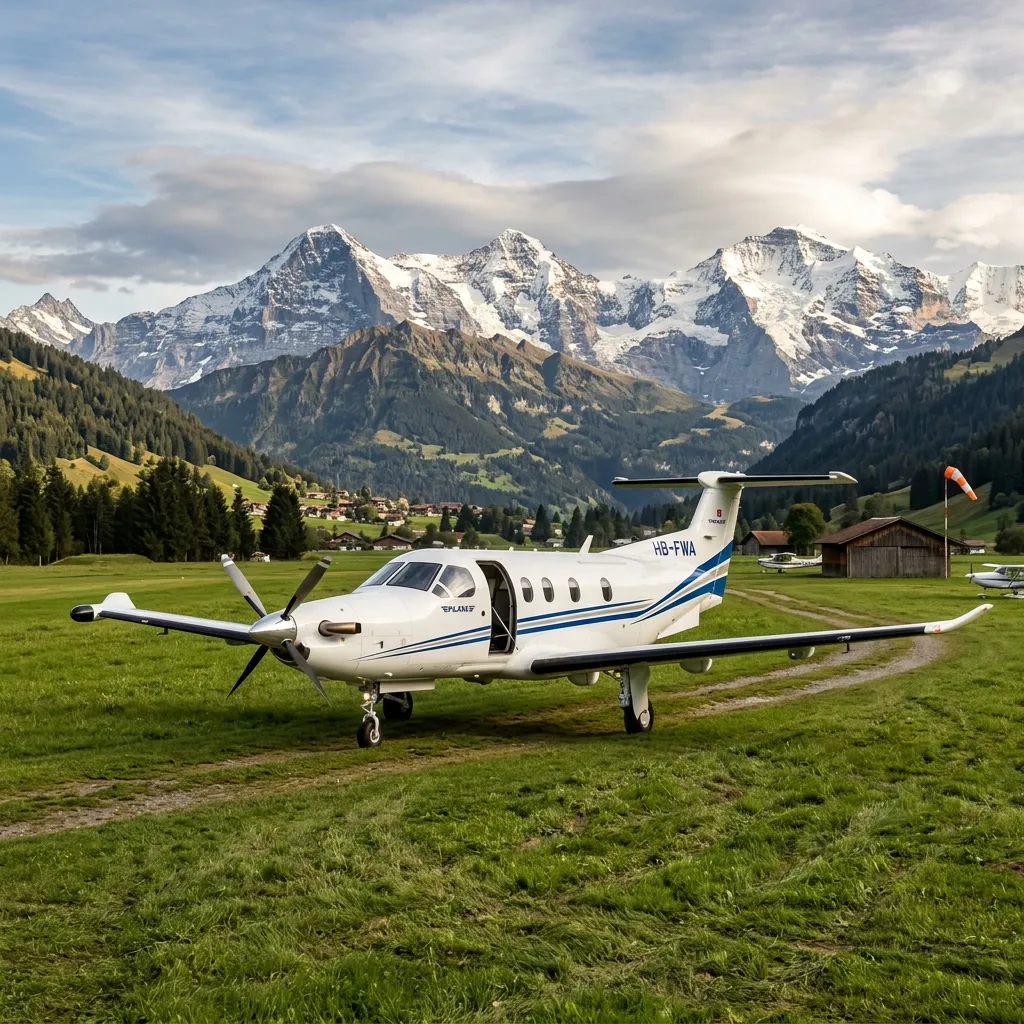
- Pilatus PC-12: The workhorse of St. Barths charter. Seats 6-9, 1,845 NM range.
- King Air 200: Shorter landing distance than the 350. Seats 7.
- De Havilland DHC-6 Twin Otter: Used by Tradewind Aviation for scheduled and charter service.
- Britten-Norman Islander: 9-seat prop used for inter-island hops.
- Cessna Caravan: Single-engine turboprop, approved with specific weight restrictions.
The Pilatus PC-12 is the most common private charter aircraft into SBH. Its 2,100-foot landing distance at light weights, combined with turbine reliability and a cabin large enough for a family of six with luggage, makes it the default. King Air 200s can operate there but are less common because fewer operators in the Caribbean hold the SBH qualification.
No midsize or large-cabin jet can land at Gustaf III. Not a Phenom 300. Not a Citation CJ3. Not a Learjet. The runway physically cannot accommodate them. Clients who fly jets to St. Barths connect through Sint Maarten (SXM), San Juan (SJU), or Antigua (ANU) and transfer to a turboprop or helicopter for the final leg.
The Two-Leg Strategy: Jet to SXM, Turboprop to SBH
Most private jet clients reach St. Barths via Princess Juliana International Airport (SXM) in Sint Maarten. SXM has an 7,546-foot runway that accommodates every business jet in production. The flight from SXM to SBH takes 10 minutes. Charter operators and helicopter companies position aircraft at SXM specifically to handle the St. Barths transfer market.
Connection Options from SXM to SBH
The charter turboprop is the preferred option for groups. A PC-12 from SXM to SBH at $3,000 splits to $500 per person for a party of six. Helicopter transfers offer the shortest transit time but seat fewer passengers and cannot carry oversized luggage. Tradewind Aviation operates scheduled turboprop service between SXM and SBH multiple times daily during high season.
Direct Charter Pricing from Major U.S. Cities
Direct turboprop charter from the mainland United States to SBH is possible but impractical for most origins. A PC-12's 1,845 NM range reaches St. Barths from South Florida with a fuel stop, but the 5-6 hour transit time at 280 knots makes it unappealing compared to a 2.5-hour jet flight to SXM followed by a 10-minute transfer. The economics reflect this:
San Juan (SJU) is the most cost-effective gateway. The 170 NM flight to SBH takes under an hour on a turboprop, and SJU handles customs for U.S. citizens re-entering from a foreign destination. Clients originating from the West Coast or Midwest typically fly jet to SJU or SXM and connect.