Why Runway Length Determines Your Airport Options
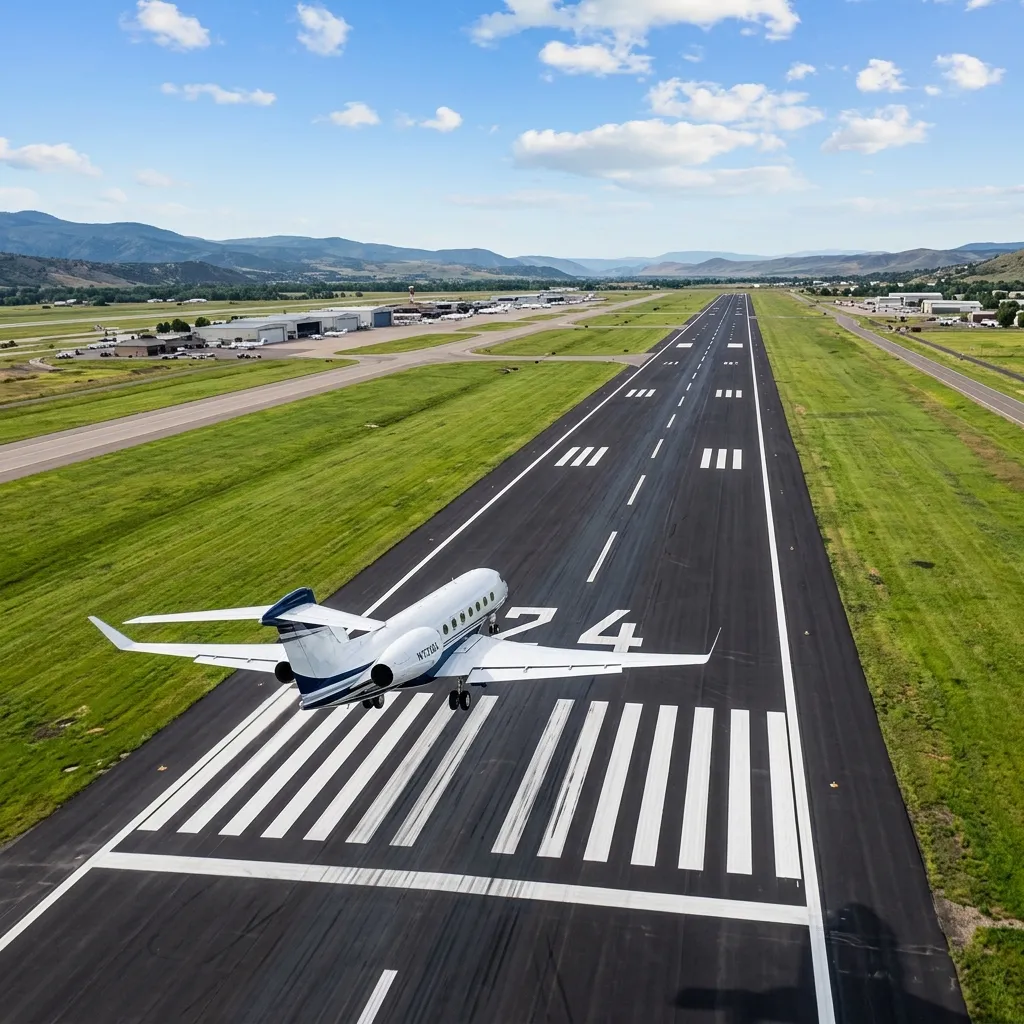
The United States has approximately 19,600 airports, heliports, and landing facilities. Only 5,090 have paved runways of 4,000 feet or longer. Only 1,350 have runways exceeding 6,000 feet. The aircraft you charter directly determines how many of those 19,600 facilities you can actually use. A Phenom 300 with a 3,209-foot sea-level takeoff distance reaches airports that a Gulfstream G650 with a 5,858-foot requirement cannot. Choosing the wrong jet for a short-runway destination means either a different aircraft or a different airport.
Published takeoff distances represent sea-level, standard temperature (59°F/15°C), maximum takeoff weight performance. Real-world conditions degrade these numbers. Every 1,000 feet of airport elevation adds approximately 7 percent to the required takeoff distance. Every 10°F above standard temperature adds another 3 to 5 percent. A jet that needs 4,000 feet at sea level on a standard day may need 5,200 feet at a 5,000-foot elevation airport on a 90°F afternoon.
Takeoff Distance by Jet Category
The numbers are stark. A very light jet accesses 8,200 U.S. airports. An ultra-long-range jet accesses 1,350. That reduction eliminates thousands of small municipal airports, mountain strips, and community fields that VLJs and light jets use routinely. For charter clients traveling to remote destinations, shorter-runway-capable aircraft are not downgrades. They are the only option.
Density Altitude: The Number That Changes Everything
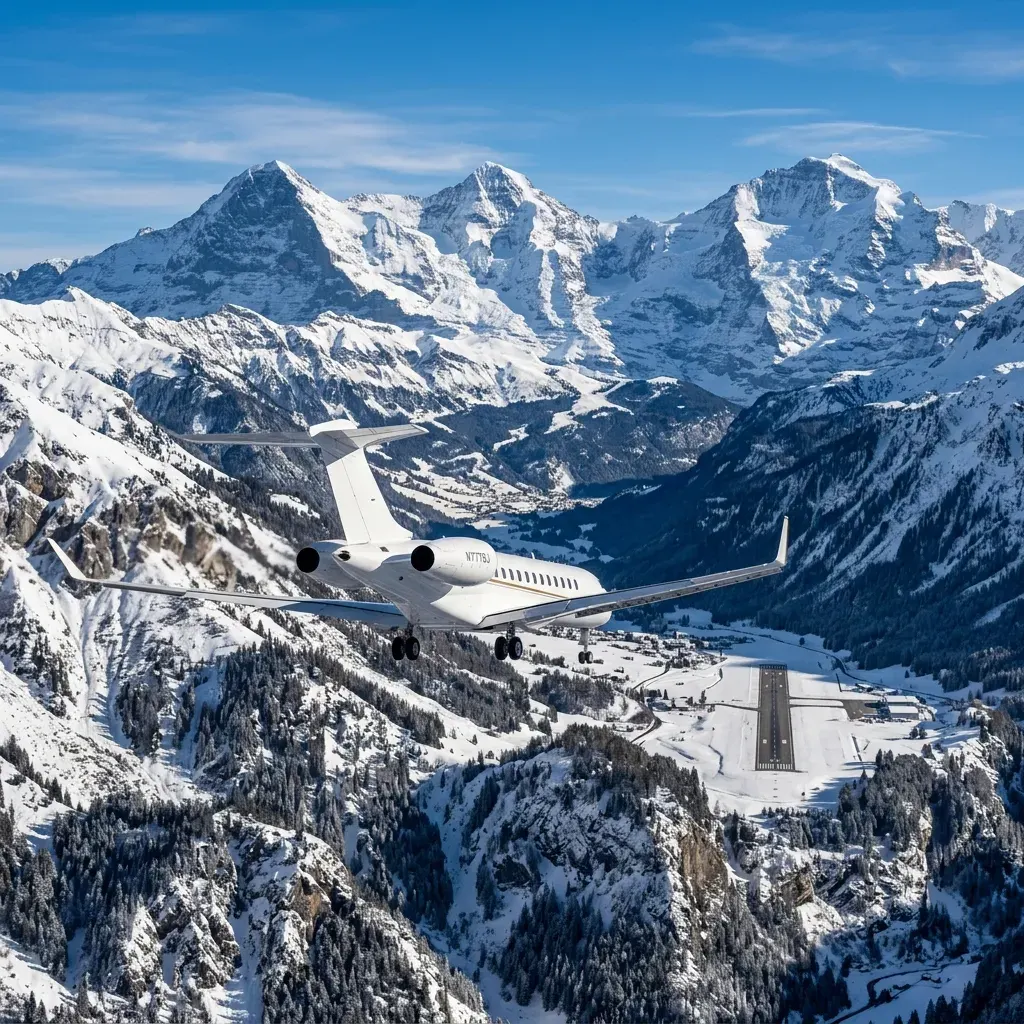
Density altitude is the pressure altitude corrected for non-standard temperature. It represents the altitude the aircraft 'thinks' it is at, regardless of the actual elevation. At Aspen (ASE), elevation 7,820 feet, on a 75°F summer afternoon, density altitude can exceed 10,500 feet. Every aircraft performs as if it were taking off from a 10,500-foot elevation airport, not a 7,820-foot one.
Real-World Example: Aspen-Pitkin County (ASE)
Aspen's runway measures 8,006 feet. On a standard-temperature day, a Gulfstream G550 (5,910-foot sea-level takeoff distance) needs approximately 7,800 feet at Aspen's elevation. That leaves 206 feet of margin. On a hot July afternoon at 85°F, the same aircraft needs over 8,400 feet, exceeding the available runway. The G550 cannot depart Aspen at maximum weight on hot days. The operator either reduces fuel (limiting range), reduces passengers, or waits until evening when temperatures drop 20 degrees.
Telluride Regional Airport at 9,070 feet is the highest commercial airport in North America. Its 7,111-foot runway eliminates every heavy and ultra-long-range jet from operations on anything warmer than a cool morning. Only light jets and turboprops operate there reliably year-round.
Need a Charter Quote?
Contact our team for a personalized quote.
Get a Quote →Short-Runway Champions: Aircraft That Open Access
Several aircraft are designed specifically for short-field performance. Their takeoff and landing distances unlock airports that larger jets cannot reach:
Turboprops
- Pilatus PC-12: 2,602-foot takeoff, 1,725-foot landing. Accesses virtually every paved airport in the U.S. Seats 9.
- King Air 350: 3,300-foot takeoff, 2,500-foot landing. The most common turboprop in Part 135 charter. Seats 8-9.
- TBM 960: 2,380-foot takeoff, 2,050-foot landing. Fastest single-engine turboprop at 330 kts. Seats 6.
Light Jets
- Pilatus PC-24: 2,930-foot takeoff. Designed for unimproved and gravel runways. Only business jet certified for unpaved strip operations.
- Phenom 300E: 3,209-foot takeoff. Best-selling light jet in the world. Strong short-field numbers for its speed class.
- HondaJet Elite S: 3,934-foot takeoff. Higher than peers but compensates with 43,000-foot ceiling and 422-knot cruise.
Midsize Jets with Short-Field Capability
- Citation Latitude: 3,580-foot takeoff. Shortest runway requirement of any midsize jet. Single-pilot certified.
- Embraer Praetor 500: 4,222-foot takeoff. Fly-by-wire controls and 3,340 NM range in a short-field-capable package.
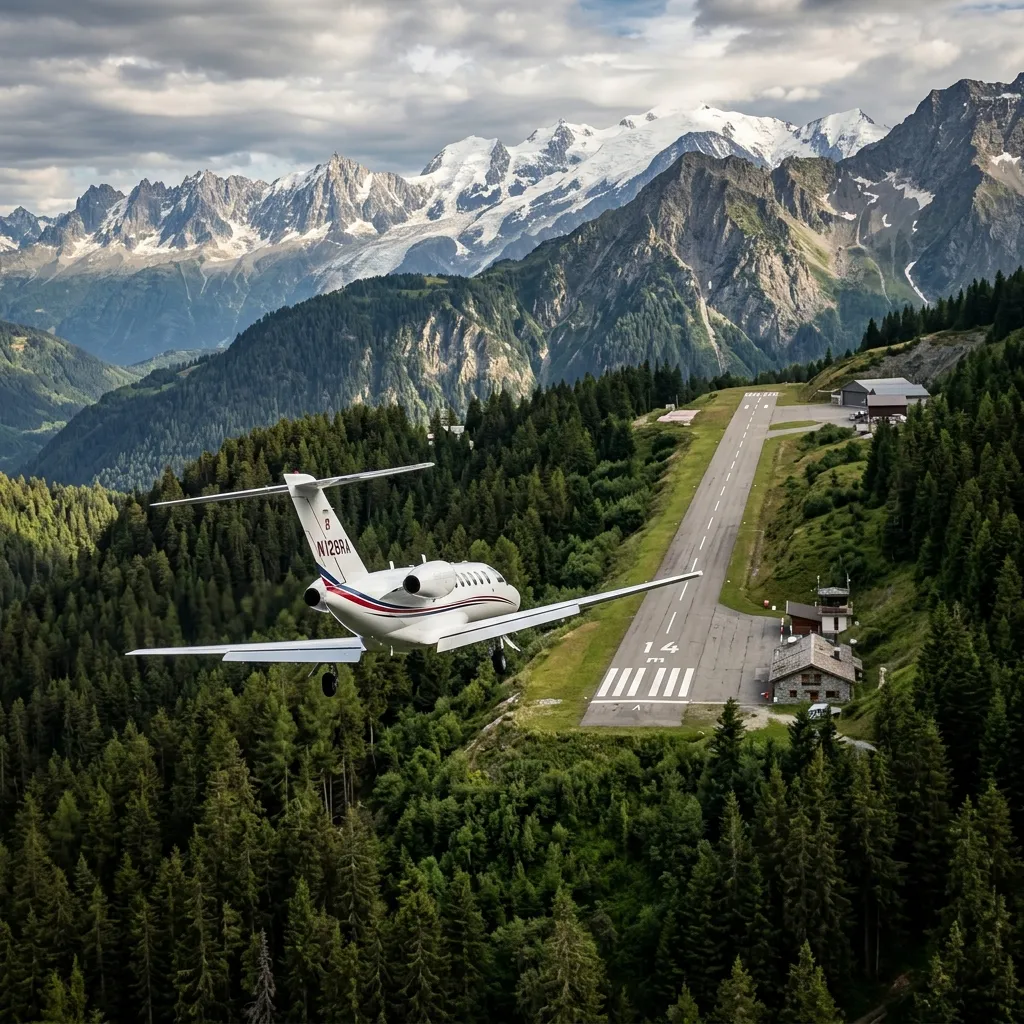
For destinations like Steamboat Springs (HDN, 4,452-foot runway at 6,882 feet elevation), Martha's Vineyard (MVY, 5,504 feet at sea level), or Telluride (TEX, 7,111 feet at 9,070 feet elevation), these aircraft are not alternatives to larger jets. They are the only jets that can reach the destination.
Landing Distance: The Often-Overlooked Number
Charter clients focus on takeoff distance because it determines departure capability. Landing distance matters equally because it determines whether the aircraft can stop safely at the destination. A wet runway extends landing distance by 15 to 40 percent depending on surface conditions. A contaminated runway (standing water, snow, ice) can double the required distance.
The Global 7500 has a shorter landing distance than the Phenom 300E. Reverse thrust on large-cabin jets provides significant braking force that light jets lack. The constraint for heavy jets is always takeoff, not landing. This asymmetry means a G550 can land at airports it cannot depart from at maximum weight, a fact that operators use for one-way flights where the return leg departs from a longer runway.
Practical Implications for Charter Clients
When you call a broker requesting a specific airport, the first question behind the scenes is: does the aircraft fit the runway? Here is how that conversation plays out for common challenging destinations:
- Aspen (ASE): Light jets year-round. Midsize jets with weight restrictions in summer. Heavy jets on cool mornings only. Ultra-long-range jets cannot operate.
- Teterboro (TEB): 7,000-foot runway handles everything. No restrictions. The default New York-area private jet airport.
- Martha's Vineyard (MVY): 5,504-foot runway. Light and midsize jets. Super-midsize jets with reduced fuel. No heavy jets.
- Sun Valley (SUN): 6,559 feet at 5,318 feet elevation. Midsize jets in cool weather. Light jets year-round. No heavy jets in summer.
- Nantucket (ACK): 6,303 feet at sea level. Light and midsize jets. Super-midsize jets with standard loads. Heavy jets with fuel planning.
- Telluride (TEX): 7,111 feet at 9,070 feet elevation. Light jets and turboprops only. No midsize, heavy, or ultra-long-range jets.
The right jet for the mission is the one that fits the runway at the destination, in the weather conditions expected on arrival day, with enough fuel to reach an alternate airport if conditions deteriorate. Runway length is not a specification. It is an access constraint that shapes the entire trip.