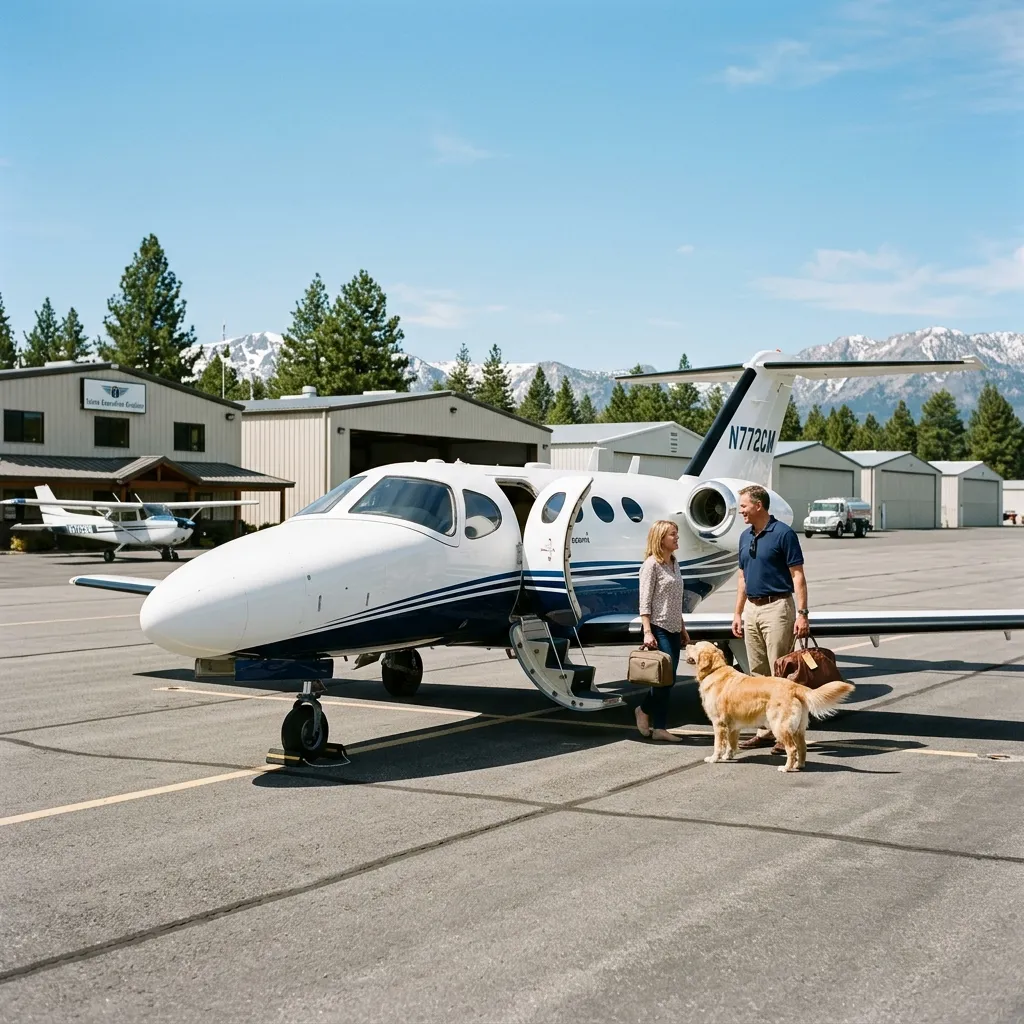
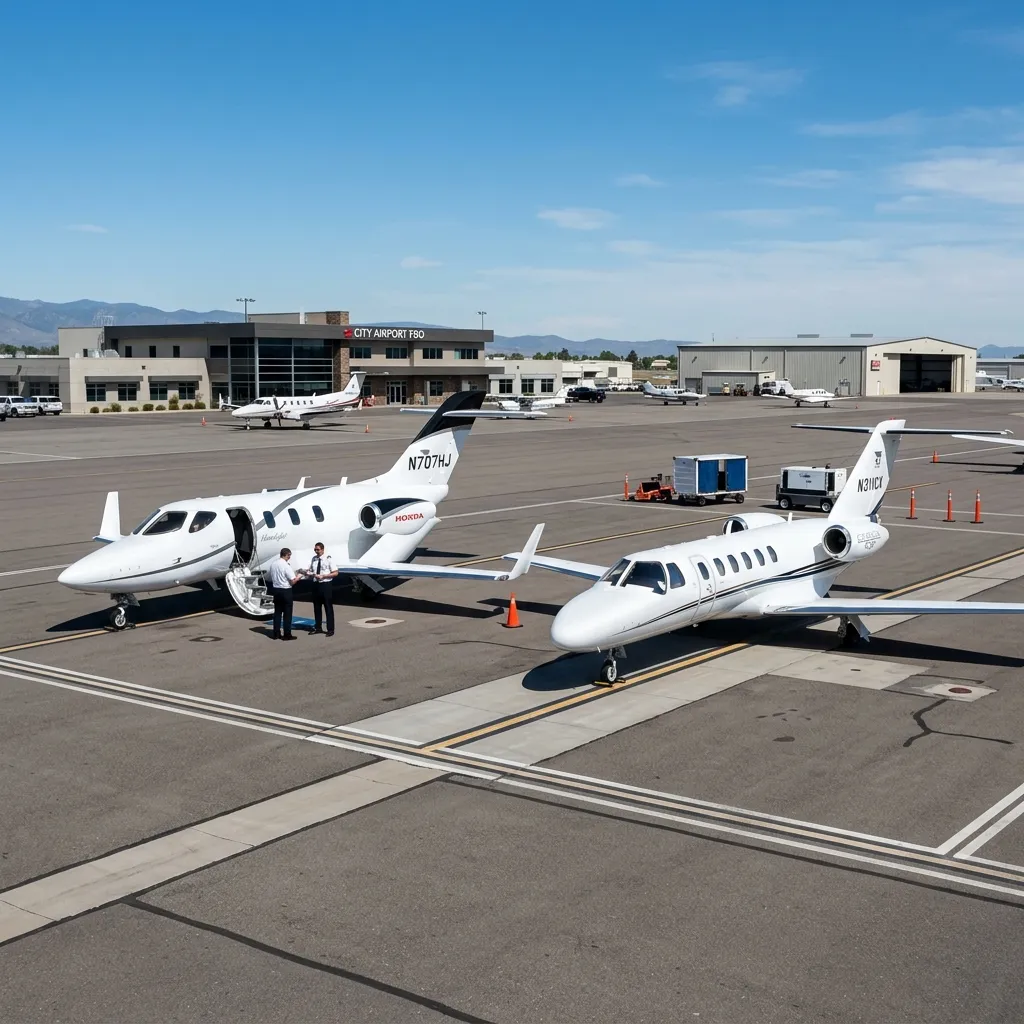
Embraer Phenom 100 very light jet taxiing at a regional airport

The Rise of Very Light Jets: 20 Years of Fleet Data and What Survived

undefined

In This Article

The VLJ Promise: Air Taxis and Personal Jets VLJ Fleet by Model: Who Survived Fleet Growth Trends: 2006 to 2026 The HondaJet Story: Engineering Over Convention What the Fleet Data Says About VLJ Economics Frequently Asked Questions

The VLJ Promise: Air Taxis and Personal Jets

In 2005, industry forecasts predicted 5,000-10,000 very light jets would be delivered by 2020. The Eclipse 500, Cessna Citation Mustang, Embraer Phenom 100, and Adam A700 were positioned to create an entirely new market segment: personal jets priced under $3 million that would operate from short runways, fly single-pilot, and serve as air taxis connecting thousands of small airports. DayJet, the air-taxi startup that ordered 239 Eclipse 500s, was the most visible bet on this vision.

Twenty years later, approximately 1,200 VLJs are registered in the FAA database. DayJet ceased operations in 2008. Eclipse Aviation went through bankruptcy, reorganized as Eclipse Aerospace, and was acquired by One Aviation, which itself filed Chapter 7 in 2020. The Adam A700 never reached production. The air-taxi model failed. But the VLJ category survived in a different form: as personal owner-flown aircraft and entry-level charter jets. The HondaJet Elite and Phenom 100EV carry the segment forward.

VLJ Fleet by Model: Who Survived

The Cirrus Vision Jet technically occupies the single-engine jet category rather than the traditional VLJ twin-engine class, but its mission profile overlaps significantly. With 400+ deliveries, the Vision Jet has become the best-selling jet in its price range. Honda Aircraft leads in twin-engine VLJ deliveries, producing 50-60 HondaJet Elite S units annually. Embraer's Phenom 100EV maintains a smaller but steady production rate of 25-30 per year.

The Eclipse 500 fleet is the cautionary tale of the VLJ era. Approximately 260 Eclipse 500s were delivered before the company collapsed. The aircraft were sold at $1.5 million with a target of producing 500 per year; Eclipse never exceeded 100. The aircraft that survived are now maintained by a shrinking support network. Parts availability is a persistent concern. Pre-owned Eclipse 500s trade at $800,000-$1.2 million, making them the cheapest jet on the market but with corresponding support risk.

The VLJ fleet has grown steadily but far below 2005 predictions. Current annual deliveries of approximately 120 units represent less than 20% of the 600-800 units per year that analysts projected. The market is real but smaller than anticipated. The typical VLJ buyer is an owner-pilot transitioning from a turboprop or piston twin, not an air-taxi operator. Corporate flight departments rarely operate VLJs because the cabin (4-6 passengers, limited baggage) is too restrictive for most business missions.

Geographically, VLJs concentrate in the Sun Belt. Florida, Texas, California, and Arizona account for approximately 45% of the U.S. VLJ fleet. The Southeast and Southwest offer favorable weather, extensive short-runway airports, and a pilot population comfortable with single-pilot jet operations. The Northeast and Pacific Northwest, with more demanding weather, see lower VLJ adoption relative to turboprops and light jets.

Need a Charter Quote?

Contact our team for a personalized quote.

Get a Quote

The HondaJet Story: Engineering Over Convention

Honda Aircraft delivered its first HondaJet in December 2015 after 20 years of development. The aircraft's over-the-wing engine mount (OTWEM) configuration was unconventional and initially met with skepticism. The design reduces cabin noise, eliminates aft-fuselage structural reinforcement typically needed for tail-mounted engines, increases interior volume, and improves natural laminar flow over the wing. The result: the HondaJet cruises faster (422 ktas), flies farther (1,437 NM), and burns less fuel (94 GPH per engine) than any VLJ competitor.

The HondaJet Elite S (current production model) lists at approximately $5.4 million, making it the most expensive VLJ on the market but also the most capable. Honda has delivered over 250 aircraft worldwide and consistently leads VLJ deliveries by unit volume. The aircraft has found particular success with owner-pilots, medical transport operators, and small charter companies serving short-haul routes. Honda's service network has expanded to 15+ service centers globally, addressing early concerns about maintenance support.

What the Fleet Data Says About VLJ Economics

VLJ operating costs run $1,500-$2,200 per flight hour for owner-operators (fuel, maintenance, insurance, crew). Charter rates range from $2,500-$3,800 per flight hour. Annual fixed costs (hangar, insurance, management, training) run $200,000-$350,000. For an owner flying 200 hours per year, total annual cost is approximately $500,000-$700,000, or $2,500-$3,500 per flight hour all-in. This is 40-50% less than a light jet like the Citation CJ3 ($4,000-$5,500 per hour all-in).

The VLJ's economic sweet spot is 150-300 annual hours on routes under 800 NM. Trips like Dallas to Houston (240 NM, 50 minutes), Atlanta to Nashville (215 NM, 45 minutes), or Los Angeles to San Francisco (340 NM, 70 minutes) demonstrate the category's value proposition. These are routes too short to justify a midsize jet's hourly cost but too time-consuming to drive. The VLJ saves 3-5 hours per trip compared to commercial or driving, at a cost of $3,000-$5,000 per flight.

1,200+
U.S. VLJ Fleet
4 Models
Still Active
HondaJet
Current Leader
$3-$6M
New Price Range
Brian Galvan

Written By

Brian Galvan

Founder, The Jet Finder ยท Private Aviation Operations & Technology

Former Director of Technology at FlyUSA (Inc. 5000 fastest-growing private jet company). Decade of hands-on experience across Part 135 operations, charter sales, fleet management, and aviation data systems.

LinkedInRead Full Profile →
Common Questions

Frequently Asked Questions


8 questions about chartering this aircraft

The air-taxi model required per-seat economics that VLJs could not achieve. DayJet needed to fill 3-4 seats per flight at $1-$3 per statute mile to break even. Actual demand filled 1.5-2 seats per flight. The VLJ's 4-seat cabin could not generate enough revenue per departure to cover operating costs, crew salaries, and the financing costs of a fleet. Airlines serve short-haul routes with 100-180 seat aircraft at $0.10-$0.15 per seat mile; VLJs operated at $0.80-$1.50 per seat mile. The math never worked at scale.

The HondaJet Elite retains the highest percentage of its original purchase price: 2018-2020 models trade at 65-75% of their original list price, or $3.0-$3.8 million. The Phenom 100E holds approximately 55-65% (2018-2020 models at $2.3-$3.0 million). The Citation Mustang, discontinued in 2017, has stabilized at $1.5-$2.5 million for late-production examples. The Eclipse 500/550 has the worst residual value at approximately 30-40% of its original price, reflecting production cessation and support concerns.

Yes. All certified VLJs (HondaJet, Phenom 100, Citation Mustang, Cirrus Vision Jet) are certificated for flight into known icing conditions (FIKI). De-icing systems vary by model: the HondaJet uses pneumatic de-icing boots on wing leading edges and engine inlet anti-ice. The Phenom 100 uses bleed air anti-ice on the wing leading edges and engine inlets. The Vision Jet uses TKS weeping wing anti-ice. All systems are effective for moderate icing but pilots are trained to exit severe icing conditions promptly, as VLJs have less power and energy reserves than larger jets.

Single-pilot certification means the aircraft is designed and approved for operation by one pilot meeting specific training and currency requirements. Insurance implications are significant: single-pilot VLJ insurance premiums run $25,000-$50,000 annually for experienced pilots (1,000+ total hours, 200+ in type). Insurers often require recurrent simulator training every 6-12 months. For less experienced pilots (under 500 total hours), premiums can double, and some underwriters require a second pilot or mentor pilot for the first 100-200 hours in type.

The Vision Jet is the only single-engine jet in the VLJ class, powered by one Williams FJ33-5A turbofan. Its cruise speed (311 ktas) and range (1,275 NM) are lower than twin-engine VLJs like the HondaJet (422 ktas, 1,437 NM). However, the Vision Jet includes Cirrus' Airframe Parachute System (CAPS), a whole-aircraft ballistic parachute that has saved lives in piston Cirrus aircraft. The CAPS system provides a unique safety margin that partially offsets the single-engine risk. The Vision Jet is the most affordable jet available at $2.8 million list price, targeting piston and turboprop upgrade buyers.

VLJ maintenance intervals follow manufacturer-prescribed inspection programs. The HondaJet uses phase inspections at 200, 400, and 800 flight hours, with costs ranging from $8,000 (200-hour) to $40,000 (800-hour). The Phenom 100 follows a similar phase program at 200/400/800/1,600 hour intervals. Annual inspections (calendar-based) typically cost $15,000-$30,000 depending on aircraft age and condition. Engine programs (Williams International TAP Blue for the FJ33, GE Honda Engine Programs for the HF120) add $150-$250 per engine per hour to operating costs.

Approximately 55-65% of VLJ flights in the U.S. are owner-flown (single-pilot, owner at the controls). The remaining 35-45% are professionally piloted: charter operations, corporate flight departments with dedicated pilots, or owner-flown with a safety pilot. This ratio is dramatically different from the light jet category (CJ3, Phenom 300), where 80-85% of flights have professional crews. The VLJ's single-pilot certification and lower operating cost attract owner-pilots who want to fly themselves, a buyer profile closer to turboprop owners than light jet operators.

No clean-sheet VLJ programs have been publicly announced by major OEMs as of mid-2026. Honda Aircraft is developing an updated HondaJet variant (details limited), and Cirrus continues to iterate on the Vision Jet with the G2+ model. The electric/hybrid aircraft segment (Lilium, Joby) targets urban air mobility rather than the traditional VLJ mission. Textron has not announced a Citation Mustang replacement. The most likely near-term VLJ development is incremental upgrades to existing platforms (avionics, engine efficiency, range extensions) rather than entirely new airframes.

Continue Reading

Related Articles


Your Next Mission

Ready to Fly?


Whether you need a charter quote or want to explore aircraft options, our team is here.

Contact Us