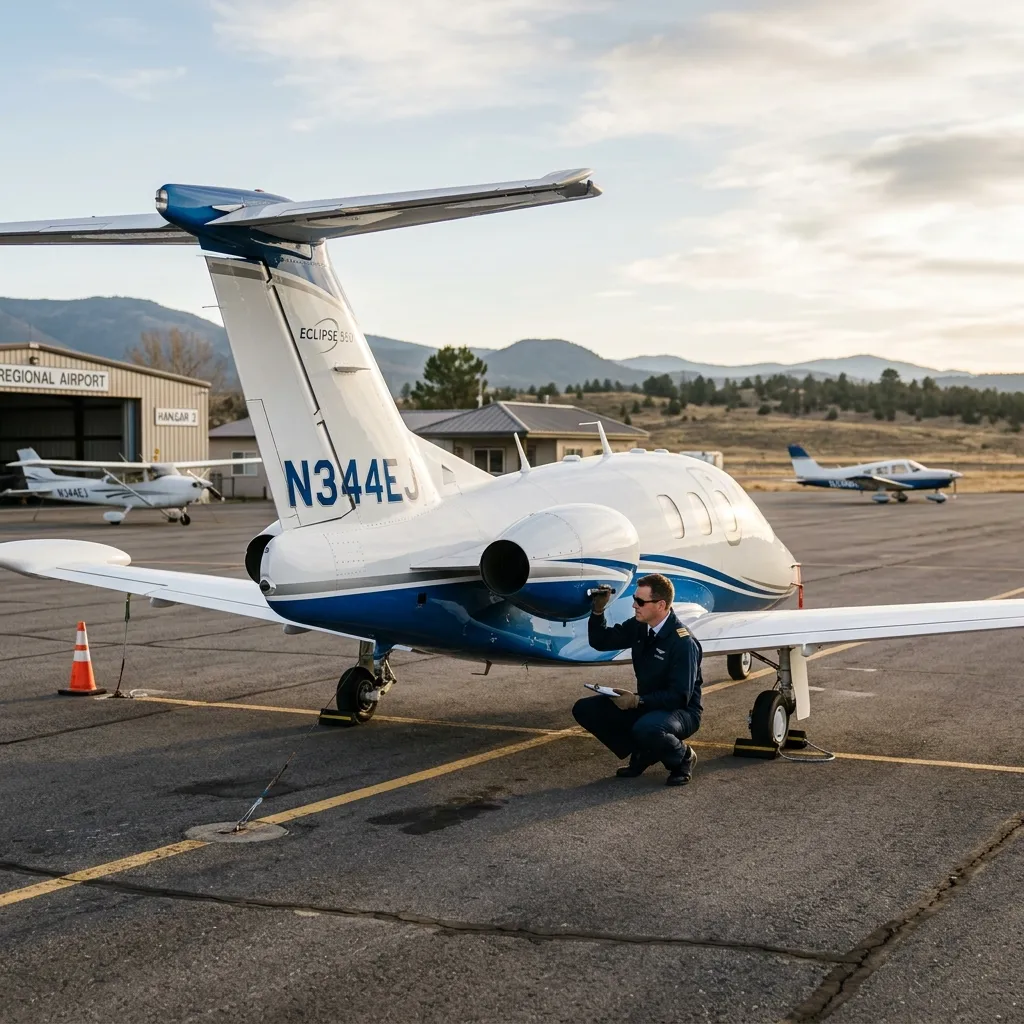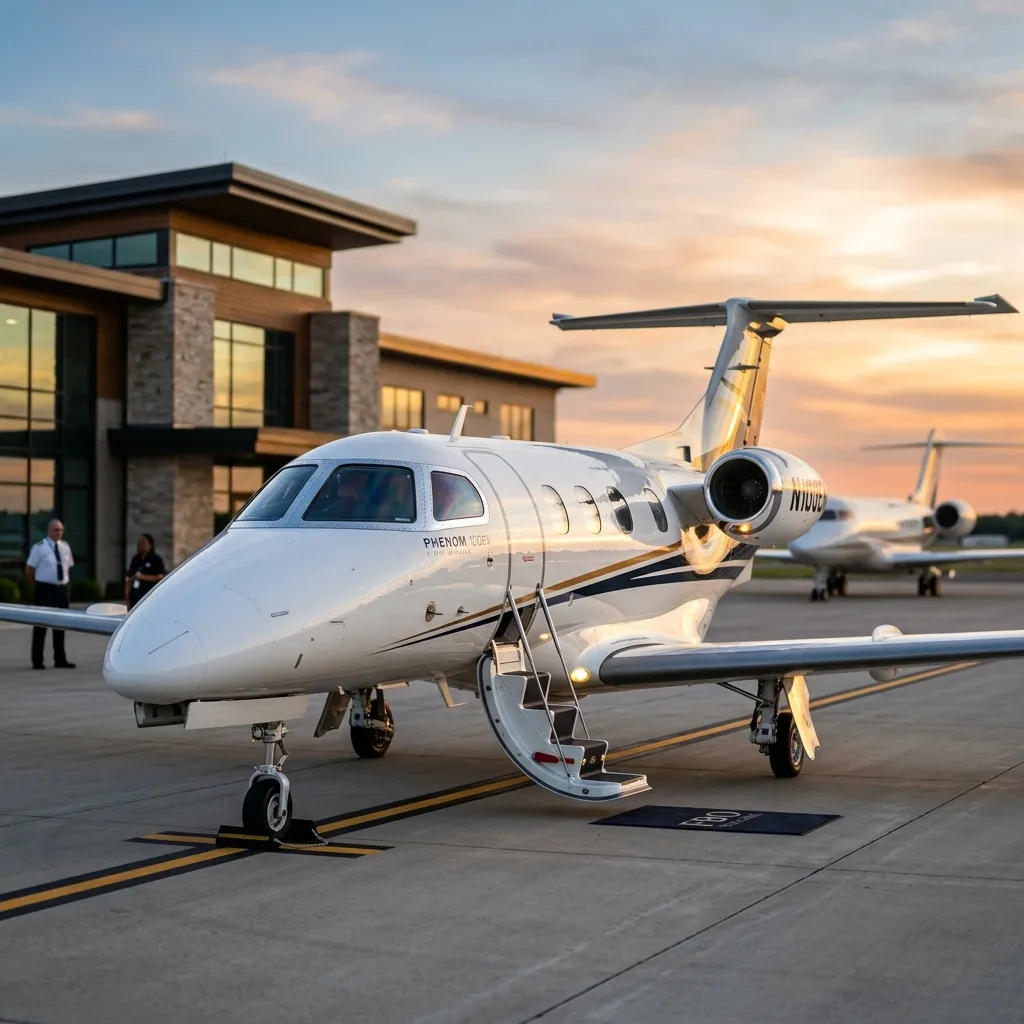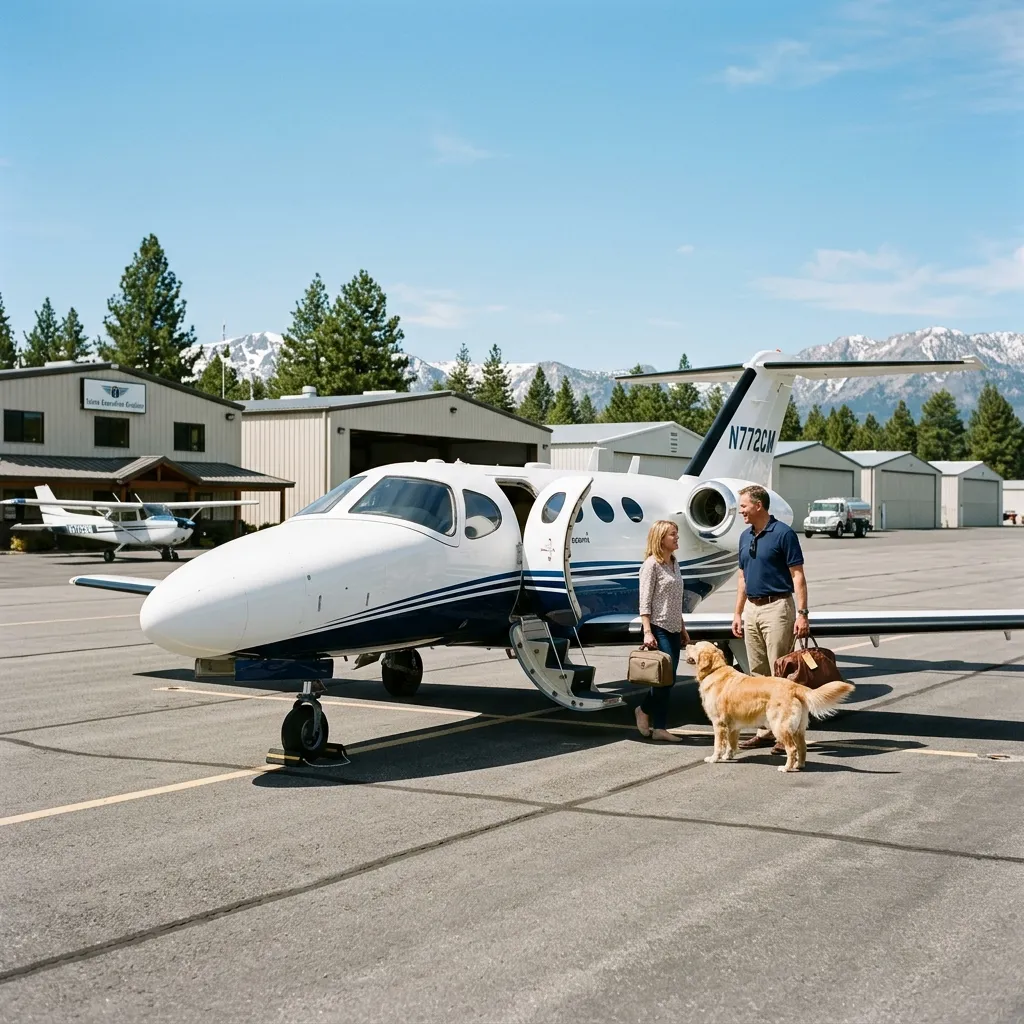
Cessna Citation Mustang parked on an executive ramp at a small general aviation airport

The Citation Mustang: The Jet That Started the Very Light Jet Revolution

Cessna delivered 479 Citation Mustangs between 2006 and 2017, creating a new aircraft category and proving that a $3.3 million jet could make economic sense. The Mustang was not the first VLJ concept (Eclipse announced first), but it was the first production VLJ from a major OEM to reach sustained commercial success.

In This Article

Why the Mustang Mattered Performance Profile: What 1,150 Nautical Miles Gets You The Cabin: Honest About Its Size Owner-Flown Economics: The Numbers That Convinced Buyers Why Cessna Stopped Building It Frequently Asked Questions

Why the Mustang Mattered

Before the Citation Mustang, the cheapest new jet cost approximately $5 million (the Cessna Citation CJ1+). The Mustang launched at $2.97 million in 2005 and delivered for $3.3 million by 2007. That price point opened jet ownership to a buyer who previously could only afford a high-performance turboprop (TBM, Pilatus PC-12) or a pressurized piston twin. The Mustang did not replace turboprops. It created a new market of pilots who wanted pressurized, 300+ knot travel for owner-flown missions under 1,000 nautical miles.

Cessna designed the Mustang as a single-pilot jet from the outset. The cockpit uses the Garmin G1000 avionics suite, the same system used in Cessna's piston and turboprop aircraft, giving transitioning pilots a familiar interface. This was deliberate. Cessna wanted a Citation-badged aircraft that a successful Cessna 206 or Bonanza owner could step into without feeling overwhelmed by an unfamiliar flight deck.

The strategy worked. Approximately 60% of Mustang buyers were first-time jet owners. Many transitioned from King Air 200s, TBM 850s, or Cirrus SR22s. The Mustang gave them jet speed (340 knots max cruise), jet altitude (FL410), and the Citation brand at a price they could justify.

Performance Profile: What 1,150 Nautical Miles Gets You

The Mustang's two Pratt & Whitney Canada PW615F engines produce 1,460 pounds of thrust each. Total thrust: 2,920 pounds. That is modest by jet standards, but adequate for an aircraft with a 8,645-pound maximum takeoff weight. The engines sip fuel at 110 gallons per hour combined at high-speed cruise, making the Mustang one of the most fuel-efficient jets ever built. At $6.50 per gallon, fuel cost runs approximately $715 per flight hour.

The Mustang's useful range covers most regional missions: New York to Miami (1,000 nm), Los Angeles to San Francisco (300 nm), Dallas to Denver (600 nm), Chicago to Teterboro (620 nm). It does not reach coast-to-coast nonstop. New York to Los Angeles requires a fuel stop at approximately the 3-hour mark, typically in Kansas or Oklahoma. For owners whose mission is 500-800 nm segments, the Mustang never runs out of range.

The Cabin: Honest About Its Size

The Mustang's cabin is 4 feet 2 inches wide, 4 feet 6 inches tall, and 9 feet 8 inches long. It seats four passengers in club configuration behind the cockpit, with a small fifth seat available in some configurations. This is not a stretch-your-legs cabin. Adults over 6 feet tall duck slightly when moving through the cabin, and shoulder room is tight for two passengers seated side by side.

Baggage capacity is 57 cubic feet in the aft baggage compartment, which is generous for a VLJ and handles four soft bags plus golf clubs. The forward compartment adds 10 cubic feet for smaller items. For a weekend trip with two passengers, the baggage space is adequate. For four passengers with full-size suitcases, packing discipline is required.

The Mustang's cabin is a two-passenger jet that tolerates four. Two adults in the rear club seats travel comfortably for 2-3 hours. Four adults on a 3-hour flight will want a bigger jet next time. Know your mission before you buy.

Need a Charter Quote?

Contact our team for a personalized quote.

Get a Quote

Owner-Flown Economics: The Numbers That Convinced Buyers

Annual fixed costs for a Mustang in 2026 run approximately $150,000-$180,000, including hangar ($18,000-$36,000 depending on market), insurance ($15,000-$25,000 for an instrument-rated owner-pilot), crew training ($12,000-$15,000 for annual recurrent at FlightSafety or CAE), database subscriptions, and maintenance reserves. Variable costs add approximately $1,100-$1,400 per flight hour (fuel, maintenance, landing fees).

At 200 flight hours per year, total annual cost runs approximately $370,000-$460,000. That translates to $1,850-$2,300 per flight hour, all-in. A charter on a comparable light jet costs $2,200-$3,100 per hour. The breakeven point where ownership becomes cheaper than chartering sits at approximately 150-180 hours annually for an owner-pilot Mustang. Above that, ownership wins on cost and eliminates scheduling friction.

Pre-Owned Market Position

Pre-owned Mustangs trade between $1.6 million and $2.8 million in 2026, depending on total time, avionics upgrades (G1000 NXi versus original G1000), paint and interior condition, and engine time remaining. Low-time examples (under 1,500 hours) with NXi upgrades command the top of the range. High-time airframes (3,000+ hours) with original avionics trade at the bottom. The market is liquid; Mustangs typically sell within 90-120 days of listing.

Why Cessna Stopped Building It

Cessna ended Mustang production in 2017 after 479 deliveries. The decision was not driven by poor sales but by product line strategy. The Citation M2 (launched 2013) overlapped the Mustang's market at a slightly higher price point ($4.7 million) with significantly better performance: 400 kts cruise, 1,300 nm range, and a larger cabin. Cessna could not justify manufacturing two single-pilot entry-level jets simultaneously.

The M2 effectively replaced the Mustang by offering more capability at a price premium the target buyer was willing to pay. First-time jet buyers who would have purchased a Mustang in 2010 purchased M2s in 2015. The Mustang's legacy is not the aircraft itself. It is the market it created: the owner-flown, single-pilot, sub-$5 million jet category that now includes the M2, HondaJet, Phenom 100, and Cirrus Vision Jet.

Brian Galvan

Written By

Brian Galvan

Founder, The Jet Finder ยท Private Aviation Operations & Technology

Former Director of Technology at FlyUSA (Inc. 5000 fastest-growing private jet company). Decade of hands-on experience across Part 135 operations, charter sales, fleet management, and aviation data systems.

LinkedInRead Full Profile →
Common Questions

Frequently Asked Questions


6 questions about the Citation Mustang's design, performance, and market impact

Approximately 350-380 Citation Mustangs remain on the FAA active registry as of 2026. Of the 479 delivered worldwide, some have been exported, a small number have been damaged beyond repair, and others are in storage awaiting sale or maintenance. The U.S. fleet is the largest, followed by Europe (primarily UK, Germany, and France). The Mustang has a loyal owner community and parts support remains strong through Textron Aviation.

No. The Mustang's 1,150 nm NBAA IFR range is approximately half the distance from New York to Los Angeles (2,450 nm). A coast-to-coast flight requires one fuel stop, typically in Kansas, Oklahoma, or Colorado. The fuel stop adds approximately 30-45 minutes (landing, taxi, refuel, taxi, takeoff). Most owner-pilots plan the stop at a familiar FBO along the route and treat it as a built-in break.

The Mustang uses the Garmin G1000 integrated flight deck. Older Mustangs (2006-2013) have the original G1000 hardware. Garmin's G1000 NXi upgrade ($60,000-$80,000 installed) adds faster processors, higher-resolution displays, wireless database updates, and ADS-B In traffic and weather. The NXi upgrade is the single most impactful modification for pre-owned Mustangs and adds approximately $40,000-$60,000 to resale value.

The HondaJet is faster (422 kts vs 340 kts), has longer range (1,437 nm vs 1,150 nm), and offers a larger cabin. However, the HondaJet costs $5.4 million new (no longer available used under $3.5M) versus $1.6-$2.8 million for a pre-owned Mustang. The Mustang's value proposition is cost: approximately 40-50% less acquisition cost and 20-30% lower operating cost per hour. For missions under 800 nm, the speed difference adds only 20-30 minutes.

Owner-pilot hull and liability insurance for a Citation Mustang runs $15,000-$25,000 annually, depending on pilot experience, total jet time, and hull value. Insurers typically require 500+ total flight hours, an instrument rating, and completion of an approved type-specific training program (FlightSafety or CAE) for initial issuance. Annual recurrent training is required to maintain coverage. Pilots with fewer than 100 hours in type may face surcharges or mentor pilot requirements.

The most common maintenance items on Citation Mustangs include landing gear actuator issues (typically appearing at 4,000-6,000 cycles), windshield delamination requiring replacement ($8,000-$12,000 per windshield), and Garmin G1000 display unit failures on pre-NXi aircraft. The PW615F engines are generally reliable but the fuel nozzles require periodic cleaning every 500-800 hours to prevent uneven turbine inlet temperatures. Annual inspection costs (Phase 1-4 inspections on a rotating schedule) run $15,000-$25,000 per event depending on which phase is due.

Continue Reading

Related Articles


Your Next Mission

Ready to Fly?


Whether you need a charter quote or want to explore aircraft options, our team is here.

Contact Us