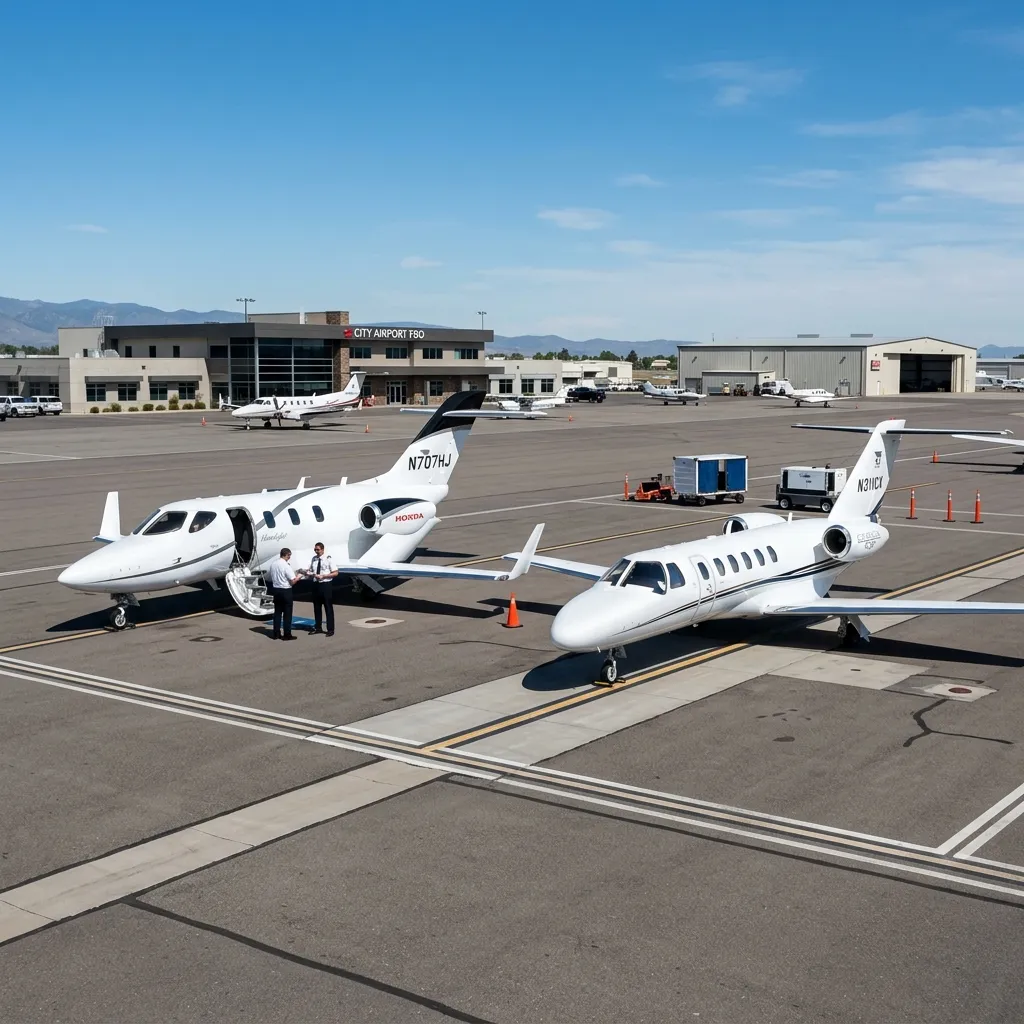
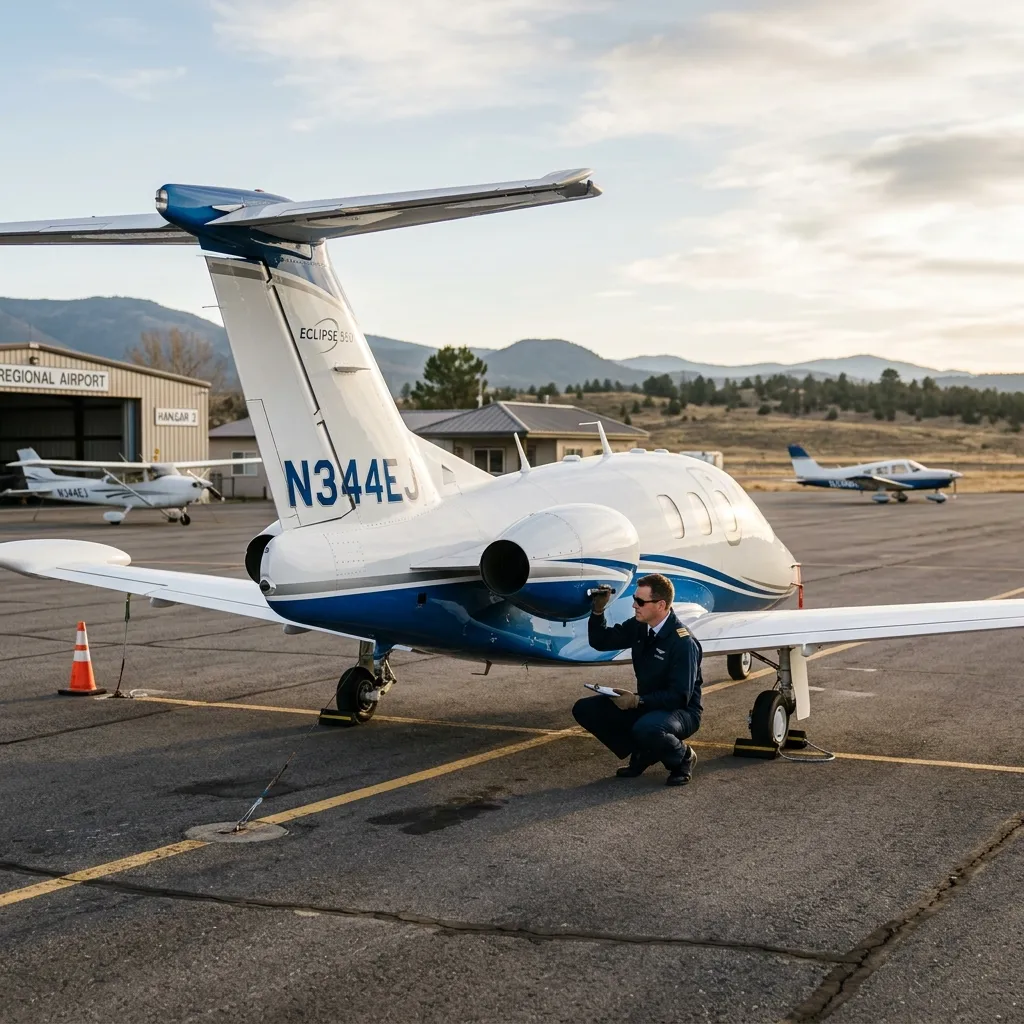
Two Engineering Philosophies in the Same Market
The HondaJet Elite S lists at $5.75 million. The Citation M2 Gen2 lists at $4.75 million. Both seat 5 to 7 passengers. Both carry FAA single-pilot type certificates. Both compete for the same buyer: the owner-pilot or small flight department operating a personal jet for business travel under 1,500 nautical miles. The similarities end at the spec sheet. Honda mounted its GE Honda HF120 engines on pylons above the wing, a configuration that exists on no other production jet. Cessna put the M2's Williams FJ44-1AP-21 engines on the aft fuselage in the conventional configuration used by every other business jet since the 1960s.
That engine placement decision cascades through every performance metric, cabin dimension, and operational characteristic. Understanding which jet fits which mission requires examining both aircraft beyond the brochure numbers.
The HondaJet is faster, climbs faster, and flies higher. The M2 flies farther, burns less fuel, and operates from shorter runways. For an owner-pilot flying 600 to 800 NM legs (New York to Chicago, Atlanta to Dallas), both jets complete the mission comfortably. The HondaJet arrives 8 to 12 minutes sooner on a typical 3-hour flight. The M2 burns 80 to 100 fewer gallons on the same trip, saving $500 to $700 in fuel at current Jet-A prices.
The HondaJet's 43,000-foot ceiling matters on East Coast routes where airline traffic congests FL330 to FL410. Climbing above the traffic to FL430 eliminates ATC delays, reduces turbulence encounters, and puts the aircraft in thinner air where its speed advantage widens.
Cabin: Where the Engine Placement Shows
The HondaJet's over-the-wing engine mounting produces a cabin that is quieter and wider than the M2's. Without engines attached to the aft fuselage, there are no engine-mount carry-through structures invading the cabin cross-section. The Honda cabin measures 5 feet wide and 4 feet 10 inches tall. The M2 cabin measures 4 feet 10 inches wide and 4 feet 9 inches tall. Two inches of additional width translates to noticeably more shoulder room.
The HondaJet's enclosed lavatory is a significant differentiator for trips over 2 hours. The M2's lavatory is a curtained emergency seat, functional but not private. For owner-pilots flying business associates, the enclosed lavatory removes an awkwardness that the M2's configuration creates. Honda engineered 66 cubic feet of combined baggage space (a nose compartment plus an external aft baggage area) versus the M2's 51 cubic feet. Four passengers with standard luggage fit the HondaJet. The M2 requires packing discipline.
Need a Charter Quote?
Contact our team for a personalized quote.
Get a Quote →Avionics and Cockpit
Both aircraft feature glass cockpit suites suitable for single-pilot IFR operations:
HondaJet: Garmin G3000 with Custom Honda Modifications
The HondaJet uses a Garmin G3000 avionics suite with Honda-specific customizations including performance calculation integration, custom engine instrument displays for the HF120 engines, and enhanced situational awareness features. Three 14-inch displays provide flight data, navigation, and engine monitoring. The autothrottle system (standard on the Elite S) reduces single-pilot workload during approach and climb phases. Synthetic vision, radar, and traffic advisory are standard.
Citation M2: Garmin G3000
The M2 Gen2 also uses the Garmin G3000 with three 14-inch displays. Cessna's integration includes the ThrustSense autothrottle system that prevents asymmetric thrust conditions (critical for single-pilot operations in case of engine failure). The M2 Gen2 added surface-watch technology and Telligence voice command functionality that allows the pilot to control radio frequencies and avionics functions by voice. Both cockpits are excellent for the single-pilot mission.
The avionics are essentially equivalent. Both use the same Garmin G3000 platform. The differentiators are in the manufacturer-specific integrations: Honda focuses on performance calculation automation. Cessna focuses on workload reduction through voice commands and enhanced autothrottle protection.
Ownership Economics
The M2 costs $1 million less to acquire and approximately $80,000 less per year to operate. The difference is primarily fuel: the Williams FJ44 engines burn 23 percent less fuel than the HF120 engines at cruise. Over a 10-year ownership period at 200 hours annually, the M2 saves approximately $1.8 million in combined acquisition and operating costs. That gap closes if the owner values the HondaJet's faster speed, higher ceiling, larger cabin, and enclosed lavatory enough to justify the premium.
Residual Value
The HondaJet holds residual value well because production numbers are limited (approximately 230 delivered through 2025) and the aircraft has no direct competitor with over-the-wing engines. The Citation M2 benefits from Cessna's massive service network and the Citation family's 50-year track record, making it easier to sell. Pre-owned M2s trade at 65 to 70 percent of original list price at the 5-year mark. HondaJets trade at 70 to 75 percent, reflecting the smaller supply.
The Verdict: Which Jet for Which Owner
The decision between these jets depends on two questions: how fast do you want to go, and how much do you want to spend getting there?
- Choose the HondaJet Elite S if: speed matters (422 kts saves 8-12 minutes per flight), you need an enclosed lavatory for business passengers, you carry golf bags or bulky luggage regularly (66 cu ft baggage), or you fly East Coast routes where FL430 access avoids traffic delays.
- Choose the Citation M2 Gen2 if: operating cost discipline matters ($80,000/year less), you fly shorter legs under 800 NM where speed differences are negligible, you want the Citation service network (700+ authorized service centers worldwide), or the $1 million acquisition savings funds a hangar or additional operating hours.
- Neither jet is wrong for the VLJ mission. The HondaJet is the faster, roomier, more technologically distinctive aircraft. The M2 is the cheaper, more fuel-efficient, more conventionally supported aircraft. Owner-pilots who fly 150+ hours per year typically favor the M2's lower operating costs. Owners who fly 100 hours or fewer and prioritize speed and cabin experience lean HondaJet.