Small business jet climbing through clouds over suburban landscape

The Complete Guide to Very Light Jets: Smallest, Fastest, Cheapest

Very light jets seat 4-6 passengers, cruise at 340-420 ktas, and charter for

,600-

,800/hr. Complete guide to the VLJ category including HondaJet, Phenom 100, and Citation M2.

In This Article

Defining the Very Light Jet Category The Active VLJ Fleet in 2026 Cabin Reality: What 4-6 Passengers Actually Experience Charter Economics: When VLJs Make Sense Owner-Operator Economics The Failed VLJ Promise and What Survived Frequently Asked Questions

Defining the Very Light Jet Category

Very light jets (VLJs) are single-pilot-certified business jets with maximum takeoff weights below 10,000 pounds. The category emerged in the early 2000s when three manufacturers, Cessna, Embraer, and Eclipse, bet that smaller, cheaper jets could democratize private aviation by bringing entry-level jet travel below the $1 million acquisition threshold. Two decades later, the VLJ category has matured into a defined market segment with 5 active types, approximately 1,200 aircraft in the U.S. fleet, and a charter role focused on short-haul, low-passenger-count missions.

VLJs share common design characteristics: two turbofan engines (typically Williams FJ33 or FJ44 variants, or GE Honda HF120), pressurized cabins seating 4-6 passengers, ranges of 1,100-1,550 nautical miles, and single-pilot type certificates. They bridge the gap between turboprops (which fly at 250-330 ktas) and light jets (which cost $2,200-$3,300/hr to charter). For passengers flying 2-4 people on trips under 1,000 NM, VLJs deliver jet speed and convenience at turboprop-adjacent pricing.

The Active VLJ Fleet in 2026

Five models dominate the current VLJ market. Each serves a slightly different mission profile:

Honda HA-420 HondaJet Elite S2

The HondaJet's over-the-wing engine mounting is the most distinctive design feature in the VLJ category. It reduces cabin noise, eliminates fuselage-mounted engine pylons (freeing interior volume), and provides the largest cabin in the VLJ class. The Elite S2 variant cruises at 422 ktas with a 1,547 NM range, both class-leading figures. Charter rate: $2,200-$2,800/hr. Approximately 240 are in the U.S. fleet.

Embraer Phenom 100EV

Embraer's entry-level jet seats 4 in a club configuration with an enclosed lavatory, a feature rare in the VLJ class. The Phenom 100EV cruises at 390 ktas with a 1,178 NM range. It shares the Phenom 300's design language and build quality in a smaller package. Charter rate: $1,800-$2,400/hr. Approximately 380 in the U.S. fleet including earlier 100 and 100E variants.

Cessna Citation M2 Gen2

The M2 is Cessna's current VLJ offering, evolved from the Citation Mustang. It pairs Garmin G3000 NXi avionics with Williams FJ44-1AP engines. The M2 cruises at 404 ktas with a 1,300 NM range. Its CJ-series DNA makes it familiar to Cessna owner-pilots upgrading from piston twins. Charter rate: $1,800-$2,500/hr. Approximately 290 M2 and Mustang variants in the U.S. fleet.

Cirrus Vision Jet SF50 G2+

The only single-engine jet in production. The Vision Jet's Williams FJ33-5A engine produces 1,846 pounds of thrust and propels the aircraft to 311 ktas. Range is 1,275 NM. The airframe includes a full-aircraft parachute (Cirrus Airframe Parachute System), unique in the jet category. Charter availability is limited; most are owner-flown under Part 91. Charter rate: $1,600-$2,200/hr where available. Approximately 400 in the U.S. fleet.

Cabin Reality: What 4-6 Passengers Actually Experience

VLJ cabins are compact. The largest (HondaJet Elite S2) measures 12.1 feet long, 5.0 feet wide, and 4.8 feet tall. The smallest (Vision Jet) measures 10.5 feet long, 5.1 feet wide, and 4.1 feet tall. No VLJ allows most adults to stand upright. Passengers sit for the duration of the flight, and movement within the cabin is limited to leaning forward or turning sideways to access the lavatory.

VLJs are 2-passenger jets that can carry 4. Two passengers sit in genuine comfort with workspace and legroom. Four passengers fit but with compromised personal space. Six passengers, where permitted by certification, is a test of goodwill among close friends.

Baggage capacity is the VLJ's most common complaint. External baggage compartments range from 40-66 cubic feet, adequate for soft-sided luggage but insufficient for golf bags, skis, or multiple hard-shell roller bags. The HondaJet's 66 cubic feet is the most generous; the Vision Jet's 40 cubic feet is the most constrained. Pack light.

Need a Charter Quote?

Contact our team for a personalized quote.

Get a Quote

Charter Economics: When VLJs Make Sense

VLJs charter between $1,600 and $2,800 per flight hour, approximately 30-40% less than light jets (CJ3, Phenom 300). The cost savings come from lower fuel burn (60-100 GPH vs 120-165 GPH for light jets), single-pilot operations (saving $400-$600/hr in crew cost), and lower insurance and maintenance overhead.

4-6
Passenger Capacity
340-420 kts
Cruise Speed Range
$1,600-$2,800
Charter $/hr
1,100-1,550 NM
Typical Range

Ideal VLJ Missions

VLJs perform best on trips with 2-3 passengers flying 300-800 nautical miles. Examples: New York to Nantucket (195 NM, 45 min), Atlanta to Nashville (215 NM, 50 min), Dallas to Austin (162 NM, 35 min), Los Angeles to Phoenix (357 NM, 1h 10min). On these routes, the VLJ delivers the same time savings as a larger jet at significantly lower cost. The charter cost for a 2-passenger NYC to Nantucket VLJ flight runs approximately $3,500-$5,000, compared to $5,500-$7,500 on a CJ3.

When to Upgrade to a Light Jet

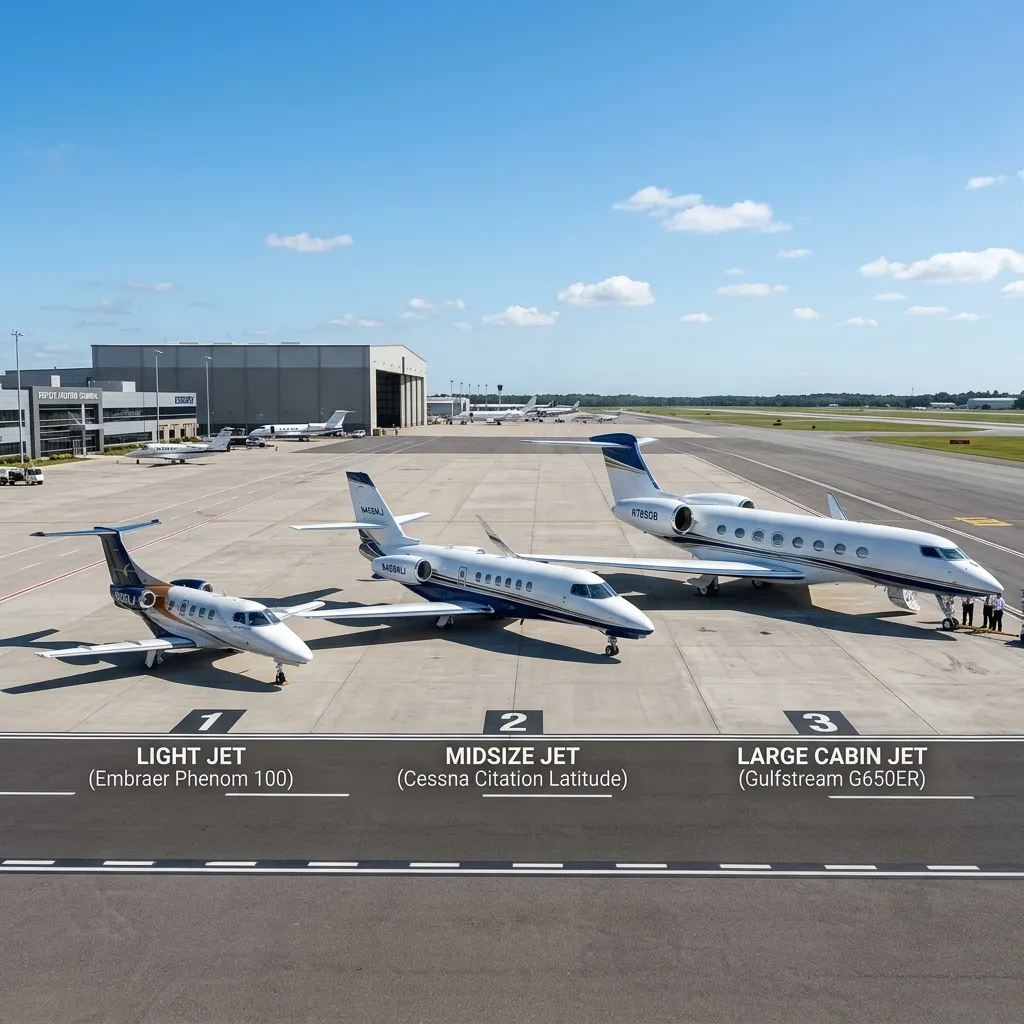
Move to a light jet when passenger count exceeds 4, trip distance exceeds 1,000 NM, or baggage requirements exceed 2 standard carry-ons per person. Light jets also offer meaningfully faster cruise speeds on longer legs: a Phenom 300 at 453 ktas covers 1,500 NM approximately 35 minutes faster than a HondaJet at 422 ktas, and the gap widens with distance.

Owner-Operator Economics

The VLJ category is dominated by owner-pilots. Approximately 70% of U.S.-registered VLJs are flown under Part 91 by their owners, compared to 40-50% for light jets and 20-30% for midsize and larger categories. The reasons are structural: VLJ acquisition costs ($2.5-$6.5 million new, $1.0-$4.0 million pre-owned) and annual operating budgets ($200,000-$350,000 at 200 hours/year) are accessible to individuals and small businesses.

Annual operating costs break down roughly as: fuel ($45,000-$65,000 at 200 hrs), insurance ($15,000-$30,000), maintenance and reserves ($60,000-$100,000), hangar ($18,000-$48,000 depending on location), crew training ($15,000-$25,000 for annual recurrent), and database/subscription services ($5,000-$10,000). These costs are approximately 40-50% of a light jet's annual budget, making VLJ ownership viable for individuals flying 150-250 hours annually.

The Failed VLJ Promise and What Survived

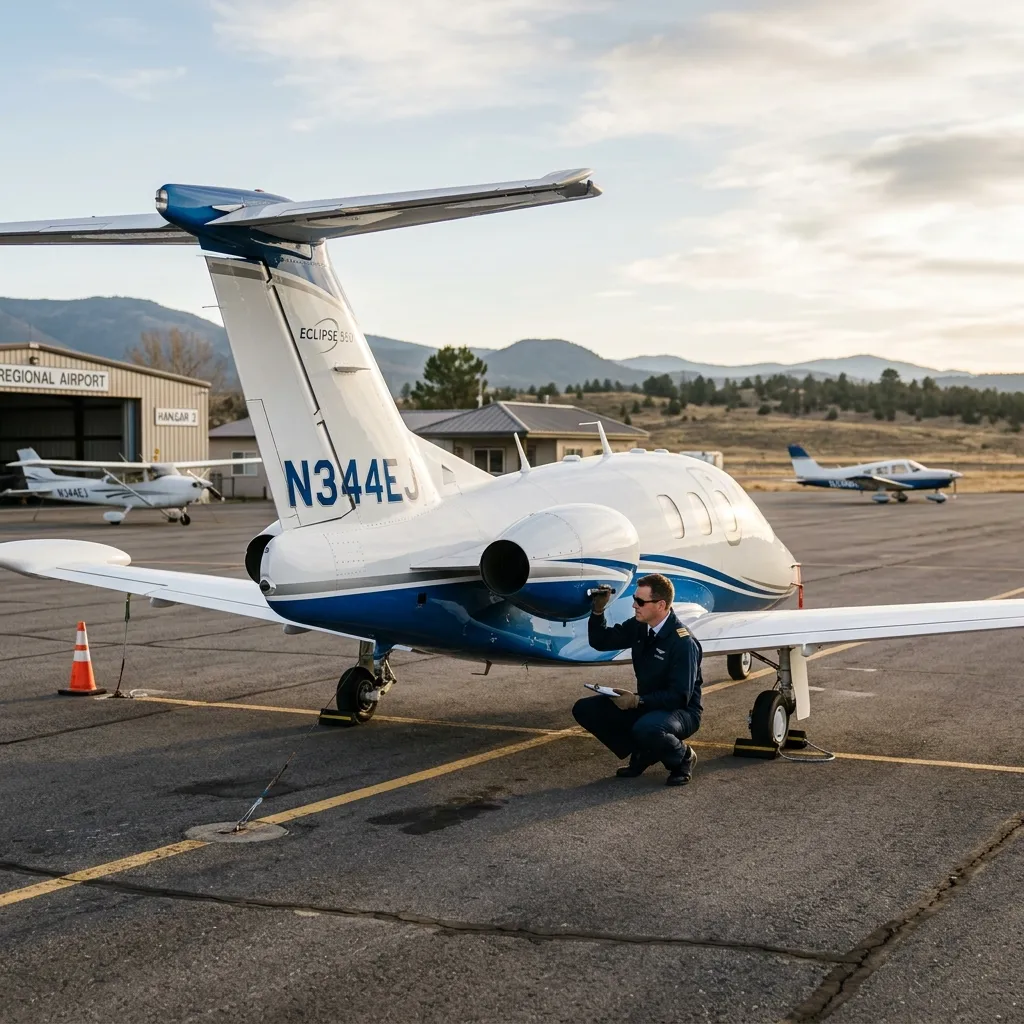
The VLJ category was born in hype. In the early 2000s, Eclipse Aviation promised a $1.1 million VLJ (the Eclipse 500) that would create a new "air taxi" industry. Eclipse delivered approximately 260 aircraft before declaring bankruptcy in 2008. The air taxi model failed because operating economics (crew, insurance, maintenance, FBO fees) consumed the savings from a cheaper airframe. A $1 million jet still costs $350,000-$450,000 per year to operate.

What survived is a more realistic VLJ market. The HondaJet, Phenom 100, and Citation M2 are priced at $3.5-$6.5 million and marketed as owner-pilot jets and light charter aircraft, not as air-taxi revolutionaries. The Vision Jet carved a unique niche as the only single-engine jet, attracting Cirrus SR22 owners upgrading to jet performance. The category is healthy at its current scale, delivering approximately 140-160 new aircraft per year globally.

Brian Galvan

Written By

Brian Galvan

Founder, The Jet Finder · Private Aviation Operations & Technology

Former Director of Technology at FlyUSA (Inc. 5000 fastest-growing private jet company). Decade of hands-on experience across Part 135 operations, charter sales, fleet management, and aviation data systems.

LinkedInRead Full Profile →
Common Questions

Frequently Asked Questions


7 questions about chartering this aircraft

The HondaJet Elite S2 leads the VLJ category at 422 ktas (Mach 0.72), followed by the Citation M2 Gen2 at 404 ktas and the Phenom 100EV at 390 ktas. The Cirrus Vision Jet, as a single-engine design, cruises at 311 ktas. The HondaJet's speed advantage comes from its GE Honda HF120 engines (2,050 lbs thrust each) and aerodynamically clean fuselage enabled by the over-the-wing engine mounting.

Most VLJs can land at mountain airports within their performance envelopes, but departure is the constraint. At Aspen (7,820 ft elevation), a HondaJet can land with 4 passengers but may need to limit fuel load for departure on hot days. Takeoff distance increases 20-30% at density altitudes above 8,000 feet. The Vision Jet's single engine reduces climb performance margins further. Operators run airport-specific performance calculations for each departure incorporating temperature, wind, weight, and obstacle clearance requirements.

The CAPS (Cirrus Airframe Parachute System) deploys a ballistic parachute that lowers the entire airframe in an uncontrollable emergency. Cirrus carried this design philosophy from the SR22 piston line. No other jet manufacturer has adopted a whole-aircraft parachute because heavier aircraft require proportionally larger and heavier systems. At the Vision Jet's 6,000-pound MTOW, the parachute system weighs approximately 90 pounds, an acceptable penalty. Above 10,000 pounds, the system becomes impractical with current materials technology.

VLJ lavatories are minimal. The Phenom 100EV has the best VLJ lavatory: a fully enclosed compartment in the aft cabin with a flushing toilet and privacy door. The HondaJet's externally accessible lavatory is compact but usable. The Citation M2's belted potty seat with a privacy curtain is functional but not enclosed. The Vision Jet has an emergency-use-only portable belted seat. On flights under 90 minutes, the lavatory situation is manageable. On longer flights, it becomes a comfort consideration.

VLJ charter availability is concentrated in specific markets. Florida, Texas, the Northeast corridor, and California have the most VLJ charter operators. In secondary markets (Mountain West, Pacific Northwest, Upper Midwest), VLJ charter may require repositioning from a distant base, which adds cost and can eliminate the pricing advantage versus a locally-based light jet. Check availability 48-72 hours in advance for the best options.

Eclipse Aviation delivered approximately 260 Eclipse 500s before bankruptcy in 2008. The fleet is still partially active: roughly 120-140 remain airworthy in 2026. One Aerospace (later Aerocine) acquired the type certificate and produced a small number of Eclipse 550 variants. Parts availability has been a persistent challenge, and many Eclipse 500s have been retired due to the cost of maintaining type-specific components without robust manufacturer support.

The Vision Jet is the most fuel-efficient VLJ at approximately 55-65 GPH (single engine). The Phenom 100EV burns approximately 85-95 GPH, and the HondaJet burns approximately 90-100 GPH. On a per-passenger-mile basis with 2 passengers, the Vision Jet costs approximately $0.65/NM in fuel, the Phenom 100 costs approximately $0.85/NM, and the HondaJet costs approximately $0.90/NM (offset by its 8% higher cruise speed).

Continue Reading

Related Articles


Your Next Mission

Ready to Fly?


Whether you need a charter quote or want to explore aircraft options, our team is here.

Contact Us