Entry-Level Turboprops with Opposite Engineering Philosophies
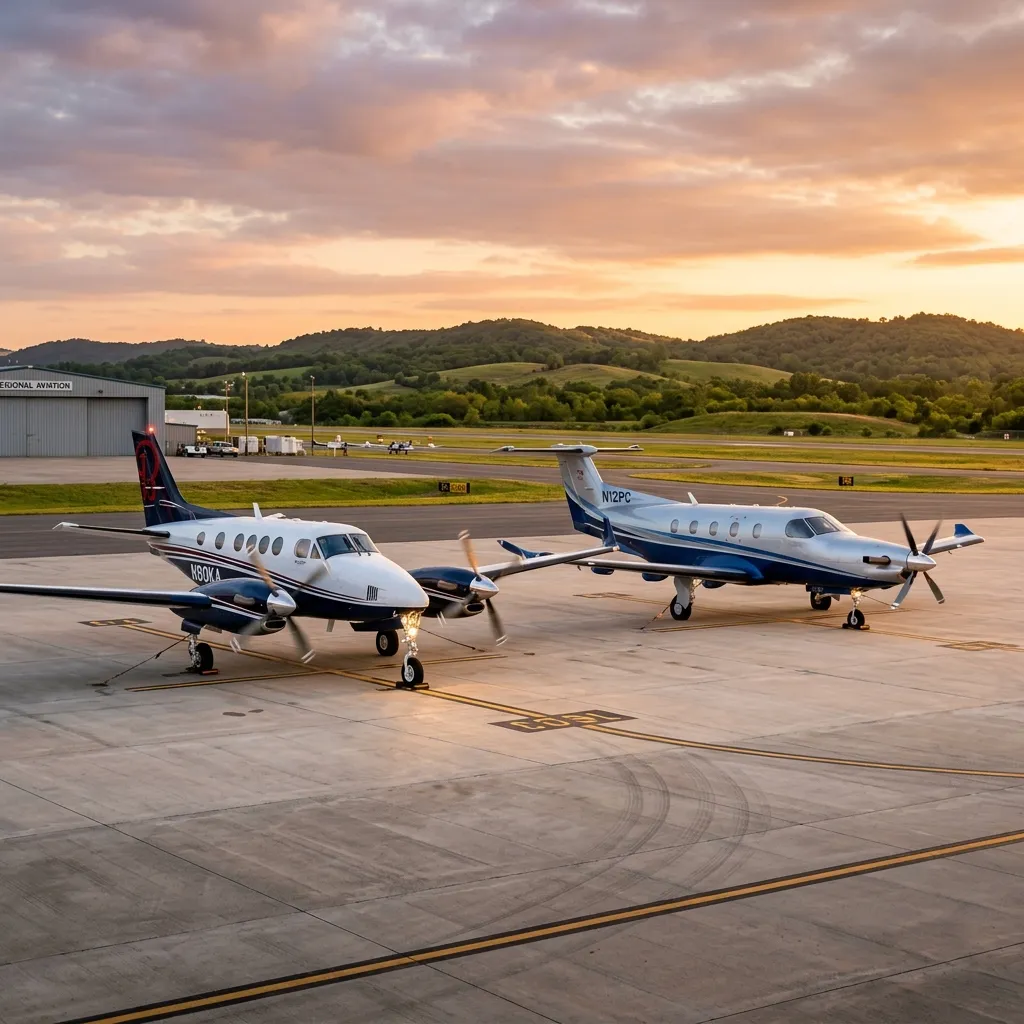
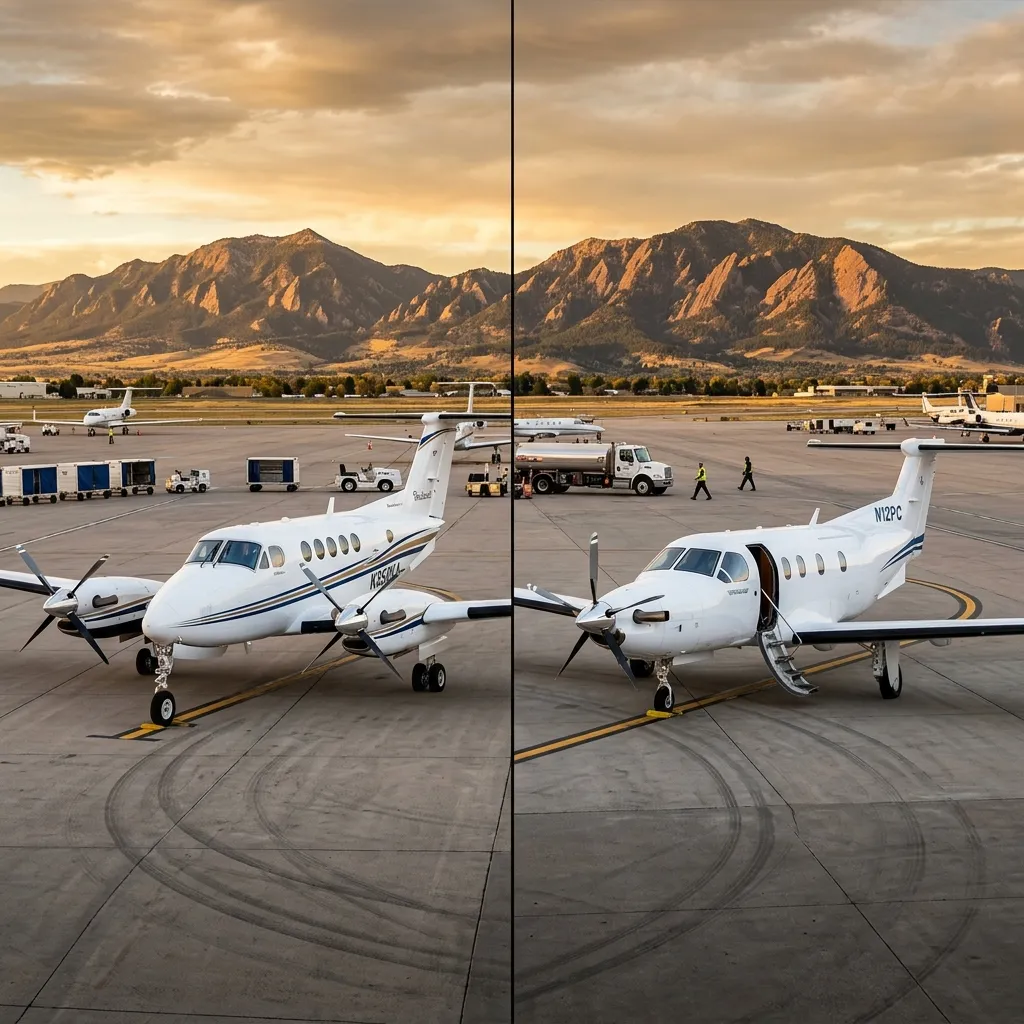
In 2026, approximately 1,400 King Air C90-series turboprops and 1,900 Pilatus PC-12s appear on the FAA registry. Together they account for 38% of all turboprop aircraft used in U.S. Part 135 charter operations. They compete for the same mission: regional flights under 600 NM with small groups, short-field access, and hourly rates that undercut every business jet on the market. But they solve the problem with fundamentally different engineering. Beechcraft put two engines on the C90. Pilatus put one very powerful engine on the PC-12. That single decision shapes everything: redundancy, fuel burn, maintenance cost, cabin layout, and the insurance underwriter's appetite for the risk.
The King Air C90 has been in continuous production since 1971, with the current C90GTx variant shipping since 2010. The Pilatus PC-12 first flew in 1994 and the NGX variant entered service in 2020. Despite the C90's 23-year head start, the PC-12 has outsold it in total deliveries since 2005. There is a reason for that, but it is not a simple story of one aircraft being better.
Side-by-Side Specifications
On paper, the PC-12 wins nearly every category. Faster, farther, bigger cabin, wider fuselage. The C90 wins on two metrics: takeoff distance and the presence of a second engine. Whether those advantages justify choosing the C90 depends entirely on where you are flying and how much the second engine matters to your specific operation.
The Single-Engine Question: Risk, Regulation, and Reality
Every conversation about the PC-12 eventually reaches the same question: is one engine safe enough? The statistical answer is yes. The PC-12's PT6A-67P has an in-flight shutdown rate of approximately 1 per 100,000 flight hours, among the lowest in aviation. Pratt & Whitney Canada's PT6A family has accumulated over 400 million flight hours across all variants. The engine does not quit without warning. It announces mechanical distress through oil pressure, temperature, and chip detector indications long before failure.
In 30 years of PC-12 service, zero fatal accidents have been attributed to engine failure in normal cruise flight. The airframe's accident record is dominated by pilot error in approach and landing phases, not powerplant failure. The twin-engine advantage of the King Air is real but statistically marginal for the mission profiles both aircraft fly.
Regulatory frameworks treat single-engine turboprops differently than twins. Under Part 135, operators can fly the PC-12 at night and in IFR conditions with specific OpSpecs. However, some corporate flight departments and charter clients have internal policies requiring twin-engine aircraft for overwater flights exceeding 50 NM from shore or for night operations in mountainous terrain. In those scenarios, the C90 qualifies and the PC-12 does not, regardless of the PC-12's superior performance numbers.
- FAA Part 135 permits single-engine IFR operations for the PC-12 with appropriate OpSpecs
- Some insurance policies require twin-engine aircraft for overwater flights beyond 50 NM
- Corporate travel policies frequently mandate twin-engine regardless of statistical safety data
- Military and government contracts for the PC-12 (U-28A Draco) validate its reliability in extreme conditions
Cabin Experience: Where the PC-12 Pulls Away
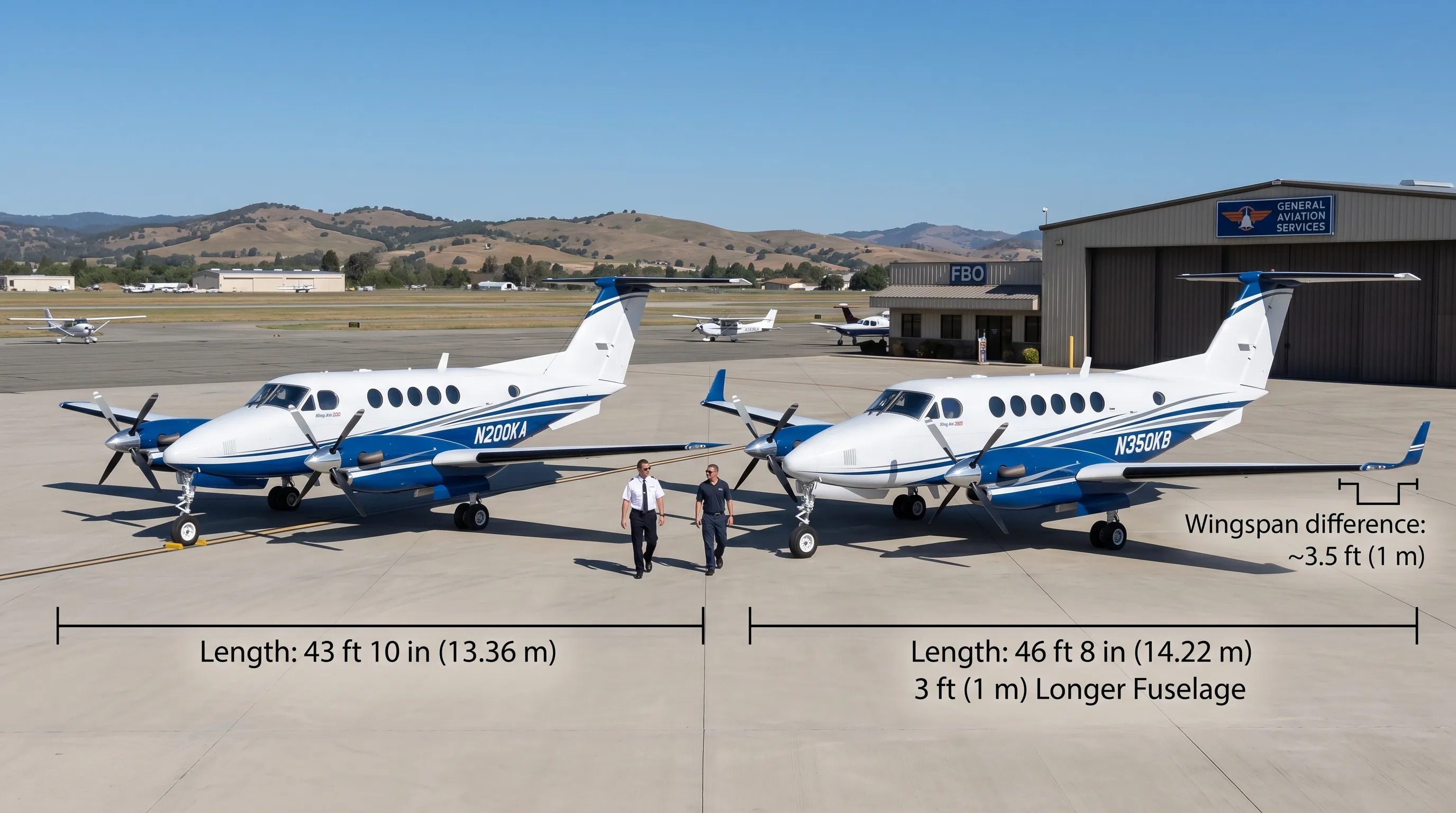
The PC-12's cabin is 16.9 feet long, 5.0 feet wide, and 4.8 feet high. The C90's cabin measures 12.4 by 4.5 by 4.8 feet. That half-foot of width matters more than the raw numbers suggest. The PC-12 can fit executive club seating with a proper aisle. The C90 requires passengers to shuffle sideways past the facing seats. For flights under 90 minutes, neither cabin causes complaints. For anything longer, the PC-12 offers a materially better passenger experience.
1,260 vs 1,845 NM
Range Gap
226 vs 285 kts
Max Cruise Speed
7 vs 9 Pax
Seating Capacity
2 vs 1 Engine
Powerplant Config
The PC-12 NGX variant (2020+) includes a belted lavatory, USB power at every seat, LED lighting, and a refreshment station. Most C90s in charter service are 1990s-era airframes with refurbished but fundamentally analog cabin appointments. The newest C90GTx variants (2010+) close the gap with leather interiors and modern lighting, but the platform's original cabin dimensions cannot be changed. Pilatus designed the PC-12 from scratch in the 1990s with executive transport as a primary mission. Beechcraft designed the C90 in 1971 as a utility platform that happened to attract business travelers.
Baggage and Cargo
The PC-12 features a massive 40-cubic-foot rear cargo door that can swallow oversized equipment, hunting rifles, ski bags, and golf club sets. The C90's baggage compartment holds 54 cubic feet in the nose and rear, but the loading apertures are smaller. For backcountry trips where baggage flexibility matters, the PC-12's cargo door is a genuine operational advantage.
Need a Charter Quote?
Contact our team for a personalized quote.
Get a Quote →Operating Economics: Fuel, Maintenance, and Charter Pricing
The PC-12 burns approximately 66 gallons per hour at economy cruise. The C90 burns roughly 80-90 gallons per hour with both engines at cruise power. At $6.50 per gallon for Jet-A, that translates to $429 per hour for the PC-12 versus $520-$585 for the C90. Single-engine maintenance is inherently less expensive: one hot section inspection instead of two, one propeller governor, one set of engine mounts.
The pricing paradox: the PC-12 costs less to operate per hour, but charters at a higher rate. Operators price based on market demand, not direct operating cost. The PC-12's larger cabin, newer fleet age, and better passenger experience command a premium. C90 operators compete on price, offering the lowest turboprop charter rates in the market. For cost-conscious buyers who prioritize twin-engine peace of mind over cabin comfort, the C90 remains the value play.
The C90's 2,270-foot takeoff roll is 380 feet shorter than the PC-12's 2,650 feet. At sea level on a standard day, both numbers are academic; nearly every paved runway in the country exceeds 3,000 feet. The performance gap becomes meaningful at high-density-altitude airports. At Telluride (9,070 feet elevation), both aircraft face significant performance penalties, but the C90's twin-engine climb gradient provides more margin during a rejected takeoff or engine failure after V1.
The PC-12 counters with unpaved runway certification. Pilatus designed the landing gear and propeller clearance for gravel, grass, and packed-dirt strips. The USAF's U-28A variant operates from austere forward operating bases worldwide. While Part 135 operators rarely dispatch to unpaved surfaces, Part 91 owners regularly take PC-12s into backcountry strips in Alaska, Montana, and Idaho that no King Air would attempt.
The PC-12 NGX has completed over 800 documented landings on unpaved surfaces during Pilatus factory demonstration tours alone. The airframe's trailing-link landing gear absorbs rough surfaces without the damage that conventional gear would sustain. For access to strips under 3,000 feet with unpaved surfaces, the PC-12 is the only turboprop in its class that is factory-certified for the mission.
Fleet Age, Resale, and What to Expect When You Book
The average C90 in U.S. charter service was built between 1985 and 2005. These are 20- to 40-year-old airframes with 8,000 to 15,000 total hours. Interiors range from dated fabric and wood veneer to fully refurbished leather and LED lighting. Avionics span the spectrum from original Collins analog gauges to Garmin G1000 NXi glass cockpits. The experience varies enormously by operator. The average PC-12 in charter service is a 2010-2020 airframe with 2,000 to 6,000 hours and relatively modern appointments.
Resale values reflect this age gap. A 1995 C90B trades between $600,000 and $900,000. A 2015 PC-12 NG commands $3.5 to $4.5 million. The PC-12 holds value better as a percentage of original purchase price because Pilatus limits production to approximately 80 airframes per year, creating perpetual scarcity. Beechcraft produced C90s in much higher volume during the 1980s and 1990s, saturating the used market.
Questions to Ask Your Operator
- What year is the aircraft? Anything before 2000 will feel it.
- When was the interior last refurbished? Original 1990s interiors are functional but not modern.
- What avionics are installed? Glass cockpits improve safety and navigational capability.
- Is the aircraft equipped with known-icing certification? Some older C90s are not.
- For the PC-12: Is this an NG (2008+) or NGX (2020+) variant? The difference is substantial.
When to Choose Each Aircraft
Choose the King Air C90 when twin-engine redundancy is a non-negotiable requirement. Overwater flights beyond 50 NM from shore. Night mountain operations where corporate policy requires two engines. Government or military contracts specifying multi-engine aircraft. Budget-constrained regional flights where the C90's lower charter rate ($1,000-$1,600/hr) saves $200-$400 per hour compared to the PC-12.
Choose the PC-12 when range, speed, cabin size, or unpaved runway access are priorities. Flights between 400 and 1,200 NM where the PC-12's 59-knot speed advantage saves 30-60 minutes of block time. Groups of 7-9 passengers where the C90's 7-seat cabin is too tight. Backcountry destinations with gravel or grass strips. Any charter where a modern interior matters to the client experience.
Neither aircraft is the right choice for passengers expecting jet speed or a stand-up cabin. Both top out around 285 knots, roughly 150 knots slower than a Phenom 300 or Citation CJ4. For transcontinental flights, overwater crossings beyond the Caribbean, or groups exceeding 9, step up to a light jet or midsize jet. These turboprops are regional workhorses, not executive flagships.