Twin Engine vs. Single Engine: The Foundational Tradeoff
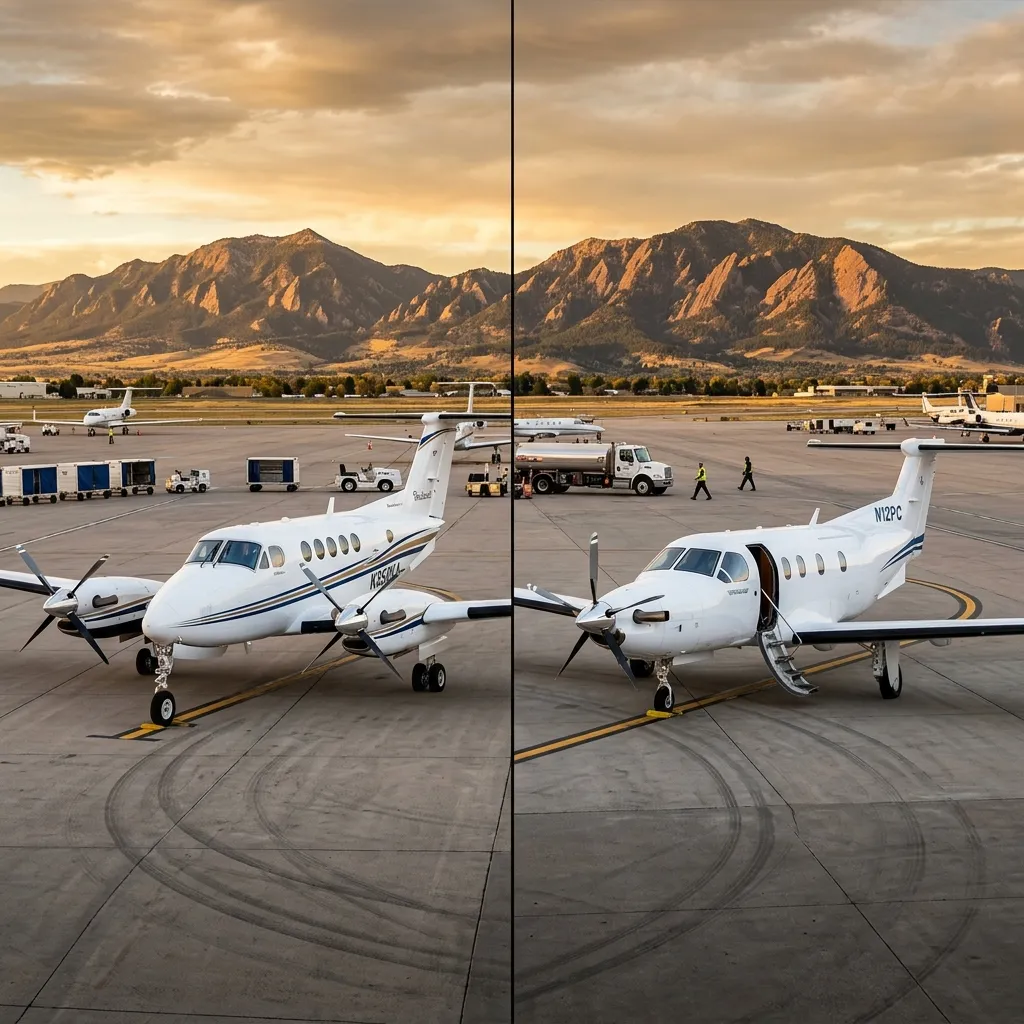
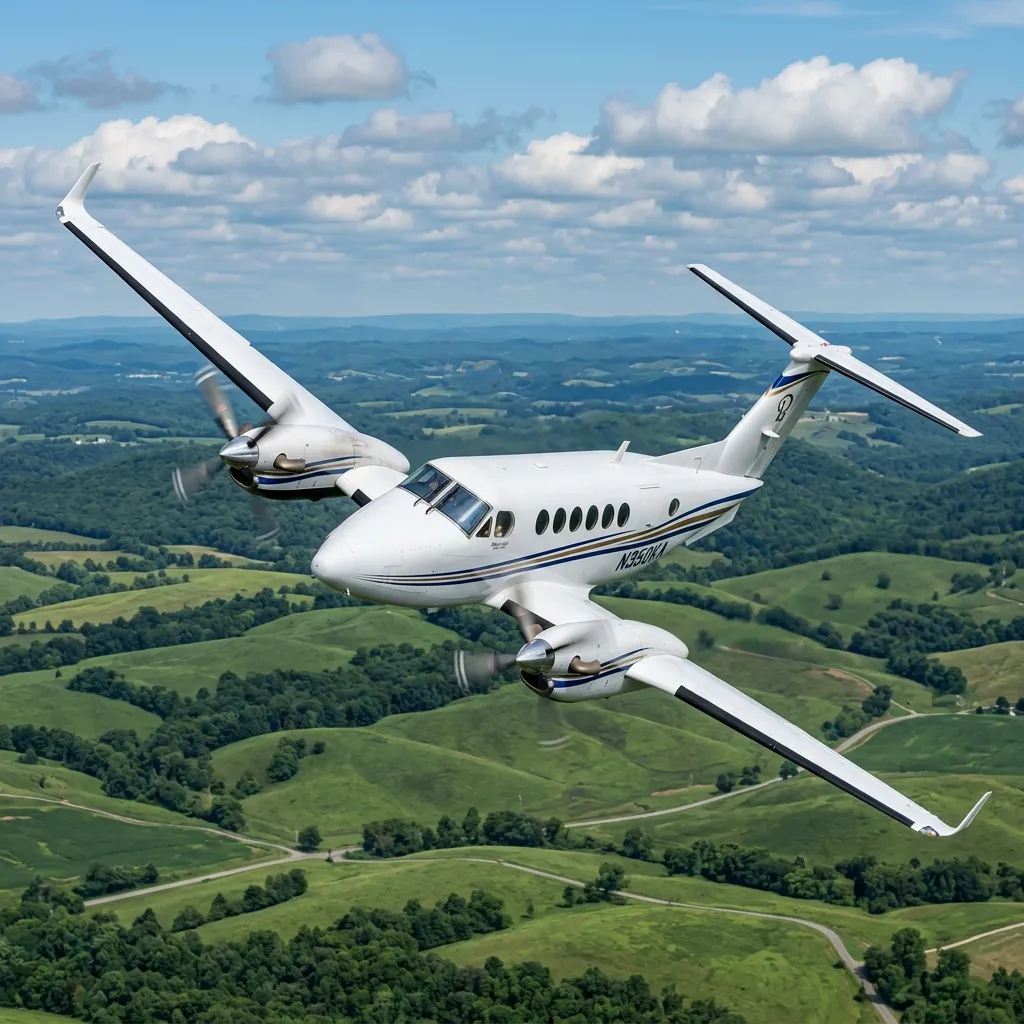
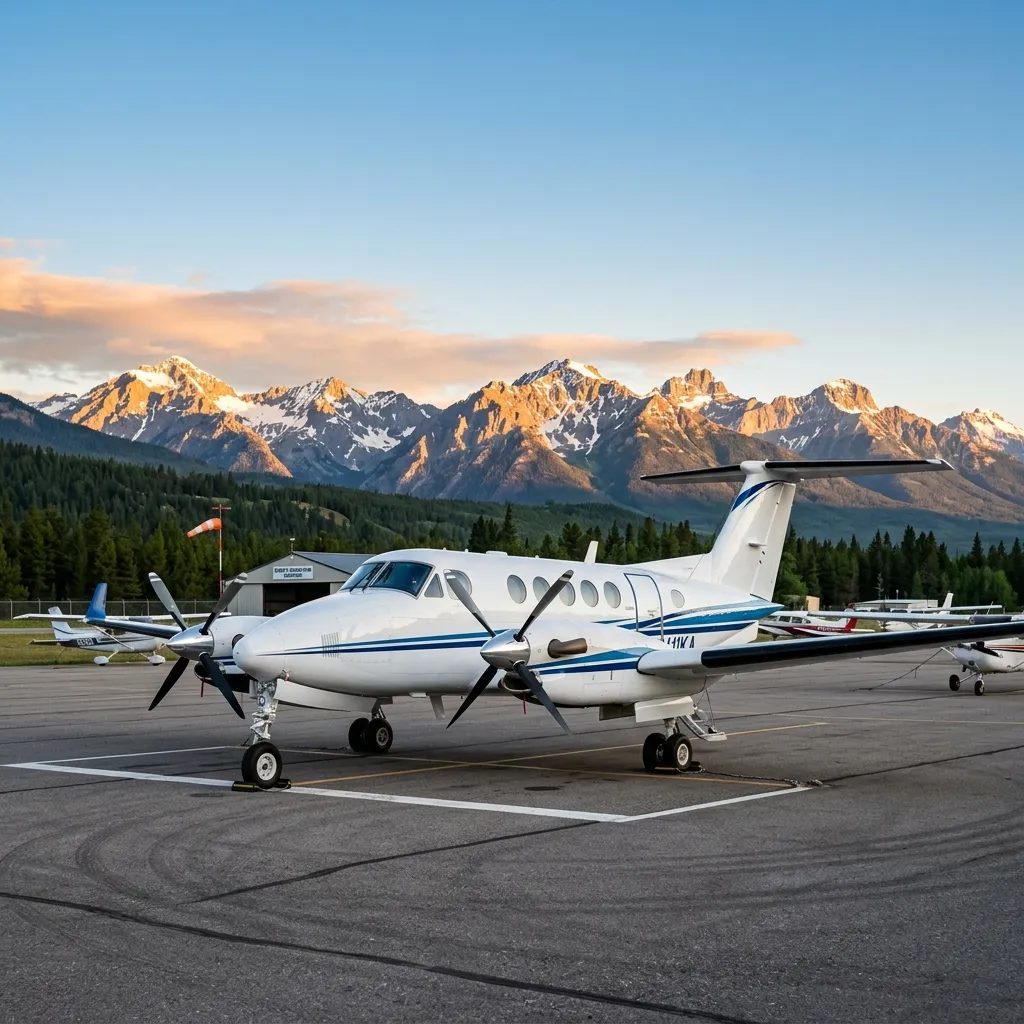
The King Air 350 and PC-12 NGX start from opposite engineering premises. Beechcraft designed the King Air around twin-engine redundancy: two Pratt & Whitney PT6A-60A turboprops generating 1,050 SHP each, providing continued flight capability after an engine failure at any phase of operation. Pilatus designed the PC-12 around single-engine optimization: one PT6E-67XP generating 1,845 SHP, maximizing fuel efficiency and reducing mechanical complexity by eliminating the second powerplant entirely.
This foundational decision cascades through every aspect of each aircraft's economics, capability, and market position. The King Air 350's twin-engine configuration delivers 22 knots more speed (312 vs 290 ktas), twin-engine reliability statistics, and regulatory clearance for overwater and night IFR operations in jurisdictions that restrict single-engine commercial flights. The PC-12's single-engine design delivers 35% lower fuel burn (68 vs 100 gph), 35-40% lower maintenance cost, and a larger useful cabin volume.
312 ktas
King Air 350 Cruise
$1,500/hr
King Air Direct Cost
$1,000/hr
PC-12 Direct Cost
On a 500 nm mission, the King Air 350 arrives approximately 12 minutes before the PC-12 (1:36 vs 1:48 flight time). On a 1,000 nm mission, the gap widens to 25 minutes. These differences rarely change a passenger's schedule, particularly when ground transportation on both ends consumes 30-60 minutes. The speed advantage becomes operationally meaningful only on multi-leg days where cumulative time savings across 3-4 legs total 45-60 minutes.
| Specification | King Air 350i | PC-12 NGX |
|---|
| Engines | 2× PT6A-60A (1,050 SHP ea) | 1× PT6E-67XP (1,845 SHP) |
| Max Cruise Speed | 312 ktas | 290 ktas |
| Max Range | 1,806 nm | 1,803 nm |
| Fuel Burn | 100 gph | 68 gph |
| Fuel Cost/hr ($5.75/gal) | $575 | $391 |
| Direct Operating Cost | $1,400-$1,600/hr | $900-$1,100/hr |
| Takeoff Distance | 3,300 ft | 2,650 ft |
| Cabin Volume | 303 cu ft | 330 cu ft |
| Passengers (typical) | 9-11 | 6-9 |
| Cargo Door | Standard entry | 52×53 in cargo door |
| New Price (2026) | $8.9M | $6.7M |
| Annual Cost (400 hrs) | $1.1M-$1.3M | $750K-$950K |
The fuel economy gap is more consequential than the speed gap. At 68 gph versus 100 gph, the PC-12 saves $184 per flight hour in fuel ($391/hr vs $575/hr at $5.75/gal). Over a 400-hour annual utilization, that is $73,600 in fuel savings alone. Combined with lower maintenance reserves (one engine versus two, no propeller sync systems, simplified hydraulics), the PC-12's total direct operating cost runs approximately $900-$1,100/hr versus the King Air's $1,400-$1,600/hr.
The question is not which aircraft is better. The question is which tradeoff matters more for your specific mission profile. If twin-engine redundancy is a hard requirement (insurance mandate, overwater routing, personal preference), the King Air wins by default. If operating cost drives the decision and single-engine reliability satisfies your risk tolerance, the PC-12 saves $200,000+ per year at 400 hours.
Cabin and Cargo: The PC-12's Hidden Advantage
The PC-12's cabin is larger than the King Air 350's in every measurable dimension that matters to passengers:
- Volume: PC-12 cabin volume is 330 cu ft versus the King Air 350's 303 cu ft. The PC-12's flat floor and vertical sidewalls create a more usable rectangular cross-section.
- Width: PC-12 interior width is 5 ft 0 in versus the King Air's 4 ft 6 in. The 6-inch difference is perceptible in shoulder room and aisle passage.
- Cargo door: The PC-12 has a 52 x 53 inch cargo door on the left aft fuselage, providing drive-on access for oversized equipment, medical stretchers, and freight. The King Air 350's cabin door is a standard passenger entry.
- Configuration flexibility: The PC-12 converts between passenger (6-9 seats), cargo (2,500 lbs payload through the cargo door), combi (mixed passenger/cargo), and medevac configurations using a modular interior system that can be reconfigured in 30 minutes.
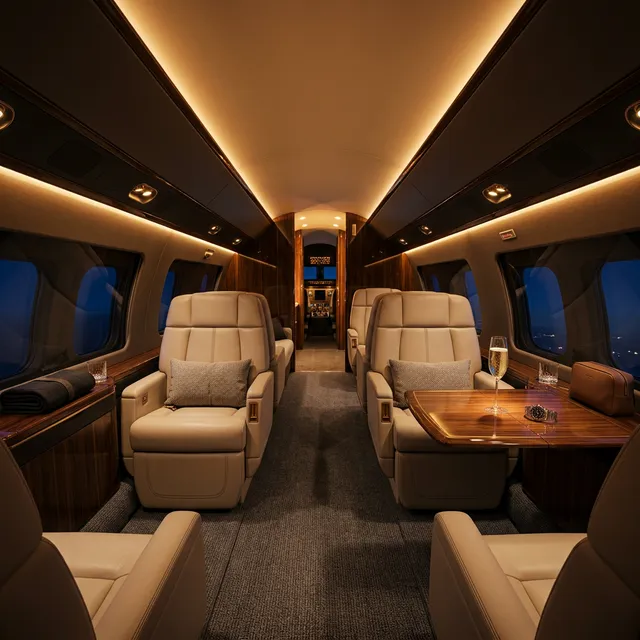
The King Air 350 cabin is narrower but longer (19.2 ft vs 16.8 ft), allowing more passengers in a double-club executive layout (9-11 versus the PC-12's 6-9). For pure passenger missions with 8+ travelers, the King Air's longer fuselage provides more seating options. For missions combining passengers and cargo, the PC-12's cargo door and modular interior are superior.
Evaluating a Turboprop Mission?
We can match your routing, passenger count, and runway requirements to the right turboprop option.
Contact Us →Safety Record: The Twin-Engine Perception vs. Single-Engine Reality
The twin-engine safety argument is intuitive: two engines provide redundancy that a single engine cannot. If one engine fails on the King Air 350, the aircraft continues flying on the remaining engine with sufficient performance to reach an airport. If the PC-12's single engine fails, the aircraft becomes a glider.
The statistical reality is more nuanced. The PT6 engine family has accumulated over 500 million flight hours with an in-flight shutdown rate (IFSD) of approximately 1 per 333,000 hours for the PT6A series. The PC-12's PT6E-67XP, the most modern iteration, has an even lower IFSD rate. The probability of a complete power loss on either aircraft due to engine failure is extremely low. Most turboprop accidents are caused by controlled flight into terrain (CFIT), loss of control, and weather-related incidents, not engine failure.
However, the twin-engine advantage is not purely statistical. Corporate insurance policies, certain jurisdictions' regulations for commercial operations, and overwater routing requirements frequently mandate twin-engine aircraft. A company flight department operating under an IS-BAO-certified safety management system may require twin-engine turboprops regardless of the single-engine reliability data. The King Air satisfies these institutional requirements. The PC-12 does not.
Purchase Price: New and Preowned Market
New aircraft pricing in 2026: the King Air 360 (current production variant) lists at approximately $8.9 million. The PC-12 NGX lists at approximately $6.7 million. The $2.2 million acquisition cost difference is the single largest line item favoring the PC-12 for new buyers.
Preowned values follow different depreciation curves. King Air 350i models (2009-2015) trade at $3.2M-$5.5M. PC-12 NG models (2008-2018) trade at $3.5M-$6.0M. The PC-12 holds its residual value better than the King Air on a percentage basis, reflecting stronger demand in the owner-flown market and the aircraft's lower operating costs that make it attractive to cost-sensitive buyers.
Total cost of ownership over a 10-year period at 400 annual hours tells the complete story: the PC-12 saves approximately $500,000-$700,000 in fuel and maintenance versus the King Air 350, partially offset by the King Air's lower preowned acquisition cost for comparable vintage airframes. The net 10-year cost advantage favors the PC-12 by approximately $300,000-$500,000, assuming no overwater or twin-engine regulatory requirements.
When to Choose Each Aircraft
After analyzing hundreds of turboprop acquisition and charter decisions, the selection criteria reduce to five questions:
- Do you require twin-engine redundancy? If corporate insurance, safety policy, or overwater routing mandates twin-engine aircraft, the answer is the King Air. This single factor eliminates the PC-12 from consideration regardless of all other variables.
- How many passengers travel regularly? If 8+ passengers are common, the King Air's longer cabin and higher seating capacity make it the practical choice. If 4-6 passengers are typical, the PC-12's wider cabin provides more comfort per person.
- Do you move cargo alongside passengers? The PC-12's cargo door and modular interior make it the superior choice for mixed-use operations (medevac, utility, cargo/passenger combi). The King Air can carry cargo but lacks the dedicated door and rapid-conversion capability.
- Is operating cost the primary decision driver? The PC-12 saves $200,000+ annually at 400 hours. If the budget constrains the decision and single-engine reliability satisfies your threshold, the PC-12 is the rational economic choice.
- What runway lengths do you need to access? The PC-12 operates from runways as short as 2,650 feet. The King Air 350 requires 3,300 feet. For missions into very short strips (backcountry, island, mountain), the PC-12's shorter ground roll provides access the King Air cannot match.
In practice, the two aircraft serve parallel markets more than they compete head-to-head. Corporate flight departments, medevac operators requiring twin-engine certification, and military/government agencies choose the King Air. Owner-operators, single-pilot operations, and cost-conscious charter companies choose the PC-12. Both aircraft remain in active production with healthy order backlogs.