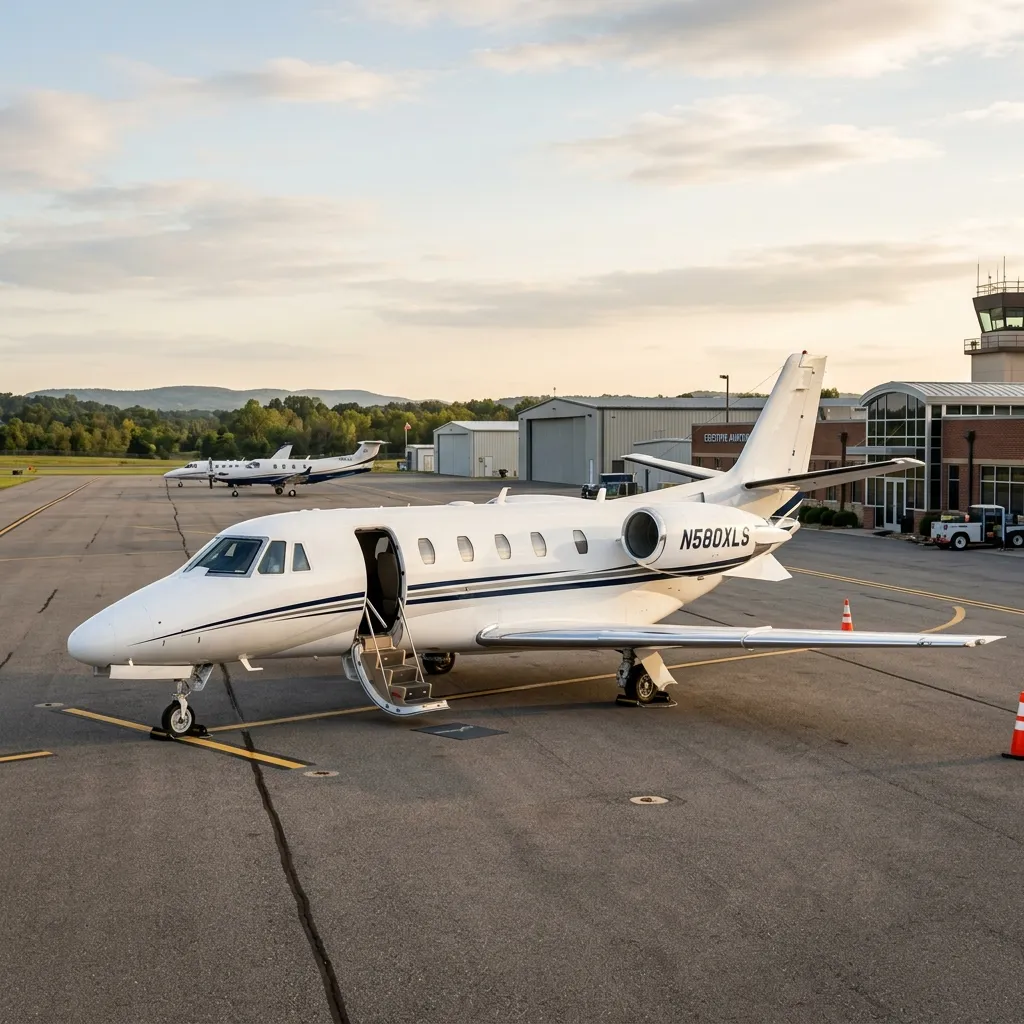
Cessna Citation XLS midsize jet flying above cloud layer at sunset

The Complete Guide to Midsize Jets: Who They Are Built For

Midsize jets sit in the center of the private aviation lineup. Stand-up cabins, enclosed lavatories, 2,000-2,800 nm range, and hourly rates that stay under $4,000. For most domestic charter missions, the midsize category delivers the best ratio of comfort to cost. Here is what defines the segment and which models lead it.

In This Article

What Makes a Jet Midsize The Models That Define the Category The Midsize Cabin: Where Comfort Begins Missions Built for Midsize Ownership vs Charter in the Midsize Category Frequently Asked Questions

What Makes a Jet Midsize

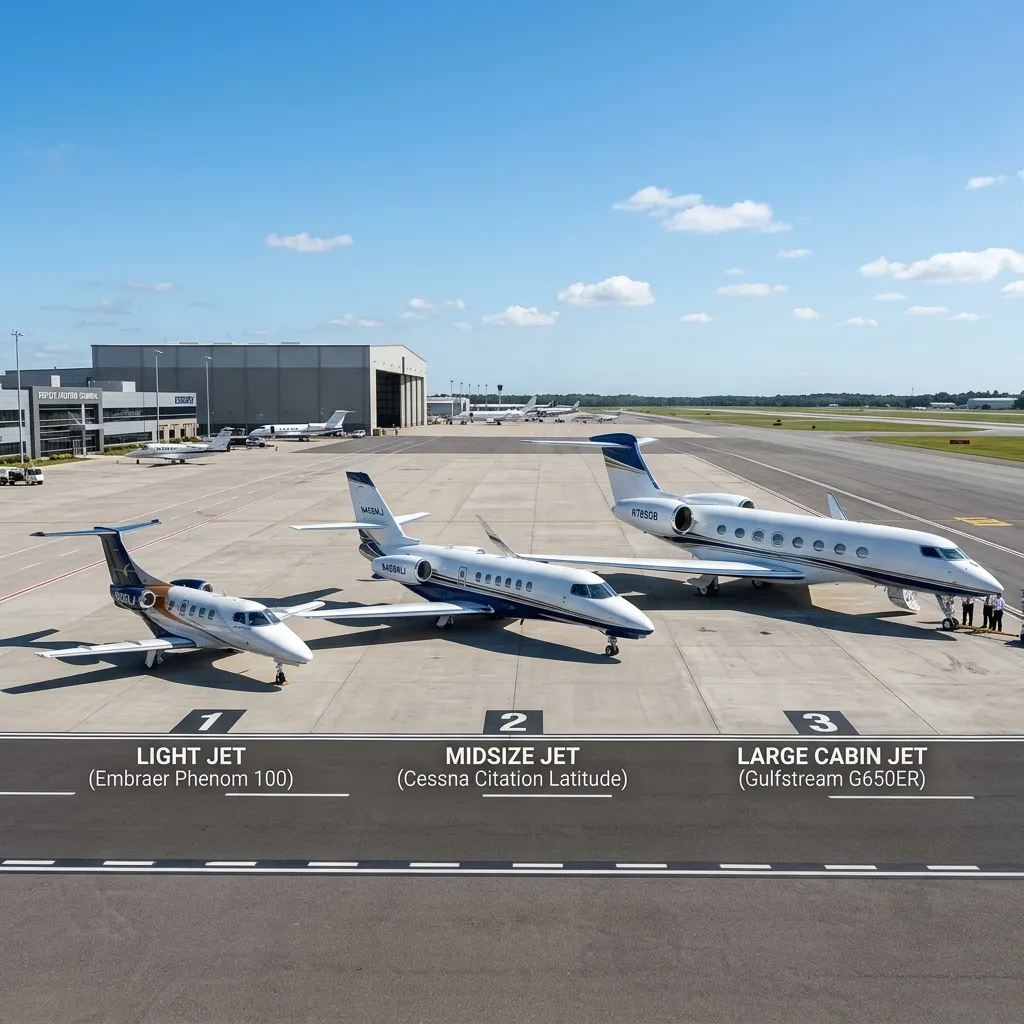
The midsize jet category spans aircraft with maximum takeoff weights between 15,000 and 25,000 pounds, cabin widths of 5.7-6.0 feet, and NBAA IFR ranges of 2,000-2,800 nautical miles. Approximately 4,100 midsize jets hold active FAA registrations in the U.S., making it the second-largest jet category behind light jets. The defining characteristic: a midsize jet is the first category where most passengers can stand fully upright in the cabin.

4,100+
U.S. Midsize Fleet
$3,000-$4,000
Hourly Charter Rate
2,000-2,800 nm
Typical Range
7-9
Passenger Capacity

Midsize jets charter for $3,000 to $4,000 per flight hour, positioning them above light jets ($2,000-$3,300) and below super-midsize ($3,800-$5,200). That pricing reflects their operating cost structure: two crew members, 180-230 gallons per hour fuel burn, and airframe maintenance programs that cost $300-$400 per flight hour in reserves.

The Models That Define the Category

Cessna Citation XLS/XLS+ (2004-present)

The Citation XLS is the most produced midsize jet in history, with over 1,050 airframes on the FAA registry. Its combination of 2,100 nm range, 8-passenger comfort, and $3,100-$3,800/hr charter rate made it the default midsize charter aircraft in the U.S. market. The XLS+ variant (2010-present) added the Garmin G5000 touch-screen flight deck and increased range by 100 nm. Operators value the XLS for its low direct operating costs and the depth of the Cessna maintenance network.

Hawker 800XP/850XP/900XP (1995-2013)

The Hawker 800XP lineage represents British-designed engineering (originally BAe 125) with American market penetration. Approximately 400 Hawker 800-series jets remain on active certificates. The cabin is 5.7 feet wide and 5.75 feet tall with a distinctive oval cross-section. Range spans 2,540 nm on the 800XP to 2,800 nm on the 900XP. Charter rates run $2,800-$3,500/hr, slightly below the XLS due to higher average fleet age and the absence of new production since Hawker Beechcraft's bankruptcy in 2012.

Bombardier Learjet 60/60XR (1993-2007)

The Learjet 60 stretched the Learjet 55 fuselage and added Pratt & Whitney PW305A engines to create a midsize jet with light-jet operating costs. Range of 2,405 nm and a cruise speed of 466 ktas made it one of the fastest aircraft in the midsize segment. Approximately 300 remain on U.S. certificates. Charter rates range from $2,500-$3,200/hr, reflecting the type's age and Bombardier's exit from the Learjet line.

The Midsize Cabin: Where Comfort Begins

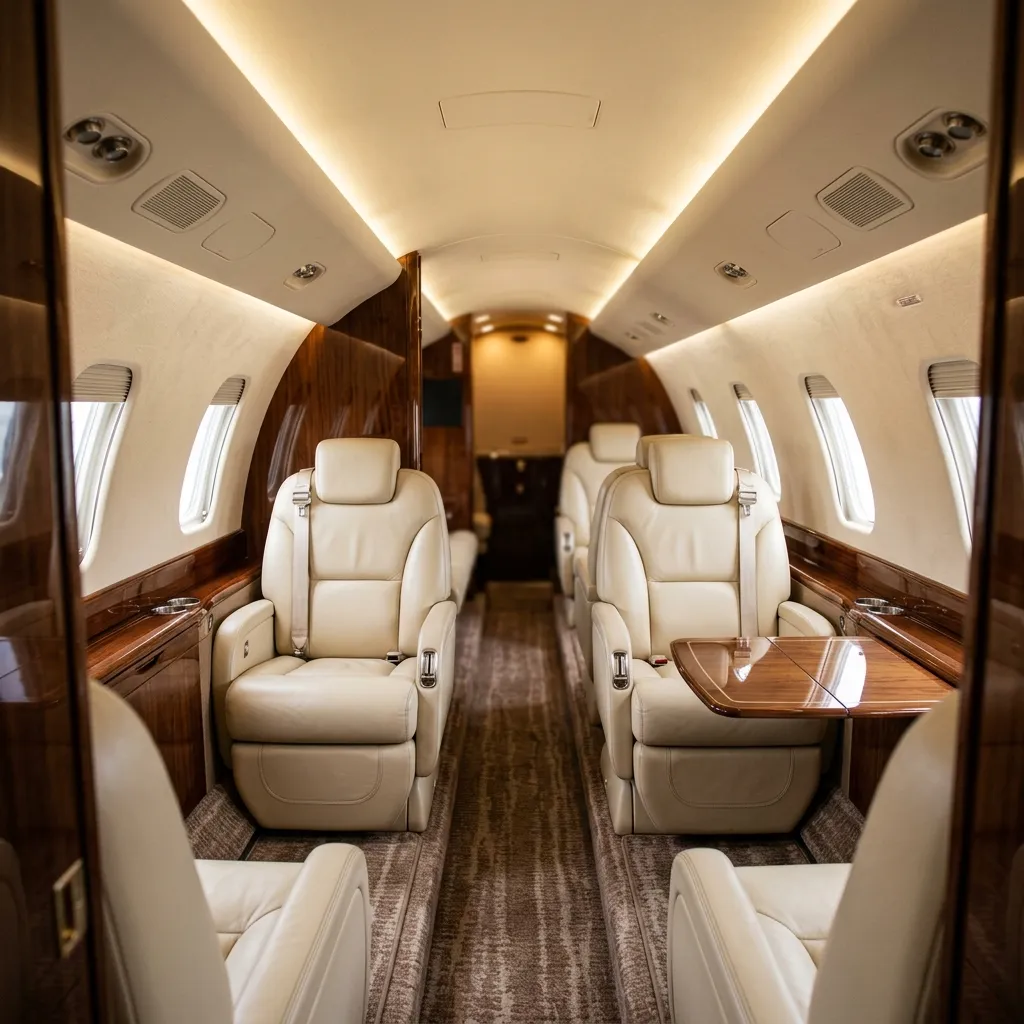
The step from a light jet to a midsize jet is the most perceptible upgrade in private aviation. Cabin height increases from 4.9 feet (crouch in the aisle) to 5.7-5.9 feet (stand upright if you are under 5'10"). Cabin width jumps from 5.1 feet to 5.7-6.0 feet, eliminating shoulder-to-shoulder contact in facing seats. The lavatory moves from a curtained partition to a fully enclosed room with a solid door.

Baggage capacity doubles: midsize jets offer 70-90 cubic feet versus light jets' 40-65 cubic feet. A six-passenger group carrying full-size rollers, garment bags, and two sets of golf clubs fits in a Citation XLS's 90-cubic-foot compartment without negotiation. The same group in a Phenom 300 makes compromises.

The midsize cabin is where chartering starts to feel different from flying. Below midsize, you tolerate the aircraft. Above it, you enjoy it.

Charter a Midsize Jet

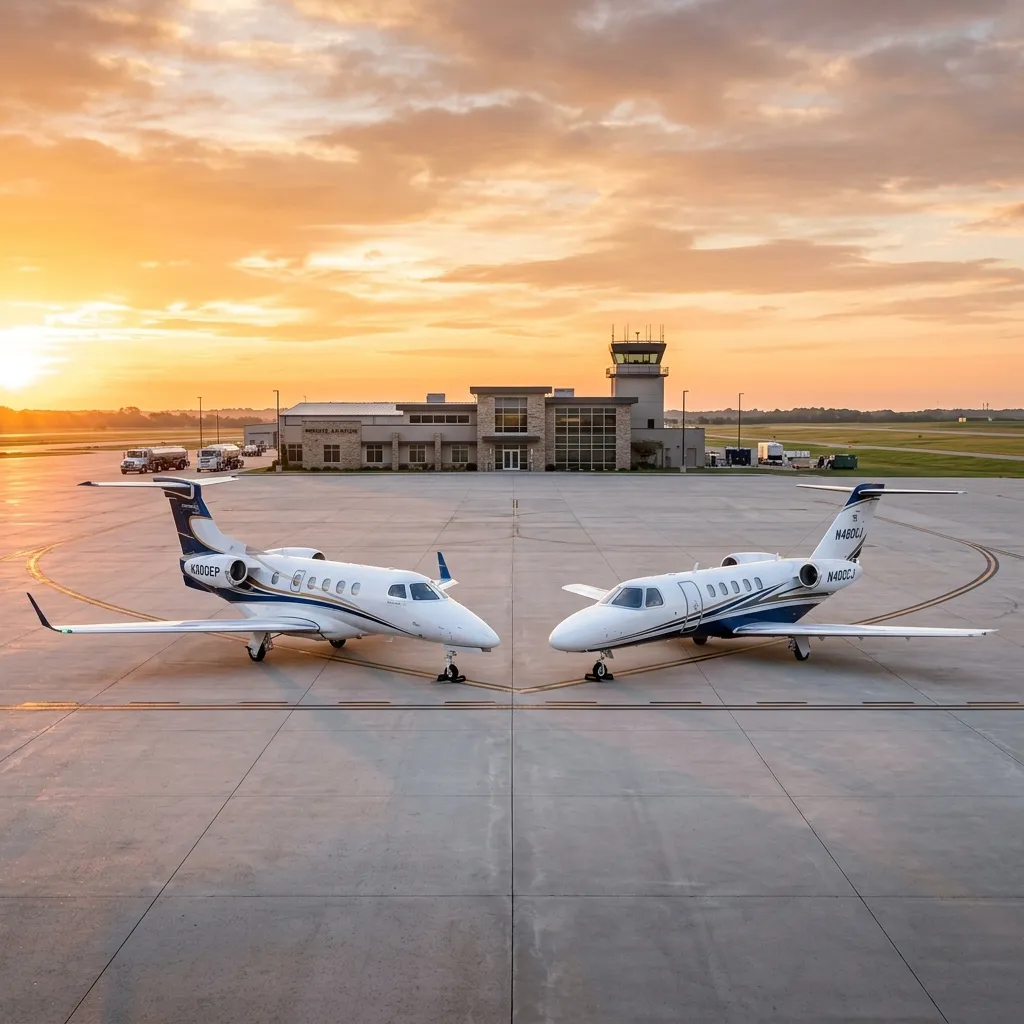
We source Citation XLS, Hawker 800XP, and other midsize availability from operators nationwide.

Request a Quote

Missions Built for Midsize

Midsize jets operate most efficiently on domestic routes between 1,000 and 2,500 nm with 4-8 passengers. Shorter routes underutilize the aircraft's range and passenger capacity (a VLJ or light jet would suffice). Longer routes strain the cabin's comfort envelope on flights exceeding four hours (a super-midsize jet would serve better).

  • Corporate road warrior: A CEO flying TEB to Chicago to Dallas to TEB in two days. The Citation XLS's 2,100 nm range covers each leg nonstop, the 9-seat cabin accommodates a traveling team of 4-6, and the $3,400/hr rate keeps the trip under $30,000 total.
  • Family vacation: Six passengers from Chicago to Aspen (1,300 nm, 2.5 hours). The midsize cabin gives children room to move, the enclosed lavatory handles family needs, and 80+ cubic feet of baggage fits ski equipment for the group.
  • Multi-city sales tour: East Coast financial roadshow hitting Boston, New York, Philadelphia, and Washington in two days. The midsize jet repositions quickly, carries presentation materials and luggage for a team of four, and costs less than four first-class airline tickets per leg when time savings are factored in.

The midsize category generates more Part 135 charter revenue than any other segment in the United States. Citation XLS aircraft alone account for an estimated 15% of all on-demand charter flights booked annually through broker platforms.

Ownership vs Charter in the Midsize Category

A pre-owned Citation XLS+ (2015 vintage) sells for $5-$7 million. Annual fixed costs (hangar, insurance, crew salaries, management) run $800,000-$1.2 million. Variable costs (fuel, maintenance, landing fees) add $2,000-$2,500 per flight hour. At 300 hours annual utilization, total cost of ownership reaches approximately $1.5-$1.9 million per year, or $5,000-$6,300 per flight hour.

At charter rates of $3,100-$3,800 per hour, the break-even point where ownership costs less than chartering falls around 200-250 annual flight hours, depending on depreciation assumptions and tax treatment. Below 200 hours, chartering is more economical. Above 300 hours, ownership becomes competitive. Between 200 and 300 hours, the decision depends on scheduling flexibility, tax appetite, and whether the owner values guaranteed aircraft availability over lower per-hour cost.

Brian Galvan

Written By

Brian Galvan

Founder, The Jet Finder ยท Private Aviation Operations & Technology

Former Director of Technology at FlyUSA (Inc. 5000 fastest-growing private jet company). Decade of hands-on experience across Part 135 operations, charter sales, fleet management, and aviation data systems.

LinkedInRead Full Profile →
Common Questions

Frequently Asked Questions


7 questions about midsize business jets

Three factors compound: fleet size (1,050+ registered), low operating costs ($2,000-$2,500/hr variable), and the Cessna service network (200+ authorized service centers in the U.S.). Operators who need an aircraft that generates reliable charter revenue five days a week default to the XLS because parts are available, pilots are plentiful, and clients consistently request it.

The Citation Sovereign (2,847 nm range) and Hawker 900XP (2,800 nm) can cover the 2,440 nm Teterboro to Van Nuys route in most wind conditions with full passenger loads. The Citation XLS (2,100 nm) and Hawker 800XP (2,540 nm) fall short on most days. The XLS requires a fuel stop in Wichita or Denver; the 800XP can make it westbound with tailwinds but not eastbound against prevailing winds.

Midsize jets pressurize to cabin altitudes of 6,500-7,500 feet at their maximum operating altitudes (FL430-FL450). The Citation XLS maintains approximately 7,200 feet at FL450. The Hawker 800XP holds about 6,900 feet at FL430. Lower cabin altitude reduces passenger fatigue; on flights under 3 hours, most passengers do not notice the difference between 6,500 and 7,500 feet.

Parts availability for the Hawker 800-series remains adequate in 2026 because of the large installed base (400+ active aircraft) and multiple aftermarket parts suppliers. Raytheon (the final manufacturer) continues to support the type through its legacy parts program. However, some avionics components and aging structural parts carry longer lead times than comparable Cessna components. Operators budget 10-15% higher maintenance reserves on Hawkers versus Citations to account for parts sourcing.

The Citation Sovereign (CE-680) offers 2,847 nm range versus the XLS's 2,100 nm, a wider cabin (5.5 ft vs 5.7 ft, with a taller ceiling at 5.8 ft vs 5.7 ft), and seats 9 passengers. It fills the gap between the XLS and the Latitude. Charter rates run $3,200-$4,000/hr, approximately $400 more per hour than the XLS. The Sovereign's range advantage makes it the better choice for transcontinental missions; the XLS wins on operating cost for shorter domestic routes.

Hull and liability insurance for a midsize jet runs $40,000-$80,000 per year depending on the aircraft's hull value, pilot experience levels, and annual flight hours. A $6 million Citation XLS+ with two 5,000-hour pilots typically insures for $45,000-$55,000 annually. An older Hawker 800XP with $2 million hull value and less-experienced pilots may pay $35,000-$50,000. Insurance is one of the fixed costs that makes ownership uneconomical below 200 annual flight hours.

The midsize segment is shrinking in new production but remains dominant in the active charter fleet. Cessna discontinued the XLS+ in 2024 without a direct replacement (the Latitude is classified super-midsize). No manufacturer currently produces a new midsize jet in the traditional 2,000-2,500 nm, 5.7-foot-wide cabin category. The installed base of 4,100+ midsize jets will sustain the charter market for 15-20 years, but new deliveries are zero.

Continue Reading

Related Articles


Your Next Mission

Ready to Fly?


Whether you need a charter quote or want to explore aircraft options, our team is here.

Contact Us