Citation XLS Hourly Charter Rates in 2026
A Citation XLS charters for $2,800 to $3,800 per flight hour. That positions it roughly $1,000 per hour above light jets like the CJ3 and $2,000 per hour below heavy jets like the Gulfstream G650. On a 2-hour flight from Teterboro to Chicago Executive, total charter cost is $5,600 to $7,600 before Federal Excise Tax and segment fees.
The two Pratt & Whitney PW545B engines burn about 170 gallons per hour combined at cruise. At $5.75 per gallon, fuel cost is approximately $978 per flight hour, accounting for 26-35% of the total charter rate. The remaining cost covers crew, maintenance reserves, insurance, fixed overhead, and the operator's margin.
Why More Operators Bought This Jet Than Any Other Midsize
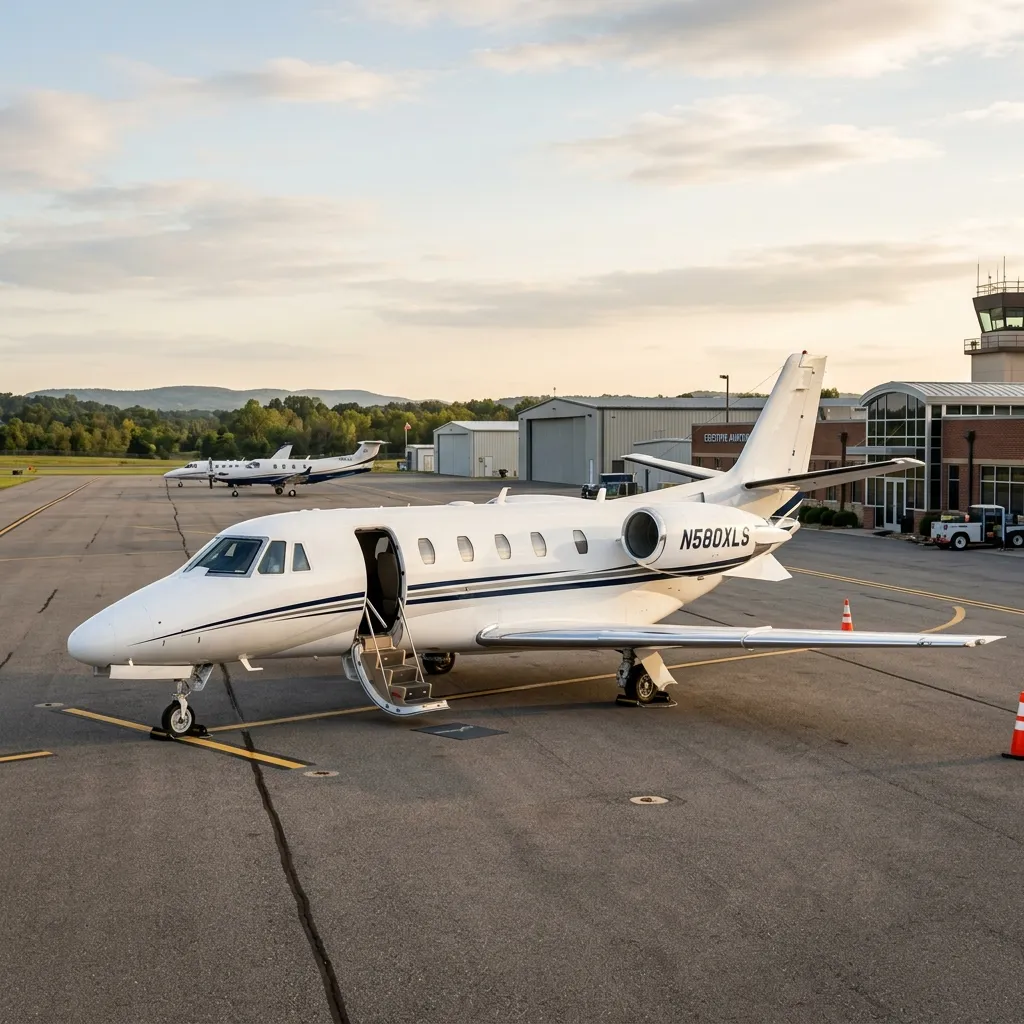
Cessna has delivered over 1,000 Citation XLS and XLS+ aircraft since 2004. That production number is not an accident. The XLS occupies a specific position in the charter economics that no competitor has managed to replicate: it carries 9 passengers in a flat-floor, stand-up cabin for an acquisition cost that operators can actually finance against projected charter revenue.
For operators, the math works like this: a pre-owned XLS costs $3M-$6M depending on year and total time. Annual charter revenue on a well-utilized XLS runs $900,000-$1,400,000. After operating costs, the jet can service its debt and generate a margin within the first 24-36 months. That's a faster payback than most midsize competitors, which is why the XLS fleet keeps growing even as newer models enter the market.
The Citation XLS is the Honda Civic of the midsize jet world. Nobody writes poetry about it. But the numbers work, and that's why there are more of them on charter certificates than any comparable aircraft.
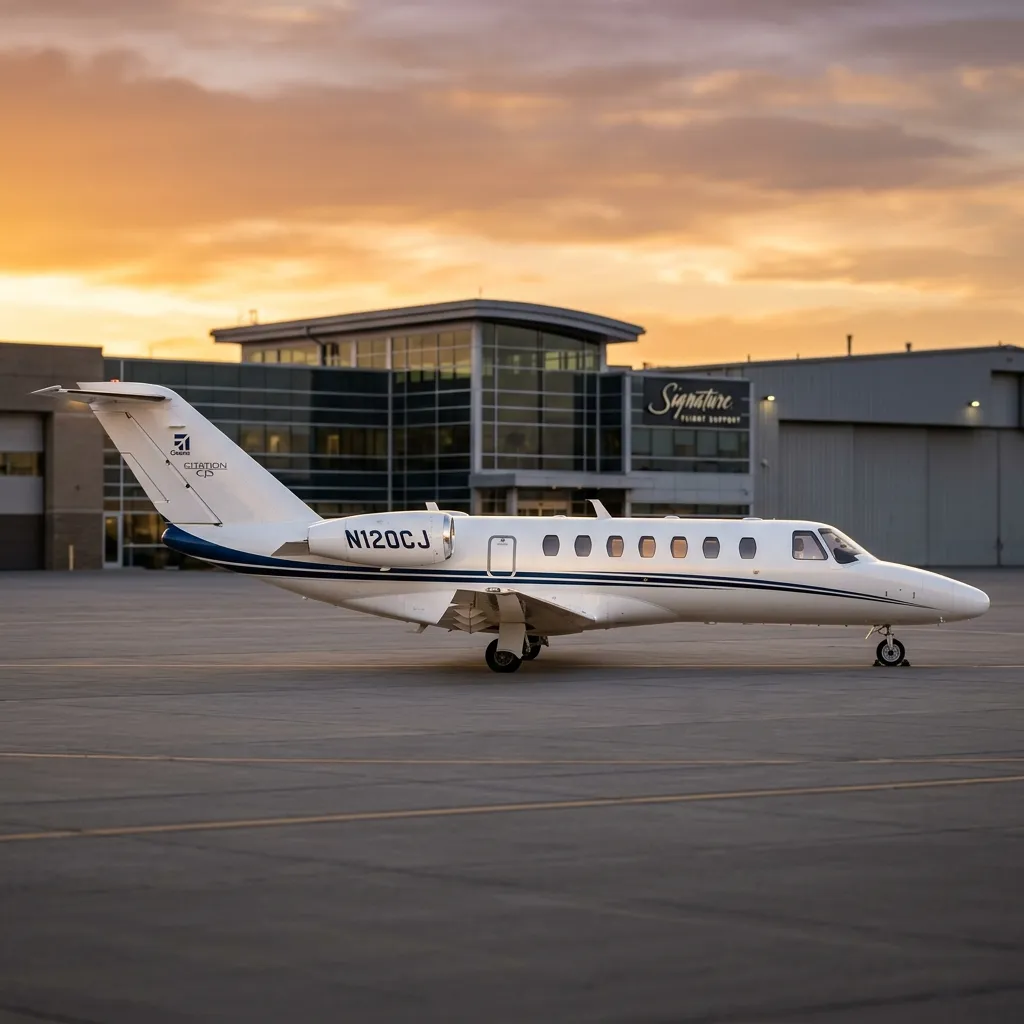
For charter clients, fleet density translates directly to availability and pricing. When 15 operators within 200 miles have an XLS on the ramp, you have leverage. Positioning fees are lower because the aircraft is already nearby. Competition between operators keeps rates in check. Aircraft like N100MA and N104R are typical examples of the fleet depth you'll find in most major metro areas.
The Cabin That Changed Midsize Expectations
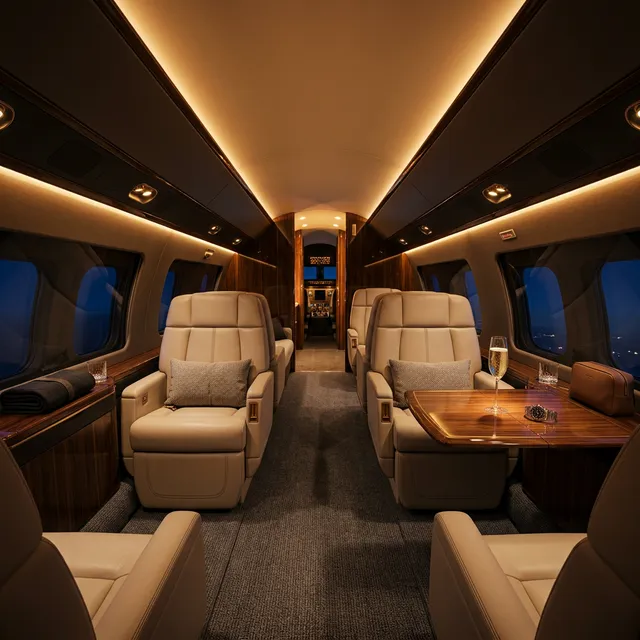
Before the XLS, midsize jets forced passengers to choose between headroom and range. The XLS cabin is 18.5 feet long, 5.5 feet wide, and 5.7 feet tall. That 5.7-foot ceiling is the detail that matters. At that height, a 5'9" passenger can walk the aisle without ducking. The King Air 350 at 4.8 feet cannot offer that. The CJ3 at 4.8 feet cannot either.
Width is 5.5 feet, which allows a true double-club seating arrangement where four passengers face each other across a table without bumping knees. The flat floor runs the full length of the cabin. There's no step-down, no raised sill to navigate. For business travel with documents, laptops, and meals, the ergonomics are noticeably better than light jets that technically seat similar numbers but pack passengers tighter.
Baggage capacity is 80 cubic feet in the external rear compartment. That's enough for standard luggage for all 9 seats, though practical loading depends on weight limits. For 6 passengers with full-size bags and carry-ons, the baggage compartment handles it without compromise. For 8-9 passengers, expect the crew to manage weight distribution carefully.
The belted lavatory at the rear is enclosed, a significant upgrade over the curtained or open-partition arrangements found in light jets. On flights over 2 hours, this goes from nice-to-have to essential, particularly for groups that include clients or guests who aren't regular private flyers.
Get a Citation XLS Quote
Tell us your route and passenger count. We'll match you with the right midsize option.
Request a Quote →Where the XLS Goes and Where It Doesn't
Maximum range is 2,100 nautical miles with 4 passengers and NBAA IFR reserves. That covers Teterboro to Miami (1,030 nm), Chicago to Aspen (880 nm), Dallas to New York (1,380 nm), and Los Angeles to Seattle (830 nm) nonstop without discussion. It does not cover New York to Los Angeles (2,145 nm) with a full load; you'll need a fuel stop or a lighter cabin.
Cruise speed is 441 knots at altitude, making the XLS one of the faster midsize jets. Long-range cruise drops to 404 knots and extends range by roughly 200 nm. Most operators file at long-range cruise because the time difference is minimal (12-15 minutes on a 3-hour flight) and the fuel savings cover the additional crew time.
Runway performance
Takeoff distance is 3,560 feet at sea level. That means the XLS operates comfortably at most executive airports but needs attention at high-altitude fields. Aspen (7,820 feet elevation) requires performance calculations that account for density altitude, passenger count, and fuel load. Eagle County, Telluride, and other mountain airports follow the same pattern. The XLS can serve them, but weight restrictions apply on hot days.
The coast-to-coast question
Can it do New York to LA? With 4 passengers and light bags, in winter with favorable winds, sometimes. Practically: plan a fuel stop in Amarillo, Oklahoma City, or Memphis. It adds 35-45 minutes to the trip. Clients who need guaranteed nonstop coast-to-coast should look at super-midsize (Challenger 350, Citation Longitude) or heavy jets. The XLS was not designed for transcontinental missions, and trying to force it creates operational compromises that no good operator will accept.
XLS vs. XLS+ vs. XLS Gen2: What Changed
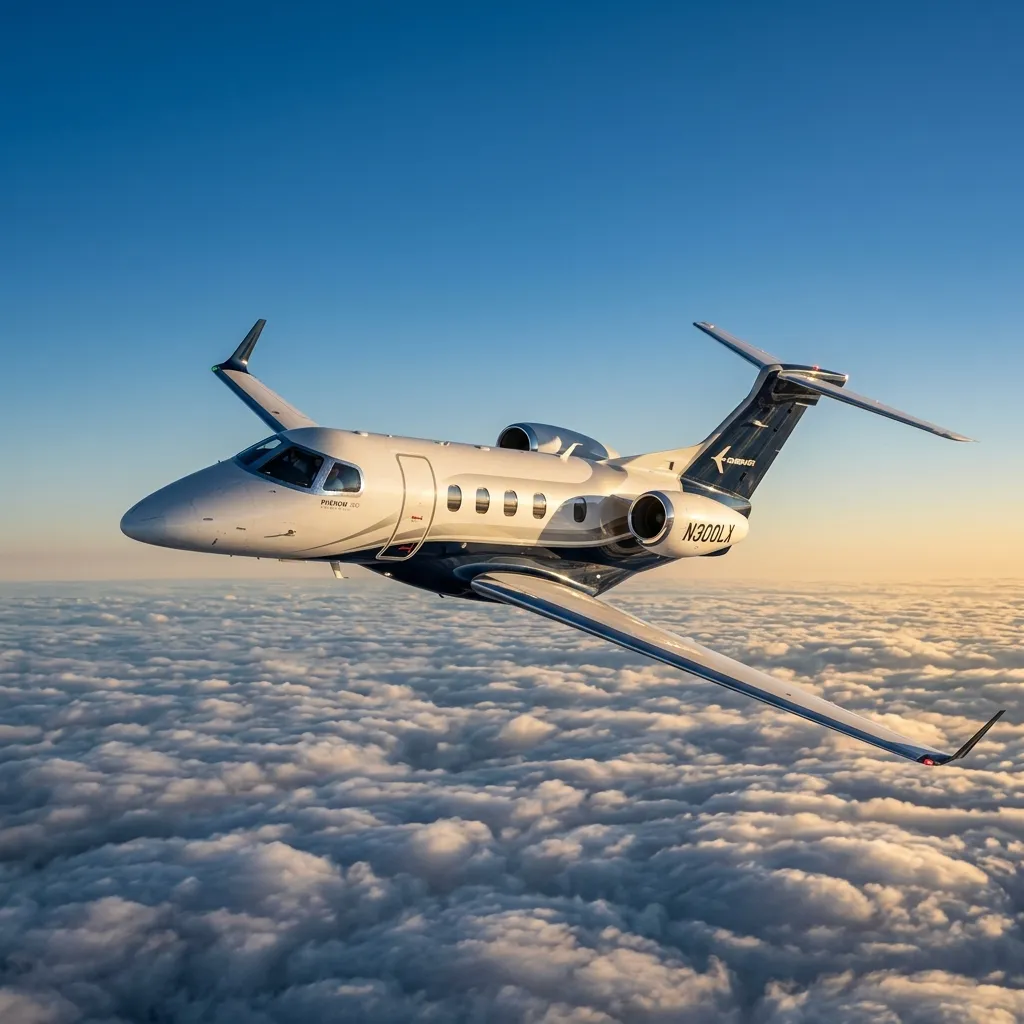
Cessna has produced three variants of the XLS platform. The original XLS (2004-2008) established the airframe. The XLS+ (2008-2019) upgraded to PW545C engines with 200 lbs more thrust, added winglets for improved fuel efficiency and climb performance, and modernized the avionics to the Collins Pro Line 21 Advanced suite. The Gen2 (2021-present) brought the Garmin G5000 flight deck and further cabin refinements.
- Original XLS (2004-2008): PW545B engines, 4,119 lbs thrust each. Solid airframe, but higher maintenance costs as they age. Charter rates at the lower end of the range ($2,800-$3,200/hr). Pre-owned price: $2.2M-$3.5M.
- XLS+ (2008-2019): PW545C engines, 4,319 lbs thrust each. Winglets improved fuel efficiency by 4-6%. Updated avionics. The sweet spot for charter operators: proven reliability, lower acquisition than Gen2. Charter rates: $3,000-$3,500/hr. Pre-owned price: $3.5M-$6.5M.
- XLS Gen2 (2021-present): Garmin G5000 touchscreen avionics, redesigned cabin, improved environmental system. Higher acquisition cost limits charter fleet penetration so far. Charter rates: $3,500-$3,800/hr.
For charter clients, the practical difference between variants is minor. The cabin dimensions are identical across all three. The Gen2's Garmin avionics benefit the pilots, not the passengers. If you're quoted an XLS vs. an XLS+, the lower rate on the original XLS is not a quality compromise. It's the same airplane with an older panel.
Charter Economics: How Operators Price the XLS
The XLS's charter rate of $2,800-$3,800 per hour is built on a direct operating cost of roughly $1,700-$2,200 per hour. That cost breaks down across several line items, and understanding them explains why rates vary by $1,000 between operators:
- Fuel: ~$978/hr. At 170 gph and $5.75/gal. This is the largest single cost and the most volatile. Operators in regions with higher fuel prices (Northeast, California) pass that through.
- Maintenance reserves: ~$400-$600/hr. Covers scheduled inspections, engine hot sections, and unscheduled items. Higher on original XLS models due to age-related maintenance events.
- Crew: ~$200-$350/hr. Includes salaries, training, per diem, and benefits prorated across flight hours. Operators with dedicated crews carry higher fixed costs but offer scheduling flexibility.
- Insurance: ~$60-$90/hr. Hull values of $2.2M-$6.5M depending on variant. Liability coverage is standard at $100M-$200M combined single limit.
- Navigation/handling: ~$50-$100/hr. ATC fees, chart subscriptions, FBO handling, deicing, and ramp charges. Variable by route and season.
The operator margin sits between $600-$1,600 per flight hour depending on utilization. High-utilization operators (400+ hours/year on the aircraft) can afford lower rates because fixed costs are spread across more flights. Low-utilization operators (200-300 hours/year) price higher to cover the same overhead. When you see a $2,800/hr rate vs. a $3,800/hr rate, utilization and fixed-cost structure explain most of the difference.