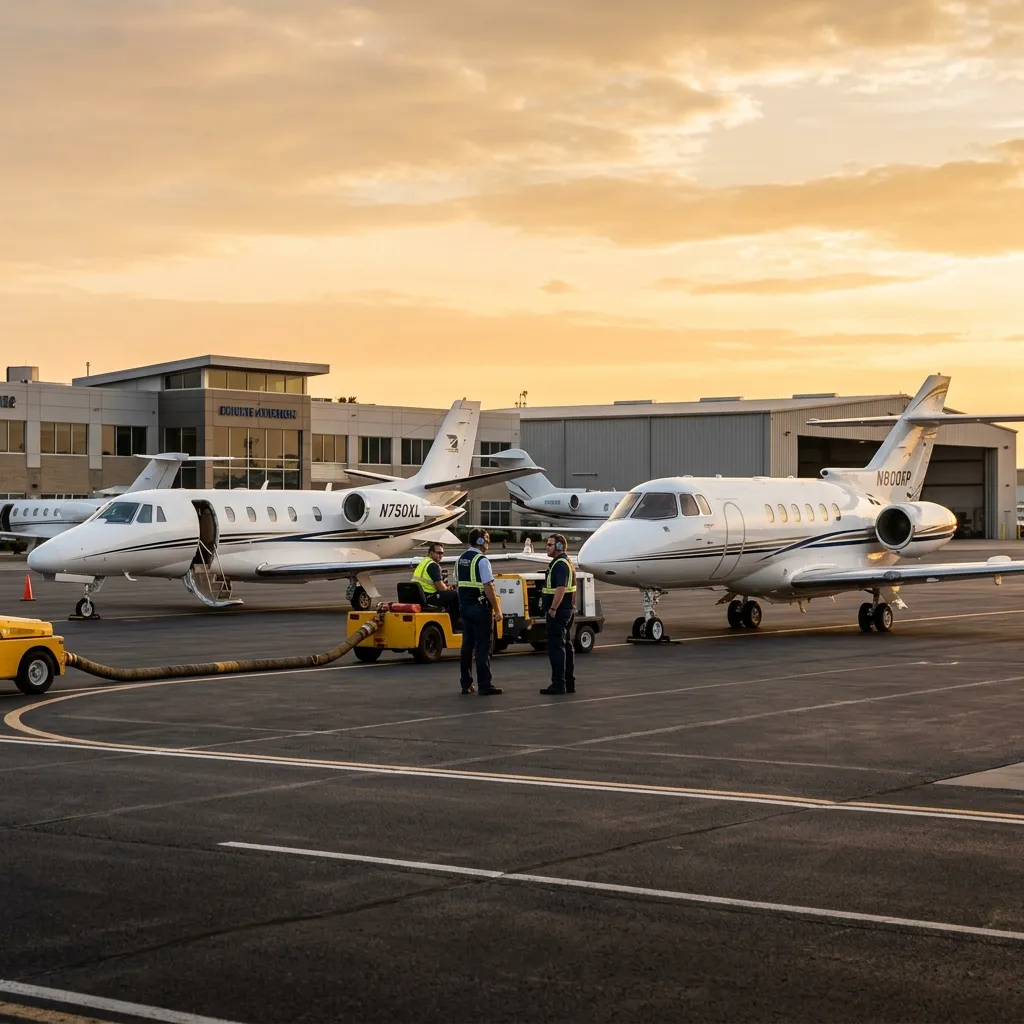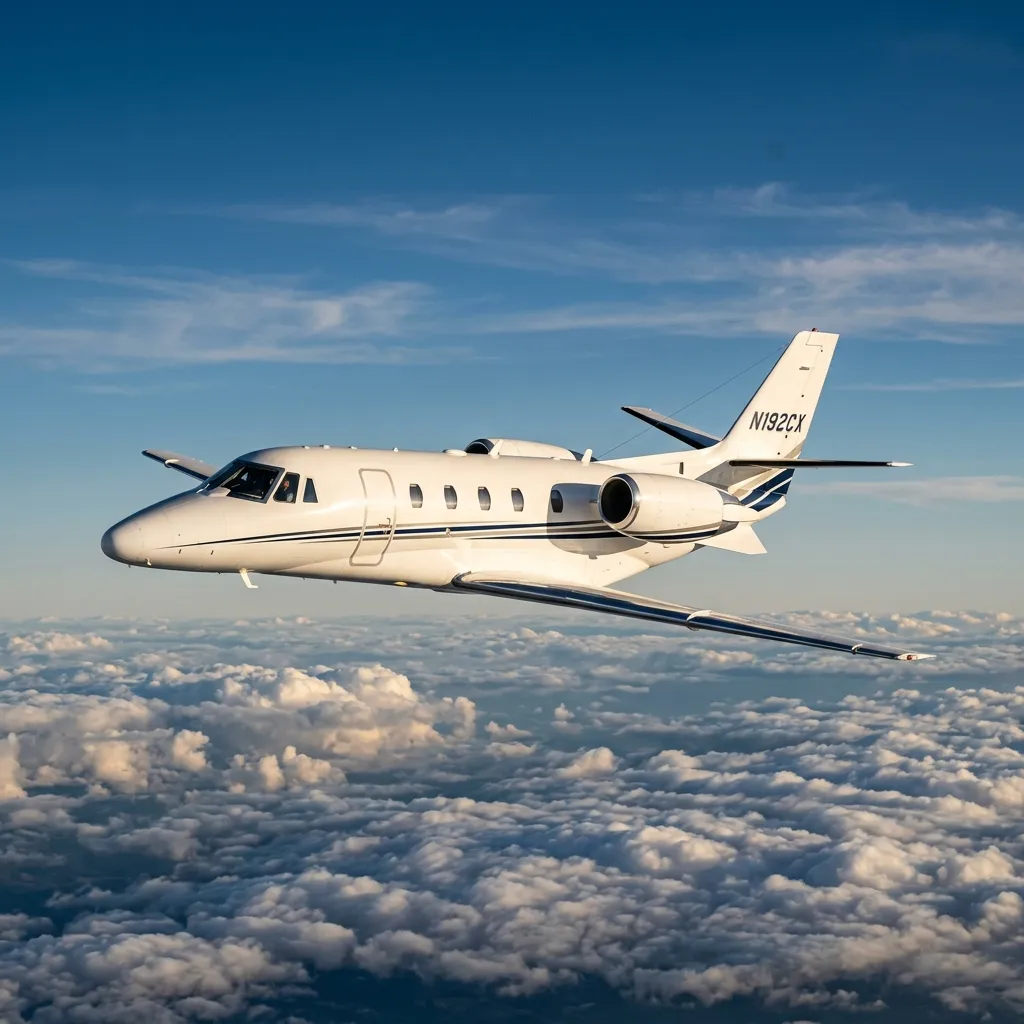
Cessna Citation XLS midsize jet cruising at altitude above a cloud deck in afternoon light

The Cessna Citation XLS: How a Midsize Jet Became the Industry's Default

Cessna delivered over 900 Citation XLS and XLS+ airframes. No midsize jet in history has matched that production volume. The XLS is not the fastest, longest-range, or most spacious aircraft in its class. It is the one that operators buy more than any other.

In This Article

900 Aircraft and Counting: Why the XLS Outsold Its Competition Performance: What the XLS Does Well and Where It Compromises Inside the XLS Cabin: Practical, Not Aspirational Why Operators Love the XLS: The Economics XLS vs. XLS+: What Changed in 2008 Where the XLS Sits in the 2026 Midsize Market Frequently Asked Questions

900 Aircraft and Counting: Why the XLS Outsold Its Competition

The Citation XLS entered service in 2004 as a stretched, re-engined variant of the Citation Excel. Cessna (now Textron Aviation) has since delivered over 900 XLS and XLS+ variants, making it the highest-production midsize jet in history. The Hawker 800XP, its closest competitor during the 2004-2013 period, reached approximately 350 deliveries before Hawker Beechcraft went through bankruptcy and ceased production.

The XLS's sales dominance stems from a precise market position. It offers enough range (2,100 nm) to cover any domestic U.S. route nonstop, a stand-up cabin that seats nine in a club-and-conference layout, and operating costs 15-20% below the Hawker 800XP. For a buyer whose mission profile is 80% domestic travel with four to six passengers, nothing else on the market matched that combination at its $13 million list price.

900+
Total Delivered
2,100 nm
Nonstop Range
441 ktas
Max Cruise Speed

Performance: What the XLS Does Well and Where It Compromises

Two Pratt & Whitney PW545B engines produce 4,119 pounds of thrust each, giving the XLS a combined 8,238 pounds of available thrust. Maximum cruise speed is 441 ktas at FL350. That is 30-40 knots slower than the Hawker 800XP's 447 ktas and significantly behind the Citation Latitude's 446 ktas at higher altitudes. The XLS makes up for that deficit in other ways.

Short-Field Capability

The XLS requires just 3,560 feet to clear a 35-foot obstacle at maximum takeoff weight. That is among the shortest takeoff distances in the midsize category. The Hawker 800XP needs 5,032 feet. The Challenger 350 needs 4,835 feet. This short-field performance opens airports that wider-body midsizes cannot access, including mountain fields in Colorado, short coastal runways in New England, and hundreds of municipal airports with 4,000-foot strips.

Range at maximum cruise with NBAA IFR reserves is 2,100 nautical miles. That covers Teterboro to Miami (1,020 nm), Los Angeles to Aspen (680 nm), and Chicago to San Juan (1,870 nm). It does not cover New York to Los Angeles (2,145 nm) nonstop in most wind conditions. For transcontinental missions, the XLS requires a fuel stop, typically at a midpoint like Dallas or Denver.

The XLS was never designed to be the best midsize jet in any single dimension. It was designed to be adequate in every dimension and affordable across the operating lifecycle. That strategy sold 900 aircraft.

Inside the XLS Cabin: Practical, Not Aspirational

The XLS cabin measures 18.5 feet long, 5.5 feet wide, and 5.7 feet tall. The stand-up height accommodates passengers up to approximately 5'9" without stooping. Taller passengers will feel the ceiling. The width places two club seats on each side of a center aisle that permits passage without contacting seated passengers. It is not spacious by heavy jet standards, but it is meaningfully more comfortable than a light jet.

Seating Configuration and Work Space

Standard configuration seats nine: four in a forward club section, four in a mid-cabin club facing a fold-down table, and one belted seat in the aft lavatory area. In practice, six passengers is the comfort threshold. At six, everyone has a window or aisle position. At eight, the cabin feels full. The fold-down work table in the mid section accommodates a laptop and documents for two passengers working across from each other.

Baggage volume is 90 cubic feet in an external, heated, pressurized compartment accessible through the fuselage. That handles eight full-size suitcases or a combination of luggage and golf bags for a group of six. The baggage door is on the left side of the aircraft behind the wing, and items are loaded by ground crew at the FBO.

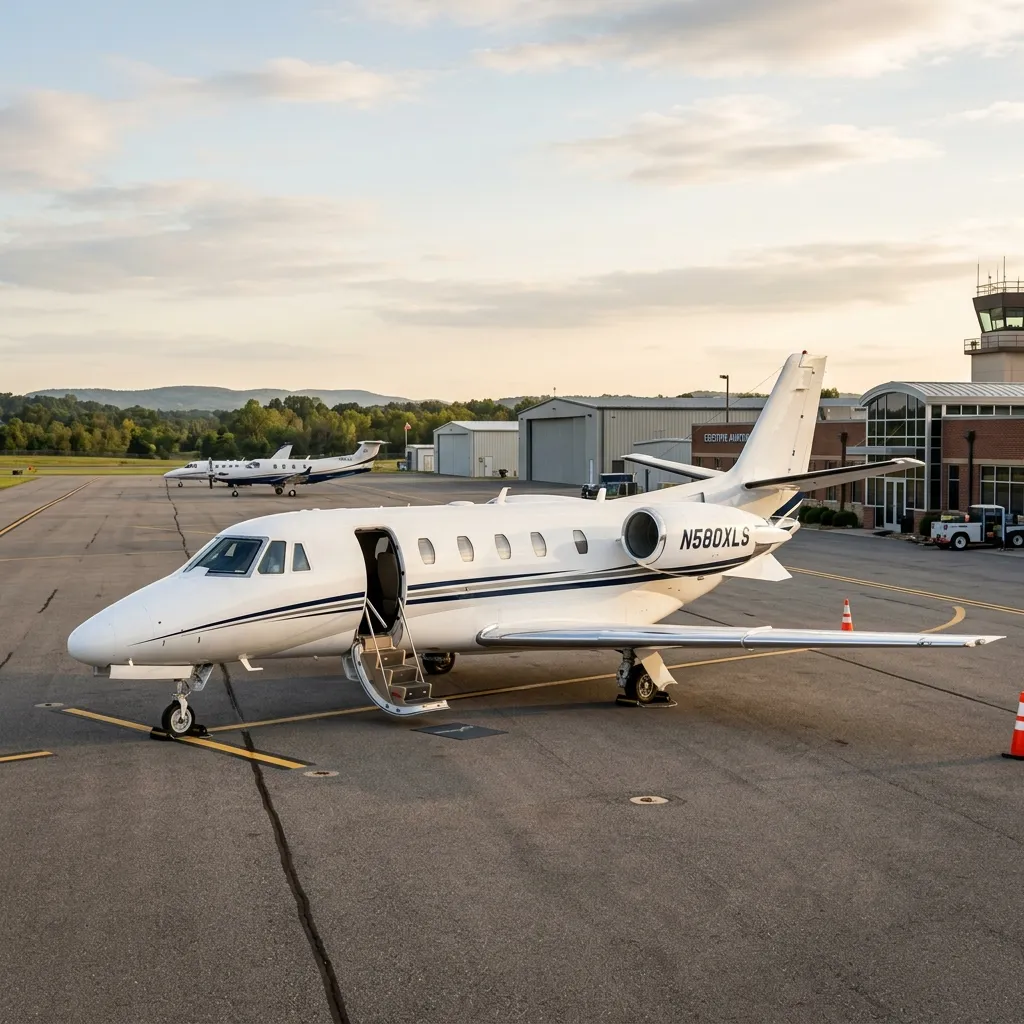
Charter a Citation XLS

We locate XLS availability from Part 135 operators across the country.

Request a Quote

Why Operators Love the XLS: The Economics

Direct operating costs for the XLS run approximately $2,200 per flight hour, including fuel, maintenance reserves, and crew. The PW545B engines burn 155 gallons per hour at cruise altitude. At $5.75 per gallon, fuel costs $890 per hour. That is $375 less per hour than the Hawker 800XP's Honeywell TFE731 engines, which burn 220 gallons per hour.

The PW545B engine is enrolled in Pratt & Whitney's ESP (Engine Service Program) by most operators. ESP covers scheduled hot section inspections and overhauls at a fixed per-hour rate, eliminating the $700,000-$900,000 lump-sum cost that catches small operators off guard. This predictable cost structure is a major reason the XLS fleet maintains high Part 135 utilization.

XLS vs. XLS+: What Changed in 2008

The Citation XLS+ entered production in 2008 with three updates: the Rockwell Collins Pro Line 21 glass cockpit (replacing the Honeywell Primus 1000), an increased maximum takeoff weight of 20,200 pounds (up from 20,000), and a revised cabin with LED lighting and larger sidewall panels. Performance is marginally improved: range increased to 2,100 nm from the original XLS's 1,858 nm.

Charter rates for the XLS+ run $200-$400 more per hour than the original XLS, reflecting the newer avionics and slightly better performance. For passengers, the difference in-cabin is subtle. The LED lighting creates a more modern atmosphere, and the Pro Line 21 cockpit may reassure clients who notice such things, but the seat comfort, cabin dimensions, and noise levels are identical.

Pre-owned XLS+ aircraft (2008-2015 vintage) sell for $4.5 to $7.5 million. Original XLS aircraft (2004-2008) sell for $3.0 to $5.0 million. The price gap reflects age, avionics modernity, and the perception, not always accurate, that a Pro Line 21 cockpit attracts better pilots and reduces training costs.

Where the XLS Sits in the 2026 Midsize Market

The Citation Latitude (2015-present) has effectively replaced the XLS+ in Textron's lineup. The Latitude offers a wider cabin (6.0 feet vs 5.5 feet), a flat floor, and Garmin G5000 avionics. It also costs $18 million new versus the XLS+'s $13 million when it was in production. The XLS remains the value play in the midsize market: strong performance, predictable maintenance, and a purchase price $3-5 million below the Latitude on the pre-owned market.

For charter clients, the XLS vs. Latitude decision rarely matters. Both fly the same routes at similar speeds. The Latitude's wider cabin is noticeable on flights exceeding three hours, but for the 90-minute to three-hour domestic flights that dominate midsize charter demand, the XLS delivers an equivalent experience at a lower hourly rate.

  • XLS charter rate: $3,200-$4,200/hr. Widest availability of any midsize jet on the Part 135 market.
  • Latitude charter rate: $3,800-$5,000/hr. Growing fleet but still fewer available airframes.
  • Hawker 800XP charter rate: $3,500-$4,800/hr. Declining fleet. Higher fuel costs. Parts scarcity increasing.
  • Challenger 350 charter rate: $4,200-$5,500/hr. Different category: wider cabin, longer range, meaningfully higher cost.
Brian Galvan

Written By

Brian Galvan

Founder, The Jet Finder ยท Private Aviation Operations & Technology

Former Director of Technology at FlyUSA (Inc. 5000 fastest-growing private jet company). Decade of hands-on experience across Part 135 operations, charter sales, fleet management, and aviation data systems.

LinkedInRead Full Profile →
Common Questions

Frequently Asked Questions


8 questions about Citation XLS specifications and history

Over 900 combined XLS and XLS+ airframes since 2004. That makes it the highest-production midsize business jet in history, surpassing the Hawker 800 series (approximately 600 across all variants) and the Learjet 60 (approximately 320 delivered).

The XLS requires 3,560 feet of runway to clear a 35-foot obstacle at maximum takeoff weight. Landing distance is approximately 2,857 feet. That allows operations from thousands of municipal airports with 4,000-foot runways that midsize competitors like the Hawker 800XP (5,032 feet takeoff) cannot access at full weight.

Approximately 1,800 nautical miles with four passengers, full fuel, and NBAA IFR reserves. That covers Chicago to San Juan, Boston to Miami, or Dallas to Seattle. The 2,100 nm published range assumes optimal conditions. In practice, headwinds, ATC routing, and passenger count reduce effective nonstop range to 1,700-1,900 nm for most real-world flights.

The XLS cabin stands 5.7 feet (68.4 inches) tall. Passengers up to approximately 5'9" can stand upright. Those taller will stoop when moving through the aisle. While seated, headroom is comfortable for virtually all body types. The stand-up limitation is the most common passenger complaint about the XLS relative to the wider, taller Citation Latitude (6.0 feet).

The PW545B on Pratt & Whitney's ESP program costs approximately $400-$500 per flight hour in reserves, covering scheduled inspections and overhauls. The Hawker 800XP's TFE731-5BR engines on Honeywell's MSP program run $500-$650 per hour. That $100-$150 per hour gap, compounded over 500 annual flight hours, creates a $50,000-$75,000 annual operating cost advantage for the XLS.

The XLS+ (2008-present) features the Rockwell Collins Pro Line 21 integrated flight deck with four 10.4-inch LCD displays. The original XLS (2004-2008) uses the Honeywell Primus 1000 suite with a combination of CRT and LCD displays. Pro Line 21 provides FANS/CPDLC capability, enhanced situational awareness tools, and a faster pilot training cycle.

A 2012 XLS+ with average airframe hours (2,500-3,500), engines on ESP, and a mid-condition interior sells for $5.5 to $7.0 million. Aircraft with recent hot section inspections completed, fresh interior refurbishment, or new exterior paint command the upper end. High-time airframes (4,500+ hours) or those off the ESP engine program trade at a $500,000-$1,000,000 discount.

Acquisition cost and operating economics. A pre-owned XLS+ costs $5-7 million; a pre-owned Latitude costs $9-13 million. The XLS burns 155 gallons per hour versus the Latitude's 190. For operators whose clients primarily fly two-to-three-hour domestic routes, the XLS generates higher margins per flight hour at a lower capital outlay, offsetting the Latitude's wider cabin.

Continue Reading

Related Articles


Your Next Mission

Ready to Fly?


Whether you need a charter quote or want to explore aircraft options, our team is here.

Contact Us