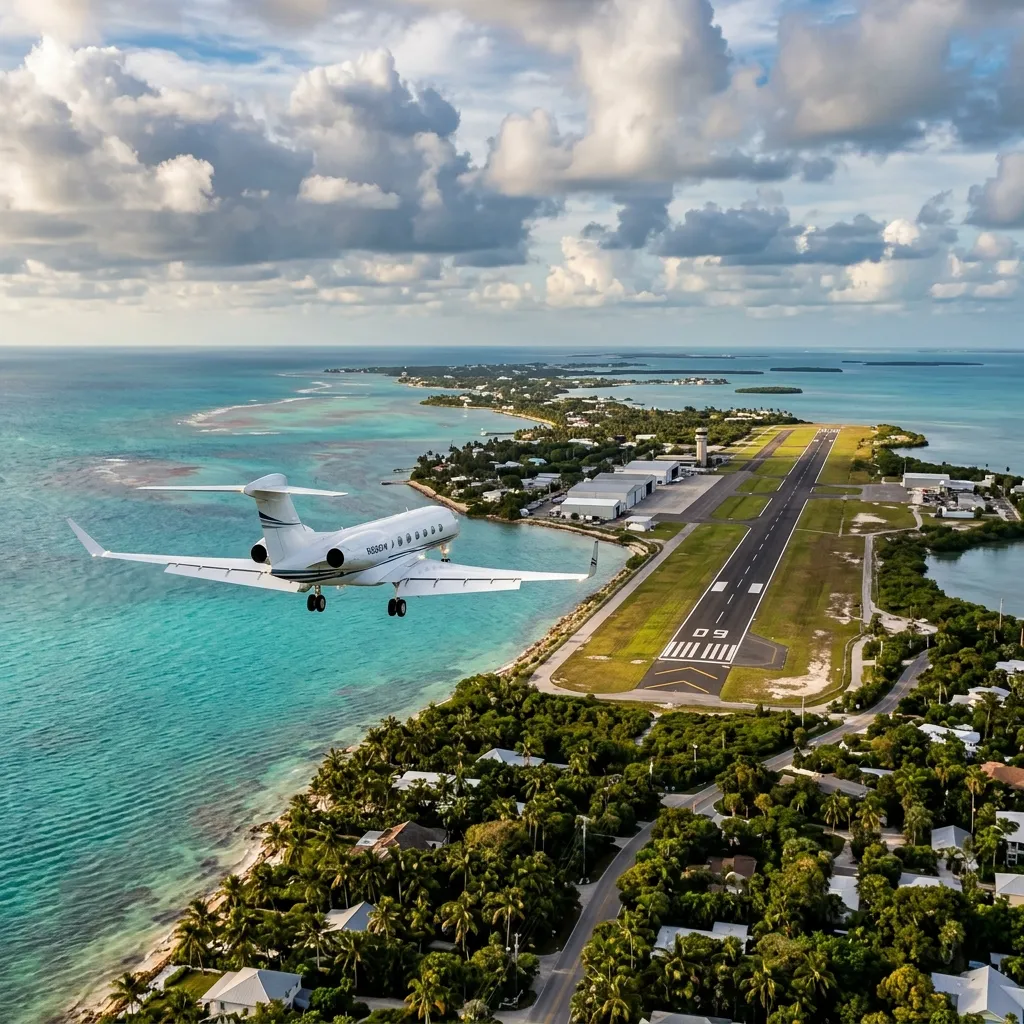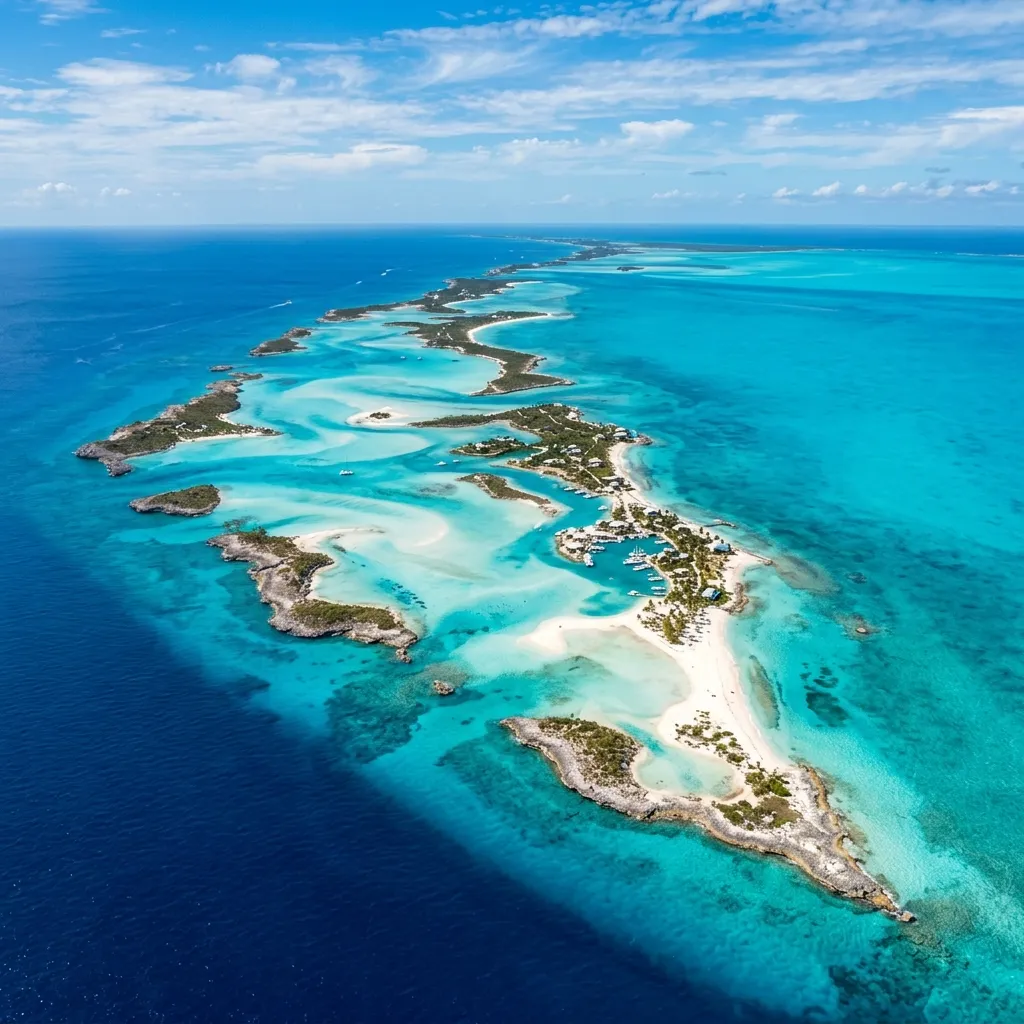
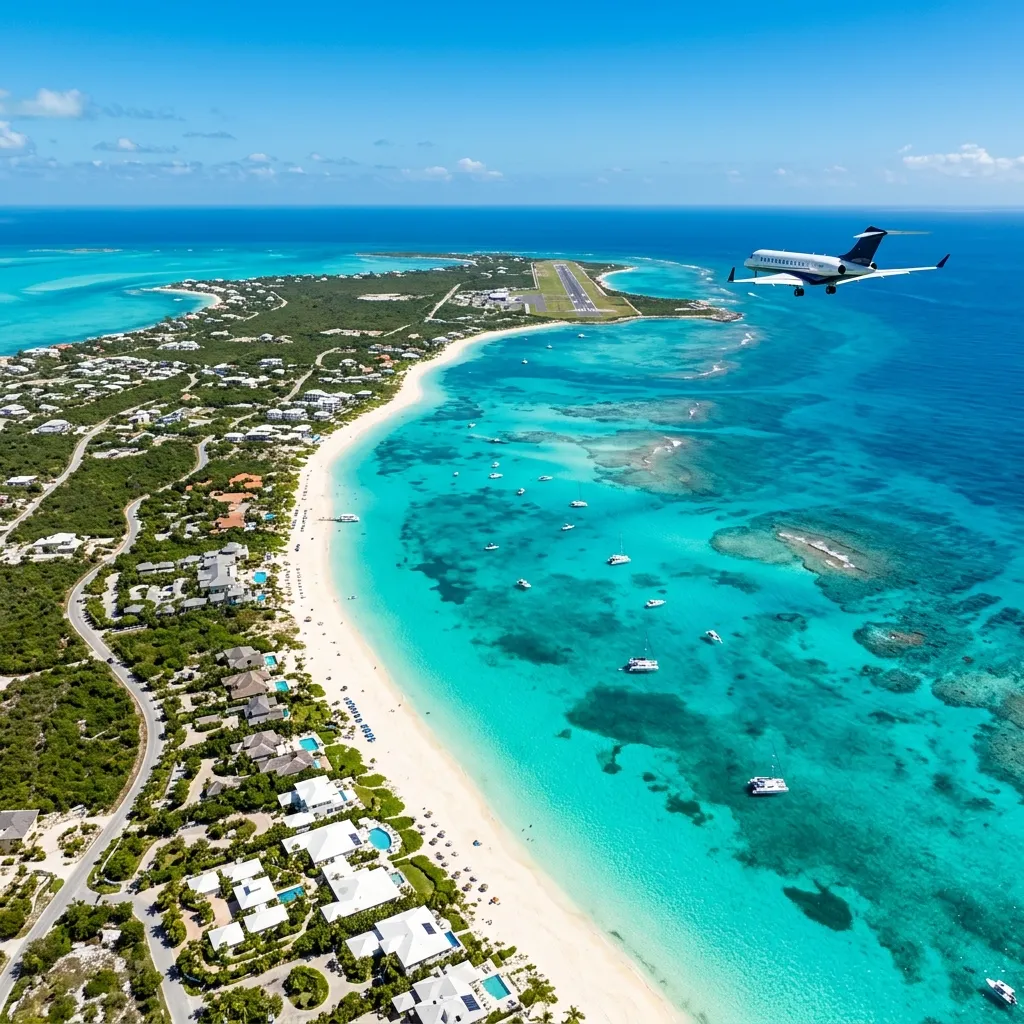
Aerial view of turquoise water and white sand cays in the Exuma Bahamas chain from private jet altitude

Flying Private to the Bahamas: Nassau, Exuma, and the Realities of Island-Hopping by Jet

Nassau's MYNN runway handles jets up to a Global 7500. Exuma's Staniel Cay has 3,000 feet of asphalt. Airports, FBOs, customs, and charter costs across 16 Bahamian airports.

In This Article

16 Airports, One Archipelago, and a 500-Mile Logistics Problem Nassau: Lynden Pindling International (MYNN/NAS) The Exuma Cays: Staniel Cay, Great Exuma, and Farmers Cay Eleuthera, Harbour Island, and the Northern Out Islands Customs, Immigration, and the eAPIS Requirement Charter Pricing: Miami to Nassau and Beyond Seasonal Considerations and Hurricane Planning Frequently Asked Questions

16 Airports, One Archipelago, and a 500-Mile Logistics Problem

The Bahamas stretches 500 miles from Grand Bahama Island (26 miles off the Florida coast) to Great Inagua (60 miles from Cuba). Between them, 16 airports accept private jets, though only 4 have runways exceeding 7,000 feet and full FBO services. The rest are regional strips with 3,000 to 5,000 feet of asphalt, limited or no fuel, and customs processing that ranges from professional to informal. In 2025, Nassau's Lynden Pindling International (MYNN) handled approximately 14,000 private jet movements, making it the busiest private aviation gateway in the Caribbean.

Most travelers think of 'the Bahamas' as a single destination. For private aviation planning, it is at least five distinct zones: Nassau and Paradise Island, the Exuma Cays, Eleuthera and Harbour Island, the Abacos, and Grand Bahama. Each has different airport infrastructure, fuel availability, customs requirements, and ground transportation options. Filing a flight plan to the wrong airport can mean an extra hour of ground travel or a missed dinner reservation.

Nassau: Lynden Pindling International (MYNN/NAS)

Nassau is the default arrival point for first-time visitors and the only Bahamian airport with infrastructure comparable to a U.S. hub. Runway 14/32 is 11,362 feet of grooved asphalt. Runway 09/27 adds 7,162 feet. Both are ILS-equipped. There is no aircraft size restriction. G650s, Global 7500s, and Boeing Business Jets operate here routinely.

16 Airports
Accept Private Jets
185 NM
Miami to Nassau
$8.50-$11/gal
Avg Fuel Price
45 min
Shortest Hop from FL

FBO Options

Two FBOs handle private jet traffic at Nassau. Jet Nassau operates the original private aviation terminal on the east side of the airport. Odyssey Aviation opened a newer facility in 2017 with a modern passenger lounge, covered ramp parking, and concierge services. Both offer customs clearance on site, fuel (Jet-A), ground handling, and rental car coordination. Odyssey tends to attract the newer large-cabin traffic. Jet Nassau handles a higher volume of light jets and turboprops.

Fuel at Nassau runs $8.50 to $10.00 per gallon for Jet-A. Operators flying from South Florida typically uplift full fuel at Fort Lauderdale Executive (FXE) or Opa-locka (KOPF) where prices are $5.50 to $7.00 per gallon, then burn down to minimum reserves on the 185 NM crossing. This saves $1,500 to $3,000 on fuel for a midsize jet.

The Exuma Cays: Staniel Cay, Great Exuma, and Farmers Cay

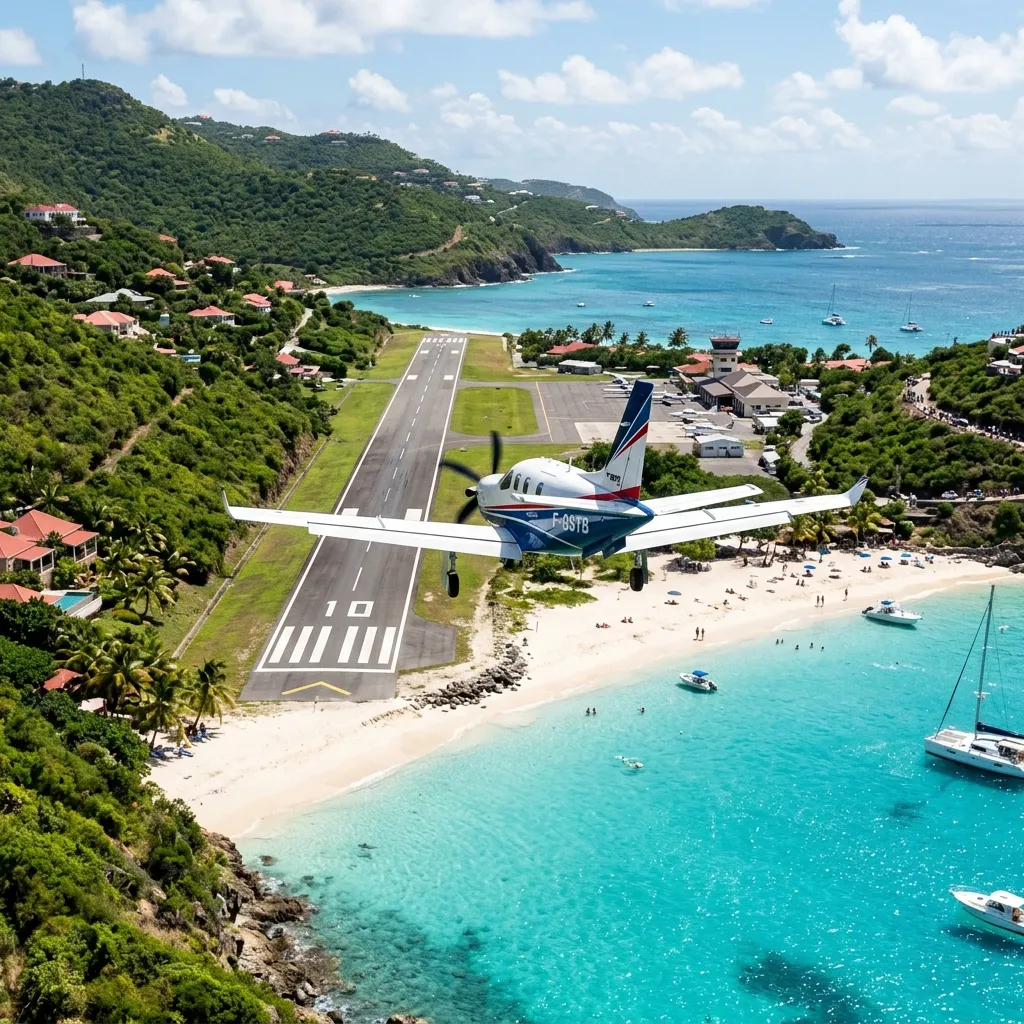
The Exumas draw the private jet crowd that has outgrown Nassau. Staniel Cay (MYLS) is the marquee destination: 3,000 feet of asphalt, no control tower, no instrument approach, and no fuel. You land VFR only, in daylight, with winds below 15 knots crosswind. The runway slopes uphill to the northwest. Pilots who have not flown into Staniel before need a briefing. This is not Teterboro.

Staniel Cay accepts turboprops and light jets comfortably. A Citation CJ3 with four passengers and light bags is ideal. A Phenom 300 can make it with weight restrictions. Midsize and heavy jets cannot operate there. Period. If your aircraft needs more than 3,000 feet, fly into Great Exuma and boat over.

Great Exuma's Exuma International Airport (MYEF/GGT) offers 7,000 feet of runway, customs processing, and fuel. It is the proper gateway for midsize and heavy jets headed to the Exuma Cays. From Georgetown (Great Exuma's capital), boat transfers to Staniel Cay take 90 minutes by speedboat or 25 minutes by chartered helicopter. Several yacht charter operators stage from Georgetown for multi-day Exuma cruises.

  • Staniel Cay (MYLS): 3,000 ft, VFR only, no fuel, light jets and turboprops only
  • Great Exuma (MYEF): 7,000 ft, IFR capable, customs, Jet-A available
  • Norman's Cay (MYEN): 3,100 ft, private strip, prior permission required
  • Farmers Cay: 2,400 ft grass/coral, Part 91 only, no commercial traffic

Eleuthera, Harbour Island, and the Northern Out Islands

Harbour Island is the Bahamas' other prestige destination. The pink-sand beach, The Dunmore hotel, and a client list that skews toward old money and fashion industry. The catch: Harbour Island has no airport. The nearest is North Eleuthera Airport (MYEH/ELH), which has 6,000 feet of runway and handles jets up to super-midsize class (Challengers, Citations, Latitudes).

From North Eleuthera, a 10-minute taxi ride reaches the government dock at Three Island Dock, where a 5-minute water taxi crosses to Harbour Island. The total door-to-door time from wheels-down to hotel lobby is 30 to 40 minutes. Plan for this. The water taxi does not run on a fixed schedule for private aviation arrivals; your FBO handler or hotel concierge should arrange a boat to meet you.
Need a Charter Quote?

Contact our team for a personalized quote.

Get a Quote

Customs, Immigration, and the eAPIS Requirement

The Bahamas requires all private aircraft to clear customs at the first airport of entry. U.S. citizens need a valid passport (no visa for stays under 90 days). Before departure from the United States, the operator must file an eAPIS manifest with U.S. Customs and Border Protection at least 60 minutes prior to departure. A $5,000 fine per passenger applies for failure to file.

Upon arrival, Bahamian Immigration officers meet the aircraft at the FBO (Nassau, Exuma) or at the terminal (smaller islands). Processing takes 15 to 30 minutes for a typical group. The general declaration, crew passports, and passenger manifest are inspected. Luggage may be searched. Firearms are strictly regulated; import permits must be obtained from the Royal Bahamas Police Force before travel. Do not assume your U.S. concealed carry permit applies.

Returning to the United States

All passengers must clear CBP upon return to the U.S. There is no preclearance facility in the Bahamas. Common clearing airports include Fort Lauderdale (KFLL), Miami-Opa Locka (KOPF), Palm Beach (KPBI), and West Palm Beach. The operator files return eAPIS and coordinates a CBP arrival window. Some airports (Opa-locka in particular) have short CBP staffing windows; confirm availability before departure from the Bahamas.

Charter Pricing: Miami to Nassau and Beyond

The 185 NM hop from Fort Lauderdale to Nassau is one of the shortest international charter routes in the world. A light jet (Citation CJ3, Phenom 300) quotes $8,000 to $14,000 one-way including positioning and customs fees. A midsize jet (Citation XLS, Hawker 800XP) runs $14,000 to $22,000. Heavy jets are $25,000 to $40,000, though at 45 minutes of flight time the heavy cabin barely reaches cruising altitude before starting descent.

Round-trip pricing typically receives a 10-15% discount over two one-way quotes because the operator avoids positioning an empty aircraft. For Exuma-bound travelers from the Northeast, a common cost-saving strategy is chartering a midsize jet to Nassau, clearing customs, then repositioning to Staniel Cay on a local turboprop or light jet. This splits the international leg from the island hop and often saves $5,000 to $8,000 over a direct charter that would require the larger jet to sit idle at Staniel.

Seasonal Considerations and Hurricane Planning

Peak season in the Bahamas runs December through April. Charter demand, hotel rates, and FBO ramp availability all peak during Christmas week and New Year's. Aircraft availability tightens by early December. Book by Thanksgiving if your dates are firm.

Hurricane season (June through November) is the off-peak window. Charter rates drop 20-30%, resort rates drop further, and FBO ramps are empty. The trade-off is real weather risk. Category 5 Hurricane Dorian destroyed significant infrastructure in the Abacos and Grand Bahama in September 2019. Most of it has been rebuilt, but the reminder is recent. Between June and November, operators include cancellation provisions in charter agreements, and passengers should carry comprehensive trip insurance.

April and May offer the best value for Bahamas charters. Winter crowds thin out, water temperatures stay above 78°F, and hurricane risk is negligible. Fuel prices drop slightly as seasonal demand recedes. The only downside: some boutique resorts close for annual maintenance in May.

Brian Galvan

Written By

Brian Galvan

Founder, The Jet Finder · Private Aviation Operations & Technology

Former Director of Technology at FlyUSA (Inc. 5000 fastest-growing private jet company). Decade of hands-on experience across Part 135 operations, charter sales, fleet management, and aviation data systems.

LinkedInRead Full Profile →
Common Questions

Frequently Asked Questions


8 questions about chartering this aircraft

Nassau's Lynden Pindling International (MYNN) handles approximately 14,000 private jet movements per year, accounting for roughly 60% of all business aviation traffic in the Bahamas. Great Exuma (MYEF) is second at approximately 2,500 movements, driven by the Exuma Cays resort and yachting traffic. North Eleuthera (MYEH) ranks third, primarily serving Harbour Island visitors during winter season.

No. Staniel Cay (MYLS) has a 3,000-foot runway with no instrument approach, no control tower, and no fuel. The G650 requires approximately 5,600 feet for landing at sea level. Even if the runway were long enough, the lack of IFR approach capability and limited ramp space make it unsuitable for large-cabin aircraft. G650 passengers bound for the Exumas should land at Great Exuma (MYEF) with its 7,000-foot runway and arrange a boat or helicopter transfer to Staniel Cay.

Jet-A at Fort Lauderdale Executive (FXE) or Opa-locka (KOPF) averages $5.50 to $7.00 per gallon. Nassau FBOs charge $8.50 to $10.00 per gallon. On a midsize jet burning 200 gallons for the 45-minute crossing, the savings from uplifting full tanks in Florida versus refueling in Nassau range from $500 to $1,000. For heavy jets that burn 350-500 gallons per hour, the savings reach $1,500 to $3,000 per fuel stop avoided.

From North Eleuthera Airport (ELH), a 10-minute taxi reaches Three Island Dock on the west coast. A water taxi (locally called 'the boat') crosses to Harbour Island in 5 minutes. Total airport-to-hotel time is 30-40 minutes. Hotels like The Dunmore, Coral Sands, and The Landing arrange private dock-side car transfers. Water taxis cost $10-15 per person. During peak season, pre-arranged transfers through your hotel concierge are strongly recommended; walk-up availability at the dock is unreliable.

Typically no, because the operator positions the aircraft on the outbound leg and recovers it on the return. However, if you leave the aircraft in Nassau for an extended stay (3+ days), daily parking fees at the FBO ($150-$500/day depending on aircraft size) and crew lodging costs ($200-$400/night) are passed to the client. Some operators offer a 'deadhead home and reposition' option where the aircraft returns empty to the U.S. and repositions back for pickup, which costs roughly $5,000-$12,000 per repositioning leg on a midsize jet.

Charter operators monitor tropical weather continuously and will recommend early departure if a named storm approaches within 48 hours. Most charter agreements include force majeure provisions for hurricanes. If the aircraft must evacuate before your planned departure, the operator coordinates an accelerated departure or arranges commercial airline backup. Trip cancellation insurance that specifically covers named storms is available and recommended for any Bahamas charter between June and November. Standard travel insurance policies may exclude hurricane-related cancellations if a storm is already named at the time of booking.

Yes, with advance documentation. The Bahamas requires an import permit from the Department of Agriculture for all animals, a veterinary health certificate issued within 48 hours of travel, and proof of current rabies vaccination. Dogs and cats are most common; exotic animals face additional restrictions. The permit application must be submitted at least 7 days before travel. Your charter operator can coordinate the paperwork, but the pet owner is responsible for obtaining the veterinary certificate and permit.

Staniel Cay (MYLS) is uncontrolled airspace. Pilots broadcast intentions on the Common Traffic Advisory Frequency (CTAF) 122.8 MHz starting 10 miles out. The standard pattern is left traffic for Runway 15 and right traffic for Runway 33. There is no ATIS, no AWOS, and no weather reporting on the field. Pilots rely on en-route weather from Nassau Approach and visual assessment of the windsock on the field. Landing is VFR only; if the ceiling drops below 1,500 feet or visibility falls below 3 miles, divert to Great Exuma.

Continue Reading

Related Articles


Your Next Mission

Ready to Fly?


Whether you need a charter quote or want to explore aircraft options, our team is here.

Contact Us