CJ4 Charter Pricing: The Numbers
The Citation CJ4 charters for $2,400 to $3,300 per flight hour. A three-hour flight from Teterboro to Miami runs approximately $7,200 to $9,900 in flight time alone. Add positioning fees, overnight crew costs, and FBO landing charges and the total invoice typically lands between $9,500 and $14,000 one-way.
That price point places the CJ4 in a unique competitive position. It delivers midsize jet range (2,165 nm) and speed (451 knots) while billing at light jet rates. A Hawker 800XP or Citation XLS covering the same route charges $3,500 to $4,800 per hour. The CJ4 saves $3,000 to $6,000 on a typical transcontinental trip without meaningfully compromising the passenger experience.
Where the CJ4 Wins and Where It Doesn't
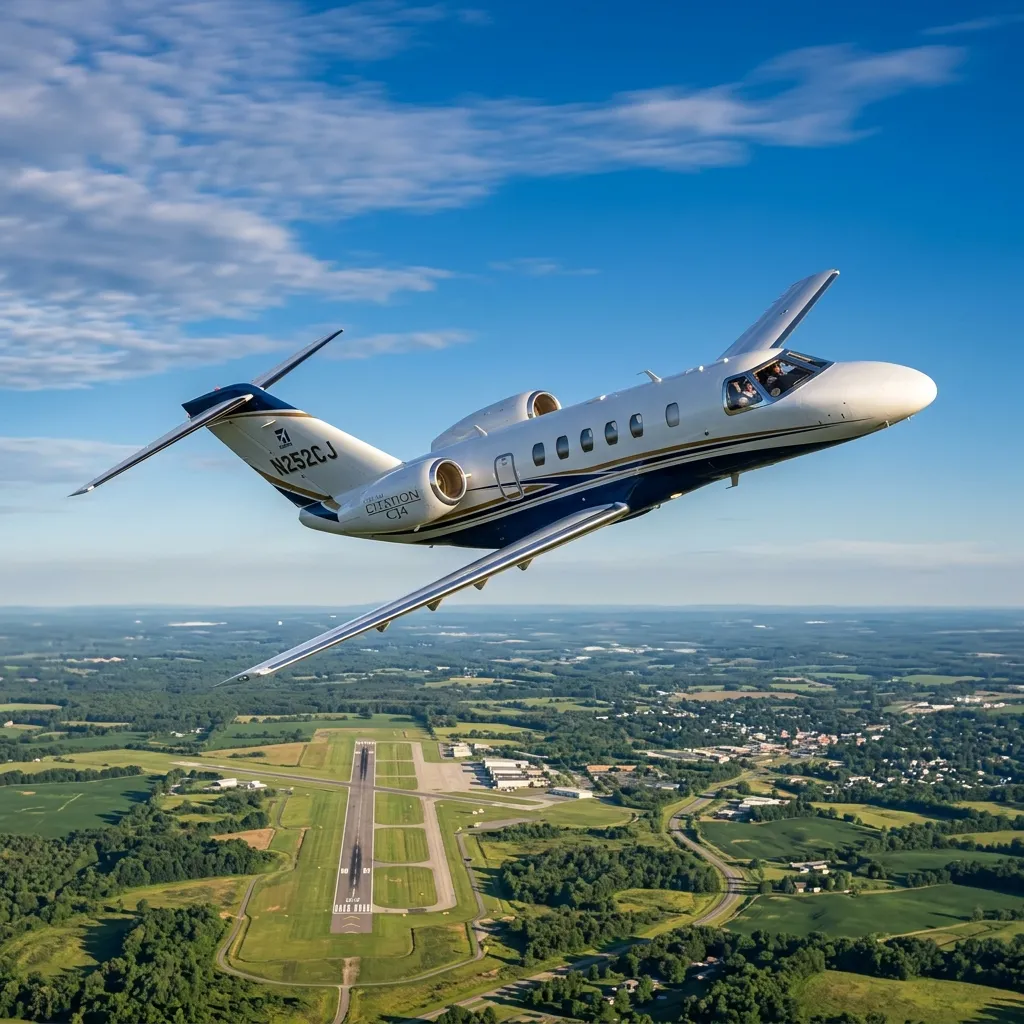
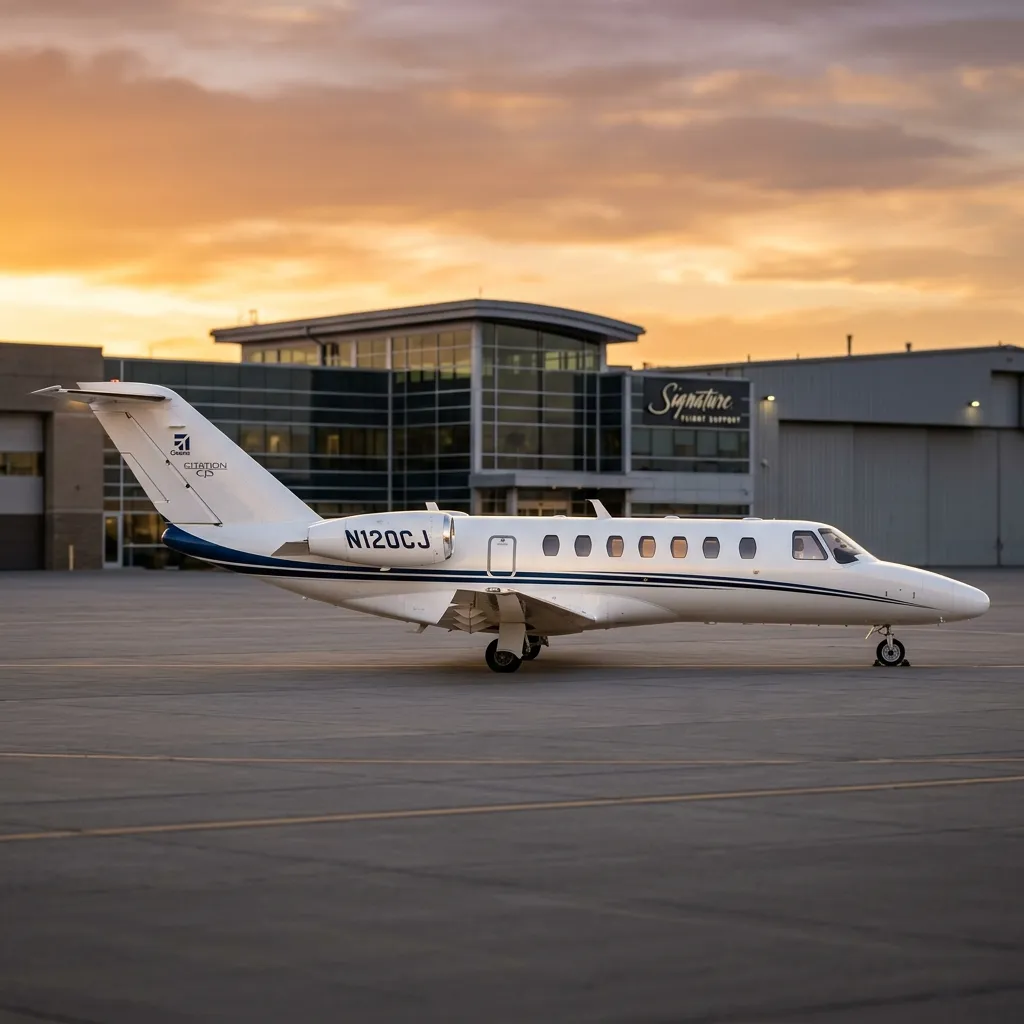
The CJ4 is the right aircraft for missions between 500 and 2,000 nautical miles with two to six passengers. It handles coast-to-coast U.S. flights nonstop in most wind conditions, connects the Eastern Seaboard to the Caribbean without a fuel stop, and accesses shorter runways that larger midsize jets cannot.
It is not the right aircraft for eight passengers who need a stand-up cabin. The CJ4's cabin height is 4.8 feet. Passengers over 5'10" will crouch when moving through the aisle. The cabin width, also 4.8 feet, seats passengers in a 2+2 club configuration with limited shoulder room. For groups larger than six, or for flights exceeding five hours where passenger comfort is the priority, a Citation XLS or Challenger 350 is the better tool.
The CJ4 is not trying to be a midsize jet. It is trying to do midsize work at light jet cost. For the right mission, nothing else in the market matches that value.
What Goes Into the Hourly Rate
The CJ4's two Williams FJ44-4A engines burn approximately 185 gallons per hour at cruise altitude. At an average Jet-A price of $5.75 per gallon, fuel costs roughly $1,065 per flight hour. That is significantly less than the 250+ gallons per hour consumed by midsize jets like the Hawker 800XP.
Single-pilot certification is a significant cost advantage. While most charter operators still fly the CJ4 with two pilots for safety and insurance reasons, the aircraft's design means crew costs are inherently lower. The Rockwell Collins Pro Line 21 avionics suite automates much of the workload that requires a second crew member in older light jets.
Sample CJ4 Charter Routes
The following estimates assume a one-way charter with no repositioning fees. Actual quotes will vary based on operator, season, and aircraft availability.
- New York (TEB) → Miami (OPF): 1,020 nm, 2.7 hrs, $6,500-$8,900. The CJ4's most popular corridor. Nonstop, no compromises.
- Chicago (MDW) → Scottsdale (SDL): 1,260 nm, 3.1 hrs, $7,400-$10,200. A Sunday evening return from a golf weekend, landing at Scottsdale Airport with its cluster of premium FBOs.
- Los Angeles (VNY) → Seattle (BFI): 830 nm, 2.2 hrs, $5,300-$7,300. Short enough that the CJ4 cabin limitations are irrelevant.
- Boston (BED) → Nassau (NAS): 1,150 nm, 2.9 hrs, $7,000-$9,600. International clearance at Nassau adds $500-$800 in handling fees.
- Dallas (ADS) → New York (TEB): 1,370 nm, 3.3 hrs, $7,900-$10,900. Nonstop against prevailing headwinds. Westbound return is 20 minutes faster.
For any route under 1,500 nm with six or fewer passengers, the CJ4 is almost always the most cost-effective jet-speed option. Above 1,800 nm, you start paying close to midsize rates for a light jet cabin, and the economics tilt toward stepping up.
Charter a Citation CJ4
Our team locates CJ4 availability from Part 135 operators across the U.S.
Request a Quote →CJ4 Fleet Size and Charter Availability
Cessna has delivered over 200 CJ4s since the type entered service in 2010. A meaningful percentage of the active fleet operates under Part 135 certificates, making charter availability generally strong across the continental United States. The densest concentrations of charter CJ4s are based in Texas, Florida, and the Northeast corridor.
The CJ4 Gen2, introduced in 2023, brought updates to the avionics suite and cabin management system but did not fundamentally change the airframe. Both variants are available on the charter market, though operators with Gen2 aircraft may charge a slight premium for the upgraded interior. For passengers, the differences between a well-maintained original CJ4 and a Gen2 are marginal at best.
Short-notice availability (under 24 hours) is realistic for the CJ4, particularly out of major hubs like Addison Airport in Dallas or Opa-locka in Miami. During peak travel periods like Thanksgiving week or the first weekend of ski season, booking 5-7 days ahead is advisable.
CJ4 vs. CJ3: When to Step Up
The CJ3 charters for $2,200 to $3,100 per hour, roughly $200-$300 less than the CJ4. For that savings, you sacrifice 665 nautical miles of range (1,500 nm vs 2,165 nm) and about 30 knots of cruise speed. On a two-hour flight from Atlanta to New York, the difference is negligible. The CJ3 gets you there for a few hundred dollars less.
The CJ4 justifies its premium on longer missions. A nonstop flight from Van Nuys to New York is well within the CJ4's range but beyond the CJ3's capability with a full passenger load and typical wind conditions. If your travel patterns regularly include transcontinental routes, the CJ4 eliminates fuel stops that add 45-60 minutes to your door-to-door time.
The CJ4 also offers 77 cubic feet of baggage space compared to the CJ3's 64 cubic feet. For ski trips or extended business travel with multiple passengers carrying luggage, the CJ4's larger baggage compartment becomes a meaningful advantage.
When Chartering Stops Making Sense
A preowned CJ4 sells for $5.5 to $7.5 million depending on serial number, engine time, and avionics condition. Annual fixed costs for a managed CJ4, including hangar, insurance, crew salaries, recurrent training, and scheduled maintenance, run between $450,000 and $650,000 before the aircraft burns a drop of fuel.
At an average charter cost of $8,500 per trip (3-hour average mission), a buyer who flies 100 hours per year spends approximately $280,000 on charter. That is less than half the annual fixed cost of ownership. The crossover point where ownership begins to compete with chartering a CJ4 is roughly 250 to 300 flight hours per year, a volume that places the aircraft in near-daily operation.
For most charter clients flying 50 to 150 hours annually, the math favors chartering. The CJ4's strong availability in the Part 135 fleet means you rarely face the scheduling compromises that push some heavy jet clients toward fractional shares or full ownership. The aircraft is available when you need it without the carrying cost when you do not.
One hybrid approach gaining traction: purchasing a CJ4 and placing it on a Part 135 certificate with a management company. Charter revenue from third-party flights offsets 20-40% of annual fixed costs, reducing the effective ownership threshold to approximately 175 hours per year. The trade-off is wear on the aircraft and scheduling constraints during peak demand periods.