From the Challenger 300 to the 350: What Changed
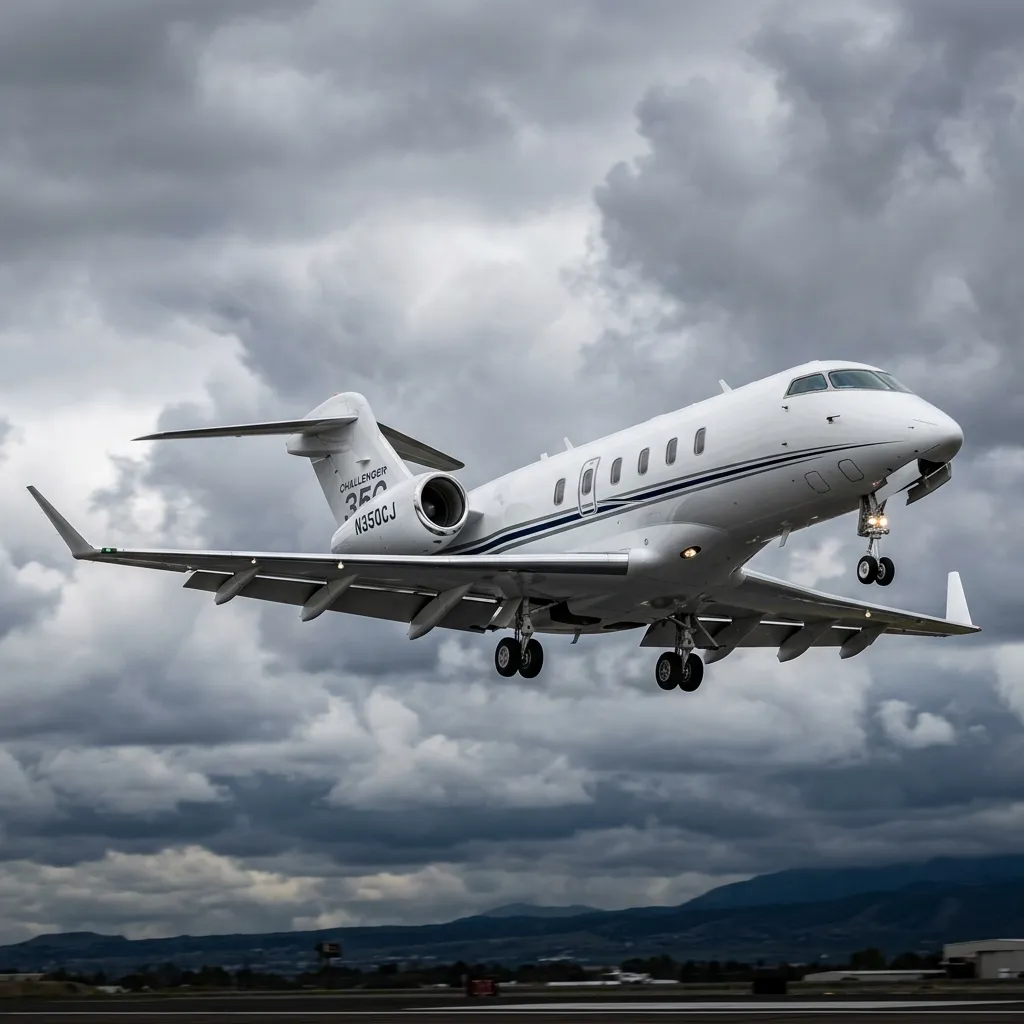
The Challenger 350 entered service in 2014 as a structural and avionics upgrade to the Challenger 300, which Bombardier had delivered since 2003. Over 400 Challenger 350s have been built since certification, placing the type in the top three for active super-midsize deliveries worldwide. The upgrade was more than cosmetic: a redesigned wing cuff increased range by 100 nm, the Rockwell Collins Pro Line 21 Advanced cockpit replaced the original Pro Line 21, and the cabin received Bombardier's Vision flight deck awareness system for passengers.
The changes addressed operator feedback without breaking the aircraft's DNA. Pilots who typed in the Challenger 300 needed minimal transition training for the 350. Maintenance programs, parts inventories, and hangar fitments carried over directly. Bombardier preserved the installed base's operational continuity while adding the range and cockpit improvements that kept the aircraft competitive against the incoming Citation Latitude and Gulfstream G280.
$3,800-$5,200
Hourly Charter Rate
The Cabin: 7.2 Feet Wide and Flat-Floor
The Challenger 350's cabin measures 25.2 feet long, 7.2 feet wide, and 6.1 feet tall. That width, 0.8 feet wider than the Citation Latitude and 0.1 feet wider than the Gulfstream G280, is the aircraft's primary selling point. Two passengers sitting across from each other in club configuration have enough shoulder room to work on laptops without elbowing each other. The flat floor runs the full length of the cabin without steps, a Bombardier design choice that simplifies catering service and passenger movement.
Standard Charter Configurations
- Standard club: Eight seats in two facing pairs, plus a two-place divan aft. Seats 10 passengers maximum, 8 in comfort.
- Executive double-club: Two four-seat club groupings with a work table between each pair. Optimized for corporate groups of 6-8.
- Aft berthing: Divan converts to a flat sleeping surface for overnight transcontinental flights. Not a true bed, but functional for a 5-hour red-eye.
- Baggage: 106 cubic feet in an externally accessed, heated compartment. Fits 8 full-size roller bags or 6 bags plus 2 sets of golf clubs.
The enclosed lavatory sits forward of the cabin, behind the cockpit, a Bombardier placement decision that passengers either prefer (removes lavatory noise from the main cabin) or tolerate (requires walking past seated passengers). The Latitude places its lavatory aft; neither position is objectively better.
The Challenger 350's NBAA IFR range of 3,200 nm covers Teterboro to Van Nuys (2,440 nm), New York to London (3,450 nm with headwinds, so a fuel stop in Bangor or Goose Bay), and Miami to Bogota (1,485 nm) nonstop. The aircraft does not cross the Atlantic nonstop from the U.S. East Coast in standard conditions. That single limitation separates it from the heavy jet category and keeps the charter rate $2,000-$3,000 per hour below a G550 or Falcon 900.
Two Honeywell HTF7350 engines produce 7,323 pounds of thrust each and push the CL350 to a maximum cruise speed of 470 ktas (Mach 0.83). Long-range cruise settles at 430 ktas, where fuel burn drops to approximately 210 gallons per hour. At $6.50 per gallon, a four-hour coast-to-coast flight burns roughly $5,460 in fuel, which represents 50-55% of the quoted hourly charter rate.
The Challenger 350 was not designed to cross oceans. It was designed to cross continents without making excuses.
Charter a Challenger 350
We source CL350 availability from Part 135 operators across the U.S. and internationally.
Request a Quote →Charter Economics: $3,800-$5,200 Per Hour
Charter operators quote the Challenger 350 at $3,800 to $5,200 per flight hour in 2026, positioning it squarely between light jets ($2,000-$3,300) and heavy jets ($5,500-$8,000). That pricing reflects the aircraft's operating cost structure: approximately $210/hr in fuel, $400/hr in maintenance reserves (engine and airframe), $350/hr in crew costs, $200/hr in insurance, and the balance in operator margin and overhead.
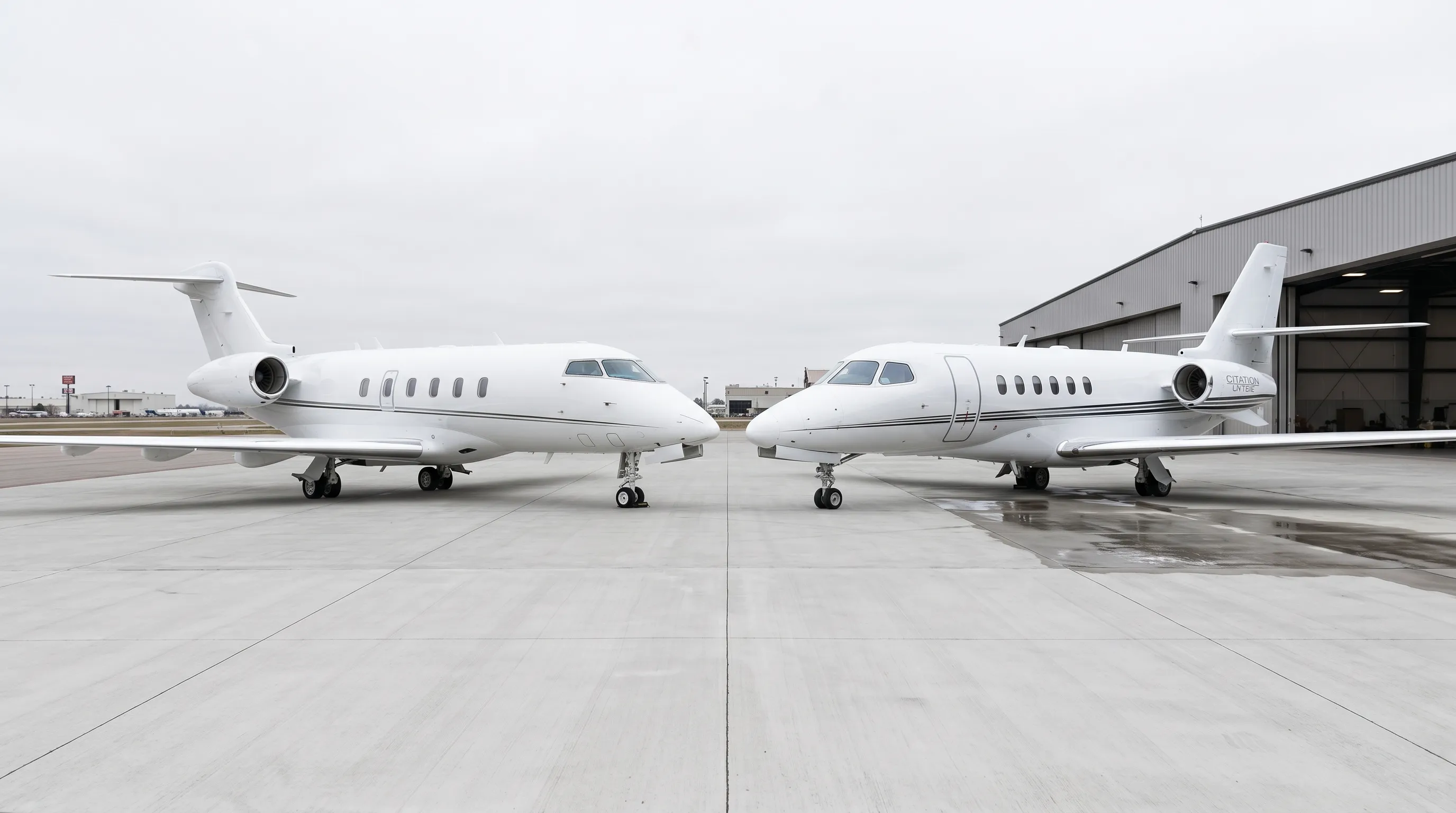
The Challenger 350 competes for the same missions as the Latitude and G280 but consistently commands a $200-$400 per hour premium. Operators justify the spread with the wider cabin, established maintenance network, and Bombardier's deeper pilot training pipeline. Whether that premium delivers $200/hr of additional comfort is a question each client answers differently.
The Competition: Latitude, G280, and the Challenger 3500
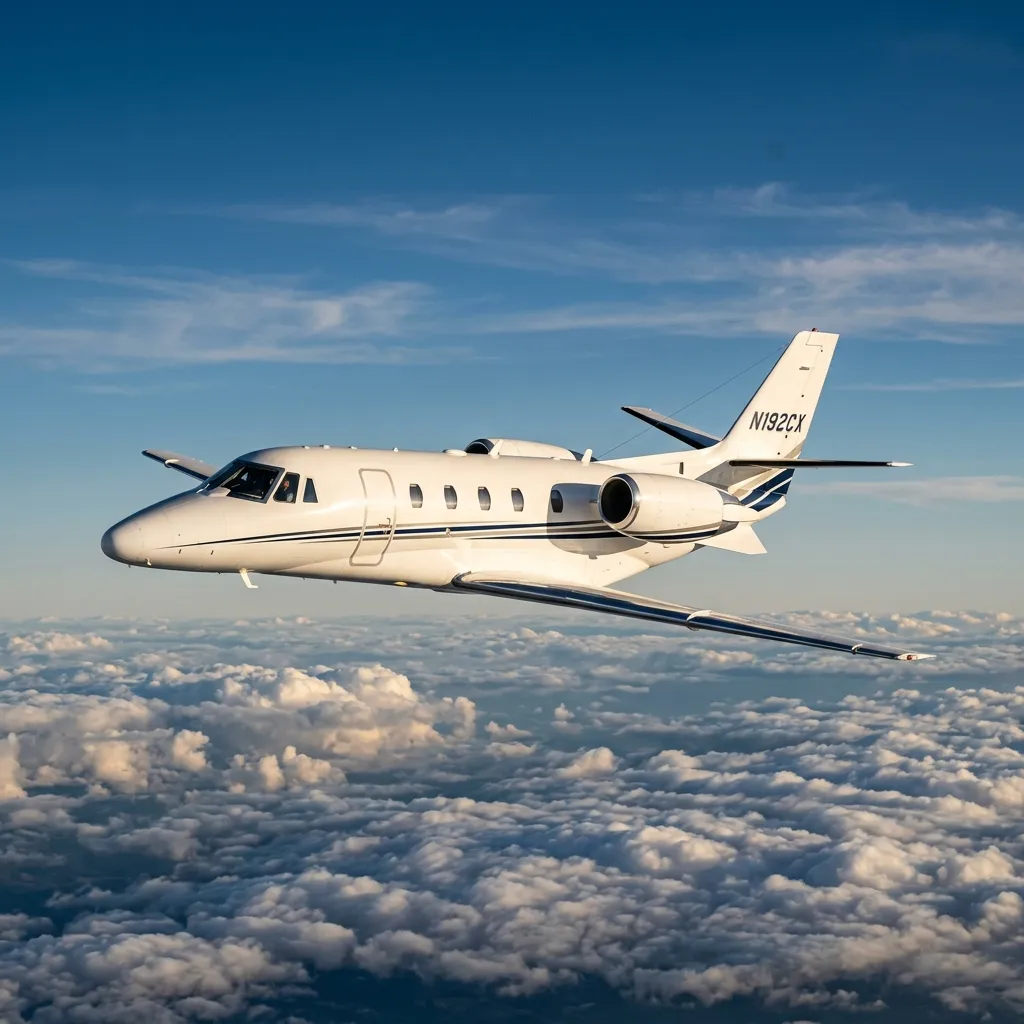
The Cessna Citation Latitude offers a flat-floor cabin at $3,200-$4,200 per hour, 500 nm less range, and a 3,580-foot takeoff distance that beats the CL350's 4,835 feet. For short-runway missions, the Latitude wins on access. For cabin width and coast-to-coast range, the Challenger 350 holds the advantage.
The Gulfstream G280 matches the CL350 on range (3,600 nm, actually exceeding it by 400 nm) and speed (482 ktas max) while offering a 5.7-foot-wide cabin. The G280's cabin is narrower but features a lower cabin altitude (4,850 feet at FL450) that reduces passenger fatigue on longer flights. The G280's smaller installed fleet means fewer charter options and less schedule flexibility.
The Challenger 3500: Successor in Name Only
Bombardier introduced the Challenger 3500 in 2022 with a redesigned cabin featuring the industry's first voice-controlled cabin management system, a resculpted seat with deeper recline, and the Bombardier Smooth Flĕx Wing with performance-enhancing winglets. The airframe, engines, and range are functionally identical to the 350. Charter rates for the 3500 run $4,200-$5,500 per hour, reflecting the newer interior and lower available flight hours.
Who Operates the Challenger 350
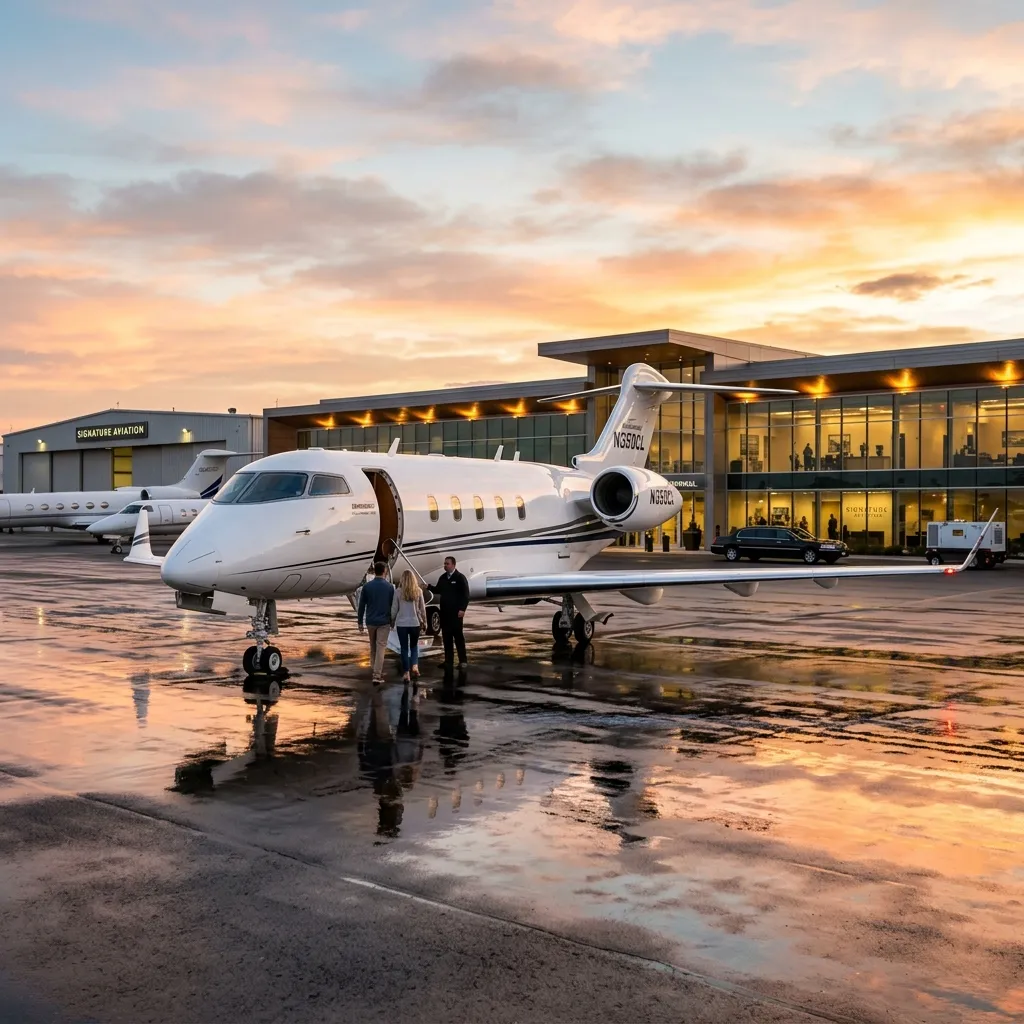
Three buyer profiles dominate the CL350 registry. First: fractional programs. NetJets and Flexjet both operate large Challenger 350 fleets, and a significant portion of CL350 charter availability flows through fractional fleet management agreements. Second: corporate flight departments at companies that need coast-to-coast domestic capability without the operating cost of a heavy jet. Third: Part 135 charter operators who need a wide-cabin workhorse that generates revenue five to six days per week.
Owner-operators are the minority. The Challenger 350's $27 million new price and $1.5-$2.0 million annual fixed operating cost put it beyond the personal use threshold for all but the highest-utilization private owners. Most private owners who want super-midsize capability at this price point buy pre-owned and place the aircraft on a Part 135 certificate to generate charter revenue when not in personal use.
The FAA registry shows approximately 400 Challenger 350 airframes with active U.S. registrations. Of those, an estimated 60-65% are available for charter through Part 135 operators or managed fleet programs. That density is the Challenger 350's structural advantage: when a client requests a super-midsize jet for next Tuesday, the CL350 is statistically the most likely aircraft available.