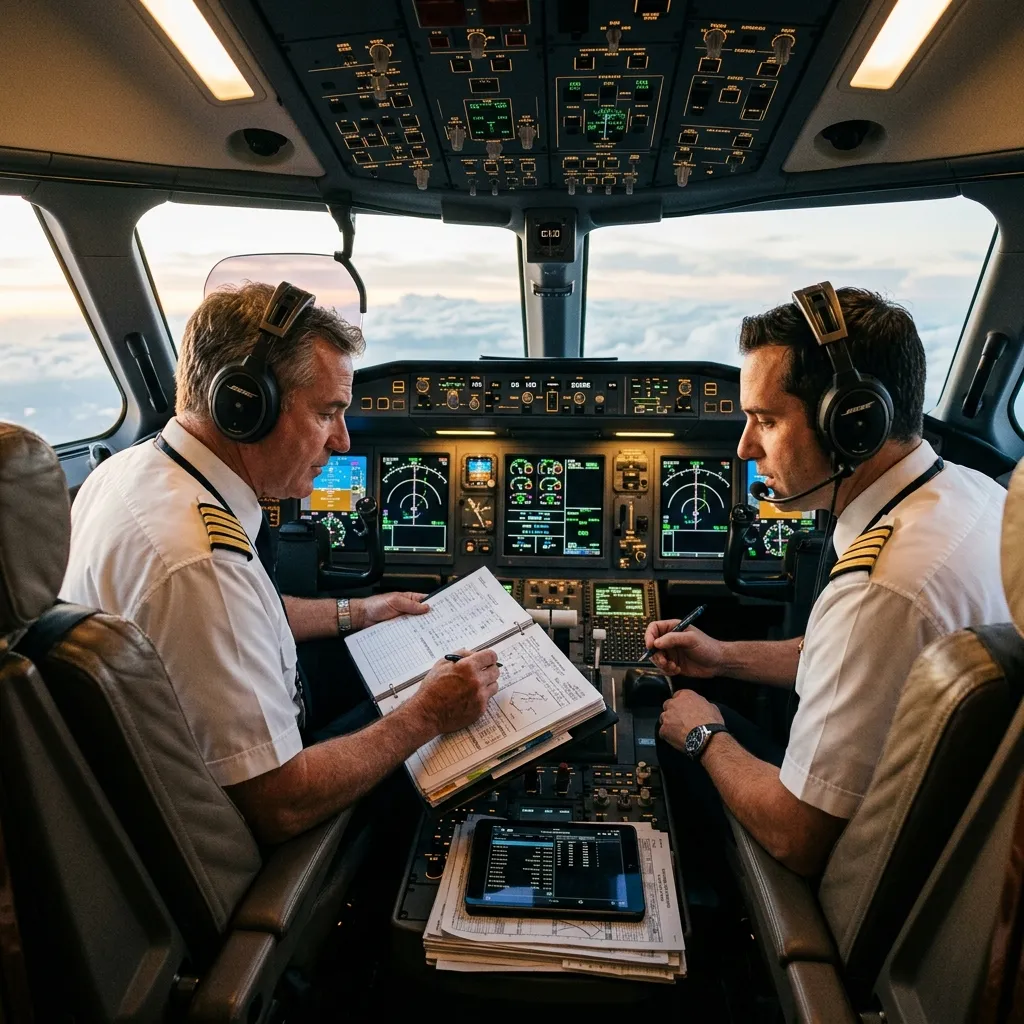
Two pilots in a full-motion flight simulator during a type rating training session

What Is a Type Rating and Why Your Charter Pilot Has One

A pilot with 5,000 hours and an ATP certificate cannot legally fly a Gulfstream G550 without first completing a G550 type rating. That training takes three weeks and costs $40,000. Here is what happens during those three weeks.

In This Article

The Rule: FAR 61.31 and Why Every Jet Pilot Needs a Type Rating What Training Covers: Ground School, Simulator, and Checkride What It Costs: $25,000 to $50,000 Per Pilot, Per Type Why This Matters to Charter Passengers The Type Rating as a Career Asset Differences Between Training Providers Frequently Asked Questions

The Rule: FAR 61.31 and Why Every Jet Pilot Needs a Type Rating

Federal Aviation Regulation 61.31(a) requires a type rating for any pilot acting as pilot-in-command of a turbojet-powered aircraft, regardless of maximum takeoff weight. This regulation exists because a Gulfstream G650 does not fly like a Cessna 172. The systems, speeds, altitudes, and failure modes of a turbojet are fundamentally different from propeller-driven aircraft, and the FAA determined that a general pilot certificate is insufficient to ensure safe operation.

A type rating is aircraft-specific. A pilot who holds a CE-560XL type rating (Citation Excel) cannot fly a Citation Latitude without earning a CE-680A type rating. A pilot type-rated in the Gulfstream G550 cannot fly a G650 without completing the G650 type rating course. Each new aircraft type requires a new type rating, even within the same manufacturer's product line.

The only exception: turboprop aircraft under 12,500 pounds (King Air 90, PC-12, TBM 960) do not require a type rating for single-pilot Part 91 operations. However, Part 135 charter operators typically require type ratings for turboprop pilots as a matter of company policy, and insurance underwriters may mandate it regardless of the FAA requirement.

What Training Covers: Ground School, Simulator, and Checkride

A typical initial type rating course runs 15-25 calendar days depending on the aircraft type and the training provider. The course breaks into three phases:

Phase 1: Ground School (5-8 Days)

Ground school covers aircraft systems in exhaustive detail. Hydraulics, electrical, fuel, pressurization, flight controls, engine operations, avionics, emergency procedures, and performance calculations. A Gulfstream G550 ground school covers approximately 40-60 chapters of aircraft-specific material. Pilots study 8-10 hours per day with written quizzes and oral exams throughout.

Modern ground school uses computer-based training (CBT) modules that allow pilots to interact with virtual cockpit panels and step through system diagrams. FlightSafety International and CAE Simuflite, the two dominant business aviation training providers, have invested heavily in CBT platforms. Some providers offer a portion of ground school as self-study before the in-person course begins.

Phase 2: Full-Motion Simulator (6-12 Days)

Simulator training is where the type rating is earned or lost. Pilots fly 40-60 hours in a Level D full-motion simulator that replicates every system, control response, and visual environment of the actual aircraft. A Level D simulator is certified by the FAA to substitute for actual aircraft flight training, meaning pilots can earn a type rating without flying the real jet.

Simulator sessions last 4 hours each, typically twice per day. Each session focuses on a specific set of maneuvers and emergency procedures: V1 cuts (engine failure during takeoff), single-engine ILS approaches, windshear escapes, fire procedures, hydraulic failures, electrical failures, pressurization malfunctions, and rejected takeoffs. The instructor introduces failures at critical phases of flight and evaluates the pilot's response.

Phase 3: Checkride (1-2 Days)

The type rating checkride is administered by an FAA Designated Pilot Examiner (DPE) or a training center's approved check airman. The checkride includes an oral exam (1-2 hours) covering aircraft systems, emergency procedures, and regulatory knowledge, followed by a practical test in the simulator (2-4 hours) covering normal and abnormal procedures. The pilot must demonstrate competency in all maneuvers to Airline Transport Pilot (ATP) standards.

What It Costs: $25,000 to $50,000 Per Pilot, Per Type

Initial type rating costs vary by aircraft complexity and training provider. Here is what operators actually pay:

These costs cover tuition, simulator time, courseware, and the checkride. They do not include travel expenses (hotel, meals, ground transportation) for 3-4 weeks at the training center. FlightSafety International operates training centers in Savannah, Dallas, Wilmington, and Teterboro. CAE operates in Dallas, and Dassault trains at facilities in Little Rock and Teterboro. Pilots must travel to wherever the simulator for their aircraft type is located.

Annual recurrent training is mandatory under Part 135 (FAR 135.293 and 135.297). Every Part 135 pilot must complete recurrent training and a proficiency check every 12 months. Recurrent courses run 3-5 days with 8-16 hours of simulator time and a checkride. Cost: $12,000-$28,000 per pilot per year depending on aircraft type. For an operator with two pilots, annual recurrent training costs $24,000-$56,000.

Need a Charter Quote?

Contact our team for a personalized quote.

Get a Quote

Why This Matters to Charter Passengers

Charter passengers do not pay directly for pilot training. But training costs are embedded in every charter hourly rate. An operator flying a Gulfstream G550 with two pilots pays approximately $76,000-$96,000 in initial type rating costs for the crew, plus $40,000-$50,000 annually in recurrent training. On a fleet of five G550s with 10 pilots, the annual training budget exceeds $400,000.

This is a significant reason why charter rates on larger jets are higher. A Citation CJ3 operator's annual pilot training cost might be $28,000-$36,000 for two pilots. A G650 operator's cost is $44,000-$56,000. That $16,000-$20,000 annual difference per crew is passed through in the hourly rate.

When an operator quotes $7,000 per hour on a G550 and another quotes $5,800, part of that spread is training investment. The cheaper operator may be using pilots with less recurrent training beyond FAA minimums. The more expensive operator may invest in additional training days, upset recovery programs, and advanced CRM (Crew Resource Management) sessions. Ask what training program the operator uses. It is a proxy for how seriously they take safety.

The Type Rating as a Career Asset

For pilots, type ratings are career currency. A pilot holding type ratings in the Citation XLS, Challenger 350, and Gulfstream G550 has demonstrated proficiency across three aircraft categories and three manufacturers. Each type rating on a pilot's certificate represents $25,000-$50,000 of training investment and 15-25 days of intensive study and simulator work.

Corporate flight departments and charter operators evaluate candidates partly on which type ratings they hold. A pilot with a G650 type rating is immediately employable by any G650 operator without the 3-4 week training pipeline. An operator hiring a pilot without the required type rating must budget $40,000-$50,000 and a month of non-revenue time to get the new hire rated.

Who Pays for the Initial Type Rating?

In the current market, most operators pay for initial type ratings as part of the hiring package, particularly for experienced pilots transitioning to a new aircraft type. Some operators require the pilot to sign a training contract stipulating that if the pilot leaves within 12-24 months, they must reimburse a prorated portion of the training cost. This is standard practice, not punitive.

Pilots seeking their first type rating without an employer sponsoring the cost can self-fund through personal savings or training loans. Self-funded type ratings are most common in the Citation CJ/Mustang category, where pilots transitioning from turboprops invest $22,000-$28,000 to make themselves marketable for entry-level jet positions.

Differences Between Training Providers

FlightSafety International (a Berkshire Hathaway company) and CAE are the two largest business aviation training providers. Both operate Level D full-motion simulators for most major business jet types. The choice between them often depends on aircraft type (not all types are available at both providers) and geographic convenience.

FlightSafety has the broadest aircraft type coverage and operates training centers in Savannah (Gulfstream types), Dallas (multiple types), Wilmington (Dassault), and Wichita (Cessna/Textron types). CAE concentrates on Bombardier types in Dallas and Montreal. Dassault Aviation Training operates its own centers for Falcon-specific training.

Training quality between providers is generally comparable because the FAA approves all curricula and simulator fidelity to the same Level D standard. The differentiator is instructor quality, which varies by individual instructor rather than by company. Experienced pilots tend to have preferences based on past training experiences at specific centers.

Brian Galvan

Written By

Brian Galvan

Founder, The Jet Finder ยท Private Aviation Operations & Technology

Former Director of Technology at FlyUSA (Inc. 5000 fastest-growing private jet company). Decade of hands-on experience across Part 135 operations, charter sales, fleet management, and aviation data systems.

LinkedInRead Full Profile →
Common Questions

Frequently Asked Questions


6 questions about type ratings for business jet pilots

It depends on the type certificate. Some aircraft families share a single type rating. For example, the CE-560XL type rating covers the Citation Excel, XLS, and XLS+. The GLF-4 type rating covers the Gulfstream GIV and GIV-SP. However, the G550 and G650 require separate type ratings (GLF-5 and GLF-6) despite both being Gulfstream products. The FAA determines type rating groupings based on aircraft handling characteristics and systems differences.

A type rating on a pilot's certificate does not expire. However, under Part 135, the pilot must complete annual recurrent training and a proficiency check (FAR 135.293/135.297) to exercise the privileges of the type rating in commercial operations. A pilot who holds a G550 type rating but has not completed recurrent training in 13 months cannot act as PIC on a Part 135 charter flight until completing recurrent training and passing a proficiency check.

The pilot receives additional training (typically 2-4 extra simulator sessions) and attempts the checkride again. Most training providers include one re-check in the course fee. The failure is recorded on the pilot's airman record but does not prevent future attempts. First-attempt pass rates at major training providers average 85-92% for experienced pilots. Failure rates are higher for pilots with fewer total flight hours or those transitioning from significantly different aircraft types.

Under FAR 61.31, type ratings are required for turbojet aircraft and aircraft over 12,500 pounds maximum takeoff weight. Most turboprops (King Air 200/350, PC-12, TBM 960) are under 12,500 pounds and turbo-propeller powered, so the FAA does not require a type rating for Part 91 operations. However, Part 135 operators and insurance companies commonly require type-specific training and may mandate type ratings as a condition of employment or coverage.

Yes. Level D full-motion simulators are certified by the FAA to substitute for actual aircraft flight training. The vast majority of business jet type ratings are earned entirely in simulators. The pilot may never fly the actual aircraft until their first revenue or positioning flight after earning the type rating. This is standard practice and has been the industry norm since Level D simulators achieved the fidelity required for complete training-to-certification programs.

If a Part 135 pilot does not complete recurrent training and the proficiency check within the required 12-month window (FAR 135.293 and 135.297), they cannot act as pilot-in-command on charter flights until the training is completed and a new proficiency check is passed. The operator must ground the pilot from revenue flights or assign them to non-PIC duties. There is no grace period. The deadline is the last day of the calendar month in which the previous check was completed. Most operators schedule recurrent training 1-2 months early to prevent scheduling conflicts from creating a compliance gap.

Continue Reading

Related Articles


Your Next Mission

Ready to Fly?


Whether you need a charter quote or want to explore aircraft options, our team is here.

Contact Us