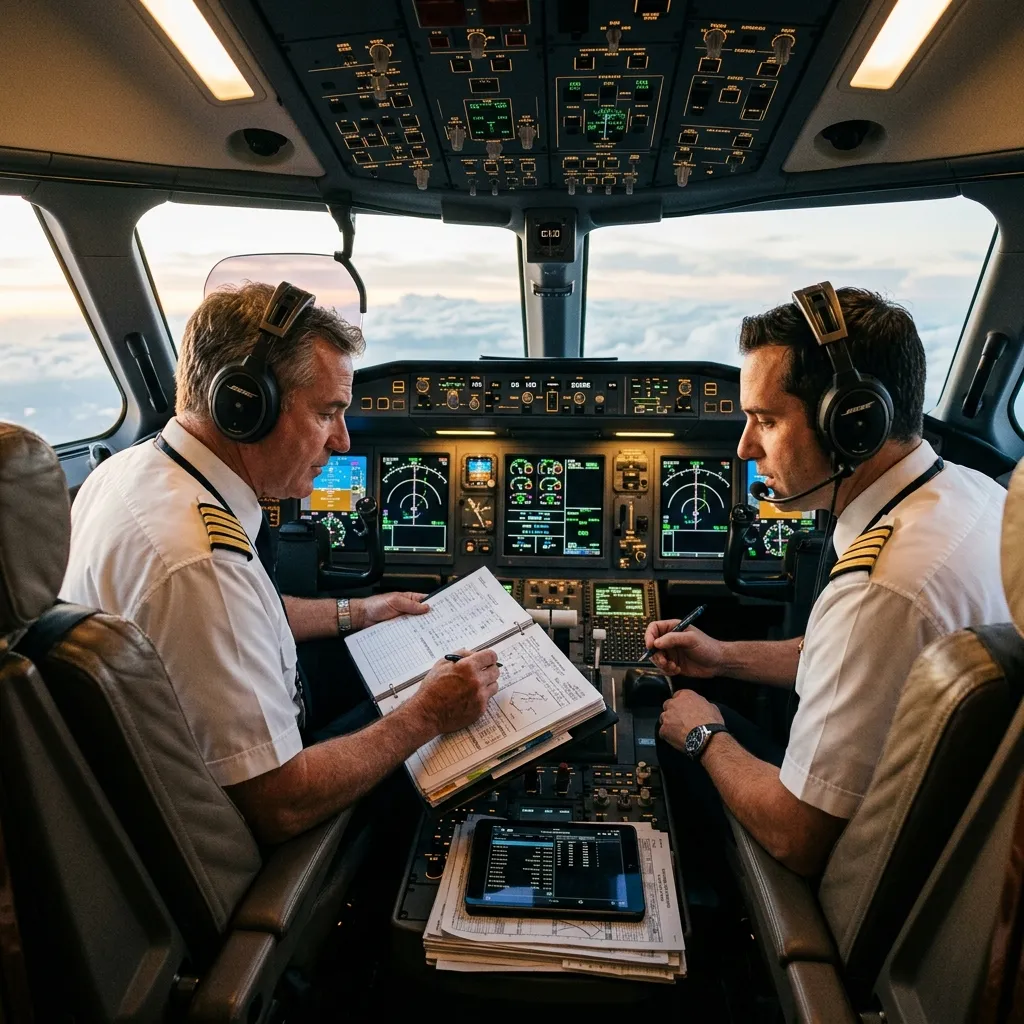
The Regulation That Controls Your Schedule
Federal Aviation Regulation 135.267 limits how long a Part 135 flight crew can work before mandatory rest. For a two-pilot crew (which covers every business jet charter), the maximum scheduled duty period is 14 hours. After that, the crew must receive a minimum of 10 consecutive hours of rest before the next duty period begins.
Duty time starts when the crew reports for duty, not when the aircraft takes off. If your pilots arrive at the FBO at 6 AM for a 7 AM departure, their 14-hour duty clock started at 6 AM and expires at 8 PM. Any flight segment that would extend beyond 8 PM cannot be legally dispatched. This is not a suggestion. It is a hard regulatory limit enforced by the FAA.
For charter passengers, the practical impact is straightforward: if your trip involves multiple legs, long ground delays, or a late departure, the crew may time out before your last segment. When that happens, the options are an overnight stay, a crew swap, or a schedule adjustment. None of these are negotiable with the crew. The regulation is the regulation.
How Duty Time Actually Counts
Duty time includes everything from crew show time to engine shutdown on the final leg. Preflight inspections, fueling delays, ATC ground holds, passenger waiting time, and post-flight duties all count against the 14-hour limit. Flight time is a subset of duty time and carries its own limits: no crew member may exceed 8 hours of flight time in any 24 consecutive hours under FAR 135.267.
The distinction between duty time and flight time matters on multi-leg days. A crew that departs Teterboro at 8 AM, flies 2 hours to Miami, waits 3 hours for a meeting, flies 1.5 hours to Atlanta, waits 2 hours, then flies 1.5 hours back to Teterboro has logged 5 flight hours but 13+ duty hours. They are legal on flight time but approaching the duty limit. A 45-minute ATC delay in Atlanta pushes them past 14 hours, and the last leg does not happen that day.
The Rest Period: Non-Negotiable Recovery
After completing a duty period, the crew must receive at least 10 consecutive hours of rest. This rest period must include an opportunity for 8 uninterrupted hours of sleep. The operator must provide suitable sleeping accommodations, which means a hotel room, not an FBO couch.
Rest time is measured from engine shutdown on the last flight to crew report time for the next duty period. If a crew shuts down at 9 PM, they cannot legally begin a new duty period until 7 AM the following day. The 10-hour rest period is a minimum. Many operators impose 12-hour rest as company policy, which exceeds the FAA requirement but reflects fatigue science.
Charter passengers occasionally ask whether the crew can start early if they feel rested. The answer is no. The regulation is not subjective. A crew member who reports that they feel fine after 8 hours of rest is still bound by the 10-hour minimum. The FAA does not recognize pilot self-assessment as a substitute for regulatory minimums.
Need a Charter Quote?
Contact our team for a personalized quote.
Get a Quote →Multi-Day Trips and Cumulative Limits
FAR 135.267 also imposes cumulative flight time limits. A crew member may not exceed 34 hours of flight time in any 7 consecutive calendar days, or 120 hours in any 30 consecutive calendar days. These cumulative limits rarely affect single-trip charter passengers, but they matter for aircraft owners who fly 15 to 20 legs per month with the same crew.
For multi-day charter trips (a four-day business swing through five cities, for example), the operator's dispatch team builds the schedule around duty limits before the trip begins. Each day's duty period is mapped with buffer time for delays. If Day 2 runs long and the crew times out, Day 3's schedule shifts. This cascading effect is why experienced charter operators build 90-minute buffers into multi-leg days.
The operators who run the tightest duty schedules are the ones whose passengers experience the most cancellations. Margins exist for a reason.
What Happens When the Crew Times Out
When a crew reaches their duty limit, the aircraft stops. There are three options for the passenger: wait for the crew's rest period to expire and resume the next morning, arrange a crew swap where a fresh crew meets the aircraft at the current location, or charter a second aircraft for the final leg.
Crew swaps are possible but expensive. The relief crew must travel to the aircraft's location, which means commercial airline tickets or a positioning flight. Some large operators maintain standby crews in major markets (New York, Miami, Dallas, Los Angeles) specifically for this purpose. Smaller operators do not have this option, and the crew swap may take 6 to 12 hours to arrange.
The cost of a crew timeout falls on the passenger in most charter agreements. The overnight hotel, crew meals, and aircraft parking fees are billed to the client. Some operators absorb these costs as a service gesture, particularly for repeat clients. Read the charter agreement before signing. The duty-time contingency clause tells you how the operator handles timeout scenarios.
Part 91 vs Part 135: A Different Standard
Part 91 operations (owner-flown or company-operated aircraft not for hire) are not subject to FAR 135.267 duty time limits. A Part 91 pilot can legally fly 18 hours in a day if they choose to. This regulatory gap is one of the most significant safety differences between Part 91 and Part 135 operations.
For charter passengers, this distinction is irrelevant because all charter flights operate under Part 135. But for aircraft owners who employ their own pilots under Part 91, the absence of mandatory duty limits creates a safety consideration. Responsible Part 91 operators voluntarily adopt Part 135 duty limits or stricter company policies. Owners who push their pilots beyond 14-hour days are assuming risk that the regulation was designed to prevent.
The FAA has proposed extending duty time limits to Part 91 operations multiple times. The rulemaking process has stalled each time due to industry opposition and the logistical complexity of enforcing rest requirements on non-commercial operators. As of 2026, Part 91 remains self-regulated on duty time.