The State of Supersonic in 2026
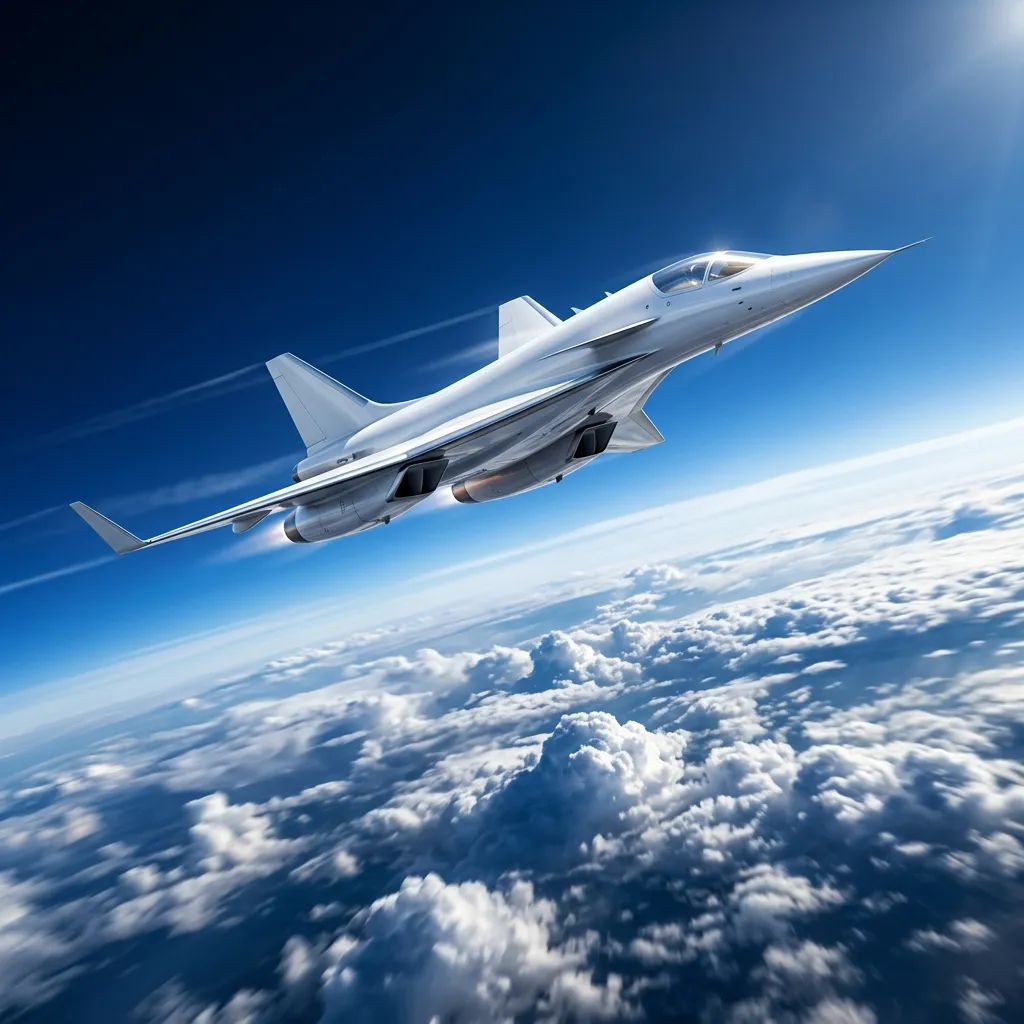
As of 2026, no supersonic civil aircraft is in commercial service. The Concorde retired in October 2003 after 27 years of transatlantic service. Since then, multiple companies have announced supersonic programs, attracted billions in investment, and projected ambitious timelines. The reality in 2026 is that no supersonic business jet or airliner has progressed beyond subscale demonstrators and computer models. The engineering is real. The funding is real. The aircraft are not.
Three programs merit examination: Boom Technology's Overture (supersonic airliner, Mach 1.7), the Aerion AS2 program (shuttered in 2021), and several early-stage supersonic business jet concepts. Only Boom has a credible path to certification and service entry, and even that path faces substantial technical and regulatory obstacles.
Boom Technology: Overture and the XB-1 Demonstrator
Boom Technology, founded in 2014 and headquartered in Denver, is developing the Overture, a 65-80 seat supersonic airliner designed for Mach 1.7 cruise (approximately 1,304 mph). The Overture's design range is 4,250 nautical miles, sufficient for New York to London (3,440 NM), but short of New York to Dubai (5,800 NM) or the full transatlantic routing with reserves.
Boom's subscale demonstrator, the XB-1, first flew in March 2024 at subsonic speeds. As of 2026, the XB-1 has not achieved supersonic flight. The full-scale Overture prototype is under construction at Boom's Greensboro, North Carolina facility, with a projected first flight in 2027 and FAA certification targeted for 2029. These timelines have slipped repeatedly since Boom's founding, which is standard for clean-sheet aircraft programs of this complexity.
Mach 1.7
Boom Overture Target
2029
Projected Service Entry
4,250 NM
Overture Design Range
65-80
Overture Passenger Capacity
Boom has secured conditional orders from American Airlines (20 aircraft), United Airlines (15 aircraft), and Japan Airlines (20 aircraft). These are options and letters of intent, not firm purchase commitments with deposits. The conditional nature means airlines can walk away if the Overture does not meet performance guarantees. No engine manufacturer has been announced for the production Overture, which is the program's most significant unresolved challenge.
The Sonic Boom Problem
FAA regulations (14 CFR 91.817) prohibit civil supersonic flight over the United States. This regulation was enacted in 1973 specifically because of the Concorde's sonic boom, which produces a ground-level pressure wave of approximately 1.5-2.0 pounds per square foot, equivalent to a nearby thunderclap. The boom is generated continuously during supersonic flight, creating a carpet of noise under the aircraft's entire flight path.
NASA's X-59 QueSST (Quiet SuperSonic Technology) aircraft, designed by Lockheed Martin, aims to demonstrate that sonic boom intensity can be reduced to approximately 75 PLdB (perceived loudness in decibels), roughly equivalent to a distant car door closing. The X-59 achieved its first flight in 2024 and is conducting community overflight tests in 2025-2026. If successful, NASA will present data to the FAA and ICAO to support new noise standards that could permit low-boom supersonic flight over land.
What This Means for Business Aviation
The overland supersonic ban is the primary barrier to a supersonic business jet market. A supersonic business jet limited to overwater routes can serve New York to London and Miami to São Paulo but cannot serve New York to Los Angeles, Chicago to Dallas, or any domestic U.S. route. If the FAA revises supersonic noise standards based on NASA's X-59 data, potentially by 2028-2030, the addressable market for supersonic business jets expands from a handful of overwater city pairs to every major route in the world.
Need a Charter Quote?
Contact our team for a personalized quote.
Get a Quote →Aerion: The Cautionary Tale
Aerion Supersonic collapsed in May 2021 after 18 years of development and approximately $300 million in cumulative investment. The company's AS2 design (a supersonic business jet seating 8-10 passengers at Mach 1.4, range 4,200 NM) had attracted a partnership with Boeing, a manufacturing agreement with Aerion Park in Melbourne, Florida, and significant deposit-backed orders. The program failed when additional funding rounds could not be closed to bridge the gap between the existing prototype work and the estimated $4 billion required for certification.
Aerion's collapse illustrated a fundamental challenge in supersonic business jet development: the certification cost for a new aircraft type is $3-$7 billion, and the addressable market for a supersonic business jet (priced at $120-$200 million per aircraft) is measured in hundreds of units, not thousands. The revenue projection from 300-500 aircraft sales over 15 years is insufficient to attract the capital required to reach certification unless a strategic partner (a major OEM or sovereign wealth fund) underwrites the development risk.
The Physics and Economics of Supersonic Business Travel
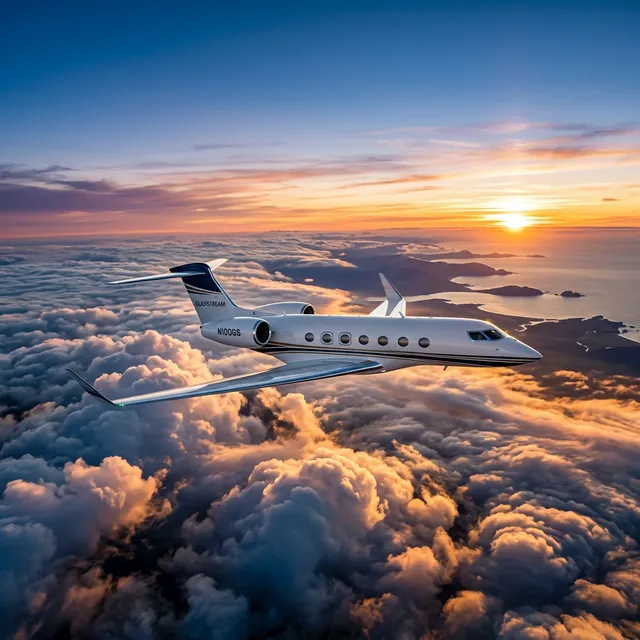
The engineering of supersonic flight is well understood. The challenge is economics. At Mach 1.7, aerodynamic drag is approximately 4 times higher than at Mach 0.85. This translates to fuel burn 2.5-3.5 times higher per seat-mile than a subsonic business jet. A hypothetical supersonic business jet carrying 10 passengers from New York to London would burn approximately 40,000-50,000 pounds of fuel, compared to approximately 18,000-22,000 pounds for a G650 on the same route.
At $6.50 per gallon and 6.7 pounds per gallon of Jet-A, the fuel cost alone for a supersonic New York to London flight would be approximately $39,000-$48,000, versus $17,000-$21,000 on a G650. The time savings is approximately 3.5 hours (3h 30m supersonic versus 7h 00m subsonic). That $20,000-$27,000 fuel premium for 3.5 hours of time savings works out to approximately $5,700-$7,700 per hour of time saved. For UHNWI travelers, this is a reasonable premium. For corporate flight departments, it is difficult to justify.
Sustainable Aviation Fuel Considerations
Boom has committed to operating Overture on 100% sustainable aviation fuel (SAF). SAF currently costs 3-5 times more than conventional Jet-A, which would multiply the already elevated fuel costs by another factor. If SAF prices decrease to 1.5-2x conventional fuel by 2030 (industry projections vary), the operating economics of supersonic flight improve but remain significantly higher than subsonic alternatives. The environmental argument for supersonic travel is challenging regardless of fuel type because of the inherently higher fuel consumption.
Timeline Realism: When Might Supersonic Return
Based on current program status, regulatory trajectory, and historical precedent for new aircraft certification, realistic timelines for supersonic business travel are:
- 2027-2029: Boom Overture first flight and flight test program (if engine selection is finalized in 2026)
- 2029-2031: Potential FAA type certification for Overture (optimistic, assumes no major test failures)
- 2030-2032: Potential revision of FAA supersonic overland noise standards based on NASA X-59 data
- 2032-2035: Earliest realistic window for a purpose-built supersonic business jet program to reach service entry
- 2035+: Supersonic business jet availability for charter (requires fleet of 20+ aircraft)
For charter passengers today, supersonic travel is a conversation about the future, not the present. The earliest any charter passenger could book a supersonic flight is 2030 at the most optimistic, and a supersonic business jet (not airliner) charter market is unlikely before the mid-2030s. In the interim, the G700 and Global 7500 remain the fastest civil aircraft available, cruising at Mach 0.925-0.935.