The Promise vs. the Reality
The pitch has been consistent since 2019: electric aircraft will transform regional aviation within five years. Quiet, emissions-free flights at a fraction of the operating cost. The timelines keep moving. The physics has not changed.
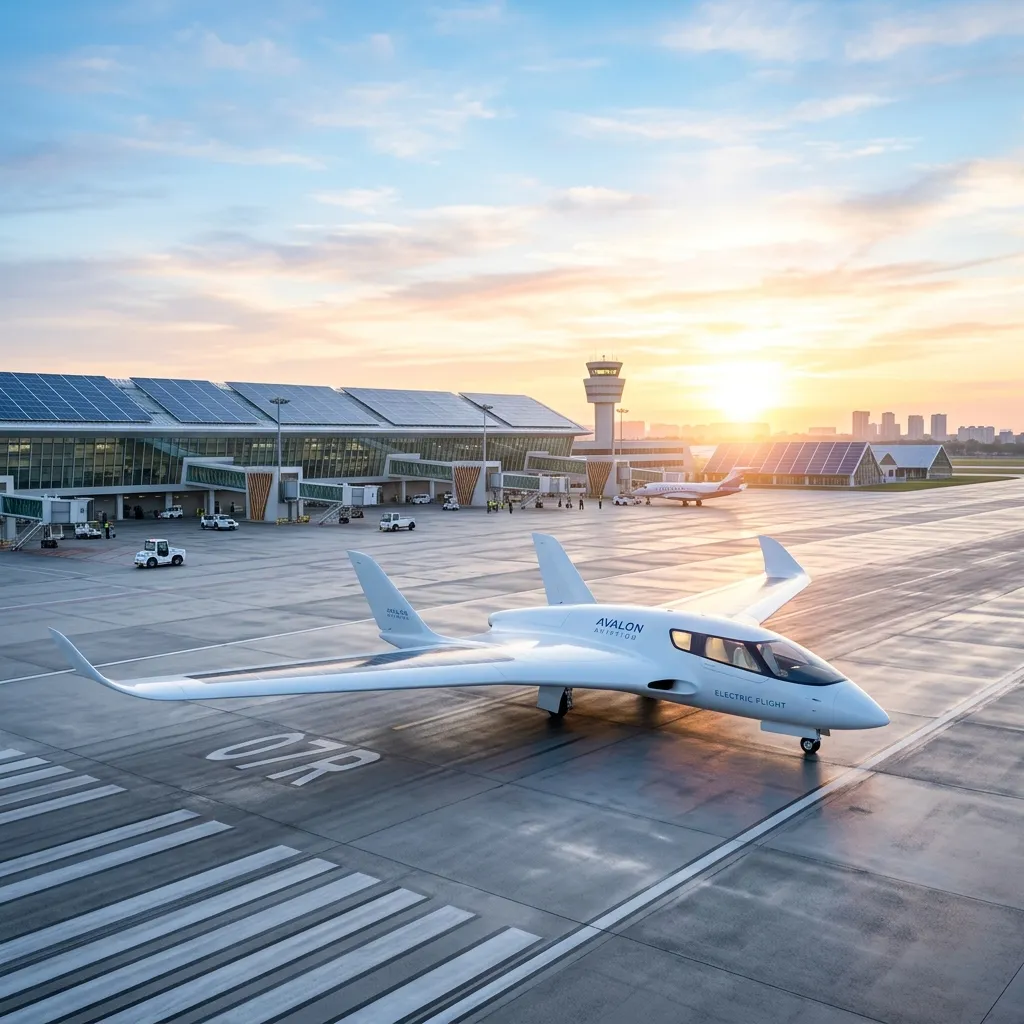
As of mid-2026, no fully electric fixed-wing aircraft has entered commercial passenger service. Several programs have flown prototypes. Two have reached advanced stages of certification. One has paused development entirely. The gap between concept renderings and certified, revenue-service aircraft remains measured in years, not months.
That does not mean the technology is failing. It means the technology is maturing on the timeline that aerospace engineering demands, not the timeline that venture capital presentations promise.
Eviation Alice: Development Paused
The Eviation Alice was positioned as the first all-electric commuter aircraft. A nine-passenger, fixed-wing airplane powered by an 820 kWh battery system with a design range of approximately 250 nautical miles. The prototype completed a first flight in September 2022 at Moses Lake, Washington.
In early 2025, Eviation laid off most of its staff and ceased active development to "explore strategic opportunities and seek additional funding." The company shifted from its original three-motor configuration to a new production design, but financial challenges halted progress before that redesign reached the flight test stage.
The Alice program illustrates a pattern common to electric aviation startups: the prototype flies, the press coverage is favorable, and then the certification timeline, manufacturing scale-up, and ongoing capital requirements collide with reality. Building one aircraft that flies is a different problem than building a certified production line that delivers aircraft to customers.
250 NM
Alice Design Range
Paused
Development Status
Lilium Jet: Pushing for Certification
Lilium is the most advanced electric aviation program currently active. The Lilium Jet is a seven-seat eVTOL (electric vertical take-off and landing) aircraft that uses 30 electric jet engines embedded in its canard and main wing to achieve vertical flight and transition to wing-borne cruise.
The company holds Design Organization Approval from EASA and is pursuing type certification under the EASA SC-VTOL special conditions framework, working with the Swiss Federal Office of Civil Aviation. Lilium has moved to assembling production-representative aircraft (MSN 1 and MSN 2) for its flight test campaign.
The target: customer deliveries beginning in late 2026 or early 2027. Whether that timeline holds depends on flight test results, certification milestones, and manufacturing readiness. Lilium has been through its own financial near-death experience, filing for administration in late 2024 before securing new investment from a consortium that included Mobilion and other strategic backers.
Even if Lilium delivers on schedule, the initial use case is urban and regional air mobility, not traditional business aviation. A seven-seat eVTOL with a 185 km range is not replacing a Gulfstream G650. It is a different product for a different mission: short urban hops, bypassing ground traffic between city centers and airports.
Planning for Next-Generation Aircraft?
Our advisory team tracks emerging aircraft programs and can help you evaluate how new propulsion technologies fit your operational timeline and fleet strategy.
Speak With an Advisor →
Hydrogen: The Dark Horse
While battery-electric aviation struggles with energy density limitations, hydrogen propulsion has emerged as a parallel pathway for zero-emission flight. Hydrogen offers roughly three times the energy density of jet fuel by weight (though storage remains a challenge), making it potentially viable for larger aircraft and longer ranges.
Several programs are active:
- ZeroAvia: Developing hydrogen-electric powertrains for 9-19 seat regional aircraft, targeting certification by 2027. Has completed taxi tests and short flights with a modified Dornier 228.
- Universal Hydrogen: Working on a hydrogen fuel cell conversion kit for regional turboprops like the ATR 72 and Dash 8. Completed a short flight in 2023 with a modified Dash 8.
- Airbus ZEROe: Long-term program targeting hydrogen-powered narrowbody aircraft by 2035. The timeline alone indicates the engineering complexity involved.
Hydrogen aviation faces its own infrastructure challenge: airports need hydrogen storage and dispensing facilities that do not currently exist at any meaningful scale. Building this infrastructure is a multi-billion dollar, multi-decade proposition.
The Physics Problem Nobody Solves in Investor Slides
The core limitation of battery-electric flight is energy density. Jet-A fuel contains approximately 12,000 watt-hours per kilogram. The best lithium-ion batteries available today deliver approximately 250-300 watt-hours per kilogram. That is a 40:1 disadvantage.
This means a battery pack weighing the same as a full fuel load carries roughly 2.5% of the energy. To match the range of a conventionally powered aircraft, the battery would weigh 40 times more than the equivalent fuel, which is physically impossible for a flyable aircraft.
Battery technology is improving at approximately 5-8% per year in energy density. At that rate, reaching even half the energy density of jet fuel, which would enable practical short-range electric aircraft, is decades away. This is not pessimism. It is chemistry.
The viable near-term use cases for battery-electric aircraft are short-range missions under 200 nautical miles with small passenger loads. This is the space where Lilium, Joby, and Archer are building. It is urban mobility, not transcontinental business aviation.
Honest Timeline: When Does This Become Real?
| Technology | First Certified Aircraft | Business Aviation Impact |
|---|
| Battery-electric eVTOL | 2026-2028 | Minimal. Urban air taxi, not private jet replacement |
| Battery-electric fixed-wing | 2028-2030 (if funded) | Short-range regional only. Sub-300 NM |
| Hydrogen fuel cell | 2027-2029 (regional) | Moderate. 19-seat regional first, then larger |
| Hydrogen combustion | 2035+ | Significant, if infrastructure is built |
| SAF (drop-in today) | Available now | High. Works in existing engines today |
The last row is the most important. Sustainable aviation fuel is available now, works in current engines without modification, and reduces lifecycle emissions by 50-80%. For anyone who wants to reduce their aviation carbon footprint today, SAF is the answer. Electric and hydrogen are the answer for a future that is still being built.
What Aircraft Owners Should Do Now
The practical takeaway for current aircraft owners and buyers:
- Do not delay an acquisition waiting for electric aircraft. The technology that replaces midsize and heavy jets does not exist yet and will not exist for a decade or more.
- Buy the most fuel-efficient aircraft for your mission. New-generation engines from Pratt & Whitney Canada and Williams International offer meaningful fuel burn improvements over predecessors.
- Use SAF where available. It is the highest-impact action you can take today.
- Watch eVTOL for last-mile connectivity. If your typical routing includes a 30-minute ground transfer from the airport, eVTOL services may eventually eliminate that segment.
- Factor carbon costs into European operations. EU ETS and ReFuelEU mandates are real and escalating.