The Mountain West Charter Surge
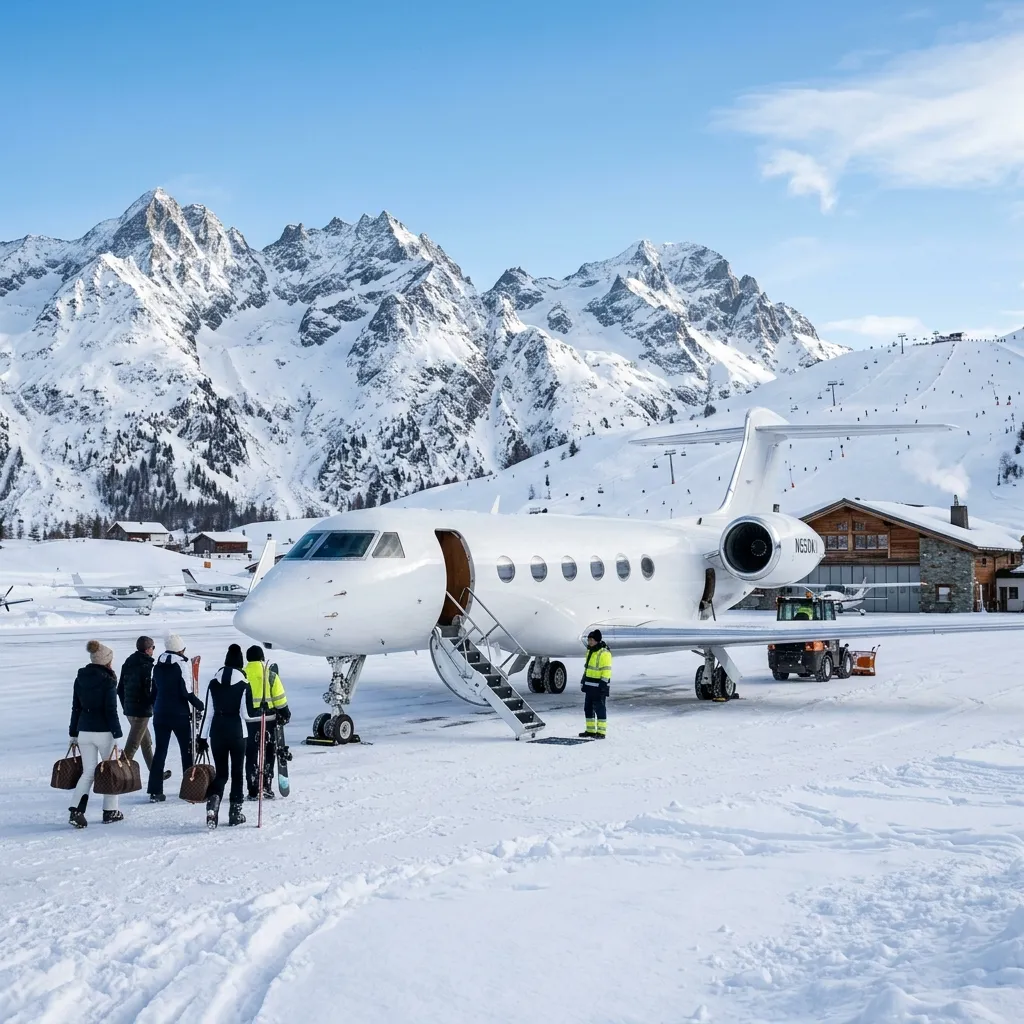
Private jet traffic to mountain airports in Colorado, Wyoming, Idaho, and Montana increases approximately 300% between December 15 and January 5 compared to average weekly volumes. Christmas week, New Year's, Martin Luther King weekend, and President's Day weekend are the four peak demand periods. During these windows, every available charter aircraft in the Mountain West, plus aircraft repositioned from Texas, California, and the East Coast, is committed to ski-season bookings.
The supply constraint is not aircraft; it is airports. Aspen (ASE), Eagle County/Vail (EGE), Jackson Hole (JAC), Sun Valley (SUN), and Telluride (TEX) all have limitations: single runways, altitude-driven performance restrictions, limited ramp space, noise curfews, and weather-related closures. A 30-aircraft ramp at Aspen that comfortably handles 40 movements per day during summer operates at 100+ movements per day during Christmas week. Delays, holds, and ground stops are standard.
Airport-by-Airport: What to Expect
Aspen-Pitkin County (ASE)
Aspen is the busiest private jet airport in the Mountain West during ski season. Its 7,006-foot runway at 7,820 feet elevation accepts aircraft up to the Challenger 604/Gulfstream GIV class. Larger jets (G550, Global 6000) cannot operate. Noise restrictions prohibit arrivals between 11 PM and 7 AM. During Christmas week, the FBO (Atlantic Aviation) operates at capacity, and aircraft may be required to shuttle to Rifle (RIL) or Grand Junction (GJT) for overnight parking because the Aspen ramp is full.
Eagle County/Vail (EGE)
Eagle County is the gateway to Vail, Beaver Creek, and the Arrowhead resort complex. Its 9,000-foot runway at 6,540 feet elevation is the most capable mountain airport in Colorado, accepting all business jet types including the Gulfstream G650 and Global 7500. The airport is 35 miles from Vail and 25 miles from Beaver Creek. FBO operations (Vail Valley Jet Center) handle both private and commercial traffic, and ramp congestion during peak periods can create 30-60 minute taxi delays.
Jackson Hole (JAC)
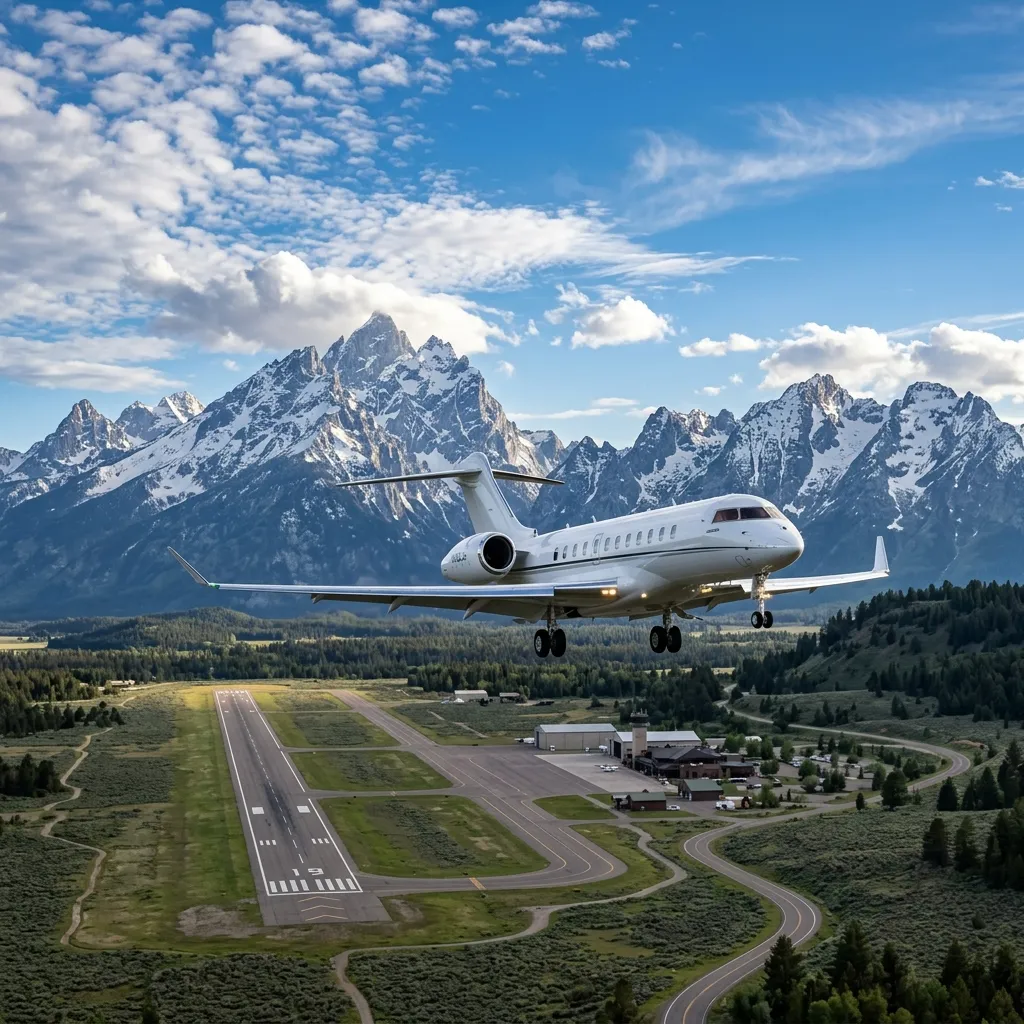
Jackson Hole Airport sits inside Grand Teton National Park at 6,451 feet elevation with a 6,300-foot runway. It accepts aircraft up to the Citation Sovereign/Challenger 350 class, though some operators bring larger jets with weight restrictions. The airport's location inside a national park creates unique constraints: no airport expansion is permitted, hangar construction is restricted, and noise abatement procedures are strictly enforced. Overnight parking is extremely limited; aircraft frequently reposition to Idaho Falls (IDA) or Rock Springs (RKS).
Sun Valley (SUN)
Friedman Memorial Airport serves Sun Valley and Ketchum at 5,318 feet elevation with a 7,550-foot runway. The approach is constrained by a box canyon that requires a circling approach from the south, and the airport has a mandatory curfew. Larger jets are restricted. The FBO (Atlantic Aviation Sun Valley) has limited ramp space. Despite the constraints, Sun Valley attracts substantial private jet traffic from the Bay Area, Los Angeles, and Seattle.
Aircraft Selection for Mountain Airports
The altitude of mountain airports reduces aircraft performance and limits which types can operate safely. The performance penalty at 7,000-9,000 feet elevation is severe: takeoff distances increase 35-50% compared to sea level, and maximum payload (passengers + fuel + baggage) decreases proportionally. This creates a practical hierarchy of aircraft for mountain operations:
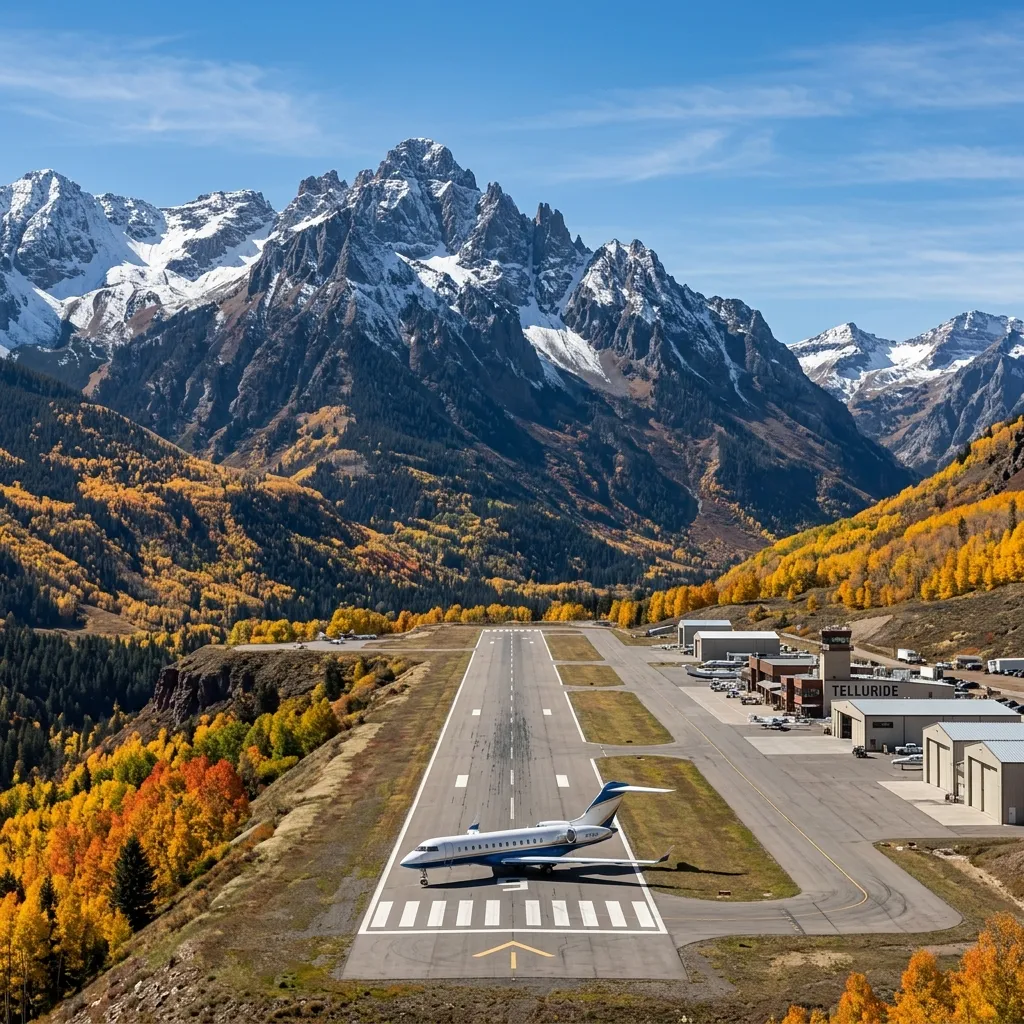
Eagle County/Vail is the only major ski destination that accepts the full spectrum of business jets. Passengers who require a Gulfstream G650 or Global 7500 should plan for Eagle County with ground transfer to Aspen (2.5 hours), Jackson Hole (direct flight not possible at JAC), or Telluride (drive from Montrose). This is a common pattern during ski season: heavy jet to EGE, ground transfer to resort.