The Most Common Business Jet Accident Category
Runway excursions, defined as an aircraft departing the paved runway surface during takeoff or landing, account for approximately 22% of all business jet accidents and incidents reported to the NTSB. They are the single most common accident category in Part 91 and Part 135 business aviation, exceeding controlled flight into terrain (CFIT), loss of control in flight (LOC-I), and approach-and-landing accidents by frequency. Between 2015 and 2025, the NTSB investigated approximately 140 runway excursion events involving business jets in the United States.
Most runway excursions do not result in fatalities. Approximately 85% are categorized as incidents (no serious injuries) rather than accidents. However, the consequences include substantial aircraft damage ($500,000 to total hull loss), airport closures (2-24 hours), passenger injury from abrupt deceleration or off-surface terrain encounter, and regulatory scrutiny that can ground an operator's fleet pending investigation.
Landing vs Takeoff Excursions
Landing excursions account for 62% of events; takeoff excursions account for 38%. The contributing factors differ significantly between the two phases of flight.
Landing Excursion Contributing Factors
- Excessive approach speed: Landing 10-15 knots above reference speed adds 15-25% to landing distance
- Unstabilized approaches continued to landing instead of going around
- Landing beyond the touchdown zone (first 3,000 feet): adds consumed runway that cannot be used for braking
- Contaminated runways (water, snow, ice, rubber deposits): reduce braking coefficient by 40-70%
- Tailwind component: a 10-knot tailwind increases landing distance by approximately 20%
- Delayed deployment of thrust reversers or spoilers
Takeoff Excursion Contributing Factors
- Incorrect takeoff performance calculations (wrong weight, wrong temperature, wrong runway)
- Contaminated runway reducing acceleration: snow or slush adds 20-40% to takeoff roll
- Engine malfunction or power loss during takeoff roll after V1
- Failure to abort when performance parameters are not met before V1
- Incorrect flap or trim configuration
Runway contamination is the environmental factor most frequently associated with excursion events. The FAA's Global Reporting Format (GRF) replaced the old NOTAM-based braking action reports in 2021, providing standardized Runway Condition Assessment Matrix (RCAM) codes that translate directly into aircraft performance adjustments.
The practical impact: a business jet that needs 3,000 feet of landing distance on a dry runway needs 4,500 feet on a wet runway and potentially 9,000-15,000 feet on ice. Few business jet airports have 15,000-foot runways. When contamination exceeds the aircraft's computed landing distance for the available runway, the only safe option is diverting to an airport with a longer runway or better surface condition.
The majority of landing excursions occur on runways that provided adequate distance for the aircraft type in dry conditions. Contamination transforms a normal landing into a marginal one, and pilot judgment about whether to land or divert is the critical safety gate.
Need a Charter Quote?
Contact our team for a personalized quote.
Get a Quote →The Stabilized Approach: The Most Effective Prevention
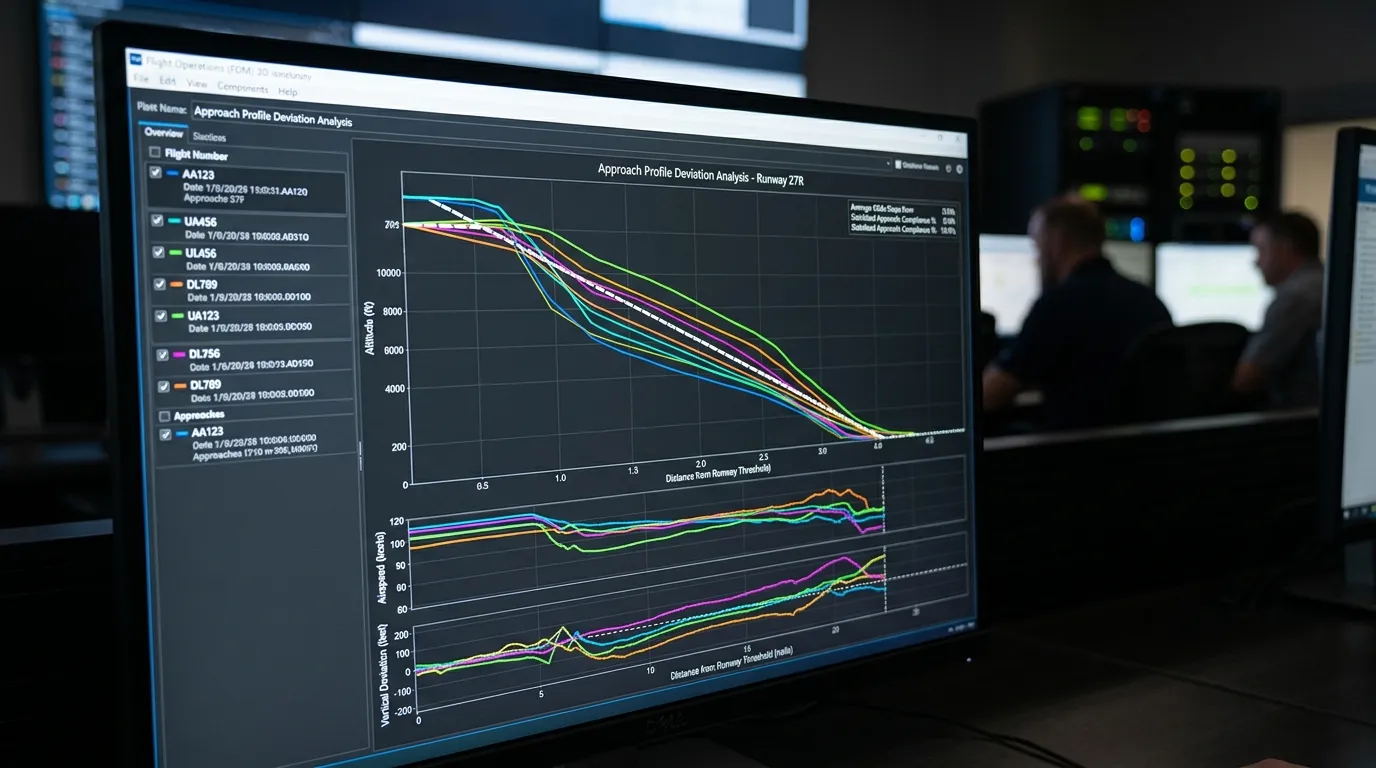
Industry data consistently shows that unstabilized approaches are the strongest predictor of landing excursions. A stabilized approach requires the aircraft to be at the correct speed, configuration, descent rate, and alignment by 1,000 feet above ground level (AGL) in instrument conditions or 500 feet AGL in visual conditions. If any parameter is not met, standard operating procedure requires a go-around.
Flight data monitoring from FOQA-equipped operators reveals that 3-5% of business jet approaches are unstabilized at the gate altitude. Of those unstabilized approaches, fewer than 1% result in a go-around. This means 97-99% of unstabilized approaches are continued to landing, in direct contradiction of published standard operating procedures. The gap between procedure and practice is the root cause of most landing excursion events.
Charter passengers have no direct role in approach execution, but asking a charter operator whether they track stabilized approach compliance through flight data monitoring signals that you understand operational safety. Operators who track and manage approach stability are demonstrably safer than those who do not.
Airport Infrastructure and Runway Safety Areas
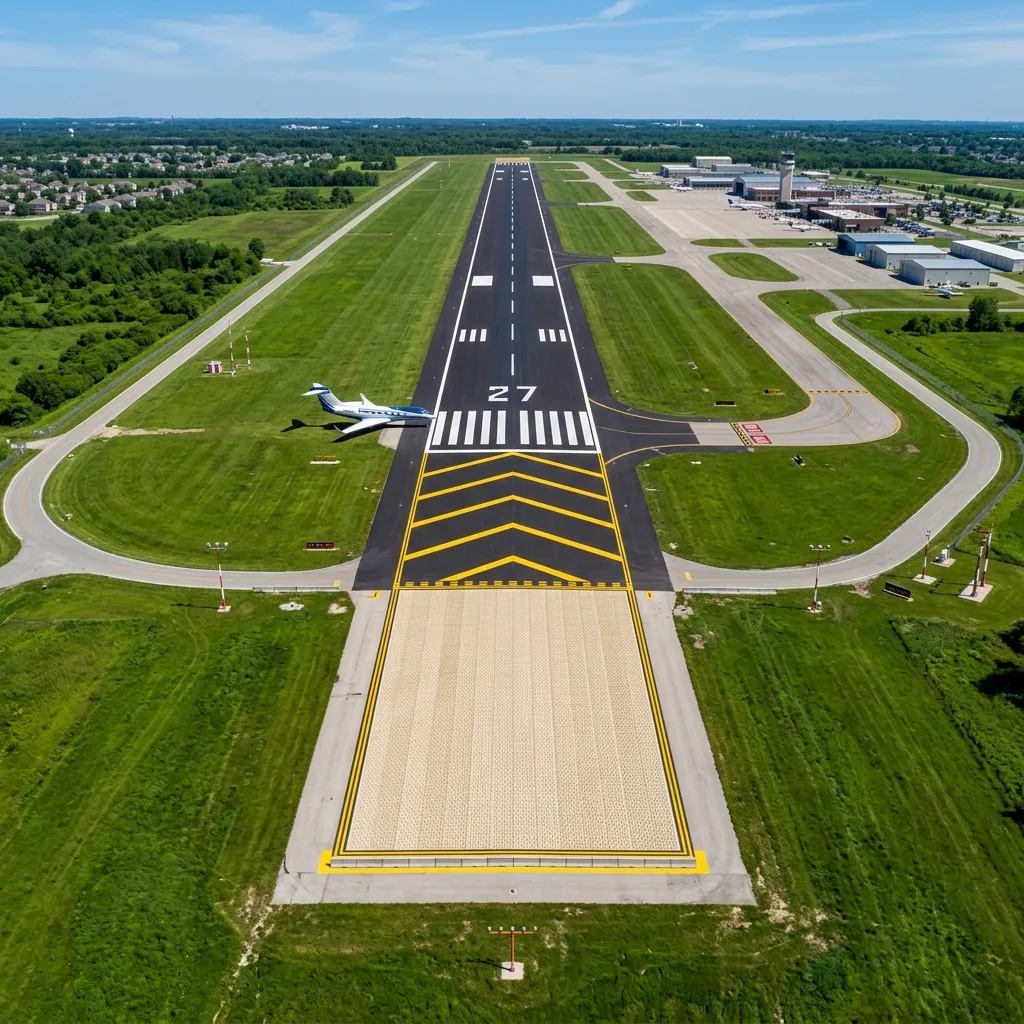
The FAA requires Runway Safety Areas (RSAs) extending 1,000 feet beyond each runway end for airports serving business jets. The RSA is a cleared and graded surface designed to reduce damage during a runway excursion. Many older airports do not meet current RSA standards due to terrain, water features, or property constraints.
Engineered Materials Arresting Systems (EMAS) have been installed at approximately 125 U.S. airports as an alternative to full RSAs. EMAS beds are crushable concrete blocks that progressively decelerate an aircraft that overruns the runway end. Teterboro Airport installed EMAS after a 2005 Citation excursion that crossed a highway. EMAS has been credited with preventing serious injury or hull loss in approximately 15 business aviation excursion events since installation began.
Airports of Concern
Several popular business aviation airports have shorter-than-ideal RSAs or approach terrain that increases excursion risk: Aspen (runway ends at terrain), Teterboro (EMAS installed after the 2005 overrun), Santa Monica (now closed to jets), and various Caribbean island airports with runways ending at water. Pilots operating into these airports apply conservative performance margins, but the infrastructure limitations increase the consequences when an excursion occurs.
Prevention Measures and Industry Progress
The business aviation industry has made measurable progress in reducing runway excursion rates. NBAA's Runway Safety Standing Committee publishes annual guidance, and the Flight Safety Foundation's Approach and Landing Accident Reduction (ALAR) toolkit is widely adopted. Key prevention measures include:
- FOQA/FDM programs that track approach stability and landing performance parameters on every flight
- Runway condition assessment training using the GRF/RCAM system
- Go-around policies with management support (no-fault go-around culture)
- Contaminated runway performance calculators integrated into EFB (Electronic Flight Bag) applications
- Recurrent simulator training focused on rejected landings and go-around execution from low altitude
Despite these measures, runway excursions remain the most common business aviation accident type. Human factors, specifically the reluctance to execute a go-around after a long approach, continue to drive event rates. Building organizational cultures where go-arounds are treated as correct decisions rather than failures is the industry's most significant remaining challenge.