Step 1: Verify the Part 135 Certificate Is Active
Every charter operator must hold a valid Part 135 Air Carrier Certificate issued by the FAA. This certificate authorizes commercial air transportation of passengers and cargo. Without it, any flight sold to you is illegal. The FAA's online database allows anyone to verify certificate status, and the process takes under two minutes.
Go to the FAA's Air Carrier Certificate Information database. Search by operator name or certificate number. Verify three things: the certificate status reads 'Active,' the operations specifications (OpSpecs) include the aircraft type you are booking, and the certificate holder's name matches the operator's legal entity.
A surprising number of charter 'operators' are actually management companies that place aircraft on other operators' certificates. This is legal and common, but it means the safety record you should investigate belongs to the certificate holder, not the management company's brand name.
If the operator cannot produce their certificate number on request, that is a disqualifying signal. Legitimate operators cite their certificate number in contracts, on their website, and during the booking process. It is public information and withholding it suggests either inexperience or something worse.
Step 2: Check Third-Party Safety Audit Status
The FAA certifies that an operator meets minimum regulatory standards. Third-party safety audits evaluate whether an operator exceeds those minimums. Two organizations dominate this space: Wyvern and ARGUS. Both conduct independent safety evaluations that assess management structure, pilot training, maintenance programs, and operational control.
Only about 19% of active Part 135 operators carry Wyvern Wingman or ARGUS Gold/Platinum ratings. The audit process costs $15,000 to $40,000 and requires ongoing compliance monitoring. Operators that invest in these audits are signaling a commitment to standards above the regulatory minimum.
The absence of a third-party audit does not automatically mean an operator is unsafe. Many small, well-run operations fly safely for decades without paying for external ratings. But the audit provides an independent verification layer that reduces your risk of encountering a substandard operation.
Step 3: Ask About Pilot Minimums and Training
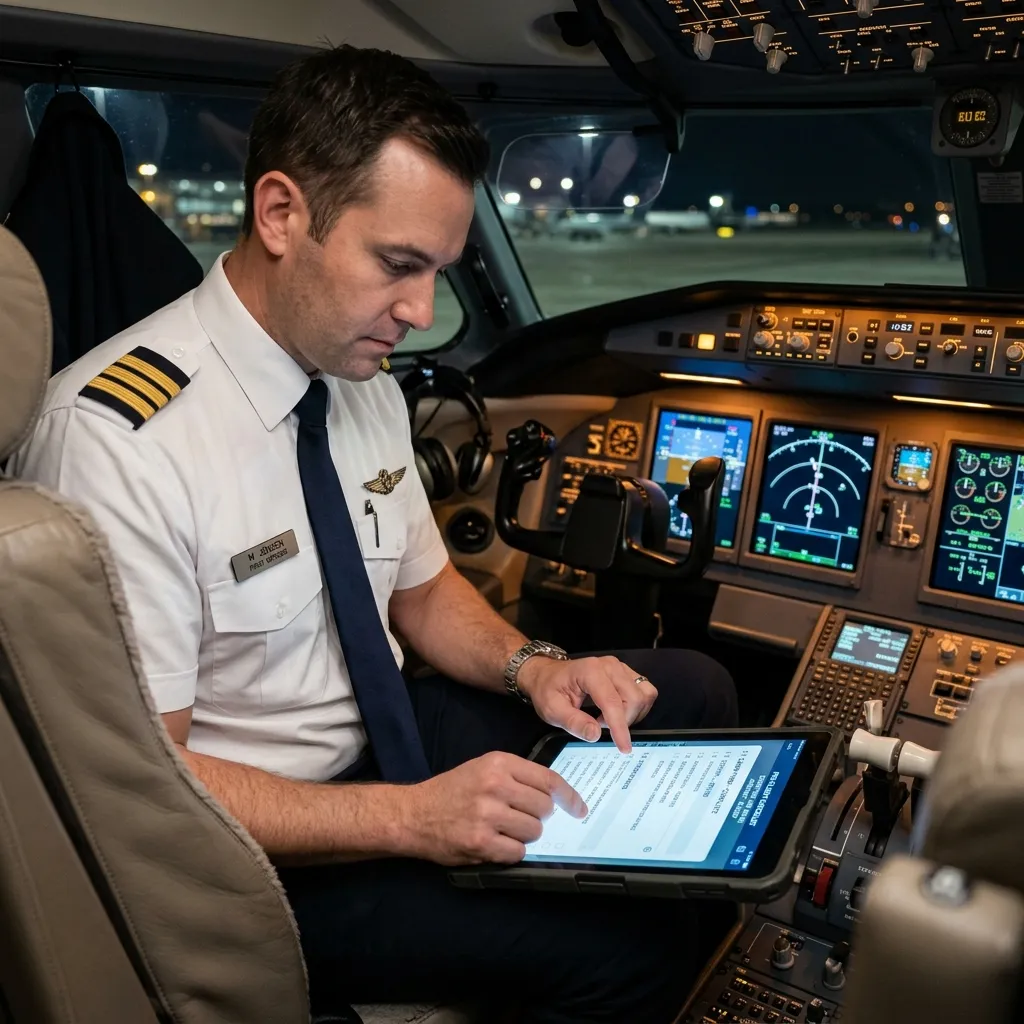
FAA minimums for Part 135 pilots are lower than most passengers assume. A pilot-in-command under Part 135 needs an ATP certificate (1,500 total hours), a type rating in the aircraft, and an instrument rating. The first officer requires a commercial certificate (250 hours minimum). These are floor-level requirements that most serious operators far exceed.
Ask operators for their internal pilot minimums. Reputable operators typically require PICs to hold 3,000+ total hours with 500+ hours in type. First officers usually need 1,500+ total hours with 100+ in type. Operators that hire PICs at 1,500 hours are technically legal but operationally thin.
- Recurrent training: FAA requires simulator training every 12 months. Better operators train every 6 months and add scenario-based events (engine failures, rejected takeoffs, wind shear) beyond the regulatory minimum.
- Training providers: FlightSafety International and CAE are the two primary simulator training organizations. Ask which one the operator uses and whether training includes CRM (crew resource management) modules.
- Line checks: Some operators conduct annual line checks where a check airman rides in the cockpit during a revenue flight to evaluate real-world performance. This is not required by regulation but correlates with higher operational standards.
- Crew pairing: Ask whether the operator ensures at least one pilot on every crew has significant experience at the destination airport. Mountain airports, offshore approaches, and high-density corridors benefit from familiarity that cannot be taught in a simulator.
Need a Vetted Operator?
Every operator in our network holds current safety audits and meets our minimum insurance requirements.
Contact Us →Step 4: Verify Insurance Coverage and Limits
Charter operators carry two types of relevant insurance: hull insurance (covering the aircraft) and liability insurance (covering passengers and third parties). As a passenger, liability coverage is what protects you. The industry standard for single-limit liability on business jets is $100 million to $300 million per occurrence.
Ask for the operator's certificate of insurance or request that their insurance broker provide a COI naming you as an additional insured. The COI should show the coverage limits, the insurance carrier, the policy period, and the specific aircraft tail number. If the operator resists providing this documentation, that is a significant red flag.
What Adequate Coverage Looks Like
For light jets (CJ3, Phenom 300), $100 million in single-limit liability is the accepted minimum. For heavy jets (G550, Global 6000), most corporate travel departments require $200 million or higher. Ultra long range aircraft (G650, Global 7500) used for international operations should carry $300 million. These thresholds are not regulatory requirements; they are industry best practices driven by risk management departments at Fortune 500 companies.
Operators with substandard insurance often fly older aircraft with below-market hull values. The correlation is direct: lower-value aircraft generate lower insurance premiums, attracting operators who optimize for cost rather than coverage. The cheapest charter quote in a competitive bid is sometimes cheap for reasons that matter.
Step 5: Ask the Right Maintenance Questions
Maintenance transparency separates serious operators from the rest. Three questions reveal the operator's maintenance philosophy.
- Is the aircraft on a manufacturer's maintenance tracking program? Programs like Gulfstream's MSG-3, Bombardier's SmartParts, or Textron's ProParts track inspections against manufacturer specifications. Aircraft on these programs maintain higher residual values and more predictable maintenance schedules.
- Are engines enrolled in an hourly cost maintenance program? Programs like Rolls-Royce CorporateCare, Pratt & Whitney Eagle, and Williams TAP Blue cover engine maintenance at a fixed per-hour rate. Enrolled engines receive predictable care. Non-enrolled engines may defer expensive inspections.
- Where is scheduled maintenance performed? Authorized service centers (ASCs) follow manufacturer-specified procedures with factory-trained technicians. Independent maintenance shops can perform the same work at lower cost but may lack model-specific expertise for complex systems.
You will not be able to audit the aircraft's maintenance records yourself. But the willingness to answer these questions, and the quality of the answers, tells you whether the operator treats maintenance as a cost center to minimize or a safety system to invest in.
Red Flags That Should Cancel the Booking
No single factor disqualifies an operator. But certain combinations should prompt you to walk away and book elsewhere.
- The quoted price is 30% or more below competing quotes for the same aircraft type and route. Cost compression of this magnitude usually means the operator is cutting somewhere you cannot see.
- The operator cannot or will not provide their Part 135 certificate number.
- No third-party safety audit, combined with pilots at FAA minimums, combined with below-standard insurance limits. Any one of these alone is manageable. All three together is a pattern.
- The aircraft tail number changes between booking and departure without explanation. Tail swaps happen legitimately (maintenance, scheduling), but the replacement aircraft should carry the same audit status and insurance coverage.
- The operator's principal base is hundreds of miles from the departure airport, requiring a long positioning leg. This is not a safety issue per se, but it adds crew duty time, reduces scheduling flexibility, and raises the question of why a closer operator was not available.
Working with a charter broker who pre-vets operators eliminates most of these concerns. Brokers with Wyvern-registered or ARGUS-certified broker status maintain operator databases with current audit status, insurance limits, and fleet information. Their financial incentive aligns with your safety: a broker that places a passenger on an unsafe flight does not survive the liability consequences.