Why Noise Restrictions Exist and Who Enforces Them
Airport noise policy in the United States is governed by a patchwork of federal, state, and local regulations. The FAA sets the aircraft noise certification standards (Stage 1 through Stage 5), but individual airports control their own operating restrictions through FAR Part 161, which requires airports to conduct a cost-benefit analysis before implementing any access restriction. The result is approximately 14 major U.S. airports with some form of mandatory or voluntary curfew affecting business jet operations.
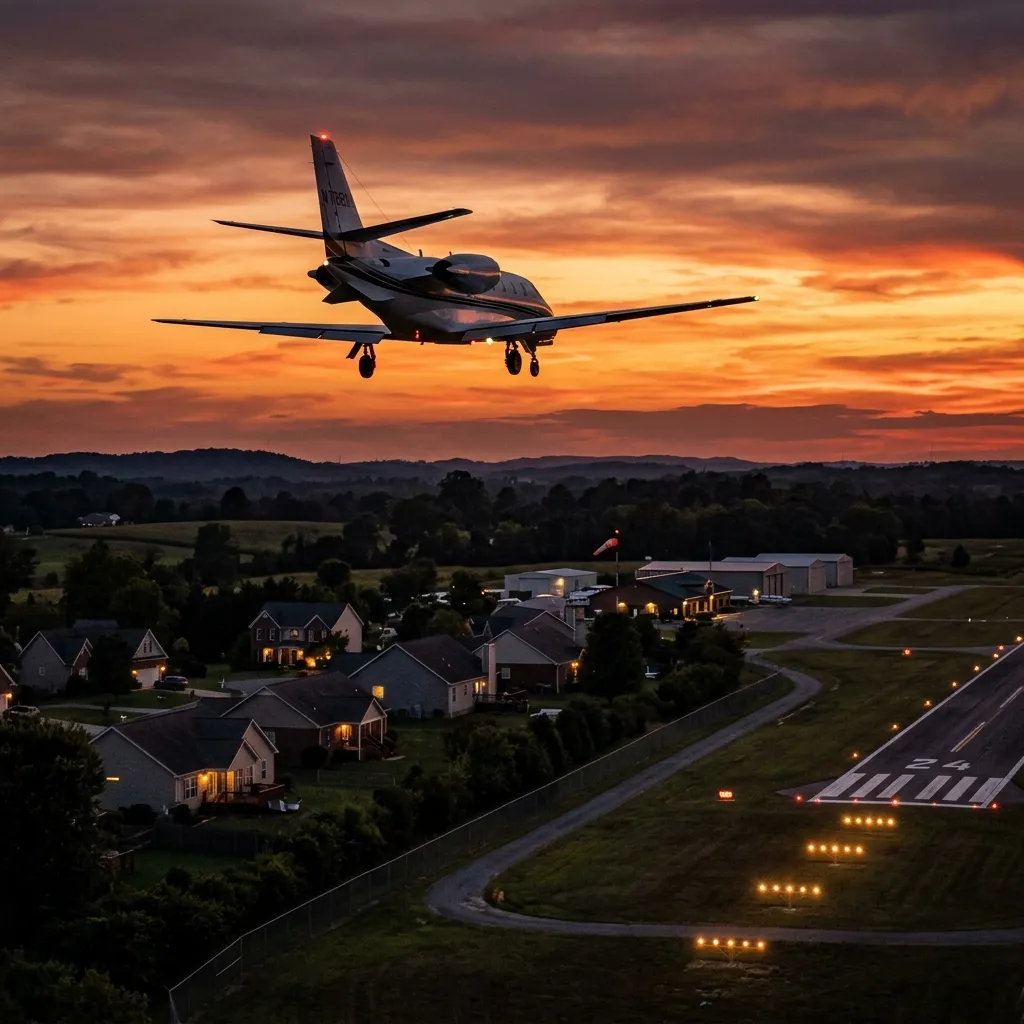
The airports on this list share a common trait: residential development encroached on the airport boundary after the airport was built. Homeowners who moved next to an active runway now drive political pressure to restrict nighttime operations. The tension between aviation access and community noise complaints is permanent. It does not resolve. It only shifts the rules.
The Strictest Airports in the U.S.
Santa Monica Airport (SMO) — California
Santa Monica has waged a decades-long war against jet traffic. The city shortened the runway from 5,000 to 3,500 feet in 2017 and banned all jet operations effective January 2029 under a deal with the FAA. Currently, jets over 77,500 lbs are prohibited entirely. The noise monitoring system triggers automatic fines for departures exceeding 95 dBA at the monitoring stations. Most charter operators route around SMO to Van Nuys (VNY) or Hawthorne (HHR) rather than deal with the restrictions.
John Wayne Airport (SNA) — Orange County, California
SNA has the most aggressive departure procedure in commercial aviation: the John Wayne 'John Wayne Departure' requires maximum takeoff thrust followed by a power reduction to flight idle at 800 feet AGL. The airport enforces a mandatory curfew from 10 PM to 7 AM for commercial operations and 11 PM to 7 AM for general aviation. Noise monitoring stations around the airport perimeter generate automatic violation notices. Average fine for a single exceedance: $2,500. Heavy jets avoid SNA entirely. Light and midsize jets operate within the curfew window.
Teterboro Airport (TEB) — New Jersey
Teterboro does not have a mandatory curfew, but it enforces Stage 4 noise standards for nighttime operations between 11 PM and 6 AM. Aircraft that do not meet Stage 4 certification cannot operate during those hours. All Stage 3-only jets (older Learjets, Hawker 800 series, Falcon 50) are restricted. The Port Authority of New York and New Jersey publishes a noise compatibility list. If your aircraft is not on it, the FBO will not accept the flight plan. Fines for violations range from $5,000 to $25,000.
Voluntary Curfews and Noise Abatement Programs
The distinction between 'voluntary' and 'mandatory' matters less than you might think. Van Nuys has a voluntary curfew, but FBOs will decline fuel and handling services for operators who regularly violate it. The community pressure is sufficient enforcement. An operator who ignores the voluntary curfew three times will find their fuel contract reviewed and their hangar lease challenged.
East Hampton (HTO) deserves special mention. The town implemented mandatory noise restrictions and flight caps during summer months (June through September) specifically targeting helicopter and private jet traffic to the Hamptons. The restrictions survived legal challenges from NBAA and the Eastern Region Helicopter Council. It set a precedent that other resort communities are watching closely.