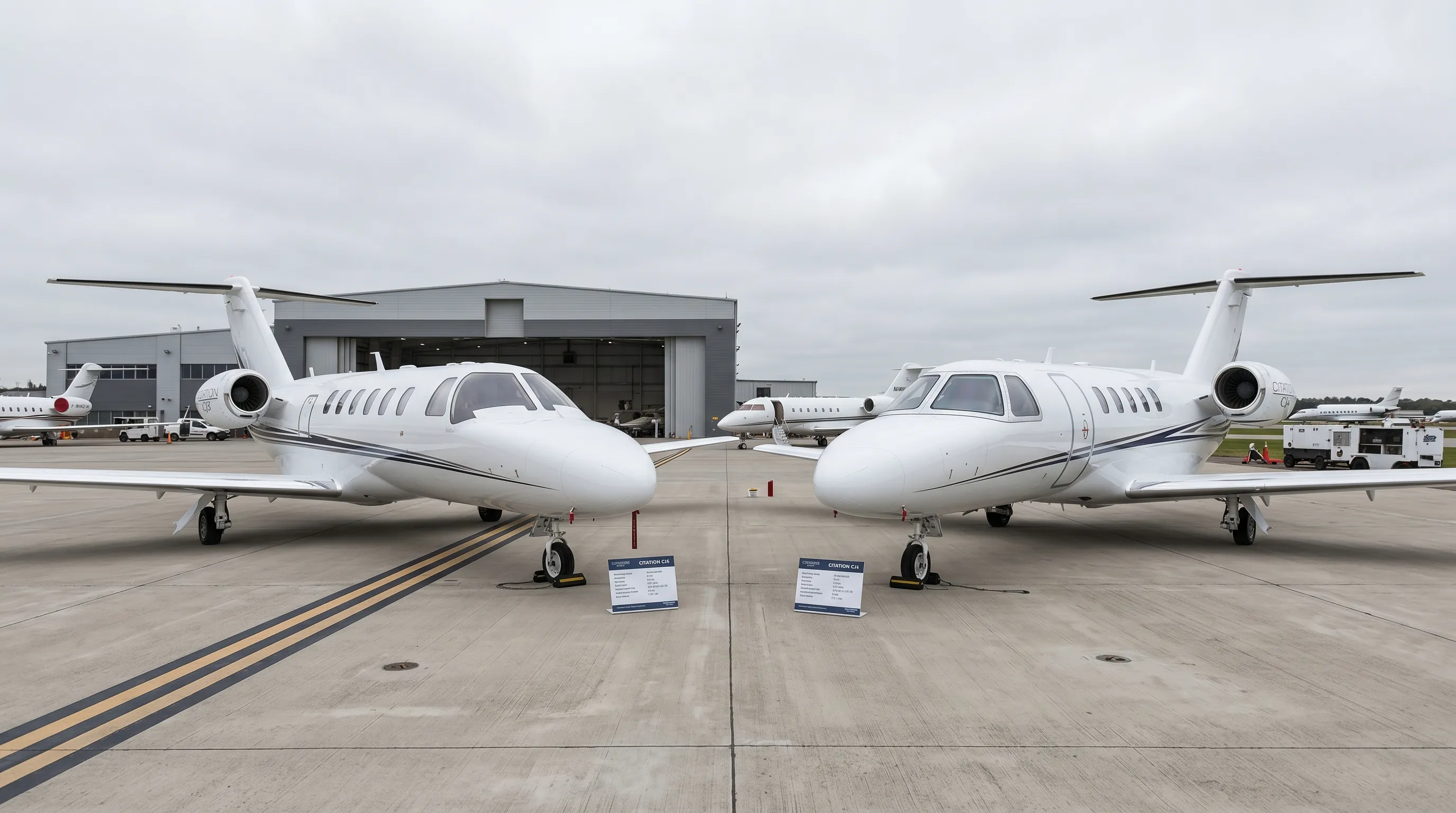
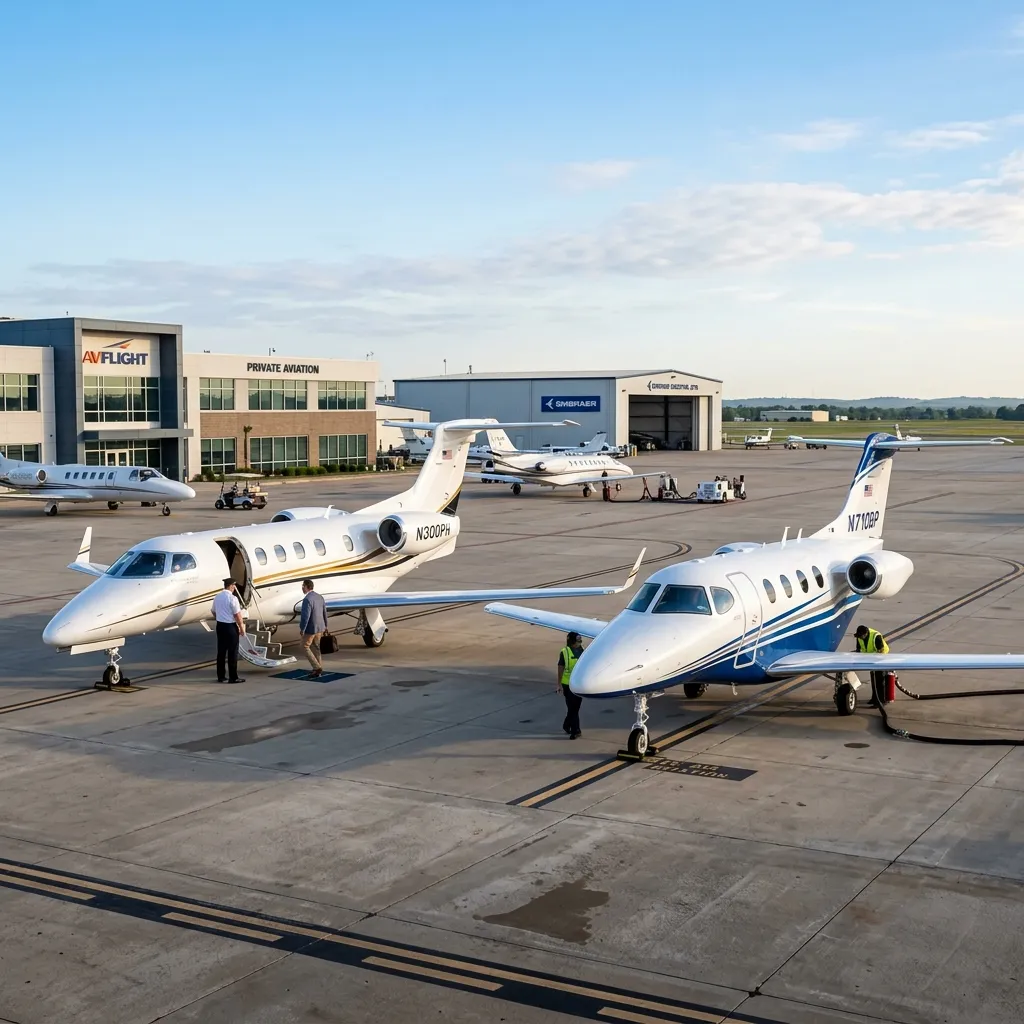
Embraer Phenom 300 and Beechcraft Premier I light business jets on an airport ramp

Phenom 300 vs Premier I: The Best-Selling Light Jet Against the Widest VLJ Ever Built

undefined

In This Article

Different Eras, Different Ambitions Performance: Range and Speed The Premier I's Composite Cabin: A Revolution That Ended Too Soon Acquisition and Mission Fit Frequently Asked Questions

Different Eras, Different Ambitions

The Embraer Phenom 300 (2009-present) and Beechcraft Premier I (2001-2013) represent two distinct attempts to redefine the light jet category. The Phenom 300 became the best-selling light business jet in the world, delivering over 600 aircraft through continuous refinement and the 300E upgrade. The Premier I attempted something more radical: a carbon-fiber composite fuselage that created the widest cabin in the very light jet category at 5.5 feet, wider than jets costing twice as much.

The Premier I's production ended in 2013 when Hawker Beechcraft (now Textron Aviation) discontinued the line. Approximately 300 Premier I and IA aircraft were built, with roughly 200 remaining in active service. The aircraft trades at $1.5-$2.5 million on the pre-owned market, making it an entry point into jet ownership that is difficult to match. The Phenom 300E, by contrast, lists at $10.5 million new and trades at $5-$8 million pre-owned for recent examples.

Performance: Range and Speed

The Phenom 300 holds a decisive 510 NM range advantage, the equivalent of an extra hour of flying. New York to Miami (1,030 NM) is comfortable in either jet, but New York to Dallas (1,370 NM) requires careful fuel planning in the Premier I and is routine in the Phenom 300. The Phenom also climbs higher (FL450 vs FL410) and departs from shorter runways (3,138 ft vs 3,792 ft).

The Premier I counters with lower fuel burn (120 GPH vs 140 GPH), a savings of approximately $140/hour that compounds over time. The Williams FJ44-2A engines are lighter and simpler than the PW535E1, with lower overhaul costs ($160,000-$200,000 vs $220,000-$280,000 per engine). For an owner flying 200 hours annually on routes under 1,000 NM, the Premier I's lower operating costs offset the performance gap.

Need a Charter Quote?

Contact our team for a personalized quote.

Get a Quote

The Premier I's Composite Cabin: A Revolution That Ended Too Soon

The Premier I's carbon-fiber composite fuselage enabled a nearly circular cross-section that maximized interior volume within a small external envelope. At 5.5 feet wide and 5.5 feet tall, the Premier I cabin feels notably more spacious than its dimensions suggest, particularly compared to the Phenom 300's 5.1-foot width and 4.9-foot height. Passengers in the Premier I sit in wider seats with more headroom, a comfort advantage that is immediately apparent.

The composite fuselage was the Premier I's engineering marvel and its commercial liability. Manufacturing carbon-fiber fuselage sections in the early 2000s was expensive and difficult to scale. Beechcraft struggled with production consistency and cost control, ultimately limiting the program's profitability. The Phenom 300's conventional aluminum construction was cheaper, faster to build, and easier to repair, contributing to Embraer's ability to deliver hundreds more aircraft at lower per-unit cost.

Acquisition and Mission Fit

At $1.5-$2.5 million, the Premier I is one of the lowest-cost entry points into pressurized twin-engine jet ownership. A well-maintained 2008 Premier IA with mid-time engines trades at approximately $2 million, comparable to a high-end piston twin or a used turboprop. The Phenom 300 starts at $5 million pre-owned (2012-2015 vintage) and reaches $8-$10 million for late-model 300E aircraft. The acquisition gap is $3-$6 million.

Mission fit determines which aircraft makes sense. The Premier I excels on routes under 1,000 NM for 2-4 passengers: owner-operators flying themselves on regional business trips, where the wide cabin provides comfort and the low operating costs keep annual budgets under $300,000. The Phenom 300 handles the same missions but extends to longer routes (1,500-2,000 NM), carries more passengers (up to 8-10), and offers a proven platform with a deep support network and strong resale value.

The Premier I's discontinued production status is a consideration for long-term owners. Textron Aviation continues to provide parts and support, but the aftermarket is smaller than the Phenom 300's active Embraer network. Independent MRO shops specializing in Premier I maintenance exist (notably Stevens Aerospace in Greenville, SC, and West Star Aviation), but the pool of qualified facilities is narrower than for in-production types.

Brian Galvan

Written By

Brian Galvan

Founder, The Jet Finder ยท Private Aviation Operations & Technology

Former Director of Technology at FlyUSA (Inc. 5000 fastest-growing private jet company). Decade of hands-on experience across Part 135 operations, charter sales, fleet management, and aviation data systems.

LinkedInRead Full Profile →
Common Questions

Frequently Asked Questions


8 questions about chartering this aircraft

Composite repair is specialized and typically more expensive per incident than aluminum sheet metal repair. A hangar rash dent that costs $2,000-$5,000 to repair on an aluminum Phenom 300 may cost $5,000-$15,000 on the Premier I due to the composite layup repair process. Inspection requirements include periodic ultrasonic and tap-testing of composite panels to detect delamination, which adds $3,000-$5,000 to annual inspection costs. The composite fuselage does not corrode (a significant advantage over aluminum), but moisture intrusion into the composite layup can cause invisible structural degradation if not monitored.

The Premier I's cabin cross-section remains wider and taller than any light jet in production, including the Phenom 300E. At 5.5 x 5.5 feet, the Premier I cabin provides genuinely comfortable seating for adults over 6 feet tall, with headroom and shoulder room that the Phenom 300 (5.1 x 4.9 ft) cannot match. The Premier I also cruises at 450 ktas, matching the Phenom 300's speed class at lower fuel burn. For owner-operators who prioritize personal comfort on 2-3 hour flights, the Premier I delivers a subjective experience that its price tag belies.

Both engines have strong reliability records. The FJ44 family has accumulated over 10 million flight hours across all variants with a dispatch reliability above 99.9%. The PW535E1 benefits from Pratt & Whitney Canada's massive service infrastructure and ESP maintenance program. The FJ44-2A has a lower TBO (3,500 hours vs 4,000 hours for the PW535E1) but lower overhaul costs ($160,000-$200,000 vs $220,000-$280,000). Williams offers the TAP maintenance program at approximately $130-$160 per engine flight hour. Both engines are well-supported and neither represents a reliability risk.

The catch is annual fixed costs. A Premier I costs $150,000-$250,000 annually to hangar, insure, maintain, and keep airworthy before you fly a single hour. Adding fuel, crew (if not owner-flown), and variable maintenance brings the all-in annual cost to $250,000-$400,000 for 150-200 hours of flying. A piston twin (Baron, Cessna 421) costs $80,000-$120,000 annually. The Premier I is not expensive to buy but it is a jet, and jets have jet-level fixed costs regardless of acquisition price. Budget the annual operating cost before celebrating the low purchase price.

The Premier I is generally considered easier for turboprop transitions due to its lighter handling characteristics, slower approach speeds, and simpler systems. The Williams FJ44 engines are FADEC-controlled with single-lever power management. The Phenom 300's Garmin G3000-based Prodigy Touch flight deck is more modern and arguably more intuitive for pilots coming from Garmin-equipped turboprops (King Air 350 with G1000, for example). Both aircraft require type-rating training (5-7 days at FlightSafety or CAE), and insurance companies require 25-50 hours of dual instruction before approving single-pilot operations for new jet pilots.

Six adults fly comfortably in the Phenom 300 with full baggage. Eight adults are possible but tight, with the rear seats (aft divan or belted lavatory seat) being less comfortable than the forward club seats. The Premier I is honestly a 4-passenger jet with a 5th seat available in the forward-facing position. Both aircraft seat counts are marketing maximums that include belted lavatory seats and optional configurations. For charter quoting, brokers recommend the Phenom 300 for up to 7 passengers and the Premier I for up to 4.

It is a calculated risk, not an absolute one. Textron Aviation continues to provide parts, service bulletins, and technical support for the Premier I. The 200+ active aircraft sustain a viable aftermarket of independent MRO facilities. The risk factors are: diminishing parts inventory over time (particularly for composite-specific components), fewer training facilities offering type-rating courses, and potentially lower resale value as the fleet ages. The risk is manageable for owners who plan to fly the aircraft for 5-7 years and budget appropriately for parts procurement lead times that may be longer than in-production types.

The Phenom 300 holds value significantly better. In-production aircraft with active manufacturer support, a large operator base, and strong charter demand depreciate more slowly than discontinued types. A 2012 Phenom 300 purchased at $5.5M today might trade at $4-$4.5M in 5 years (18-27% depreciation). A 2008 Premier IA purchased at $2M might trade at $1.2-$1.5M (25-40% depreciation). The Premier I's smaller buyer pool and discontinued status create a liquidity discount that accelerates depreciation, particularly if Textron reduces parts support investment.

Continue Reading

Related Articles


Your Next Mission

Ready to Fly?


Whether you need a charter quote or want to explore aircraft options, our team is here.

Contact Us