The NYE Charter Calendar: When Pricing Shifts
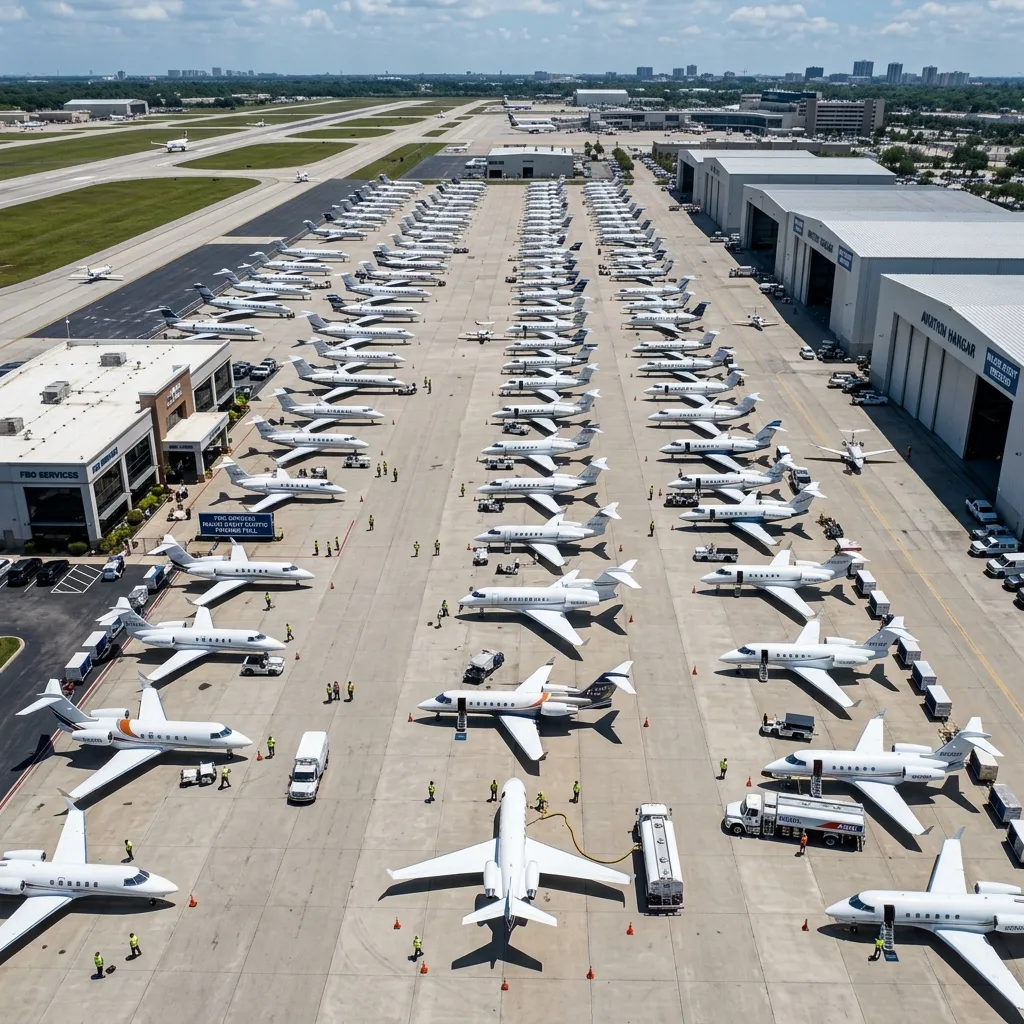
New Year's Eve charter demand begins building on December 26 and peaks between December 30 and January 2. During this 6-day window, Part 135 charter operators report flight request volumes 300 percent above November baselines. The demand is concentrated on a handful of routes: Northeast to Florida, Northeast to Caribbean, California to Las Vegas, and Midwest to ski destinations. By December 15, available aircraft on these routes are functionally sold out.
Pricing follows a predictable curve. Base-period charter rates (November) increase 25 to 40 percent for flights departing December 26 to 29. Flights departing December 30 and 31 carry a 50 to 80 percent premium. Return flights on January 1 and 2 carry a 40 to 60 percent premium. By January 3, pricing reverts to standard winter rates within 24 hours. The market resets as fast as it inflates.
Route-by-Route Pricing: What NYE Actually Costs
The premium is driven by aircraft positioning, not operator greed. When an aircraft flies a client from Teterboro to Miami on December 30, the operator must either find a return payload or reposition the aircraft empty. Empty legs back to Teterboro cost the operator $15,000 to $20,000 in fuel, crew, and landing fees. That repositioning cost is embedded in the outbound charter price. The few operators who can match a southbound client with a northbound client on the same day charge lower premiums because they eliminate the empty leg.
Booking Strategy: October Is the Deadline
Experienced charter clients book NYE travel in September or October. By November 15, premium routes (TEB-MIA, TEB-SJU, LAX-LAS) have limited availability. By December 1, clients requesting specific aircraft types on specific dates face either no availability or peak surge pricing from operators selling their last remaining slots.
How to Reduce NYE Charter Costs
- Book by October 15: Early booking locks rates 15 to 25 percent below last-minute pricing. Operators offer October rates because they want fleet certainty for the holiday period.
- Depart December 28 or 29 instead of December 30 or 31: Moving the outbound leg 24 to 48 hours earlier can reduce the round-trip cost by $8,000 to $15,000 on a midsize jet.
- Return January 3 or 4 instead of January 1 or 2: The return premium drops by 30 to 40 percent once the January 2 deadline passes.
- Request empty leg matching: Ask the broker to check for empty leg availability on your dates. If another client is flying the opposite direction on the same day, your leg may price at standard or discounted rates.
- Consider alternative airports: West Palm Beach (PBI) instead of Miami (OPF). Aspen (ASE) instead of Eagle/Vail (EGE). Secondary airports may have more aircraft availability and lower FBO fees.
- Fly a smaller aircraft: A light jet on a 3-hour route costs 40 to 50 percent less than a midsize. If your party is four passengers or fewer with light luggage, a Phenom 300 or CJ3 handles the mission at significant savings.
The single most effective cost-reduction strategy for NYE charter travel is timing flexibility. Moving departure by 48 hours and return by 48 hours can save $15,000 to $25,000 on a round-trip midsize charter. The fireworks happen on the same night regardless of when you flew in.
Need a Charter Quote?
Contact our team for a personalized quote.
Get a Quote →Destination Airports: Where the Fleet Flows
NYE charter traffic follows predictable patterns. The top five receiving airports during the December 30 to January 1 window:
1. Opa-Locka Executive (KOPF) — Miami
Miami's primary private jet airport handles 800 to 1,000 business jet movements during the NYE window. Ramp space reaches capacity. FBO parking overflows to auxiliary areas. Landing slot coordination begins December 15. Clients arriving on December 31 for Miami Beach celebrations should expect 15 to 30 minutes of ground delay for ramp sequencing.
2. Teterboro (KTEB) — New York
Teterboro is both a departure and arrival hub for NYE. Outbound traffic peaks December 28 to 31. Inbound traffic (clients arriving for NYC celebrations) peaks December 30 to 31. The airport handles 1,200+ movements during the full holiday window. Noise curfew (11 PM to 6 AM) restricts late-night departures after midnight celebrations.
3. Aspen (KASE) — Ski Season
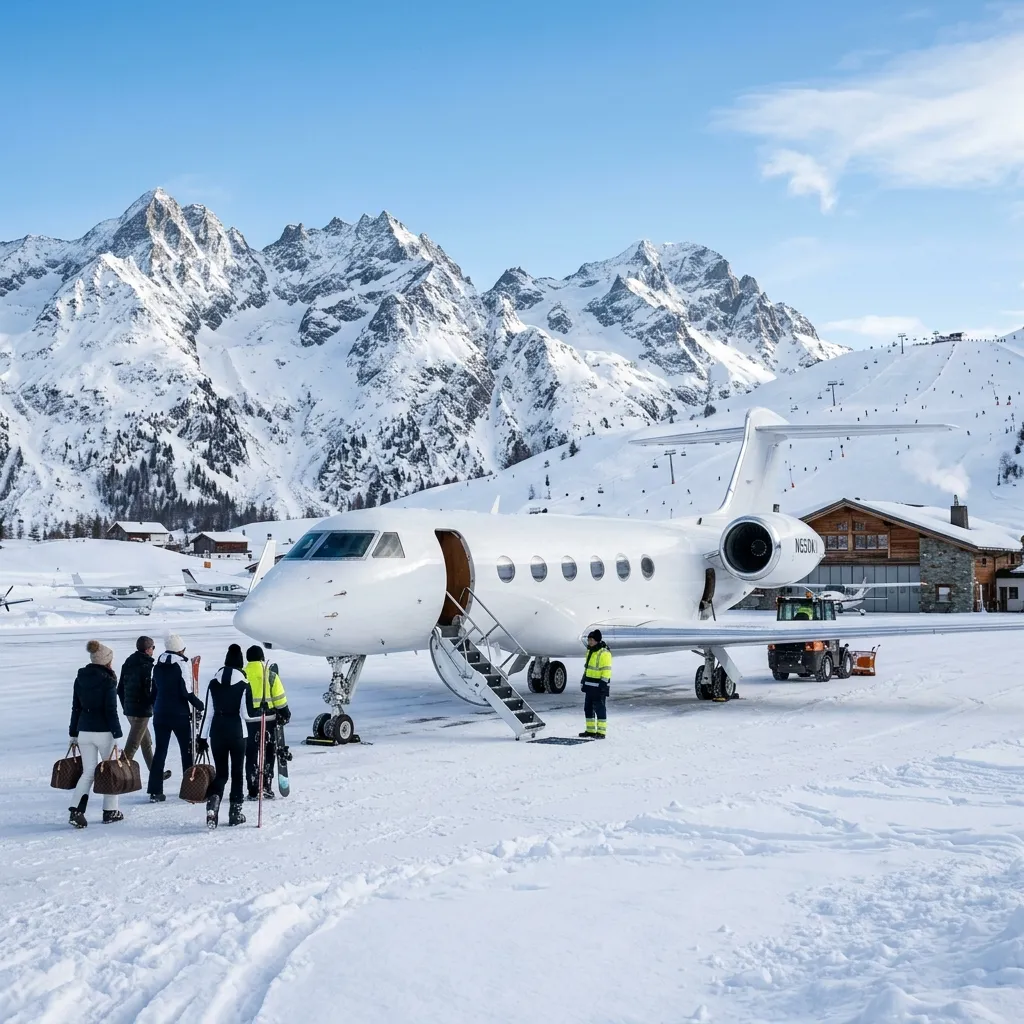
Aspen is the most operationally constrained NYE destination. The airport's single 8,006-foot runway at 7,820 feet elevation limits operations to 40 to 50 movements per day. During NYE week, ATC holds inbound aircraft in Denver Center airspace for 20 to 45 minutes due to runway saturation. Light jets and turboprops depart more efficiently than heavy jets because they require less runway separation.
4. Las Vegas (KLAS Henderson Executive)
Henderson Executive (HND) handles the majority of NYE private jet traffic to Las Vegas. Approximately 350 to 400 business jet movements occur December 30 to January 1. The 5,001-foot runway accommodates light and midsize jets. Heavy jets use Harry Reid International (KLAS) with its 14,500-foot runway but face longer taxi times and airline traffic delays.
5. St. Barts (TFFJ)
Gustaf III Airport in St. Barts has a 2,133-foot runway at the edge of a cliff. Only turboprops and a handful of specifically approved light jets can operate there. Most charter clients fly to St. Maarten (SXM) and transfer by smaller aircraft or ferry. During NYE, St. Maarten's FBO (Signature) handles 200+ movements. The SXM-to-St. Barts transfer adds $2,000 to $4,000 and 30 to 45 minutes to the journey.
What Can Go Wrong: Weather, Delays, and Contingencies
NYE charter travel coincides with winter weather across the primary departure markets (Northeast, Midwest, Mountain West). Weather-related issues affect approximately 20 to 30 percent of NYE charter trips in some form:
- Ground de-icing delays: Active snowfall at Teterboro, White Plains, or Chicago adds 30 to 60 minutes and $2,000 to $6,000 to departure. The crew will not depart with contaminated surfaces.
- Airport closures: Aspen closes for snow removal 2 to 4 times per week during peak season. Each closure lasts 30 to 90 minutes. Inbound aircraft hold or divert to Eagle/Vail.
- Crew duty time limits: Part 135 flight crews have 14-hour duty day limits. If weather delays push a crew past their limit, the flight cancels until the crew rests. On multi-leg trips, tight connections create duty-time risk.
- Repositioning failures: When the operator planned to position your aircraft from another city, weather at the origin airport can delay the aircraft's arrival at your departure point. This cascading delay is the most common cause of NYE charter disruptions.
- Return flight weather: A storm in the Northeast on January 1 or 2 can ground return flights for 12 to 24 hours. Operators build contingency into crew scheduling but cannot control airport closures.
Build 24 hours of flexibility into both ends of the trip. Depart a day early. Plan to return a day late. The passengers who get stranded are the ones who booked the last possible departure on December 31 and the first possible return on January 1.