The Economics of Super Bowl Charter Demand
Super Bowl LX in February 2026 generated approximately 600+ private jet movements into the host city area over a 4-day window (Thursday through Sunday). That is 300-400% above normal weekend charter volume for a single metro area. The demand comes from three sources: team ownership and VIP guests (50-75 aircraft), corporate hospitality clients (200-300 aircraft), and individual charter buyers (200-300 aircraft). Every FBO within 90 miles of the stadium operates at maximum capacity.
Pricing reflects the demand spike. A midsize jet one-way from New York to the host city that normally quotes $12,000-$18,000 runs $25,000-$40,000 during Super Bowl week. Heavy jets from the West Coast quote $45,000-$70,000 versus the normal $30,000-$45,000. The premium is not gouging. It reflects repositioning costs (the operator must get the aircraft out of the congested host city), crew scheduling complexity, and the opportunity cost of allocating fleet to a single event weekend. Operators can fill every aircraft they have during Super Bowl week. The excess demand sets the price.
Airport and FBO Logistics: The Real Bottleneck
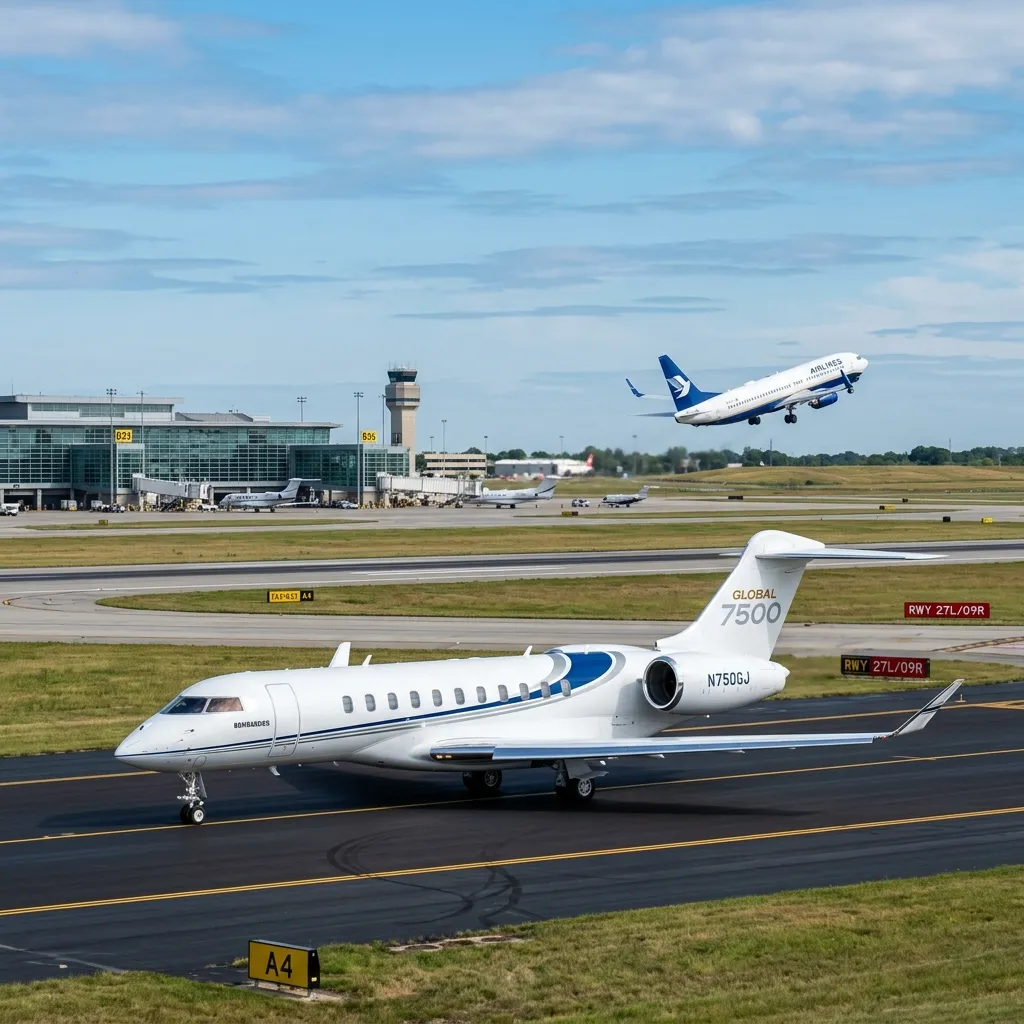
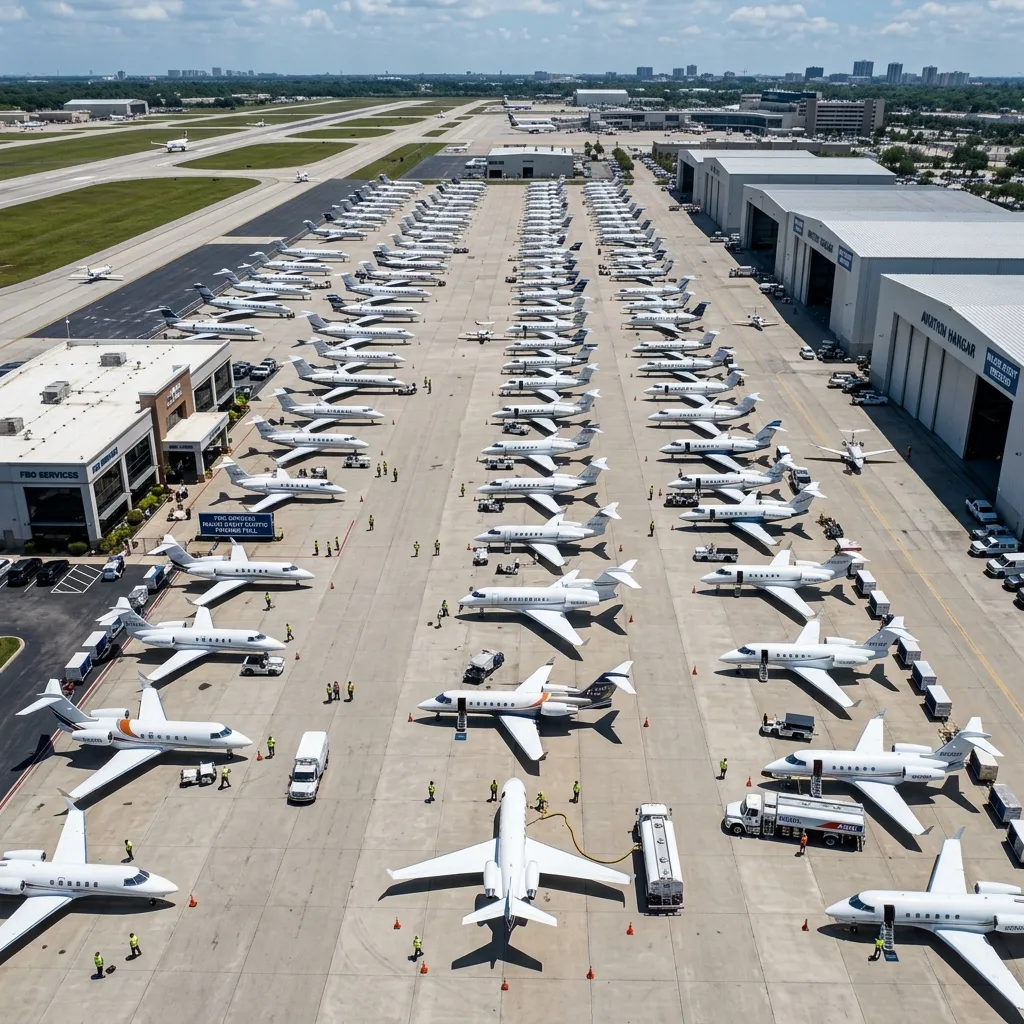
Ramp space, not aircraft availability, is the binding constraint during Super Bowl weekend. A typical GA airport near a Super Bowl host city has ramp capacity for 80-120 transient aircraft. During Super Bowl weekend, 300-400 aircraft need parking. FBOs implement slot reservations 6-8 weeks before the event. Without a confirmed ramp slot, the FBO will not accept the flight plan. Some FBOs require non-refundable ramp fees of $1,000-$5,000 to reserve a parking spot, paid in advance.
Overflow parking forces aircraft to satellite airports 60-90 miles from the stadium. A client who cannot secure ramp space at the primary GA airport may end up at a secondary field with limited FBO services and a 90-minute ground transfer. This is the single biggest logistical failure point for Super Bowl charters: the client assumes they will park at the closest airport, the closest airport is full, and the fallback adds 3 hours of ground time to the trip.
The Post-Game Departure Problem
The game ends around 10 PM local time. Within 2 hours, 400+ passengers want to be airborne. Every FBO is processing departures simultaneously. Ground transportation from the stadium to the airport takes 45-90 minutes due to event traffic. The aircraft need to be fueled, preflighted, and repositioned from overflow parking to the active ramp. Crew duty time limits under FAR Part 135 become a factor if the crew has been on duty since early morning.
Experienced operators handle post-game departures with a specific playbook: the aircraft is fueled and preflighted by 4 PM (before the game starts), positioned on the active ramp with a confirmed departure slot by 6 PM, and the crew enters rest until the passenger arrives. The crew's duty clock starts when they report for duty, not when the passenger boards. A crew that reported at 6 PM has duty time remaining until midnight. A crew that reported at 8 AM is approaching 14-16 hours of duty by 10 PM and may be unable to legally depart.
For Part 91 operations, no duty time limits apply, but fatigue is still a factor. A Part 91 pilot who has been awake since 5 AM and departs at midnight for a 3-hour flight is making a risk calculation. The smart money stays overnight and departs Monday morning. The ego money pushes for a Sunday night departure. The accident database has entries in both columns.