Masters Week Produces the Most Concentrated Private Jet Demand in American Sports
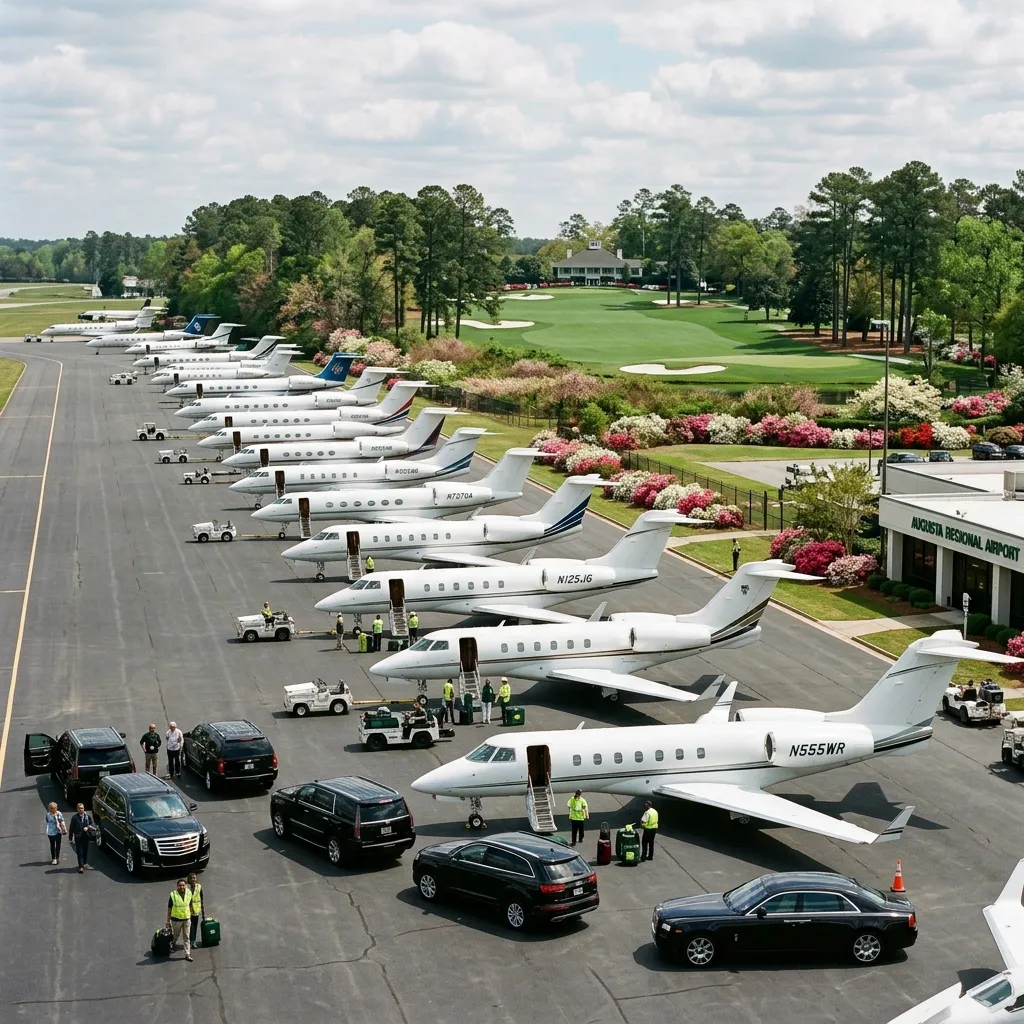
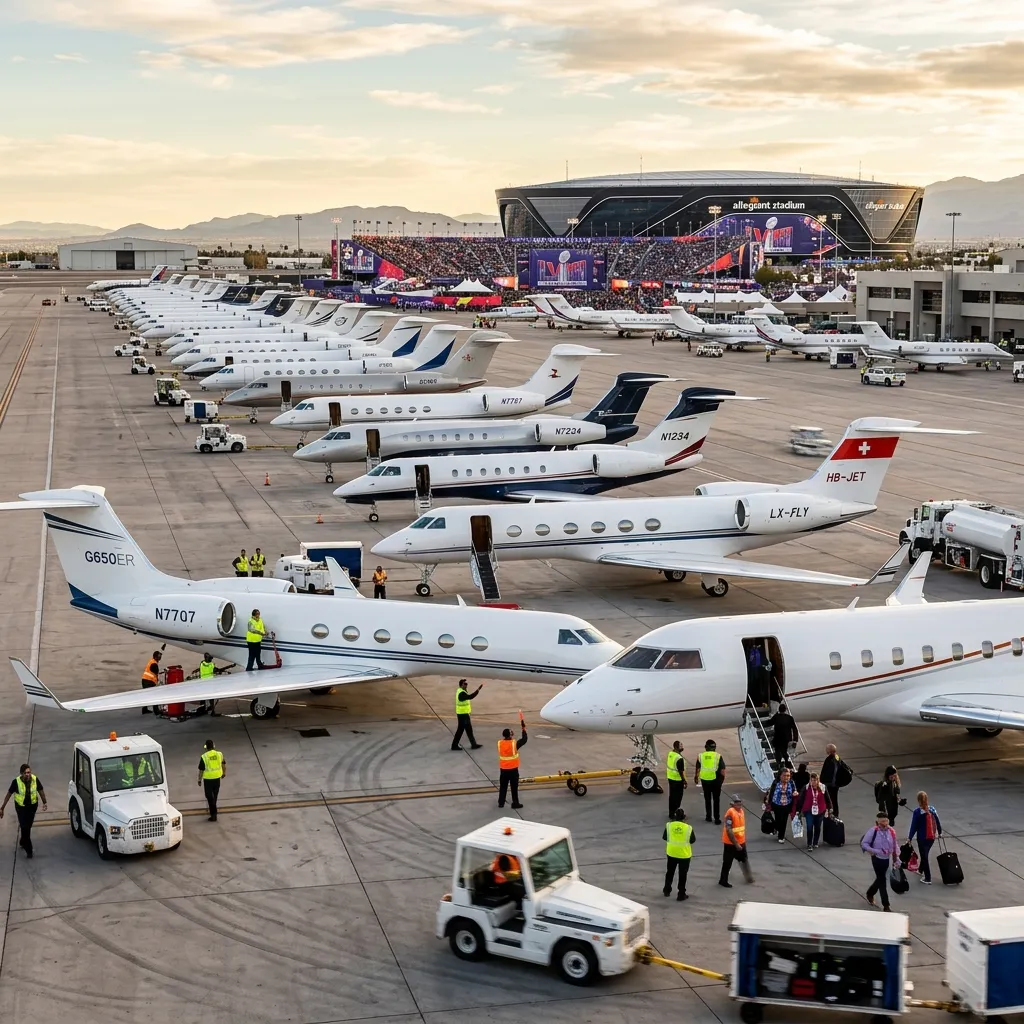
The Masters Tournament at Augusta National Golf Club generates approximately 800+ private jet arrivals into the Augusta, Georgia area during the Monday-through-Sunday tournament window. This makes Masters week the single most concentrated private aviation event in American sports, surpassing the Super Bowl, Kentucky Derby, and every F1 race. The difference is geography: Augusta is a small Southern city with limited airport infrastructure, and the entire private jet demand concentrates into a 7-day window at two airports that handle a fraction of this volume the other 51 weeks of the year.
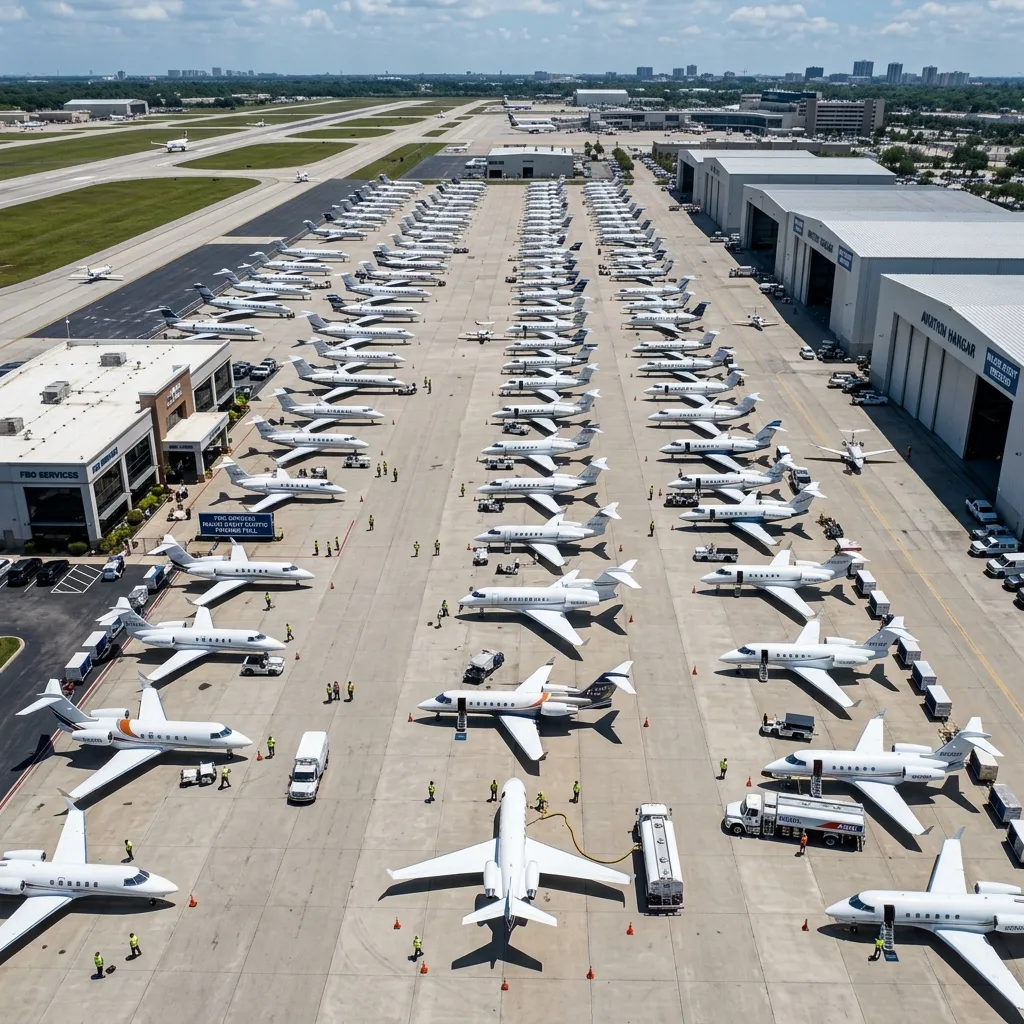
Charter rates for Masters week spike 50-100% above baseline for routes into Augusta. A one-way charter from Teterboro (TEB) to Augusta Regional (AGS) on a midsize jet costs $15,000-$25,000 during Masters week versus $8,000-$14,000 on a normal week. Heavy jets (G650, Global 7500) run $30,000-$45,000 one-way. Ramp space at AGS sells out 8-10 weeks before the tournament. Late planners get redirected to Columbia, South Carolina (CAE) or Aiken (AIK), adding 90+ minutes of ground time.
Augusta Regional Airport (AGS): The Primary Entry Point
Augusta Regional Airport (AGS/KAGS) handles approximately 70% of Masters week private jet traffic. The airport has an 8,001-foot primary runway (8/26) that accommodates all aircraft types up to and including BBJs. Two FBOs operate at AGS: Signature Flight Support and Augusta Aviation. During Masters week, both FBOs expand operations with temporary ramp space, additional line service staff, and extended hours. Despite the expansion, ramp space fills by early February for an April tournament.
Drive time from AGS to Augusta National Golf Club is 15-25 minutes under normal conditions. During Masters week, particularly Wednesday (practice round day) and Thursday-Sunday mornings, traffic congestion on Washington Road and I-20 adds 15-30 minutes. Pre-arranged car service with a driver familiar with the Masters traffic pattern is strongly recommended. Do not rely on rideshare apps; driver availability drops sharply near the course during tournament hours.
Daniel Field (DNL): The Local's Secret
Daniel Field (DNL/KDNL) is a small public airport 3 miles from downtown Augusta and 10-15 minutes from Augusta National. Its 3,700-foot runway limits operations to light jets (Phenom 300, CJ3/CJ4, Citation M2) and turboprops. No super-midsize, heavy, or ultra-long-range jets can operate into DNL.
The advantage: proximity. DNL is the closest airport to Augusta National, and during Masters week, the reduced ground travel time is significant when every road near the course is congested. The disadvantage: limited services. DNL has one small FBO, minimal ramp space, and no fuel truck capacity for high-volume operations. Operators using DNL must arrange fuel at AGS before repositioning.
Daniel Field is the airport for Masters patrons who fly in on a light jet, attend Thursday-Sunday rounds, and depart Sunday evening. The 10-15 minute drive to the course (versus 25-40 minutes from AGS during peak traffic) saves 30-50 minutes per round trip. For patrons making the daily commute from airport to course, that time savings over four days is substantial.
Need a Charter Quote?
Contact our team for a personalized quote.
Get a Quote →Booking Timeline: Masters Demands Planning Most Events Do Not
The Masters is not an event you decide to attend by private jet two weeks before. The booking timeline is among the most aggressive in private aviation, rivaled only by the Super Bowl and Davos. Ramp reservations at AGS fill 8-10 weeks before the tournament. Charter aircraft availability narrows 6-8 weeks before. By 4 weeks before, options are limited to light jets, overflow airports, or repositioning from distant bases.
Empty legs departing Augusta become available Sunday afternoon through Monday morning as operators reposition aircraft back to home bases. These legs are typically 30-50% below standard rates but have fixed departure times and destinations that may not match your return route. Ask your broker to monitor Augusta empty legs beginning the Friday of tournament week.
Ground Logistics: Washington Road Is the Bottleneck
Washington Road is the main artery connecting I-20 to Augusta National's main entrance. During tournament hours (gates open at 8 AM, play typically ends by 6-7 PM), Washington Road experiences stop-and-go traffic that can stretch a 5-mile drive to 30-45 minutes. The route from AGS to Augusta National via I-20 and Washington Road is the most common approach, and during peak ingress (7-9 AM) and egress (5-7 PM), it is the slowest.
- Alternative route from AGS: Take Wheeler Road south to Berckman Road, entering from the north side. Adds 5 minutes versus Washington Road but avoids the worst congestion on patron ingress days.
- Alternative route from DNL: Use Broad Street to Wheeler Road. DNL's proximity means even congested routing stays under 20 minutes.
- Helicopter transfers: Not available to Augusta National. The club does not permit helicopter landings on the property. Helicopter service from AGS to a nearby helipad is theoretically possible but not commonly arranged.
- Augusta National parking: Patron parking is severely limited. Most patrons use shuttles from satellite lots. Private car drop-off at the main gate is possible but requires navigating Washington Road traffic.
Cost Snapshot: What Masters Week by Private Jet Actually Costs
A four-day Masters trip (arrive Wednesday, depart Sunday) on a midsize jet from the Northeast costs approximately $35,000-$55,000 total: $30,000-$50,000 in round-trip charter, $2,000-$4,000 in ramp and FBO fees, $1,600-$2,400 in crew costs, and $1,200-$2,000 in ground transport. Add Masters badge cost ($150-$400 for daily patron badges purchased through the lottery; secondary market prices for full-week badges reach $3,000-$8,000+), hotel or house rental ($3,000-$15,000 for the week), and dining, and the total Masters experience by private jet runs $45,000-$80,000 per trip for a group of 4-6.
The per-person math matters. A midsize jet carrying 6 passengers to Masters costs roughly $6,000-$9,000 per person for the aviation component. Commercial flights from the Northeast to Augusta (connecting through Atlanta or Charlotte) run $600-$1,200 per person round-trip during Masters week, but add 4-6 hours of travel time each way including connections, security, and ground transport from ATL or CLT. At 6 people, the private jet is 5-8x the airline cost but saves 8-12 hours of collective travel time. The group determines whether that trade-off is justified.