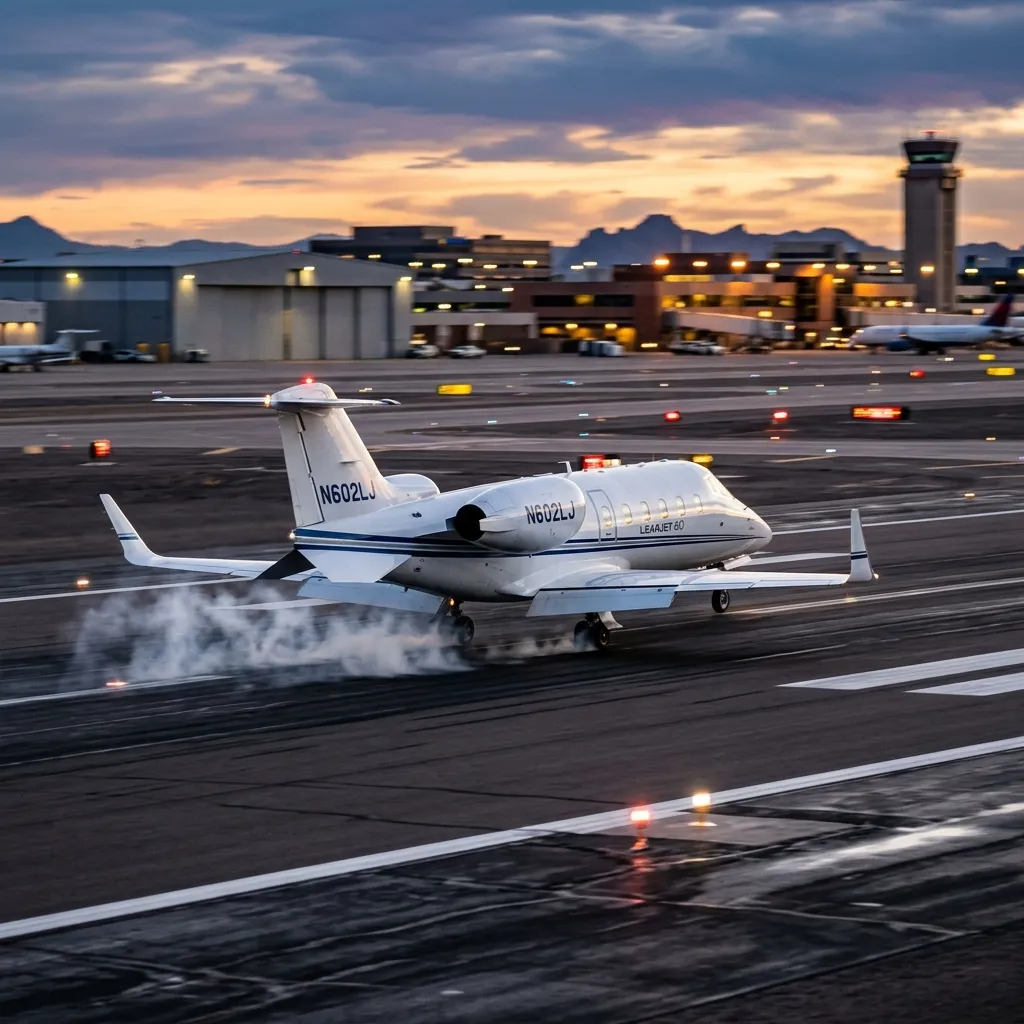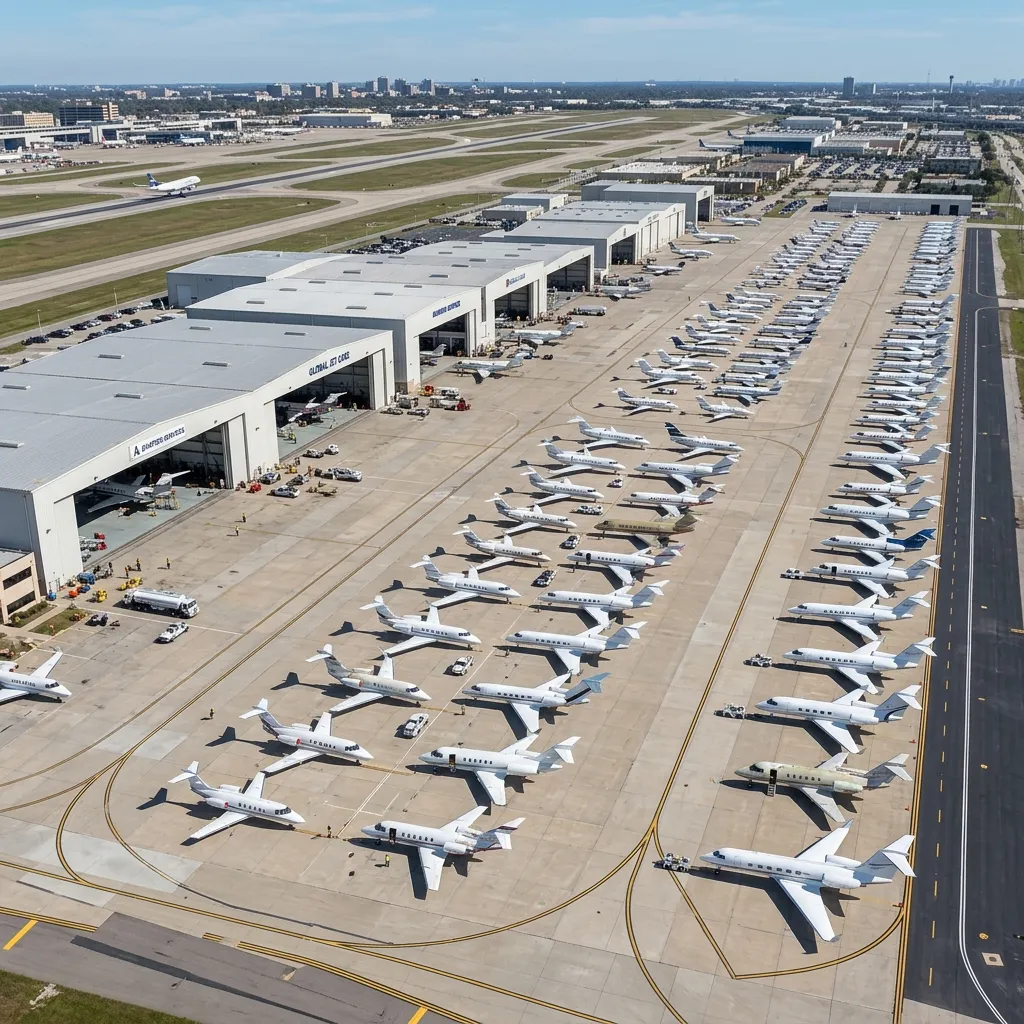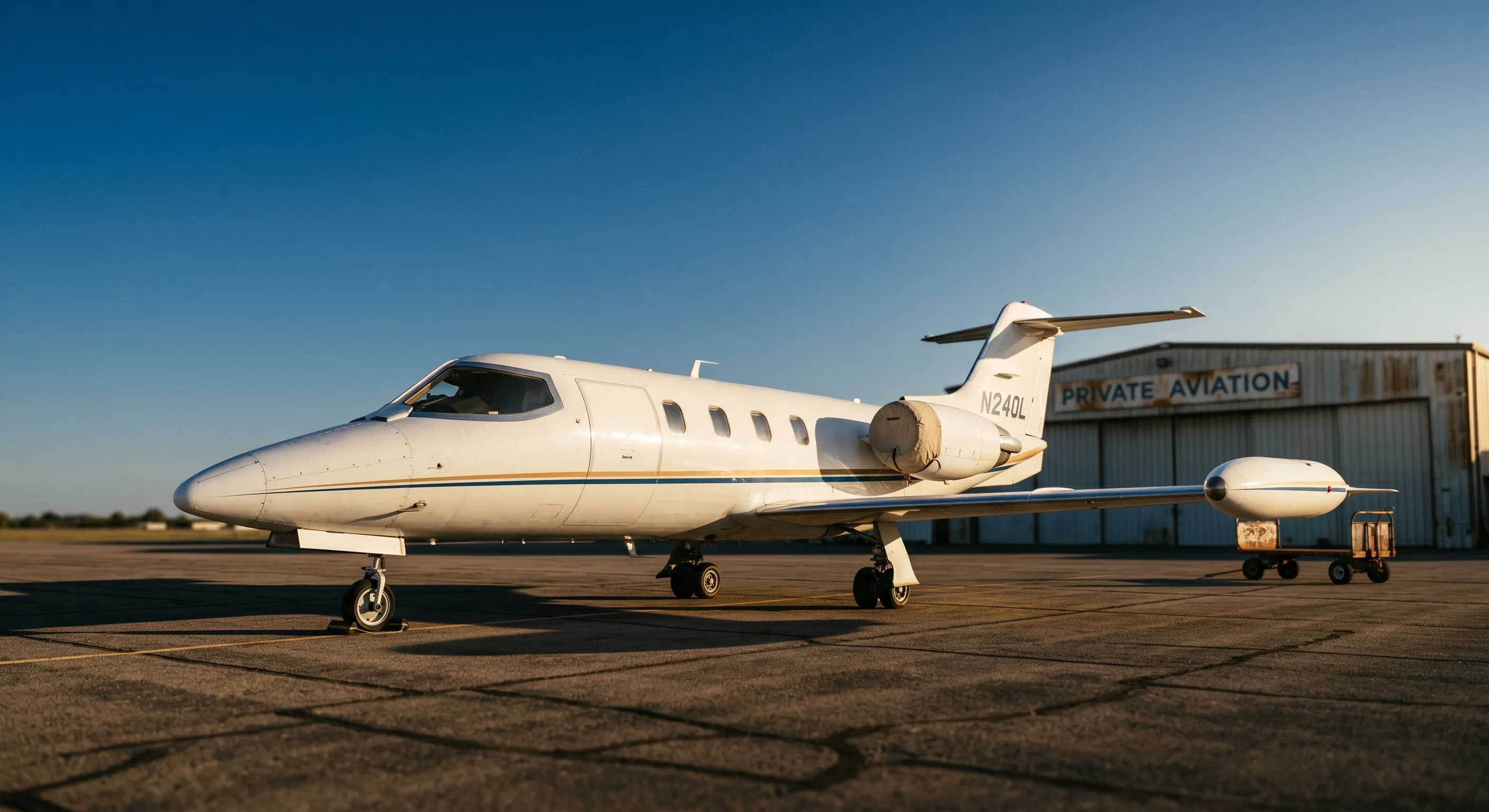
Classic Learjet 35A parked on a quiet ramp with a sunset sky, representing the aging Learjet fleet

How Many Learjets Remain in Service? A 2026 Fleet Census

The FAA registry lists 1,174 aircraft with 'Learjet' as the manufacturer designation as of April 2026. Of those, approximately 614 are actively flying on Part 91 or Part 135 certificates. The remainder are stored, deregistered but not yet removed from the database, or held by salvage operators selling components. Bombardier ceased Learjet production in February 2021 with the final Learjet 75 Liberty. No new Learjets will ever be built.

In This Article

Model-by-Model Fleet Count Why the Fleet Is Shrinking The Learjet 45 and 60: The Survivors The End of the Line: Learjet 75 Liberty The Learjet Legacy: Cultural Impact Beyond the Numbers Frequently Asked Questions

Model-by-Model Fleet Count

Learjet produced more than 3,000 aircraft across all models from 1964 to 2021. The fleet has contracted steadily since peak active numbers in the early 2000s. Older models (Learjet 24, 25, 28, 31, 36, 55) have largely exited service. The remaining active fleet concentrates in four models: the Learjet 35/36 series, Learjet 45/45XR, Learjet 60/60XR, and Learjet 75/75 Liberty.

The Learjet 35/36 series remains the most numerous on the registry but has the lowest active utilization rate. Many are parked, with owners holding registrations while deciding whether to overhaul or part out. At $350,000-$900,000 for a flyable airframe, the Learjet 35A offers the lowest entry point into jet ownership in the United States. Whether that entry point is advisable is a separate question.

Why the Fleet Is Shrinking

Three factors drive Learjet fleet contraction. First, engine overhaul economics. A TFE731-2 overhaul (Learjet 35/36) costs $350,000-$500,000 per engine. On an aircraft with a hull value of $400,000-$700,000, spending $700,000-$1,000,000 on engines is economically irrational. Owners facing hot section inspections on low-value airframes part out rather than overhaul. This process removes 30-50 Learjets from active service annually.

Second, ADS-B compliance. The January 2020 ADS-B Out mandate forced owners of older Learjets to invest $80,000-$150,000 in transponder and avionics upgrades. Many pre-2000 Learjets with outdated avionics were retired rather than upgraded. The mandate accelerated attrition by approximately 3 years, pulling forward retirements that would have occurred naturally.

Third, insurance availability. Underwriters have tightened coverage for Learjet models with aging fleets and diminishing parts support. Liability premiums on Learjet 35/36 aircraft have increased 40-60% since 2020. Some underwriters have exited the segment entirely. Higher insurance costs push marginal operators out of the fleet, further reducing active numbers.

The Learjet 45 and 60: The Survivors

The Learjet 45 (production 1998-2012, 495 delivered) and Learjet 60 (production 1993-2007, 318 delivered) represent the fleet's operational core. Both models use modern turbofan engines (TFE731-20 on the 45, PW305A on the 60) with established overhaul shops and adequate parts supply. Pre-owned pricing supports economic operation: $1.5-$3.5 million for a 45XR, $2.0-$4.5 million for a 60XR.

The Learjet 45XR, in particular, remains competitive in the charter market. Its 2,120 nm range, Mach 0.81 cruise speed, and 6-8 passenger cabin meet the specifications of the light jet charter segment at lower operating costs than the Phenom 300 or Citation CJ4. Charter operators running 45XRs report variable costs of $2,800-$3,500 per flight hour, competitive with newer light jets.

The Learjet 60XR occupies an unusual market position: a midsize jet with light jet operating costs. Its 2,405 nm range and stand-up cabin (5 feet 7 inches) bridge the gap between light jets and true midsize aircraft. The 60XR's PW305A engines are reliable and well-supported. However, the aircraft's narrow cabin (5 feet 1 inch width) limits its appeal compared to wider midsize options like the Citation XLS+ and Hawker 800XP.

Need a Charter Quote?

Contact our team for a personalized quote.

Get a Quote

The End of the Line: Learjet 75 Liberty

Bombardier delivered the final Learjet 75 Liberty in February 2021 and permanently closed the Learjet production line in Wichita, Kansas. The 75 Liberty was Bombardier's last attempt to modernize the Learjet brand: Garmin G5000 avionics, Honeywell TFE731-40BR engines, 2,080 nm range, and a 6-passenger cabin priced at $9.9 million. It sold modestly. Approximately 79 Learjet 75 and 75 Liberty aircraft exist on registries worldwide.

The decision to end Learjet production was economic. Bombardier redirected capital toward the Global and Challenger families, where margins and demand were stronger. The Learjet 75 competed against the Phenom 300E ($9.65 million, wider cabin, similar range) and lost consistently. The Learjet brand carried enormous recognition but insufficient market share to justify continued investment.

For the 79 Learjet 75/75 Liberty owners, the end of production raises long-term parts and support concerns. Bombardier committed to supporting the fleet through its service center network, and the Garmin G5000 avionics ensure cockpit technology remains current. But history suggests that once production ceases, parts availability gradually deteriorates, overhaul costs increase, and resale values compress as buyers discount the lack of manufacturer investment in the platform.

The Learjet Legacy: Cultural Impact Beyond the Numbers

Bill Lear's original Learjet 23, which first flew on October 7, 1963, in Wichita, Kansas, did more than create a product category. It created a cultural symbol. "Learjet" became a synonym for private jet in popular culture, appearing in songs, films, and news coverage for six decades. The brand's cultural penetration exceeded its market share by an order of magnitude.

The Learjet 35/36 series, produced from 1973 to 1994, was the most successful model family with approximately 740 units delivered. Its combination of speed (Mach 0.81), range (2,060 nm), and relatively low acquisition cost made it the default light jet for charter operators, air ambulance services, and military/government users. The U.S. military operates C-21A variants (military designation for the Learjet 35A) for passenger and cargo transport, with approximately 50 remaining in active service.

As the fleet contracts toward its eventual end, the Learjet 45XR and 60XR represent the last economically viable Learjet models. Both will likely remain in service through the early 2030s before parts scarcity and maintenance costs push the final examples into retirement. The Learjet 75 Liberty, the youngest and most capable model, should remain active through the late 2030s, its Garmin G5000 avionics ensuring cockpit currency long after older models have departed.

Brian Galvan

Written By

Brian Galvan

Founder, The Jet Finder ยท Private Aviation Operations & Technology

Former Director of Technology at FlyUSA (Inc. 5000 fastest-growing private jet company). Decade of hands-on experience across Part 135 operations, charter sales, fleet management, and aviation data systems.

LinkedInRead Full Profile →
Common Questions

Frequently Asked Questions


6 questions about the remaining Learjet fleet and fleet contraction trends

Approximately 614 Learjets are actively flying on Part 91 or Part 135 certificates in the United States as of mid-2026. The FAA registry lists 1,174 aircraft with Learjet designations, but many are stored, deregistered pending removal, or held by parts companies. The active fleet contracts by approximately 30-50 aircraft per year as older models reach engine overhaul life limits and are parted out rather than overhauled.

Bombardier delivered the final Learjet 75 Liberty in February 2021 and permanently closed the Wichita, Kansas production facility. The decision redirected Bombardier's capital and engineering resources toward the Challenger and Global families, which offered higher margins and stronger order backlogs. No new Learjets will ever be produced. The Learjet brand name was retired after 58 years of continuous production dating to Bill Lear's original Learjet 23 in 1964.

The Learjet 35A trades at $350,000-$900,000 because the aircraft has entered negative economic territory where engine overhaul costs exceed hull value. A pair of TFE731-2 overhauls costs $700,000-$1,000,000. When the hull is worth $400,000-$700,000, spending more on engines than the aircraft is worth means rational buyers either part out the aircraft or operate it until the next overhaul event and then scrap. This dynamic compresses values toward parts value rather than operating value.

Parts availability varies by model. Learjet 45/45XR and 60/60XR parts remain adequate through Bombardier's service network and aftermarket suppliers. Learjet 35/36 parts are increasingly sourced from parted-out aircraft rather than new production, which introduces variability in availability and lead times. Avionics components for pre-G1000/G5000 Learjets (Honeywell SPZ-800, Collins Pro Line) are the most challenging to source. Several specialized shops (West Star Aviation, Duncan Aviation, Elliott Aviation) maintain Learjet parts inventories.

The Learjet 45XR remains competitive on performance: 2,120 nm range, Mach 0.81 cruise, and variable operating costs of $2,800-$3,500 per hour are comparable to the Phenom 300E and Citation CJ4. Its cabin, however, is narrower (4 feet 11 inches versus 5 feet 1 inch for the Phenom 300) and shorter. Charter passengers who have flown the Phenom 300's flat-floor cabin notice the difference. At $1.5-$2.5 million pre-owned versus $9.65 million for a new Phenom 300E, the 45XR offers significant acquisition savings for operators prioritizing cost over cabin experience.

Historical precedent from other discontinued aircraft (Hawker 800 series, Westwind, Sabreliner) suggests a gradual decline. Initial years after production cessation see stable or slightly declining values as the fleet remains well-supported. After 5-10 years, parts availability issues, reduced service center expertise, and buyer anxiety about support begin compressing values. The Learjet 75/75 Liberty, with Garmin G5000 avionics and recent production, will hold value longest. Older Learjet 35/36 models will continue depreciating toward parts value as engine overhaul economics eliminate them from the active fleet.

Continue Reading

Related Articles


Your Next Mission

Ready to Fly?


Whether you need a charter quote or want to explore aircraft options, our team is here.

Contact Us