From 1964 to 2026: A Production Run No Turboprop Has Matched
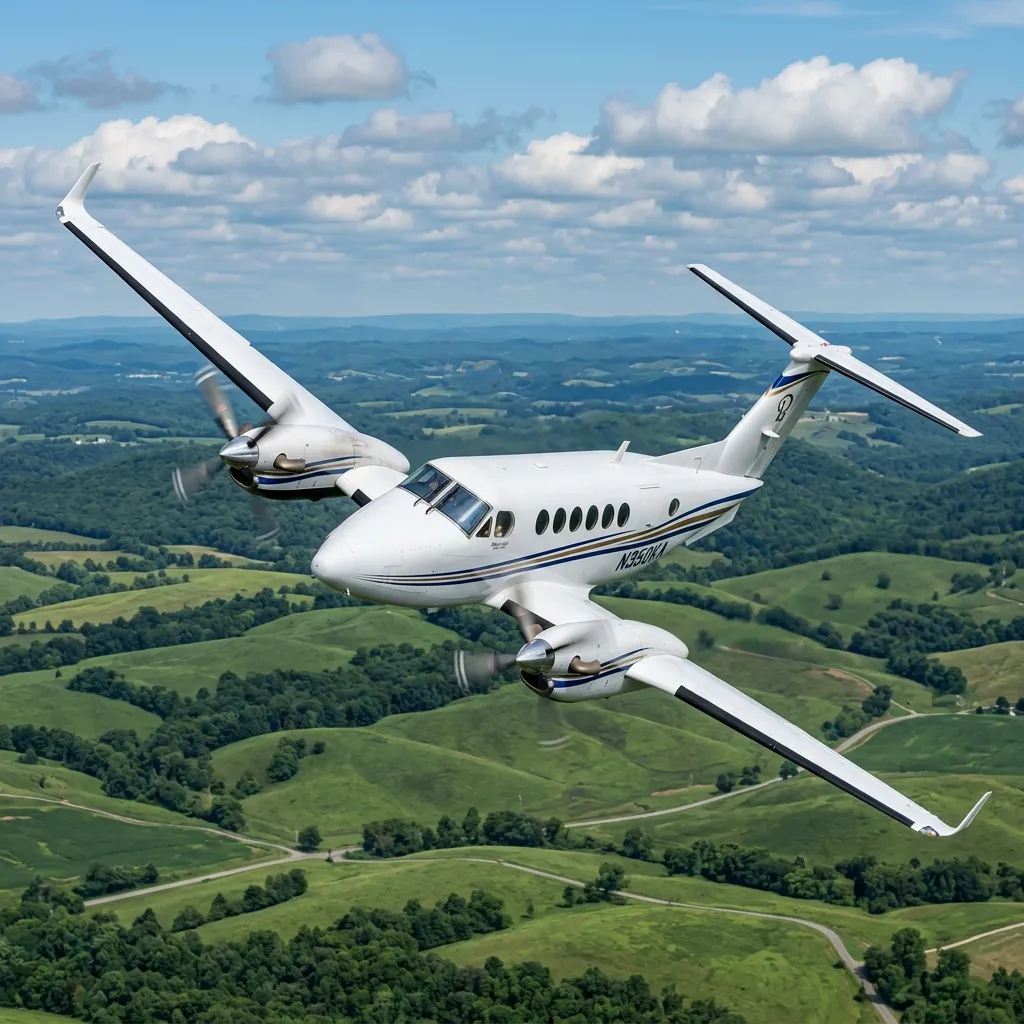
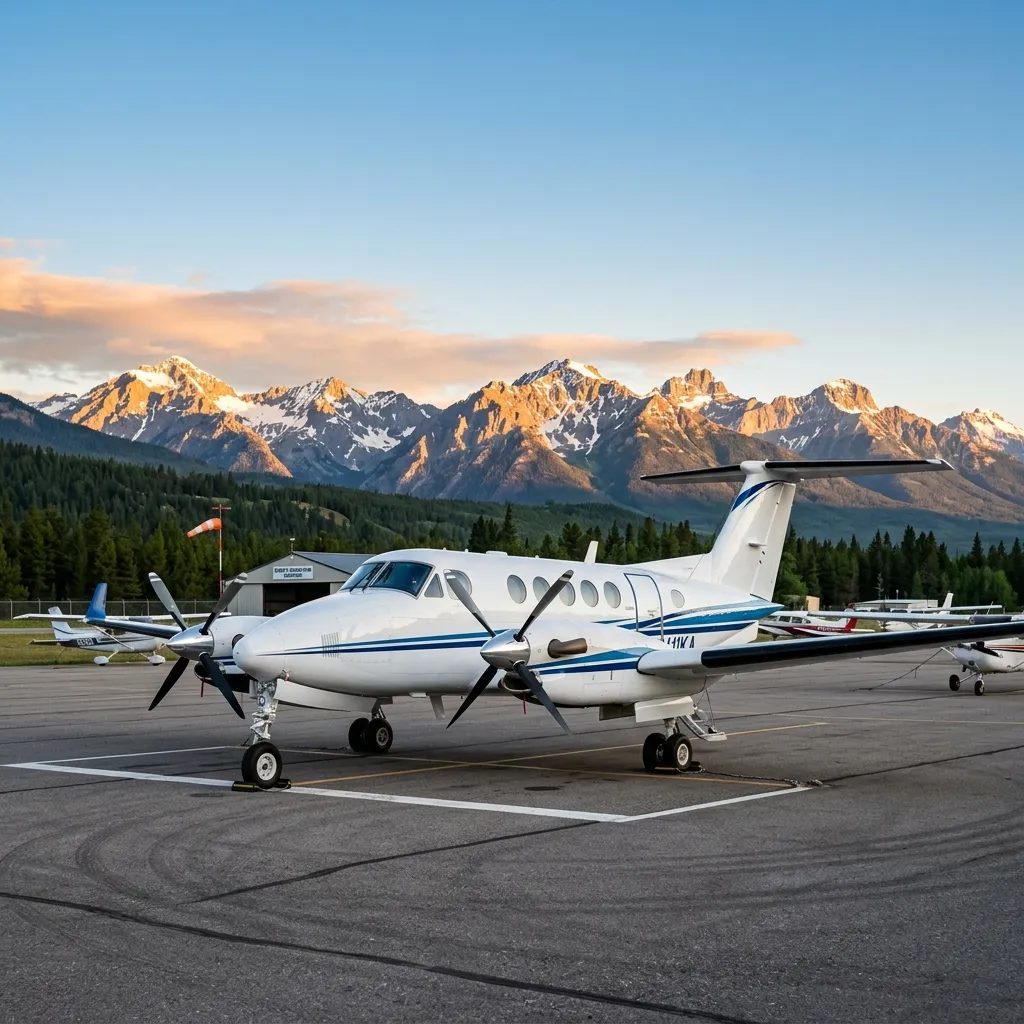
Beechcraft (now Textron Aviation) introduced the Model 65-90 King Air in 1964 as the first pressurized twin-turboprop for the business market. The aircraft filled a gap between piston twins and early turbojets, offering pressurized, air-conditioned cabin comfort with turboprop fuel efficiency and runway flexibility. Over the next six decades, Beechcraft expanded the King Air family into 14 distinct models: the 90-series (smallest), 100-series (mid), 200-series (stretched), and 300/350-series (largest and most capable).
The King Air 350, introduced in 1990 as the Model B300, stretched the 200-series fuselage by 34 inches and added winglets. The 350i variant (2009) introduced the Collins Pro Line 21 avionics suite and a redesigned interior. The current production model, the King Air 360 (2020), features the Collins Pro Line Fusion touchscreen flight deck, autothrottle, and digital pressurization. Combined deliveries across all King Air variants exceed 7,600 airframes, making it the most successful turboprop family in aviation history.
7,600+
Total Deliveries (All Variants)
61 yrs
In Production Since 1964
The King Air 350i cruises at 312 ktas (359 mph) at FL350, burning approximately 100 gallons per hour of Jet-A. Maximum range with 4 passengers is 1,806 nm; with a full cabin of 9 passengers and standard luggage, effective range compresses to approximately 1,200-1,400 nm. The aircraft can operate from runways as short as 3,300 feet at sea level, a capability that no jet in the light or midsize category can match.
The performance tradeoff is speed. A Phenom 300E cruises at 453 ktas, 45% faster than the King Air 350. On a 500 nm mission (Houston to Dallas, for example), the King Air 350 flies 1:36, while the Phenom 300 completes the same trip in 1:06. That 30-minute difference may or may not matter depending on the mission. On a 200 nm leg where the King Air's short-field capability provides access to a runway the jet cannot use, the time calculation reverses.
| Specification | King Air 350i | Phenom 300E | PC-12 NGX |
|---|
| Max Cruise Speed | 312 ktas | 453 ktas | 290 ktas |
| Max Range (4 pax) | 1,806 nm | 2,010 nm | 1,803 nm |
| Fuel Burn | 100 gph | 135 gph | 68 gph |
| Takeoff Distance | 3,300 ft | 3,209 ft | 2,650 ft |
| Cabin Width | 4 ft 6 in | 4 ft 11 in | 5 ft 0 in |
| Passengers | 9-11 | 7-10 | 6-9 |
| Engines | 2x PT6A-60A | 2x PW535E1 | 1x PT6E-67XP |
| Direct Hourly Cost | $1,400-$1,600 | $1,800-$2,100 | $900-$1,100 |
| New Price (2026) | $8.9M | $12.1M | $6.7M |
The King Air 350 does not compete with jets on speed. It competes on access. 5,197 public-use airports in the United States have runways under 5,000 feet. The King Air 350 can use approximately 4,800 of them. A Citation CJ3 can use approximately 3,200. A Phenom 300 can use approximately 2,900. For missions into short-field airports in mountainous terrain, remote areas, or unimproved surfaces, the King Air has no jet-powered equivalent.
The PT6A Engine: The Reason the King Air Exists
The King Air 350 is powered by two Pratt & Whitney Canada PT6A-60A turboprop engines, each producing 1,050 shaft horsepower. The PT6A family is the most produced turboprop engine in history: over 53,000 units manufactured with more than 500 million flight hours accumulated across all operators worldwide.
The PT6A's reliability record drives the King Air's operational economics. Time between overhaul (TBO) is 3,600 hours, meaning a King Air flying 400 hours per year operates 9 years between engine overhauls. Overhaul cost runs approximately $380,000-$420,000 per engine through Pratt & Whitney's authorized network. Hot-section inspections at 1,800 hours ($85,000-$110,000 per engine) are the primary between-overhaul maintenance event.
The reverse-flow design of the PT6A, where air enters the rear of the engine and exits the front, provides superior FOD (Foreign Object Damage) resistance compared to turbofan engines. This design characteristic is why the King Air operates safely from unimproved runways, grass strips, and gravel surfaces that would ingest debris into a conventional turbofan.
Interested in a King Air 350?
Whether you are evaluating a charter mission, considering acquisition, or comparing turboprops, we can provide operator introductions and market intelligence.
Contact Us →The Cabin: Versatility Over Elegance
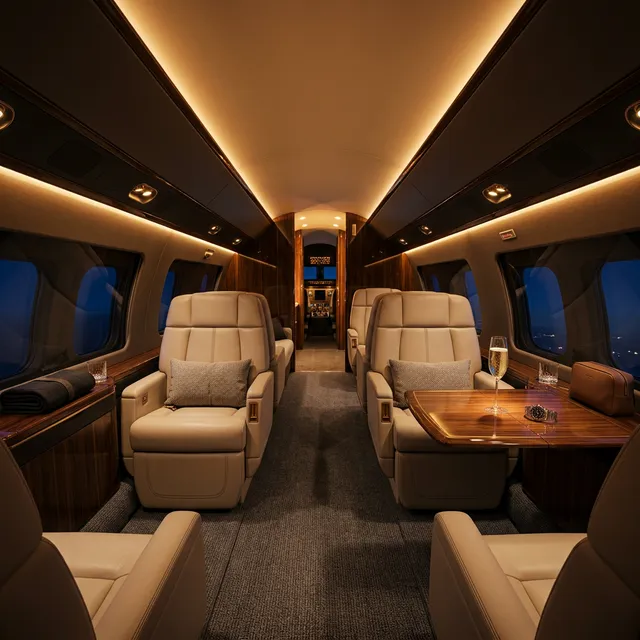
The King Air 350 cabin measures 19.2 feet long, 4.5 feet wide, and 4.8 feet tall. These dimensions provide a wider cabin than the Phenom 300 (5 ft 1 in vs 4 ft 11 in width) and substantially more headroom. Standard configuration seats 9 passengers in a double-club arrangement with an aft utility zone that accommodates a refreshment center or additional passenger seat.
The cabin's primary advantage is configuration flexibility. King Air 350s are delivered in executive, commuter, medevac, aerial survey, and cargo configurations. The flat floor, wide cargo door (52 x 52 inches on the 350ER variant), and high useful load (approximately 4,650 lbs) make the aircraft as effective for hauling equipment to a remote site as for transporting executives to a board meeting.
- Executive interior: 7-9 seats in leather, double-club configuration with fold-out work tables. Refreshment center with hot and cold capability. Pressurized lavatory in the aft section.
- Air ambulance/medevac: 1-2 litter positions with medical equipment rails, supplemental oxygen, and electrical outlets for medical devices. The King Air 350 is the most-used fixed-wing air ambulance in the United States.
- Cargo/utility: Seats removed, tie-down tracks installed. 4,650 lbs useful load handles oil field equipment, geological samples, or humanitarian supplies.
- ISR/Special Mission: Over 1,000 King Air variants operate in military and government ISR (Intelligence, Surveillance, Reconnaissance) roles, equipped with belly-mounted sensors, electronic warfare equipment, or aerial photography systems.
Operating Economics: The Numbers That Keep the King Air Relevant
The King Air 350i's direct operating cost runs approximately $1,400-$1,600 per flight hour, including fuel ($575/hr at 100 gph and $5.75/gal), maintenance reserves ($450-$550/hr), and crew costs. Total annual operating cost for an owner flying 400 hours per year, including fixed costs (insurance, hangar, training, management), runs approximately $1.1-$1.3 million.
These numbers position the King Air 350 at a 25-35% discount to light jets like the Phenom 300 ($1,800-$2,100/hr direct) and a 50-60% discount to midsize jets like the Challenger 350 ($3,400-$4,200/hr direct). The fuel savings alone are substantial: at 100 gph versus the Phenom 300's 135 gph, the King Air saves approximately $200 per flight hour in fuel. Over 400 annual flight hours, that is $80,000 in fuel savings.
The King Air 350 charter cost ranges from $2,200-$2,800 per flight hour, making it the most cost-effective pressurized turbine aircraft in the charter market. For regional missions under 1,000 nm where speed differential is less than 30 minutes, the King Air's hourly rate advantage often makes it the rational economic choice over a light jet.
The Competition: Why Nothing Has Killed the King Air
Three aircraft have attempted to displace the King Air 350 over the past two decades. None has succeeded:
Pilatus PC-12 NGX
The PC-12 is a single-engine turboprop with a larger cabin (330 cu ft vs the King Air 350's 303 cu ft), cargo door, comparable range (1,803 nm), and lower operating cost ($900-$1,100/hr). The PC-12 has sold well, with over 2,000 deliveries. But the single-engine configuration limits its appeal to operators and passengers who require twin-engine redundancy for overwater operations, night IFR, or corporate insurance compliance. The King Air 350 and PC-12 coexist rather than compete directly.
Cessna Denali (Beechcraft's own family)
Textron Aviation's Cessna Denali, powered by the GE Catalyst turboprop engine, was announced in 2016 and remains in certification testing as of 2026. If certified, the Denali would offer King Air-class performance with a single-engine operating cost structure. But the Denali's extended development timeline has left the King Air 350/360 as Textron's only production turboprop, ensuring continued market presence.
Light jets (Phenom 300, CJ3+, CJ4)
Light jets offer 40-45% faster cruise speeds at a 25-35% higher hourly cost. On routes over 600 nm, the speed advantage is decisive. On routes under 400 nm where the time savings is under 20 minutes, the King Air's lower hourly cost, superior short-field access, and turboprop reliability on unimproved runways maintain its position. The King Air's strongest competitive defense is not any single performance metric but the combination of capabilities no single competitor matches.