The Gear Problem That Airlines Cannot Solve
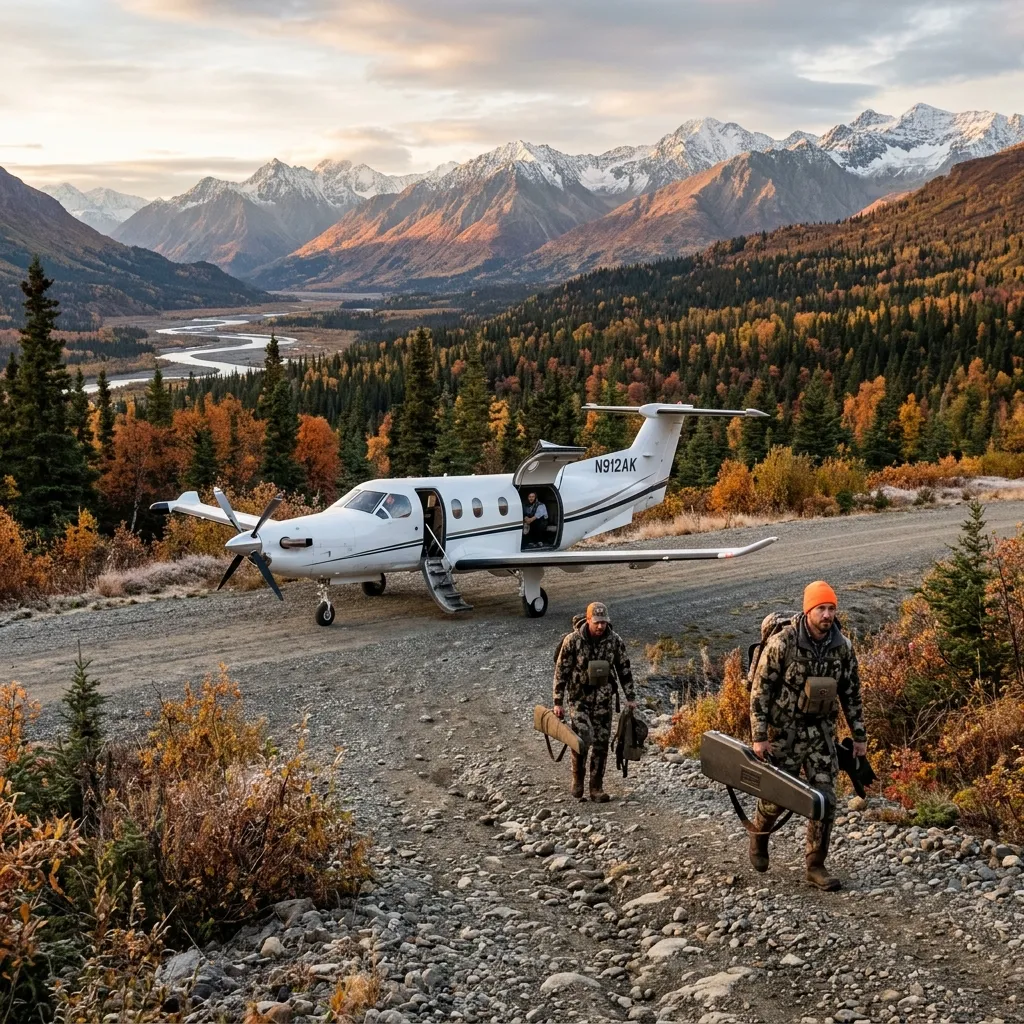
A guided elk hunt in Montana requires two rifle cases (40-50 lbs each), a spotting scope, ammunition, cold-weather layering for a week, boots, a game processing kit, and sometimes a bird dog or two. A fly-fishing trip to Alaska demands rod tubes (4-6 feet long), waders, tackle boxes, coolers for the catch, and rain gear for every day. Commercial airlines impose $150-$200 per oversized item, $100-$150 per firearm case each way, and absolute restrictions on ammunition exceeding 11 lbs per passenger. A private jet loads everything through one door, on the ramp, in under 10 minutes.
In 2025, charter operators reported that hunting, fishing, and outdoor sporting trips accounted for approximately 8% of domestic charter legs in the September through January period. The demand concentrates on routes that airlines serve poorly or not at all: Bozeman, Kalispell, and Missoula in Montana; Kodiak and King Salmon in Alaska; Jackson Hole and Cody in Wyoming; Bend and Redmond in Oregon. These are destinations where the final 100 miles from the nearest commercial hub to the lodge can take 3 hours by truck and 15 minutes by turboprop.
Firearms on Private Jets: What the Law Actually Says
Private jet passengers are not subject to TSA screening. There are no metal detectors, no bag X-rays, and no prohibited items list on Part 91 or Part 135 charter flights departing from FBO terminals. Firearms travel in the cabin or baggage compartment at the operator's discretion. Ammunition travels with the firearms. There is no TSA Form 4457 (Declaration of Firearms) for private aviation.
The legal framework for firearms on private aircraft is state law, not federal aviation law. The firearm must be legal in both the departure state and the destination state. Most operators require firearms to be unloaded and cased during ground handling and taxi. Some operators store firearms in the baggage compartment during flight; others allow cased firearms in the cabin. The operator's policy, not FAA regulation, governs this decision.
- No TSA screening at FBO terminals for charter passengers
- Firearms must be legal in departure and destination states
- Most operators require firearms unloaded and in hard-sided cases during ground ops
- Ammunition limits: operator discretion (no federal cap for private flights)
- Suppressors, SBRs, and NFA items require ATF Form 5320.20 for interstate transport
- International flights with firearms require destination country import permits (apply 30-60 days in advance)
The firearms advantage is the one charter clients cite most frequently when explaining why they stopped flying commercial for hunting trips. No declaring firearms at the ticket counter. No waiting for TSA to inspect the case. No checked bag limbo where a rifle case gets lost in Denver for two days while you sit in camp without a gun. The firearm goes from your truck to the aircraft to the lodge, handled by you or your pilot the entire way.
Traveling with Hunting Dogs
Most charter operators allow dogs in the cabin with advance notice. Standard policies limit the number to two dogs per flight and require dogs to be well-behaved, non-aggressive, and restrained during taxi and takeoff. Bird dogs (Labs, pointers, setters) are the most common passengers. Some operators provide kennel mats or blankets; others ask clients to bring their own crate or restraint system.
Cleaning fees for post-flight cabin detailing after dog travel range from $200 to $500 depending on the aircraft type and the condition of the cabin afterward. A muddy Lab that just spent a week in a duck blind requires more cleanup than a dry pointer in a crate. The cleaning fee is standard and expected. It is not a penalty for bringing the dog; it is a line item in the trip cost.
Health Certificates and Interstate Travel
Dogs traveling interstate on charter flights need a Certificate of Veterinary Inspection (CVI) issued within 30 days of travel for most states. Hawaii requires a 120-day pre-arrival rabies quarantine protocol. Alaska requires a CVI within 30 days. Most continental U.S. states accept a standard CVI from any licensed veterinarian. The charter operator rarely checks this documentation, but the destination state can, and kennels at lodges sometimes require proof of vaccination.