New-Generation Large Cabin: Different Design Philosophies
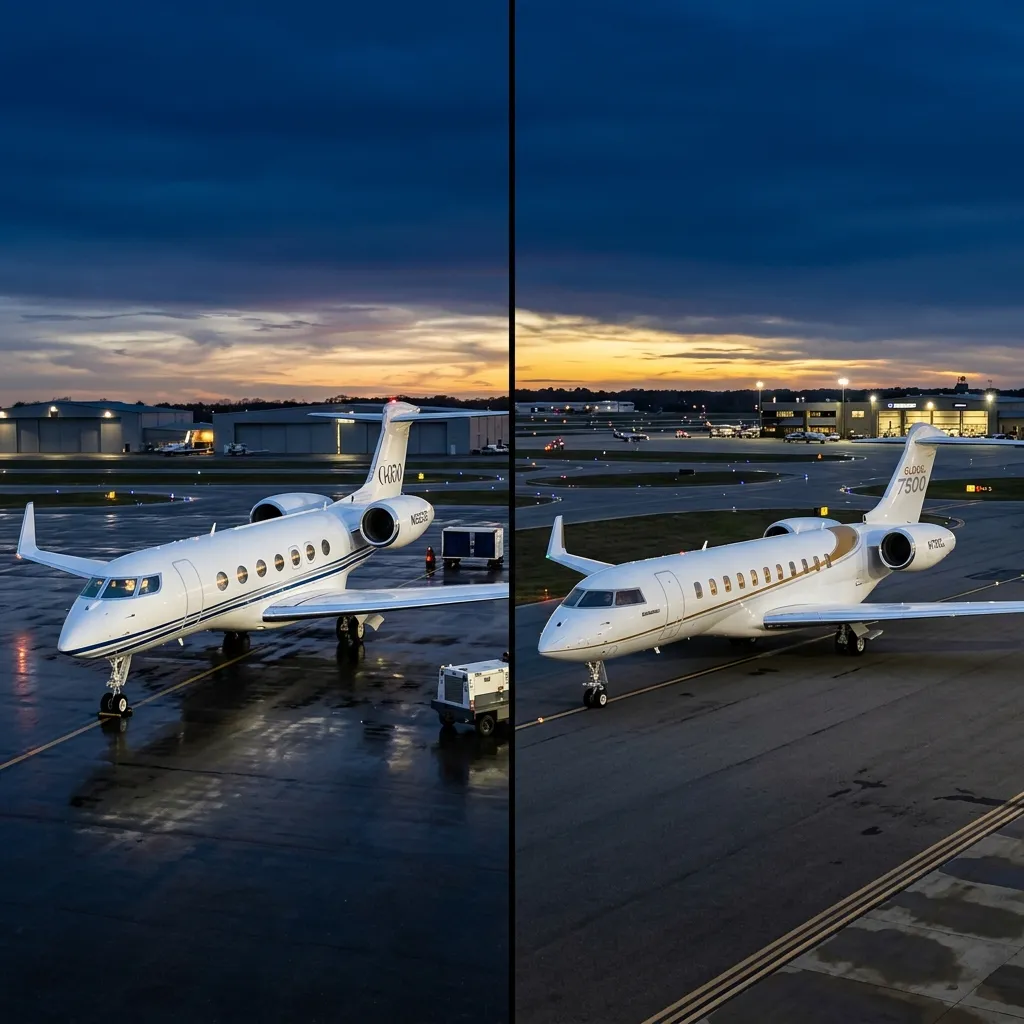
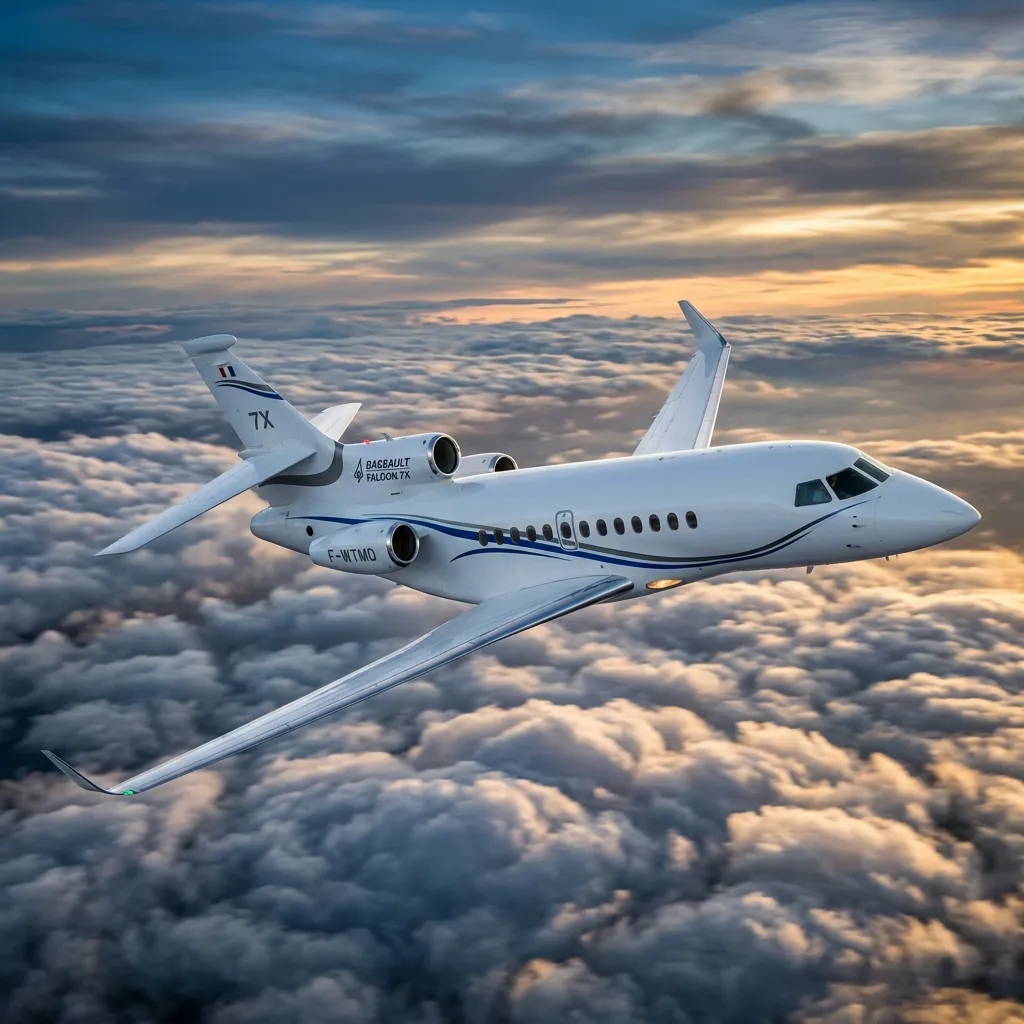
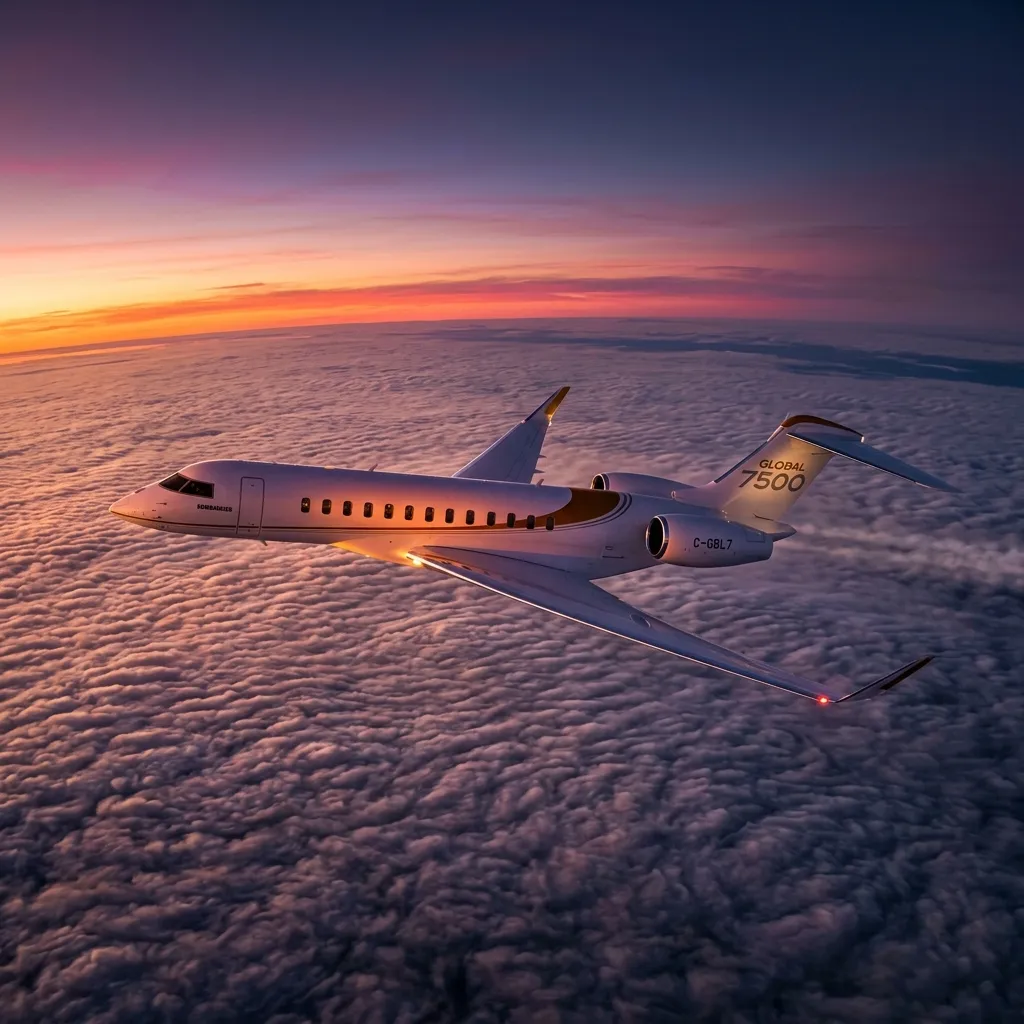
The Gulfstream G500 and Dassault Falcon 6X represent the latest generation of large-cabin business jets from America's and France's premier manufacturers. Both entered service in the 2020s. Both target the same buyer: the operator who needs intercontinental range, a stand-up cabin, and the capability to fly 10+ hour missions in comfort. But they arrive at that mission through fundamentally different engineering decisions.
The G500 prioritizes speed. It cruises at Mach 0.85 and can push to Mach 0.90, making it the fastest large-cabin jet short of the G650. It uses two Pratt & Whitney Canada PW814GA engines producing 15,144 lbs of thrust each. The Falcon 6X prioritizes cabin volume. Its 8 ft 6 in wide fuselage is the largest cross-section in the large-cabin class, wider than both the G500 (7 ft 7 in) and the Bombardier Challenger 650 (7 ft 11 in). The 6X uses two Pratt & Whitney Canada PW812D engines producing 13,000-14,000 lbs of thrust each.
The Falcon 6X's 300 NM range advantage means it can connect city pairs that the G500 reaches with tighter fuel reserves. London to Singapore (5,900 NM) is a one-stop mission for both aircraft, but the 6X's landing performance, a 2,480-foot landing distance versus the G500's 3,100 feet, opens more alternate airports along the route. This matters on oceanic crossings where alternate options are limited.
Dassault's short-field pedigree shows up in the 6X's landing distance. At 2,480 feet, the 6X can access airports like Lugano (4,527 ft), St. Moritz-Samedan (5,600 ft with altitude penalties), and London City (4,948 ft) that challenge most aircraft in this class. The G500 needs 3,100 feet, which still covers most major airports but excludes a handful of challenging European destinations.
Cabin Dimensions and Interior Configuration
The cabin width difference is immediately visible. The Falcon 6X's 8 ft 6 in cross-section means seats are genuinely wider, opposing passengers in a club configuration have more knee room, and the aisle is wide enough for two people to pass comfortably. The G500's 7 ft 7 in cabin is well-appointed but noticeably narrower in side-by-side comparison.
The 6X offsets its width advantage with 30 extra-large windows that fill the cabin with natural light. Dassault designed a skylight option over the galley that no other business jet in this class offers. The G500 counters with 14 panoramic oval windows that are each larger individually but fewer in number. Both cabins offer three-zone configurations with forward galley, mid-cabin club seating, and aft divan or berthing area.
Need a Charter Quote?
Contact our team for a personalized quote.
Get a Quote →Cockpit and Systems: Symmetry and PlaneView
The G500 was the first Gulfstream to fly with the Honeywell Symmetry flight deck, featuring active-control sidesticks (replacing traditional yokes), ten touchscreen controllers, and combined vision system (CVS) that blends synthetic and enhanced vision on the HUD. The Symmetry deck reduces pilot workload and enables more precise hand-flying in challenging approaches.
The Falcon 6X uses Dassault's EASy IV flight deck with three large head-down displays and a FalconEye combined vision system HUD as standard equipment. FalconEye was the first combined vision system certified for operational credit, meaning pilots can fly to lower minimums in low-visibility conditions. Both aircraft are certified for steep approaches (up to 6 degrees versus the standard 3-degree glideslope), expanding airport access.
Operating Economics: Hourly Costs and Maintenance
Both aircraft operate in the $6,000-$8,500 per hour range for total variable costs (fuel, maintenance, crew, handling). The G500 burns approximately 270-290 gallons per hour at long-range cruise. The Falcon 6X burns approximately 260-280 gallons per hour, a modest fuel efficiency advantage that compounds on long missions.
The Falcon 6X lists at approximately $53 million, a $7.5 million premium over the G500. That premium buys the wider cabin, the shorter landing distance, and FalconEye as standard equipment. Whether the premium is justified depends on the buyer's mission: if short-field access and cabin width are priorities, the 6X earns its price. If speed to market and Gulfstream's broader service network are priorities, the G500 is the rational choice.
Mission Profiles: Where Each Aircraft Wins
The G500 Wins When:
- Speed matters: Mach 0.90 cruise connects New York to London in 6 hours 45 minutes
- North American operations dominate: Gulfstream's U.S. service center network (Dallas, Savannah, Palm Beach, Las Vegas, Appleton) provides faster AOG response
- High passenger counts are needed: 13-19 seat configurations with higher max passenger certification
- Baggage capacity is critical: 175 cu ft baggage volume versus 155 cu ft
- Pre-owned availability matters: G500 entered service in 2018; pre-owned units exist. The 6X entered service in 2023; virtually none on the secondary market
The Falcon 6X Wins When:
- Cabin comfort on 8+ hour flights is the priority: 8 ft 6 in width with 6 ft 6 in height makes overnight missions materially more comfortable
- European operations require short-field access: 2,480 ft landing distance opens Lugano, London City, and challenging alpine airports
- Natural light matters to passengers: 30 extra-large windows with optional skylight create a different cabin atmosphere
- Fuel efficiency on long routes: 260-280 gal/hr versus 270-290 gal/hr saves $50-$80 per hour at current fuel prices
- Combined vision system value: FalconEye is standard, not optional, and provides operational credit for lower approach minimums
This comparison does not have a universal winner. The G500 is a faster, more practical jet with a stronger resale market and a deeper service network. The 6X is a more comfortable, more capable short-field performer with better cabin volume and natural light. The right choice depends on whether you spend more time crossing oceans or crossing continents. For transoceanic missions with sleeping passengers, the 6X's width advantage matters. For high-frequency domestic and transatlantic ops, the G500's speed and support infrastructure matter more.