The Government Aviation Fleet
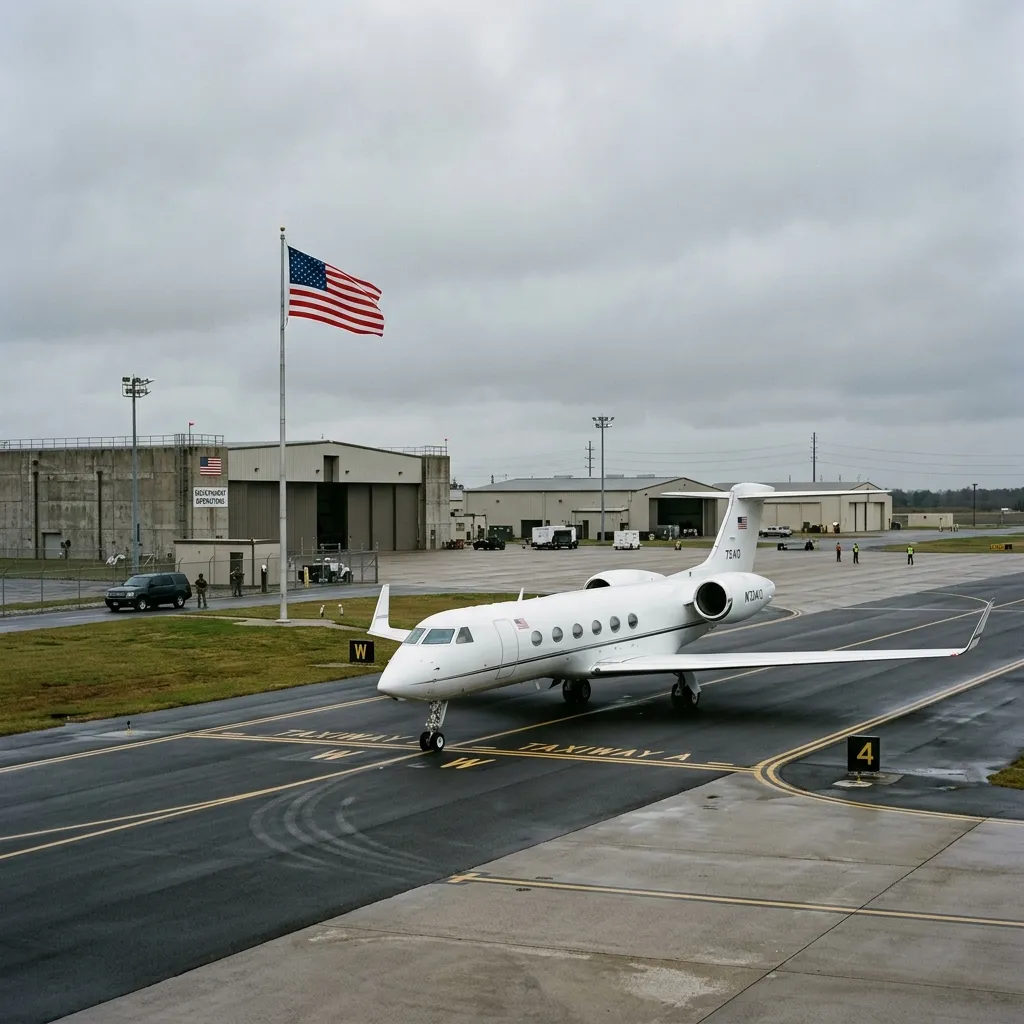
The United States government operates one of the largest aviation fleets in the world outside of commercial airlines. This includes military aircraft (which are not FAA-registered), civil agency aircraft (FAA-registered), and contractor-operated aircraft used for government missions.
The scope of government aviation extends far beyond executive transport. Federal and state agencies operate aircraft for law enforcement surveillance, border patrol, medical evacuation, firefighting, environmental monitoring, calibration flights, and prisoner transport. However, the aircraft that generate the most public interest are those used for executive and legislative travel.
All data in this article comes from publicly available FAA registration records, Government Accountability Office (GAO) reports, congressional budget documents, and Freedom of Information Act (FOIA) disclosures.
Federal Agency Aircraft
Federal agencies outside the Department of Defense that operate significant aviation fleets include:
| Agency | Fleet Size | Primary Aircraft Types | Primary Missions |
|---|
| Department of Justice (FBI, DEA, ATF, US Marshals) | 100+ | Cessna Citations, King Airs, Pilatus PC-12 | Surveillance, transport, investigations |
| Department of Homeland Security (CBP, ICE) | 250+ | King Airs, Black Hawks, Predator drones | Border patrol, maritime, immigration |
| Department of the Interior | 50+ | King Airs, Single-engine, Helicopters | Firefighting, land management, surveys |
| NASA | 30+ | Gulfstream G-III/G-V, WB-57, T-38 | Research, training, executive transport |
| FAA | 40+ | King Airs, Citations, Challengers | Flight inspection, calibration |
| Department of Energy | 10+ | King Airs, Citations | Nuclear facility oversight, emergencies |
The FAA's own fleet is particularly interesting. The agency that regulates civil aviation operates approximately 40 aircraft, primarily used for flight inspection of navigation aids and instrument approaches at airports nationwide. These are working aircraft, not executive transport.
500+
Federal Civil Aircraft
250+
DHS Aircraft (Largest Agency)
GAO
Primary Oversight Body
Government Fleet Advisory
Our team advises government agencies on fleet management, aircraft acquisition, and operational efficiency. Public sector experience since 1990.
Speak With an Advisor →
Military Executive Transport
The most visible government aircraft are those assigned to executive transport missions:
- Air Force One (VC-25A/B): Two Boeing 747-200B aircraft (to be replaced by 747-8i variants designated VC-25B). Used exclusively for presidential travel. The "Air Force One" call sign applies to any Air Force aircraft carrying the President.
- C-32A (Boeing 757-200): Used by the Vice President, First Lady, Secretary of State, and congressional delegations (CODELs). Four aircraft assigned to the 89th Airlift Wing at Joint Base Andrews.
- C-37A/B (Gulfstream G550/G650): Used by senior military commanders, cabinet secretaries, and congressional delegations for smaller-group travel. The C-37B (G650) entered service in 2023.
- C-40B (Boeing 737-700): Used by senior DOD leadership and congressional delegations requiring larger passenger capacity.
The 89th Airlift Wing at Joint Base Andrews, Maryland operates most executive transport aircraft. Congressional CODEL travel on military aircraft is publicly documented through disclosure requirements.
State Government Fleets
State governments operate aircraft for gubernatorial travel, law enforcement, emergency response, and agency operations. Fleet sizes vary dramatically:
| Category | Typical Fleet | Common Aircraft | Examples |
|---|
| Large state (TX, CA, NY) | 10-25 aircraft | King Air 350, Citation CJ3, Helicopters | Texas DPS: 20+ aircraft |
| Mid-size state | 3-10 aircraft | King Air 250, Pilatus PC-12 | State police, governor transport |
| Small state | 0-3 aircraft | King Air 90, Single-engine | Some use charter instead |
Gubernatorial use of state aircraft is one of the most scrutinized categories of government aviation. State ethics commissions require disclosure of political travel vs. state business. Several governors have faced political consequences for perceived misuse of state aircraft.
Law Enforcement Aviation
Law enforcement agencies at federal, state, and local levels operate a substantial fleet for surveillance, pursuit, transport, and emergency response. The FBI alone operates approximately 100 aircraft, primarily Cessna Citations and King Airs used for surveillance missions.
CBP Air and Marine Operations is the largest law enforcement aviation organization in the world, operating 240+ aircraft along U.S. borders. Their fleet includes fixed-wing aircraft for border surveillance, helicopters for interdiction, and unmanned aircraft systems (UAS).
Cost and Accountability
Government aviation costs are documented through several mechanisms:
- GAO audits: The Government Accountability Office periodically reviews agency aviation programs, evaluating fleet utilization, costs, and alternatives
- OMB Circular A-126: Establishes federal policy for the management and use of government aircraft, including cost accounting and reporting requirements
- Congressional oversight: Appropriations committees review aviation budgets annually
- FOIA requests: Media and advocacy organizations regularly request flight logs and cost data
The GAO has repeatedly recommended that agencies improve fleet utilization tracking and consider commercial charter alternatives for missions that do not require government-owned aircraft. Some agencies have reduced fleet sizes in response, shifting to fractional or charter arrangements for non-critical missions.
Public accountability for government aviation is an active area of policy discussion. Contact us for advisory services related to government fleet management and optimization.