The Fractional Arms Race
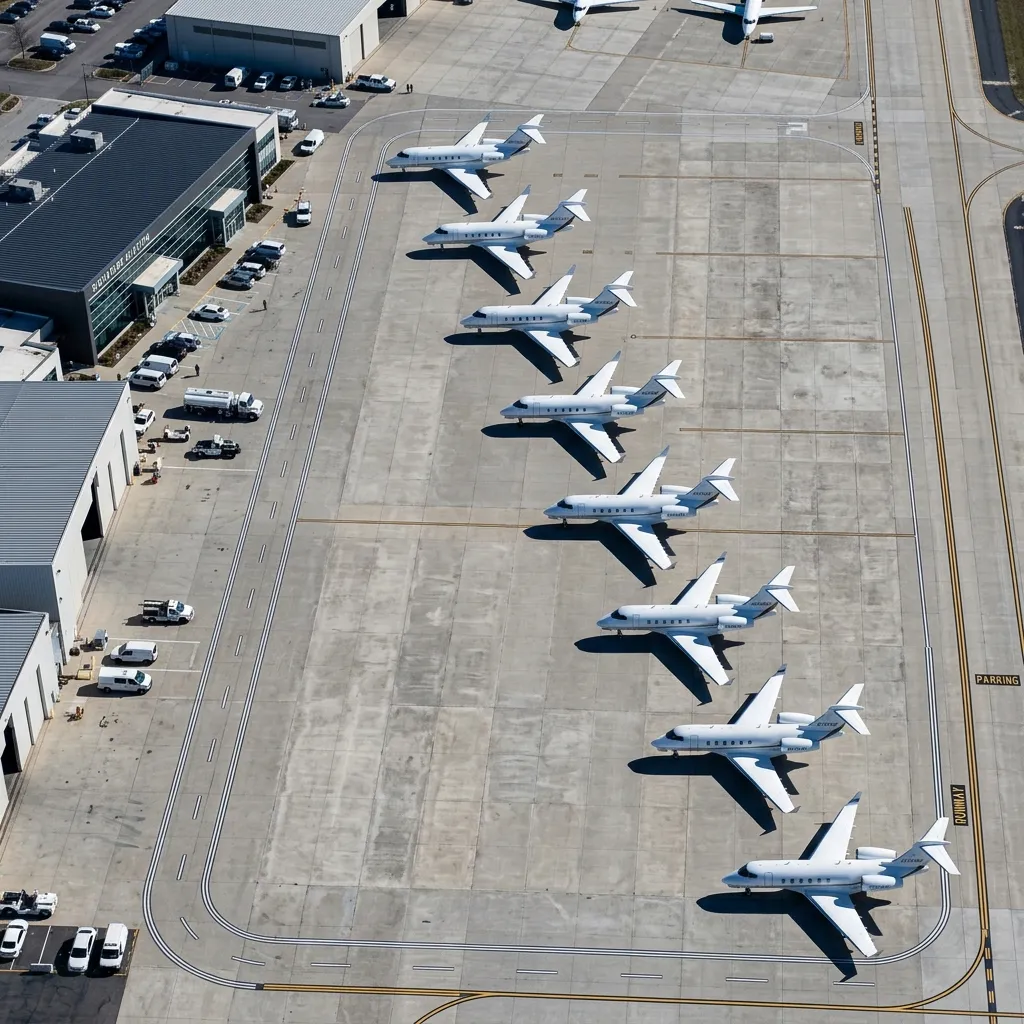
The two largest fractional jet operators in the world are spending billions to outbuild each other. NetJets is taking delivery of 80+ aircraft in 2026. Flexjet is targeting a fleet of 600+ by the early 2030s. The arms race is not about vanity. It is about capacity, because the demand for guaranteed private jet access has not slowed since the pandemic reshaped corporate travel.
Fractional ownership, where a buyer purchases a share of an aircraft (typically 1/16th to 1/2) and receives a guaranteed number of flight hours annually, now represents a significant and growing portion of total U.S. business aviation activity. The model appeals to buyers who want the consistency of ownership without the full financial and operational burden of a standalone aircraft.
NetJets: 845 Aircraft and Growing
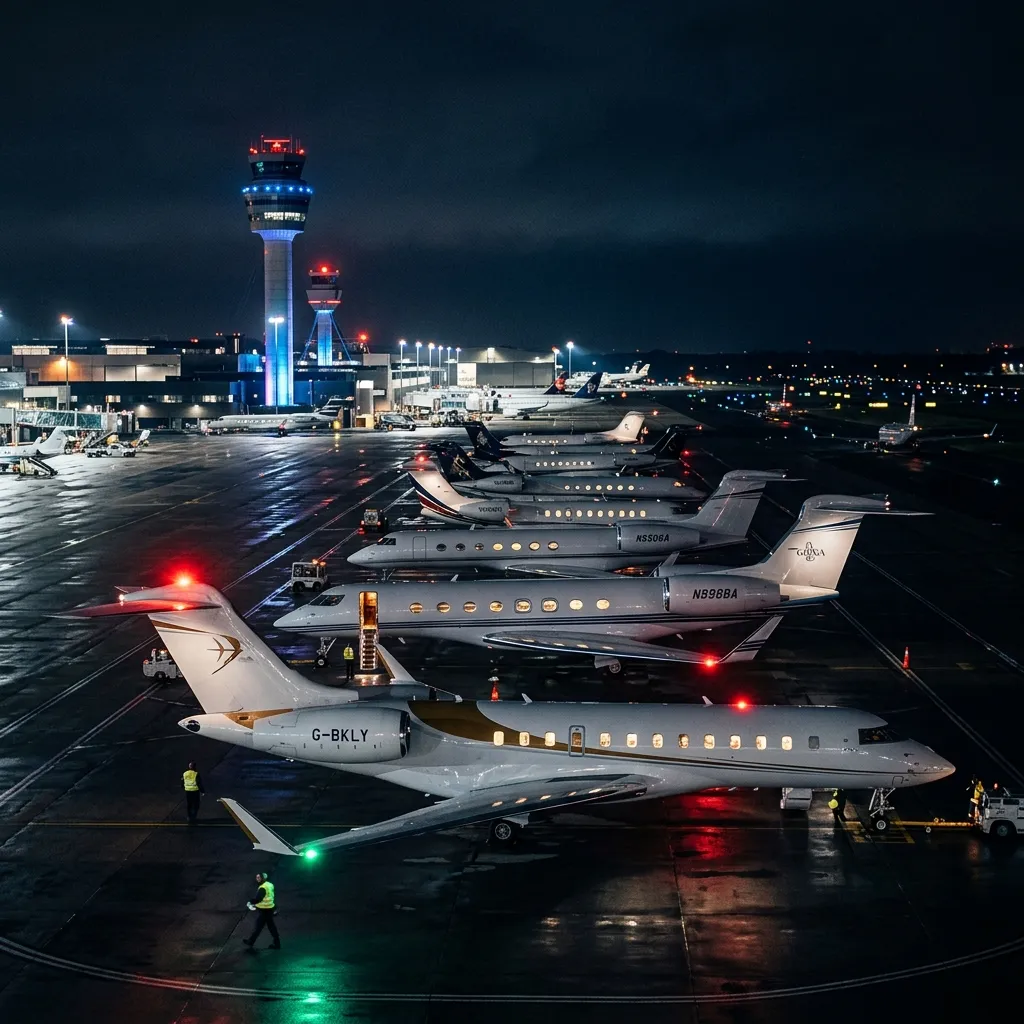
NetJets, a Berkshire Hathaway subsidiary, operates the world's largest private jet fleet. As of March 2026, NetJets and NetJets Europe collectively operate 845 aircraft, up from 826 at year-end 2025. The fleet spans the full spectrum of business aviation:
- Light jets: Embraer Phenom 300 series
- Midsize: Cessna Citation Latitude, Citation XLS
- Super midsize: Bombardier Challenger 350
- Heavy: Bombardier Challenger 650
- Ultra-long-range: Bombardier Global 7500, Gulfstream G650/G700
NetJets has committed to taking delivery of over 80 new aircraft in 2026, primarily Embraer Phenom 300E, Cessna Citation Latitude, and Bombardier Challenger 3500 platforms. The company's fleet renewal strategy emphasizes newer, more fuel-efficient aircraft with improved cabin technology, aligning with both customer expectations and emerging sustainability pressures.
845
NetJets Fleet (Mar 2026)
340+
Flexjet Global Fleet
80+
NetJets Deliveries in 2026
Flexjet: From Challenger to Contender
Flexjet has positioned itself as the premium alternative to NetJets, operating a fleet of 340+ aircraft globally. The company has differentiated on service philosophy: smaller owner-to-aircraft ratios, dedicated crews, and a Red Label program that assigns specific aircraft and pilots to individual owners.
Flexjet's fleet strategy leans heavily on Bombardier and Embraer:
- Light: Embraer Phenom 300E
- Midsize: Embraer Praetor 500
- Large-cabin: Bombardier Challenger 350, Gulfstream G650
- Ultra-long-range: Bombardier Global 7500
The company has publicly stated a goal of growing to 600+ aircraft by the early 2030s. Whether that target holds depends on delivery timelines from Bombardier and Embraer, both of which have multi-year backlogs, and on sustained demand from the high-net-worth buyer segment.
Evaluating Ownership Models?
Whole ownership, fractional, jet card, or charter. Our team can model the economics for your specific travel pattern and help you select the structure that actually fits.
Speak With an Advisor →
Head-to-Head Fleet Comparison
| Factor | NetJets | Flexjet |
|---|
| Total Fleet | 845 aircraft | 340+ aircraft |
| Parent Company | Berkshire Hathaway | Directional Aviation (Kenn Ricci) |
| Primary OEMs | Bombardier, Embraer, Cessna, Gulfstream | Bombardier, Embraer, Gulfstream |
| Minimum Share | 1/16th share (50 hours) | 1/16th share (50 hours) |
| Contract Term | 5-year commitment | 5-year commitment |
| Crew Model | Shared crew pool | Dedicated crew (Red Label) |
| Service Differentiator | Fleet depth, global reach | Personalized service, dedicated crews |
| Growth Target | 900+ by end of 2026 | 600+ by early 2030s |
Corporate Flight Departments Are Shifting
The growth of fractional ownership is not happening in a vacuum. Corporate flight departments, traditionally the backbone of business aviation, are increasingly integrating fractional shares into their operations.
The pattern is clear across Fortune 500 companies:
- Supplemental capacity: Companies that own one or two aircraft purchase fractional shares for peak periods when their fleet cannot cover all travel needs
- Fleet right-sizing: Some corporations have sold aircraft from their fleet and replaced the capacity with fractional shares, reducing capital on the balance sheet while maintaining travel access
- Risk distribution: Fractional programs absorb residual value risk, maintenance unpredictability, and crew management complexity that flight departments otherwise bear entirely
This trend does not signal the death of corporate flight departments. Companies with 300+ flight hours annually still find whole ownership more economical. But the break-even point, the number of hours at which ownership becomes cheaper than fractional, is higher than most people assume when total cost is calculated honestly.
The Economics: When Fractional Wins
The financial comparison between whole ownership and fractional is not as simple as dividing the purchase price by the share fraction. The real calculation requires accounting for:
- Capital cost: A 1/16th share of a Challenger 350 costs approximately $1.5M vs. $28M for the whole aircraft
- Monthly management fee: Fractional programs charge $15,000-$40,000/month depending on share size and aircraft type
- Occupied hourly rate: $5,000-$15,000/hour depending on aircraft, covering fuel, crew, landing fees, and maintenance reserves
- Residual value guarantee: Most programs guarantee a residual value at the end of the 5-year term, removing depreciation risk
A buyer flying 200 hours per year on a super-midsize jet will typically spend $1.2-1.8M annually in a fractional program. That same 200 hours on a wholly owned aircraft, including depreciation, crew, maintenance, hangar, insurance, and fuel, costs $1.8-2.5M. The fractional option wins on cost for most owners below 300-400 annual hours.
Above 400 hours, whole ownership becomes more economical. Below 100 hours, jet cards or charter are typically more cost-effective than fractional. The 100-400 hour range is fractional's core market, and it is a large one.
What the Fleet Data Shows
Our U.S. Charter Fleet Intelligence dashboard tracks 10,738 Part 135 aircraft across 1,674 operators. The fractional operators dominate the top of the fleet size rankings:
- NetJets Aviation, Inc.: 721 U.S.-registered aircraft on the D085 listing
- Flexjet, LLC: 321 aircraft
- Combined, these two operators account for nearly 10% of all U.S. Part 135 aircraft
The concentration of fleet size in fractional operators is accelerating. As these companies take delivery of new aircraft, they are simultaneously retiring older airframes into the pre-owned market, creating a steady supply of 10-15 year old, well-maintained aircraft at attractive valuations for individual buyers.
For the broader market, the fractional fleet build-up has a stabilizing effect: it absorbs new aircraft production, supports OEM delivery rates, and provides a secondary supply channel for the pre-owned market. Whether you are buying a fractional share or a whole aircraft, the fleet dynamics of these two companies affect your transaction.