The Data Is Public
Every publicly traded company that operates aircraft for executive transportation discloses it. SEC regulations require disclosure of personal use of corporate aircraft as executive compensation in annual proxy statements. Fleet details appear in 10-K filings, and aircraft registrations are public through the FAA registry.
This is not leaked information. It is regulatory disclosure. The data paints a detailed picture of how corporate America uses private aviation: which companies maintain flight departments, what they fly, how much their executives use the aircraft for personal travel, and how the fleet composition is evolving.
The Largest Corporate Flight Departments
Based on FAA registry data, SEC filings, and public reporting, the largest U.S. corporate flight departments include:
| Company | Fleet Size | Primary Aircraft | Sector |
|---|
| Walmart | 20+ | Mixed fleet including Challenger, Citation, King Air | Retail |
| Berkshire Hathaway | 4-6 | Bombardier Challenger, Gulfstream G650 | Conglomerate |
| JPMorgan Chase | 4-6 | Gulfstream G650ER, Bombardier Global | Financial Services |
| Coca-Cola | 3-5 | Gulfstream G550/G650 | Consumer |
| General Electric | 3-5 | Bombardier Global, Gulfstream | Industrial |
| ExxonMobil | 3-5 | Gulfstream G550 | Energy |
| Goldman Sachs | 2-4 | Gulfstream G650ER | Financial Services |
Walmart's fleet stands out. The company operates the largest corporate flight department of any non-aviation Fortune 500 company. The rationale is geographic: Walmart's headquarters in Bentonville, Arkansas has limited commercial airline service, and the company's operations span 10,500+ stores across all 50 states and 19 countries. The flight department is not a perk. It is logistics infrastructure.
G650ER
Most Common CEO Aircraft
SEC
Personal Use Must Be Disclosed
Building a Corporate Flight Department?
From aircraft selection to management structure, our team advises corporations on building and optimizing flight department operations.
Speak With an Advisor →
What They Fly and Why
Corporate fleet composition reveals operational priorities. The most common patterns:
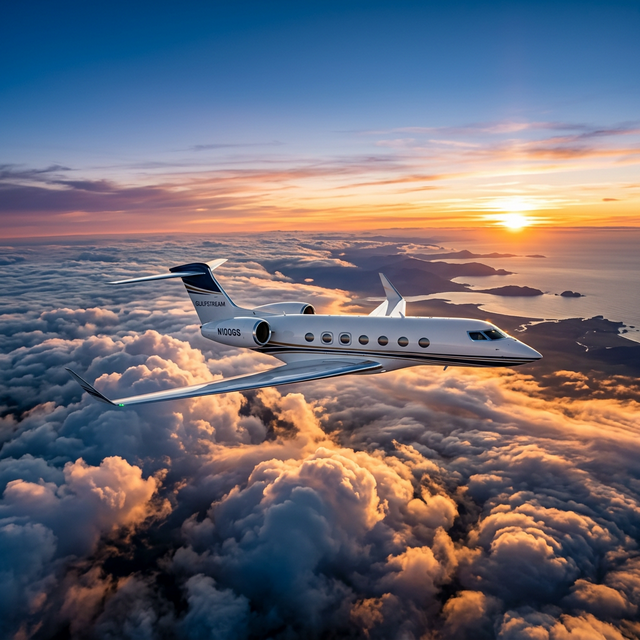
- Gulfstream G650/G650ER for CEO travel: The G650 remains the default choice for CEO-level travel at Fortune 100 companies. Range, speed, and cabin size make it suitable for international and transcontinental missions. The aircraft signals both capability and status.
- Bombardier Challenger 350 for domestic operations: Companies with high-frequency domestic travel often supplement a long-range flagship with one or more Challengers for coast-to-coast and regional flights at lower operating costs.
- King Air/turboprop for short-haul: Companies like Walmart and Koch Industries use turboprops for frequent short hops under 500 miles where jet speed provides no meaningful time advantage.
The trend in fleet composition is toward smaller fleets with newer aircraft supplemented by fractional shares for overflow capacity. Companies are reducing the number of aircraft they own while maintaining or increasing total flight hours through hybrid models.
Personal Use Disclosure
SEC rules require companies to disclose the value of personal use of corporate aircraft by named executive officers. This disclosure appears in the "All Other Compensation" column of the Summary Compensation Table in annual proxy statements.
The valuation methodology varies. Some companies use the Standard Industry Fare Level (SIFL) rate, which significantly undervalues the actual cost of operating the aircraft. Others use the incremental cost method, which captures fuel, crew, landing fees, and catering for personal flights but excludes fixed costs like depreciation and insurance. Neither method reflects the full cost of the aircraft to the company.
Common personal use arrangements include:
- Board-mandated security travel: Some boards require the CEO to use corporate aircraft for all travel, including personal, as a security measure. This shifts the personal use from optional perk to corporate policy.
- Time-sharing agreements: Executives reimburse the company for personal flights at a rate calculated under FAR 91.501, which caps reimbursement well below actual operating costs.
- Tax gross-up: Some companies pay the executive's tax liability on imputed income from personal aircraft use, effectively making the perk cost-free to the executive.
The Cost Justification Equation
Corporate flight departments exist because the math works for companies with high-frequency, time-sensitive travel requirements. A CEO whose time is valued at $5,000-$10,000 per hour who saves 3 hours per trip by flying private generates a return on aviation investment within 200-300 annual flight hours.
Beyond time savings, corporate aviation provides security, confidentiality for sensitive business discussions, the ability to reach locations not served by commercial airlines, and scheduling flexibility that commercial travel cannot match. For a company with $50+ billion in revenue, the $3-5 million annual cost of a flight department is a rounding error on the balance sheet and a meaningful multiplier on executive productivity.
The Trend: Supplement, Do Not Scale
The data shows a clear trend: Fortune 500 companies are not expanding their flight departments. They are right-sizing them. Companies that operated 5-8 aircraft a decade ago now operate 3-4, supplementing with fractional shares, jet cards, and ad-hoc charter for overflow capacity.
This shift reflects several pressures: shareholder scrutiny of executive perks, ESG reporting requirements that make large fleets a sustainability liability, and the availability of high-quality supplemental access through fractional programs that did not exist at current scale 15 years ago.