Two Philosophies for the Same Mission
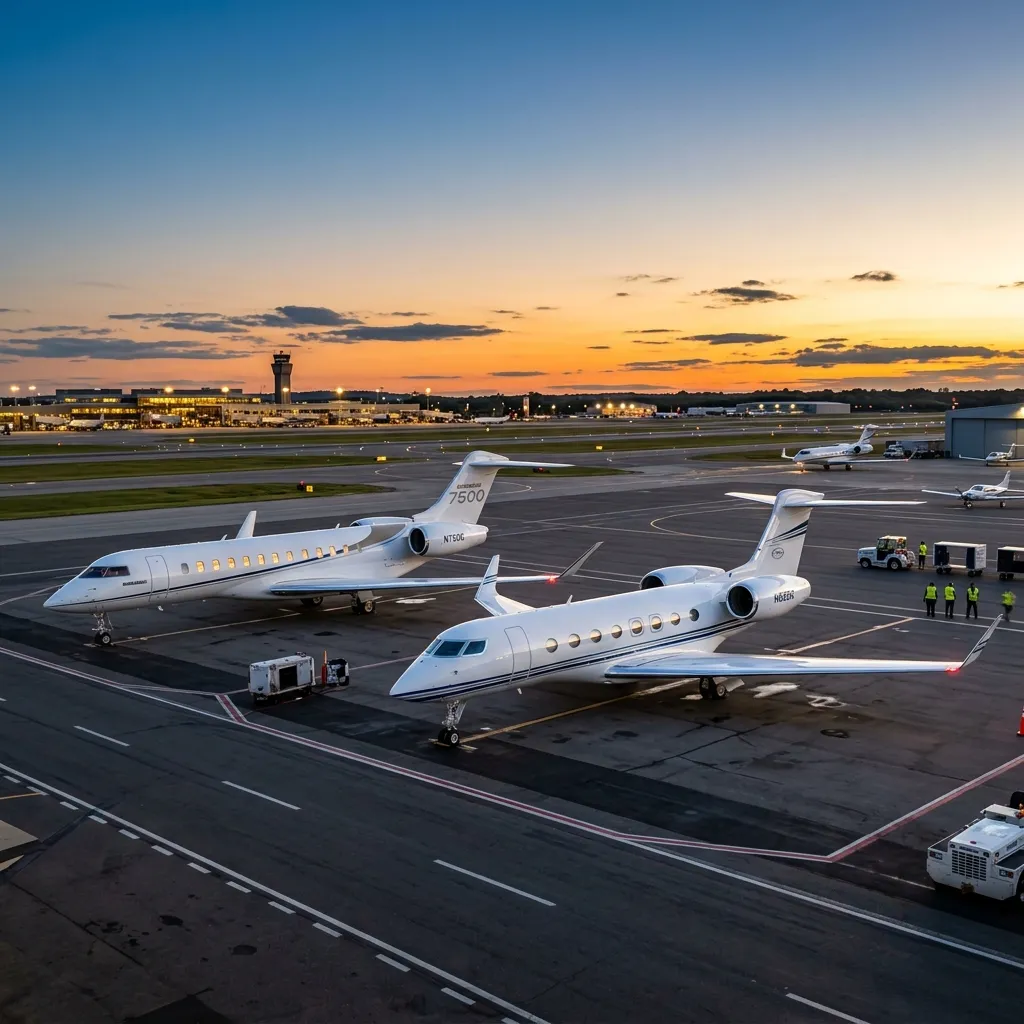
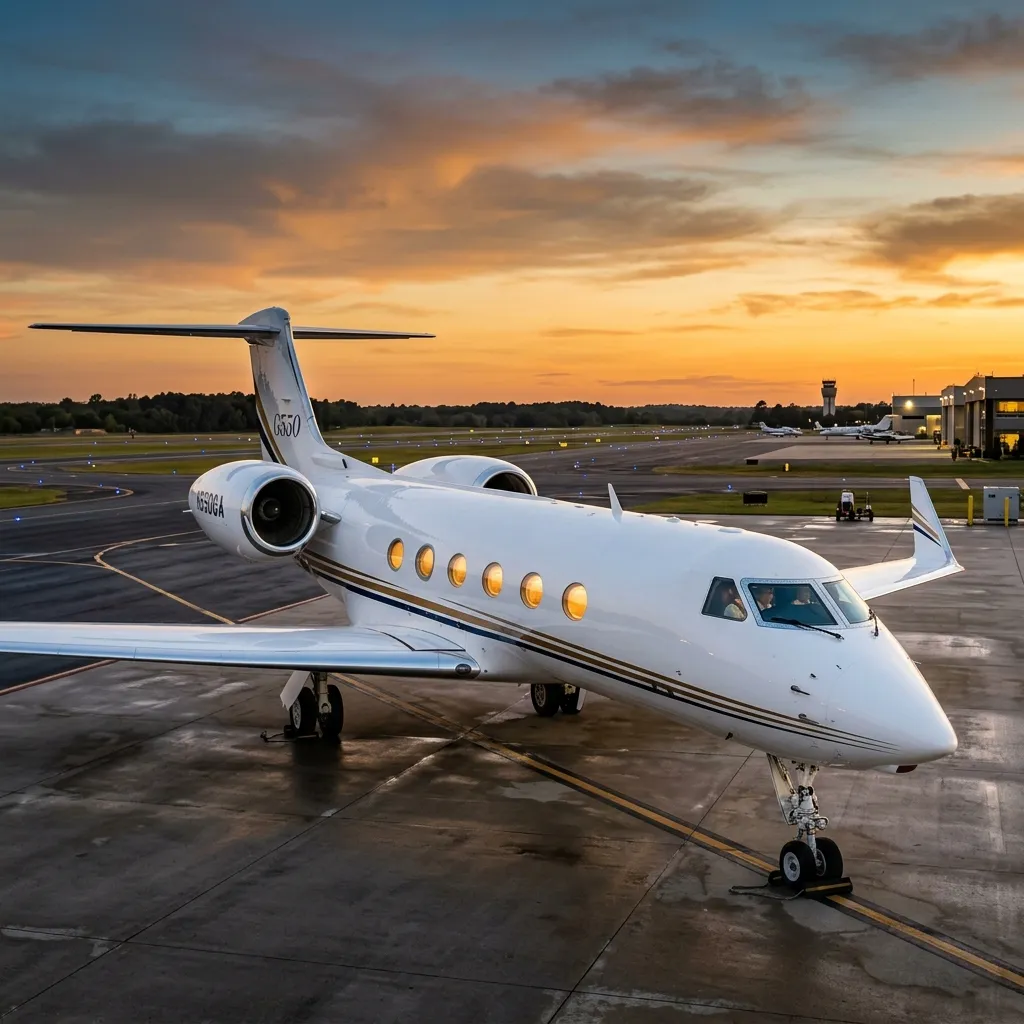
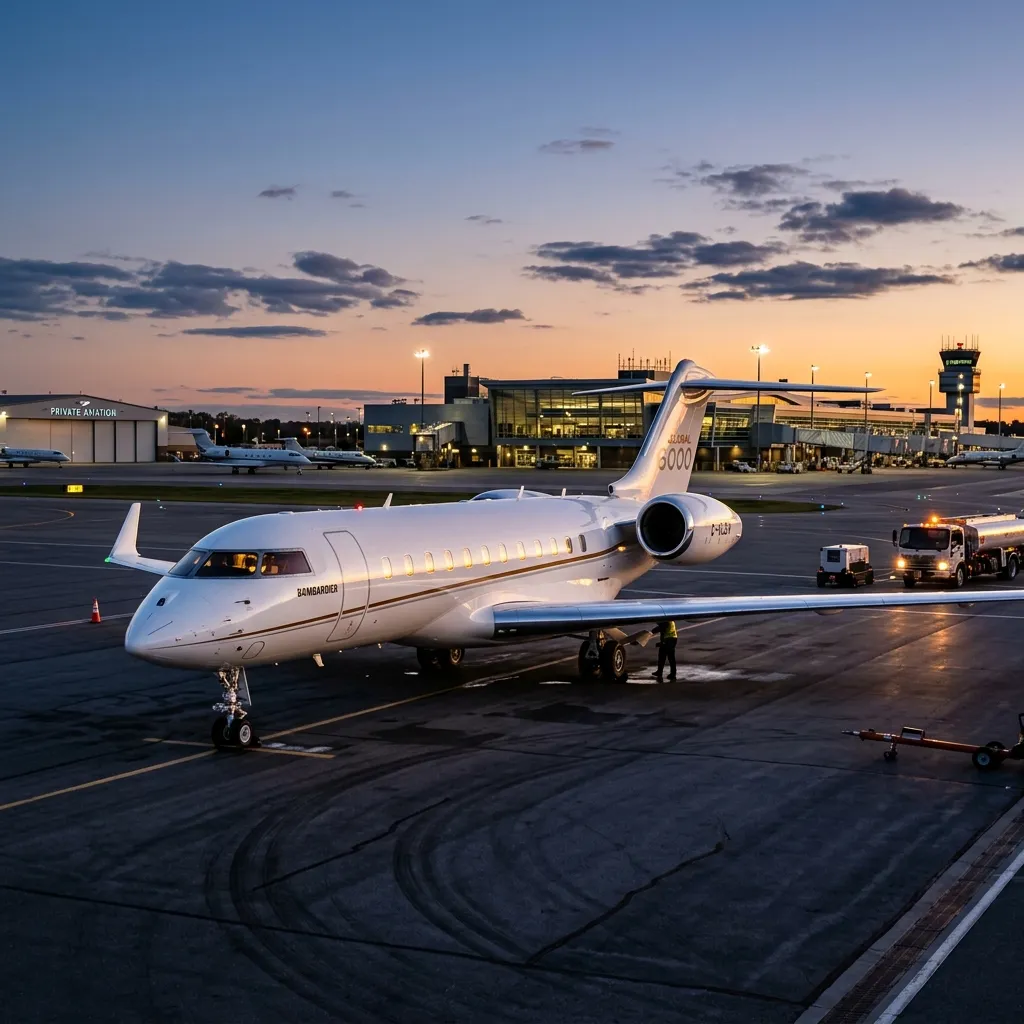
The Bombardier Global 5000 and Gulfstream G550 entered service within two years of each other (2005 and 2003, respectively) and have competed head-to-head ever since. Bombardier built the Global 5000 around cabin volume: 8.2 feet wide and 6.2 feet tall, the widest cross-section in its class. Gulfstream built the G550 around range: 6,750 nautical miles, enough to connect New York with Tokyo nonstop. Both approaches attracted loyal operators, and in 2026 both types remain heavily active on the charter market.
Bombardier delivered approximately 370 Global 5000 airframes through 2018, when the Global 5500 replaced it. Gulfstream produced roughly 560 G550s through 2021. The G550's larger production run translates to greater charter availability: approximately 120-140 G550s operate on U.S. Part 135 certificates compared to 50-60 Global 5000s. That availability gap affects both pricing and lead time on bookings.
The range difference is the defining distinction. The G550's 6,750 NM range covers every major city pair on Earth without a fuel stop: New York to Dubai, London to Singapore, Los Angeles to London. The Global 5000 at 5,200 NM handles most transatlantic routes but requires fuel stops on longer city pairs. Miami to London (3,800 NM) is comfortable for both. New York to Hong Kong (8,000 NM) requires a stop for both, but the G550 needs one stop while the Global 5000 needs two.
The Global 5000 wins on short-field performance. Its 5,540-foot balanced field length versus the G550's 5,910 feet may seem marginal, but at high-altitude airports like Eagle County (6,540 ft MSL), that 370-foot difference translates to meaningful payload capability in hot weather. The Global 5000 also holds a slight speed edge at Mach 0.89 maximum cruise versus Mach 0.885.
Cabin Experience: Width Wins Hearts
The Global 5000's cabin width of 8.2 feet is its decisive advantage over the G550's 7.4 feet. That 0.8-foot (9.6-inch) difference is immediately noticeable when entering the aircraft. The Global's cabin feels like a room; the G550 feels like a corridor by comparison, though neither is cramped by any standard.
8.2 ft vs 7.4 ft
Cabin Width
$9,000 vs $9,000
Hourly Rate Floor
For overnight transatlantic flights with 8-10 passengers, the Global 5000's wider cabin creates a more restful sleeping environment. The berthing divan is wider, the aisle between facing seats allows easier movement, and the overall sense of space reduces the psychological compression that accumulates on 7+ hour flights. Passengers who have flown both types consistently prefer the Global's cabin for red-eye crossings.
The G550 counters with a cabin 1.1 feet longer (43.6 vs 42.5 feet), which allows for a more spread-out three-zone layout. The G550's galley is also larger, supporting more elaborate catering service on long flights. Both aircraft offer full-width lavatory facilities and stand-up cabin heights exceeding 6 feet.
Need a Charter Quote?
Contact our team for a personalized quote.
Get a Quote →Charter Rate Comparison and Route Economics
Both aircraft charter in the $9,000 to $13,500 per flight hour range in 2026. The Global 5000 tends to quote $9,000-$12,500 while the G550 runs $9,000-$13,000. Pricing parity reflects comparable operating costs: both burn 280-310 gallons per hour at cruise, both require two-pilot crews, and both carry similar insurance and maintenance cost structures.
Route-Specific Cost Comparisons
On routes under 5,000 NM, which covers the vast majority of charter demand (domestic U.S. and transatlantic), both aircraft are functionally interchangeable. The Global 5000's wider cabin becomes the deciding factor. On ultra-long routes above 5,200 NM, the G550's range advantage eliminates fuel stops, saving 1.5-2.5 hours of total travel time and $8,000-$15,000 in fuel and handling fees at the intermediate airport.
Pre-Owned Market and Fleet Trajectory
The pre-owned Global 5000 market prices between $9 million and $18 million depending on vintage and total hours. Early 2005-2008 airframes with 6,000+ hours trade at $9-$12 million. Low-time 2015-2018 models command $15-$18 million. The G550 market runs slightly higher: $12-$22 million across the same vintage spectrum, reflecting the G550's stronger brand premium and larger resale buyer pool.
Both fleets are aging into their optimal charter years. Aircraft 8-15 years old have completed their steepest depreciation but retain modern avionics, current interior standards, and strong engine reserves. This is where charter economics work best: acquisition cost has depreciated enough to support competitive hourly rates, while the aircraft remains operationally capable of premium-tier service. The Global 5000 fleet will begin seeing accelerated retirements after 2030 as the oldest airframes approach 25-year mandatory inspection thresholds.
Which Aircraft to Book and When
The decision between a Global 5000 and G550 on charter reduces to two variables: route distance and cabin priority. For domestic transcontinental flights and standard transatlantic routes (New York to London, Miami to Paris, Chicago to Geneva), the Global 5000's wider cabin provides a measurably better passenger experience at comparable or slightly lower cost. The range of both aircraft is more than sufficient.
- Choose the Global 5000 when your route is under 5,000 NM and cabin width matters (overnight flights, groups of 8+, meetings in the air)
- Choose the G550 when your route exceeds 5,200 NM and nonstop capability eliminates a fuel stop (New York to Abu Dhabi, London to Singapore)
- Choose either for standard transatlantic routes, major domestic routes, and day trips with 6-12 passengers
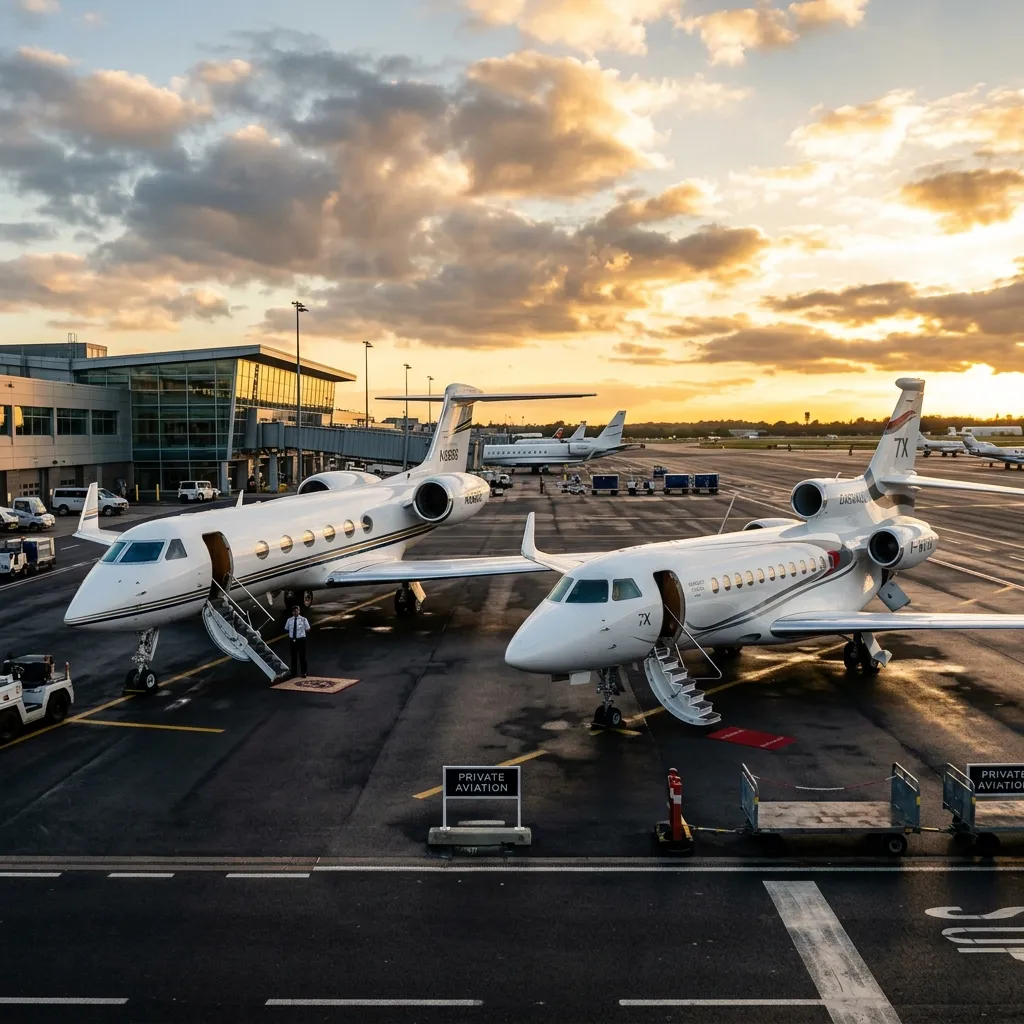
- Consider the Falcon 7X if short-field access matters more than cabin width or maximum range
Charter brokers who understand both types well will recommend the Global 5000 for 70% of heavy jet missions and the G550 for the remaining 30% where ultra-long range is operationally necessary. The cabin width premium is worth more than the range premium for the majority of charter passengers.