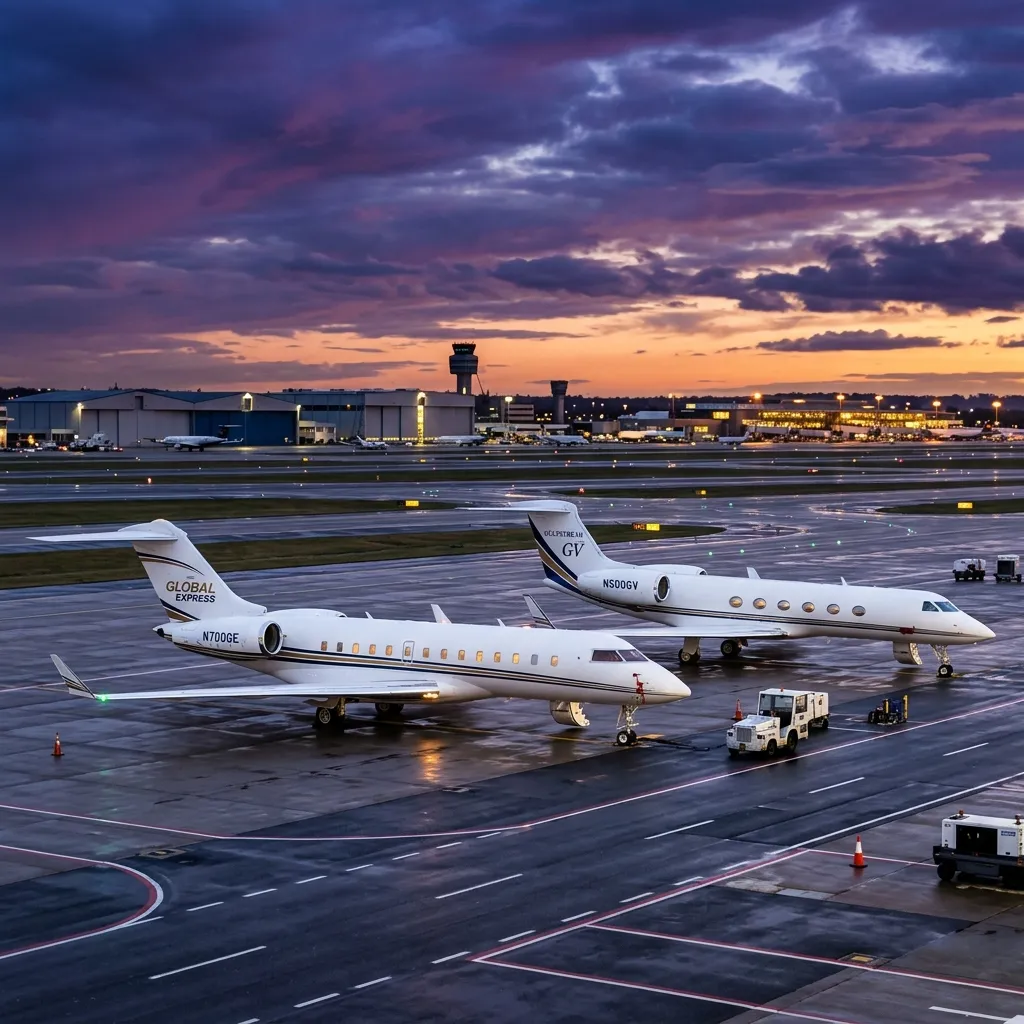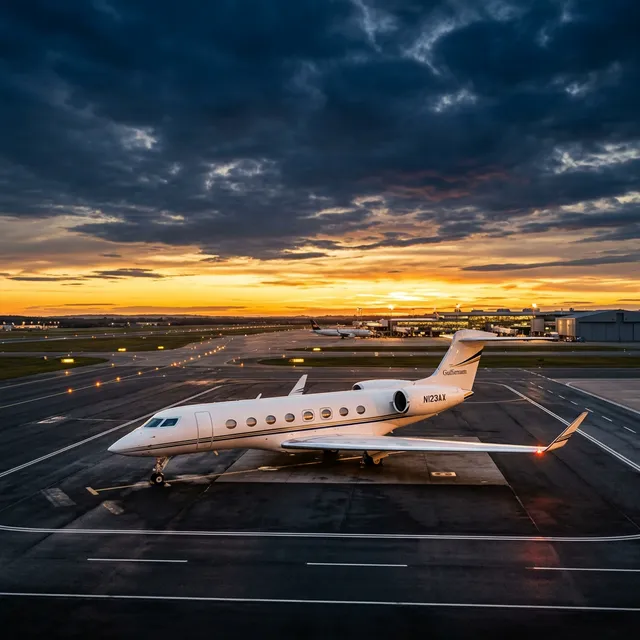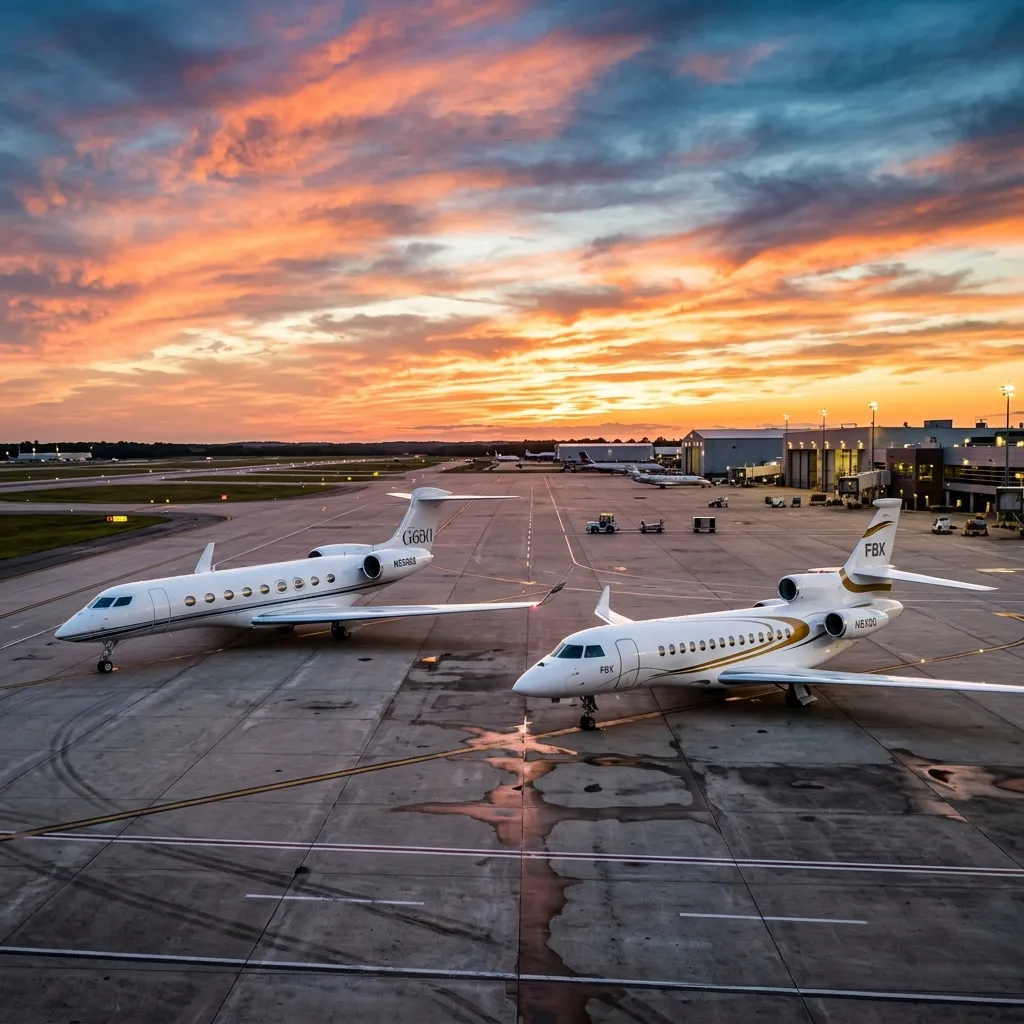
Gulfstream G650 and Dassault Falcon 8X ultra long range jets on the ramp at golden hour

Gulfstream G650 vs Falcon 8X: The Definitive Ultra Long Range Comparison

undefined

In This Article

Two Flagships, Two Design Philosophies Performance: Speed and Range vs Flexibility Cabin: Width and Configuration Operating Economics Frequently Asked Questions

Two Flagships, Two Design Philosophies

The Gulfstream G650 (2012-present) and Dassault Falcon 8X (2016-present) are the flagship ultra-long-range offerings from two of business aviation's most storied manufacturers. The G650 prioritizes speed and range: Mach 0.925 top speed, 7,000 NM range, and a cabin wide enough to stand as the benchmark for the category. The Falcon 8X prioritizes versatility: three engines for short-field performance, steep-approach certification, and the operational flexibility to reach airports that no other ultra-long-range jet can access.

Gulfstream has delivered over 500 G650 and G650ER aircraft, making it the most commercially successful ultra-long-range jet in history. Dassault has delivered approximately 70 Falcon 8X aircraft, reflecting both the jet's later entry and its positioning in a narrower market segment. The G650 dominates mindshare; the Falcon 8X rewards operators who need what no other jet offers.

Performance: Speed and Range vs Flexibility

The G650 is faster by a meaningful margin: Mach 0.925 versus Mach 0.90 at top speed, and 29 knots faster at long-range cruise. On an 8-hour transatlantic flight, the G650 arrives 20-25 minutes sooner. The G650 also carries 550 NM more range, enabling nonstop routes that the 8X cannot reach (Singapore to London at 5,950 NM is comfortable in the G650, marginal in the 8X with headwinds).

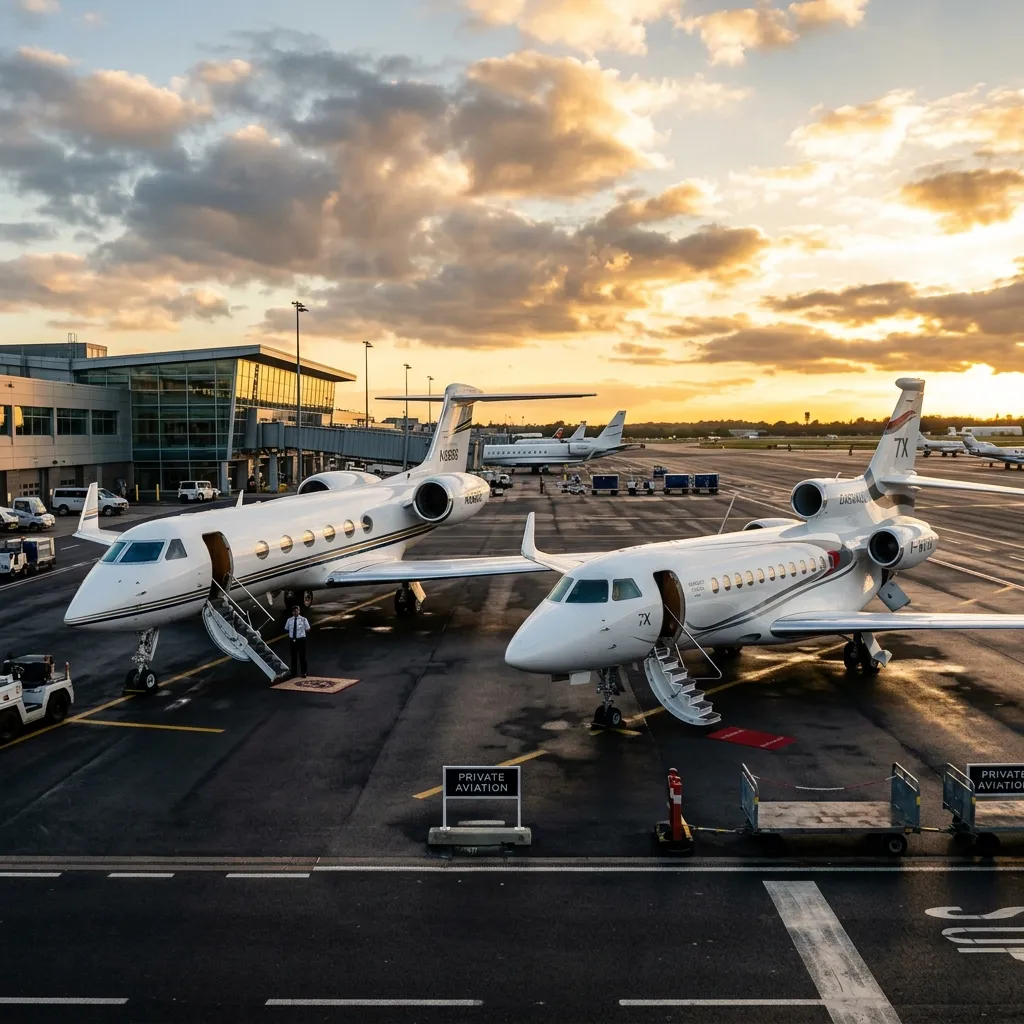
The Falcon 8X's three-engine configuration is not about speed or range. It is about short-field access and steep-approach capability. The 8X is certified for London City Airport (LCY) steep-approach operations, a certification no Gulfstream holds. The third engine provides additional go-around thrust at low speeds, enabling approaches into airports with steep glide paths, short runways, and surrounding terrain that twin-engine jets cannot safely access. This capability opens airports like Lugano, La Mole-Saint Tropez, and Samedan/St. Moritz to the 8X.

Need a Charter Quote?

Contact our team for a personalized quote.

Get a Quote

Cabin: Width and Configuration

The G650 wins the cabin comparison decisively: 9.6 inches wider, 4 feet longer, and fitted with the largest oval windows in business aviation. These windows flood the cabin with natural light and create a sense of openness that no competitor matches. The G650's cabin accommodates four-zone configurations (crew rest, forward lounge, mid-cabin conference, aft stateroom) that the shorter Falcon 8X cannot replicate without compromising galley or lavatory space.

The Falcon 8X cabin at 7.7 feet wide and 42.8 feet long is generous by any standard, wider than many heavy jets and longer than any super-midsize. Dassault's interior design emphasizes three-zone flexibility with modular configurations that can be reconfigured between flights. The 8X's lower cabin noise levels (Dassault claims the quietest cabin in the ultra-long-range category) partially compensate for the width disadvantage on flights exceeding 10 hours.

Operating Economics

The Falcon 8X burns 60 fewer gallons per hour than the G650, saving $420/hour at $7/gallon fuel. At 400 annual flight hours, that is $168,000 per year in fuel savings. The 8X's three PW307D engines each cost $300,000-$400,000 to overhaul versus $600,000-$800,000 per engine for the G650's BR725s, but with three engines the total overhaul exposure ($900K-$1.2M) is comparable to the G650's ($1.2M-$1.6M).

Residual values favor the G650. Gulfstream's brand strength and the G650's status as the most recognized business jet in the world create demand that supports resale pricing. A 2016 G650 trades at $35-$42 million; a 2016 Falcon 8X trades at $30-$36 million. Both aircraft depreciate at 3-5% annually, but the G650's higher starting point produces more absolute value retention.

Brian Galvan

Written By

Brian Galvan

Founder, The Jet Finder ยท Private Aviation Operations & Technology

Former Director of Technology at FlyUSA (Inc. 5000 fastest-growing private jet company). Decade of hands-on experience across Part 135 operations, charter sales, fleet management, and aviation data systems.

LinkedInRead Full Profile →
Common Questions

Frequently Asked Questions


8 questions about chartering this aircraft

New York (TEB) to London (LTN) is approximately 3,050 NM. At the G650's Mach 0.90 high-speed cruise (516 ktas), the flight takes approximately 5 hours 55 minutes. The Falcon 8X at Mach 0.85 (481 ktas) covers the same distance in approximately 6 hours 20 minutes. The G650 saves approximately 25 minutes. At Mach 0.925 (the G650's maximum operating speed), the savings increase to approximately 35 minutes, but fuel burn at Mach 0.925 is significantly higher and rarely sustained for entire flights.

Three engines do not materially improve reliability over two engines in modern business aviation: both the BR725 and PW307D exceed 99.9% dispatch reliability. The third engine adds approximately 15-20% to total engine maintenance cost (three overhaul cycles instead of two, with each PW307D overhaul costing $300K-$400K). The operational advantage is not reliability but performance: three engines provide more go-around thrust at low speed, enabling short-field and steep-approach operations that twin-engine jets cannot safely perform. The third engine is a capability feature, not a reliability feature.

On a 14-hour flight, the 9.6-inch width difference is substantial. The G650's 8.5-foot cabin allows 24-inch-wide seats with room for a genuine center aisle that two people can pass in. Sleeping on a berthed divan, the G650 provides lie-flat beds up to 26 inches wide. The Falcon 8X at 7.7 feet provides 20-22 inch seats and 22-24 inch berths. For a single traveler, both are adequate. For 8-12 passengers on an overnight transpacific flight, the G650's extra width provides meaningfully better sleeping and working conditions.

Dassault engineers designed the 8X cabin for a target interior noise level of approximately 47 dB at cruise, using acoustic insulation, vibration dampening, and engine placement (the center engine is mounted in the empennage, away from the cabin). The G650's cabin noise level is approximately 50-52 dB at cruise. The 3-5 dB difference is perceptible: the 8X cabin allows normal-volume conversation without raising voice, while the G650 requires slightly elevated speaking volume in certain cabin zones. Both are quiet by any standard; the 8X holds a measurable advantage.

The G650 at 7,000 NM covers approximately 95% of commercially relevant nonstop routes: New York to Tokyo (5,850 NM), London to Singapore (5,960 NM), Los Angeles to London (4,750 NM), Dubai to New York (6,350 NM). Routes that challenge the standard G650 include New York to Hong Kong (7,000 NM, marginal with headwinds), Los Angeles to Sydney (6,500 NM, possible but tight), and Singapore to San Francisco (7,350 NM, requires the ER variant or a fuel stop).

At a $38M acquisition cost, $950K annual fixed costs, and $2,380/hour fuel, the G650's total annual operating cost at 400 hours is approximately $5.5M (excluding depreciation). Charter pricing for a G650 averages $10,000/hour occupied. At 400 charter hours, the cost would be $4M. Ownership only becomes cheaper per hour than charter above approximately 550-600 annual flight hours when including depreciation, and above 350 hours when excluding depreciation. Most private G650 owners fly 300-500 hours annually, placing them at or near the breakeven threshold.

The 8X stretches the fuselage 3.5 feet versus the 7X (42.8 ft vs 39.3 ft cabin), extends range by 450 NM (6,450 NM vs 5,950 NM), and adds winglets that reduce fuel burn by 3-5%. The EASy III flight deck upgrades the 7X's EASy II with enhanced synthetic vision and HUD capability. The PW307D engines on the 8X produce slightly more thrust than the 7X's PW307A variant. The improvements are evolutionary, not revolutionary: 7X owners report that the 8X is a refined version of an already excellent aircraft.

The G650 holds value better due to Gulfstream's dominant brand position and higher charter demand. Historical data shows Gulfstream flagship models (GIV, GV, G550) retain 40-50% of original value after 10 years. Dassault Falcon flagships (900, 7X) retain 35-45% over the same period. However, a new Falcon 8X with full warranty and zero-time engines represents less mechanical risk than a pre-owned G650 with mid-life engines and 5+ years of wear. The value retention advantage must be weighed against the maintenance condition and remaining life of the specific aircraft.

Continue Reading

Related Articles


Your Next Mission

Ready to Fly?


Whether you need a charter quote or want to explore aircraft options, our team is here.

Contact Us