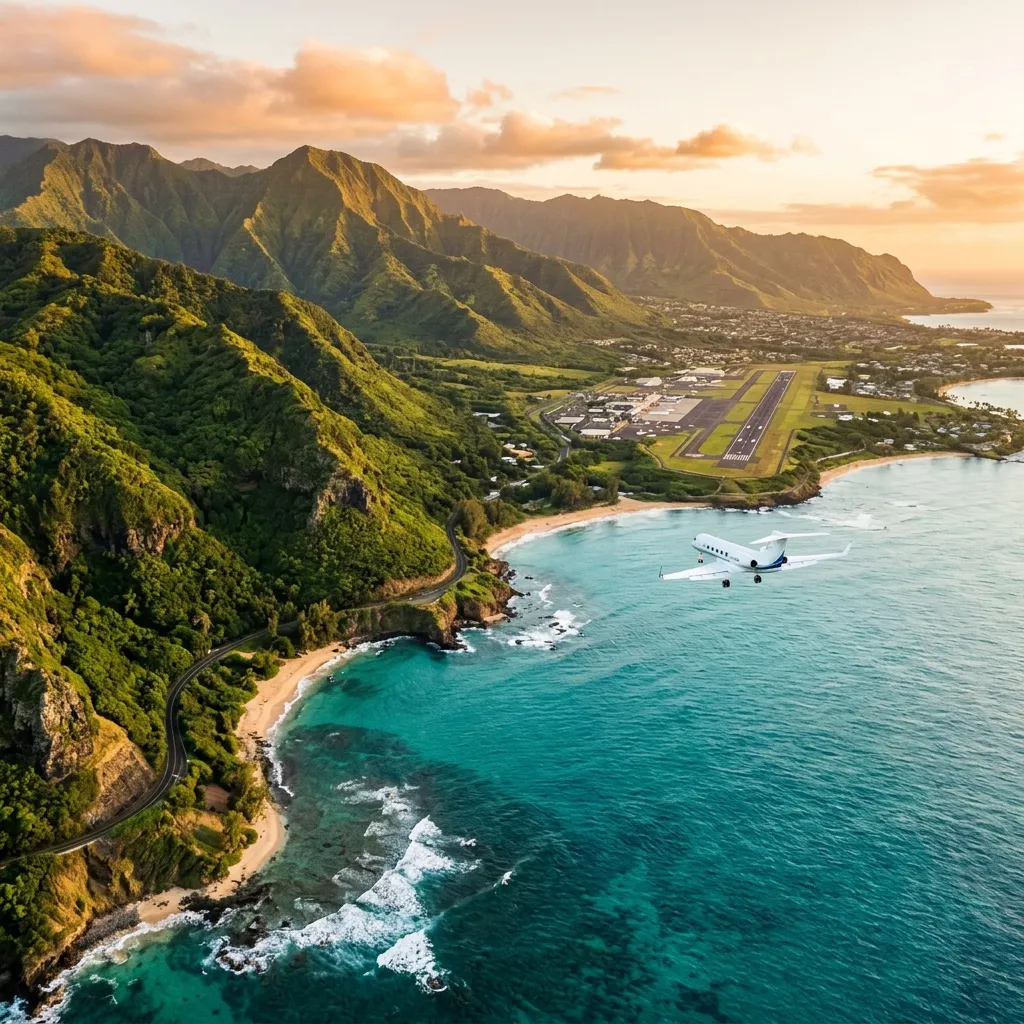
Private jet on the ramp at Kahului Airport with Maui's West Mountains in the background

Flying Private to Maui: Kahului, Kapalua, and the 2,400-Mile Water Crossing

Maui sits 2,400 nautical miles from the California coast. That distance eliminates most light jets and every turboprop from the nonstop conversation. Here is what works, what does not, and what the crossing actually costs.

In This Article

The Distance Problem: 2,400 Nautical Miles of Open Pacific Kahului Airport (OGG): The Default for Private Aviation Kapalua Airport (JHM): The Short Runway That Tempts Everyone Charter Pricing: California to Maui Seasonal Demand: When Maui Charters Peak Inter-Island Flying: Getting Around Hawaii by Private Jet Frequently Asked Questions

The Distance Problem: 2,400 Nautical Miles of Open Pacific

From Van Nuys (VNY) to Kahului (OGG), the distance is 2,377 nautical miles. From Teterboro (TEB), it is 4,370 NM. From San Jose (SJC), 2,281 NM. Every route to Maui from the mainland involves crossing the Pacific with no divert airports for the final 800 miles. This is not a coast-to-coast hop where you can put down in Albuquerque if weather moves in.

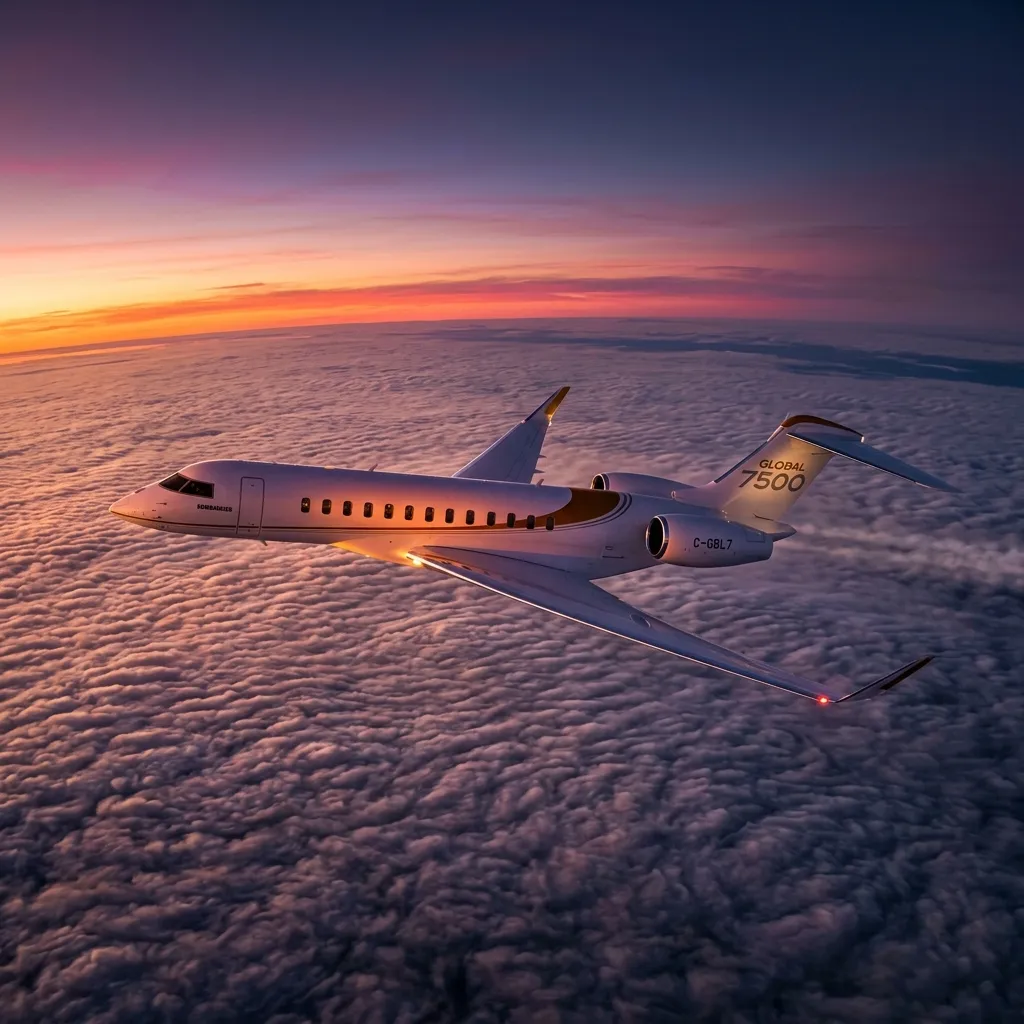
The crossing distance dictates aircraft selection. Very light jets (Citation Mustang, HondaJet) cannot make the trip nonstop from any mainland airport. Light jets (CJ3, Phenom 300) cannot make it nonstop from California. Midsize jets (Citation XLS, Hawker 800XP) cannot make it nonstop. Super-midsize jets (Citation Latitude, Challenger 350) can make it nonstop from Southern California with 4-6 passengers on favorable wind days. Heavy and ultra-long-range jets (G550, G650, Global 7500, Falcon 7X) handle the crossing without payload restrictions.

The jet that makes the most sense for a California-to-Maui charter is the Gulfstream G550 or Challenger 604. Both have the range to cover the crossing nonstop with full passengers and baggage, and both charter for significantly less than a G650 or Global 7500. You do not need a $72 million jet to fly to Hawaii. You need 2,500 NM of range and a pilot who has done the crossing before.

Kahului Airport (OGG): The Default for Private Aviation

Kahului Airport (OGG) handles the vast majority of Maui's private jet traffic. The primary runway (Runway 2/20) is 6,995 feet long, which accepts everything from turboprops to heavy jets without restriction. A secondary runway (5/23, 4,990 ft) handles lighter aircraft and general aviation.

FBO Options at OGG

Maui's FBO situation is limited compared to mainland hubs. Air Service Hawaii operates the primary general aviation facility at OGG. The FBO provides fuel (Jet-A), ground handling, customs clearance for international arrivals, rental car coordination, and a passenger lounge. Do not expect the marble-and-espresso experience of Signature at Teterboro. OGG's private aviation facilities are functional, not luxurious. The ramp gets hot. There is shade.

Fuel pricing at OGG runs $1.50-$2.00 per gallon above mainland averages. In May 2026, Jet-A at OGG averaged approximately $8.20 per gallon versus $6.50 at VNY. On a jet burning 300 GPH, the fuel premium adds $500+ per flight hour. Operators factor this into the charter quote, but it is worth understanding why Hawaii charters carry a structural cost premium beyond the distance.

Customs and International Arrivals

OGG is a designated Airport of Entry. Private jets arriving from international origins (Japan, Australia, Pacific Islands) can clear customs at OGG. The agriculture inspection is mandatory for all arrivals including domestic: Hawaii's ecosystem is protected, and agricultural inspectors will check for prohibited plants, fruits, and soil. Do not pack fresh lei flowers from the mainland. They will be confiscated.

Kapalua Airport (JHM): The Short Runway That Tempts Everyone

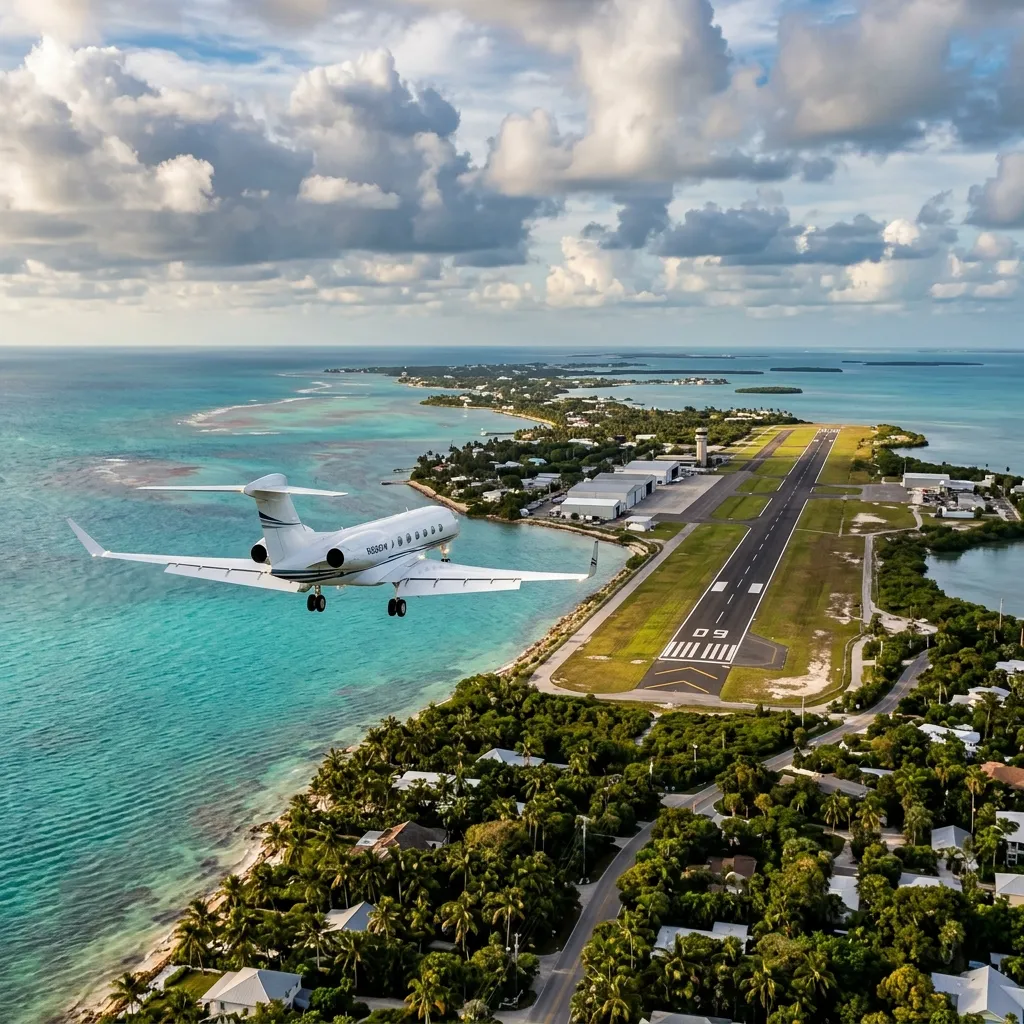
Kapalua Airport (JHM) sits on Maui's northwest coast, 5 minutes from the Ritz-Carlton Kapalua and 10 minutes from the Montage Kapalua Bay. For passengers staying on West Maui, landing at JHM eliminates the 50-minute drive from Kahului through the winding Honoapiilani Highway. The appeal is obvious.

The problem is the runway. JHM's Runway 8/26 is 3,000 feet long, uncontrolled, and ends at a cliff overlooking the Pacific Ocean. The runway is restricted to aircraft with approach speeds under 121 knots and takeoff distances under 2,800 feet at the field's density altitude. In practice, this means turboprops (King Air 200, PC-12, TBM 960) and the smallest jets (Citation Mustang, possibly HondaJet) are the only aircraft that can operate safely at JHM.

No midsize or larger jet can operate at Kapalua. Passengers who charter a Gulfstream from the mainland must land at OGG and drive or helicopter to West Maui. JHM is useful only for inter-island positioning or if you arrive at OGG on a heavy jet and connect to West Maui on a small turboprop.

JHM looks perfect on a map. On the ground, the approach is visual-only, the runway slopes downhill toward a cliff, and wind shear from the West Maui Mountains creates conditions that test experienced island pilots. This is not an airport for a casual turboprop rental. It is an airport for pilots who have trained at JHM specifically.

Need a Charter Quote?

Contact our team for a personalized quote.

Get a Quote

Charter Pricing: California to Maui

A one-way charter from Van Nuys (VNY) or San Jose (SJC) to Kahului (OGG) costs between $45,000 and $90,000 depending on aircraft type, passenger count, and positioning. Round-trip pricing ranges from $80,000 to $160,000.

Positioning fees add $10,000-$25,000 if the charter jet is not already based on the West Coast. Most Hawaii charters originate from California, so West Coast-based operators avoid the positioning premium. An operator based in Houston or Dallas will quote the positioning leg on top. Ask where the jet is sitting before you compare quotes.

Empty legs from Maui back to the mainland appear regularly during peak season (December through March). These one-way repositioning flights price at 40-60% of the normal charter rate. A G550 empty leg from OGG to VNY might price at $30,000-$40,000. The catch: timing is fixed. The jet departs when the operator needs it back on the mainland, not when you are ready to leave.

Seasonal Demand: When Maui Charters Peak

Maui charter demand follows a predictable calendar. December 15 through January 5 is the absolute peak. Charter rates increase 20-30% and aircraft availability drops to near zero for same-week bookings. Presidents' Day weekend (mid-February) and spring break (late March through mid-April) are secondary peaks.

Summer months (June through August) see steady demand from family travelers, but rates remain closer to shoulder-season levels. September and October are the quietest months and the best value. A G550 charter that quotes $75,000 one-way in December may quote $60,000 in October for the same routing.

The Return Leg Problem

Charter operators hate the Hawaii market because the return leg is almost always empty. A jet that flies passengers from VNY to OGG must return to the mainland with no revenue passengers unless the operator can sell the return as an empty leg. This dead-leg cost is embedded in the outbound pricing. Round-trip charters are cheaper per leg because the operator captures revenue in both directions.

Some operators position a jet in Hawaii for the entire holiday season (3-4 weeks), serving multiple inter-island charters and outbound legs during the peak period. This amortizes the positioning cost across several trips and can reduce individual charter pricing by 10-15%.

Inter-Island Flying: Getting Around Hawaii by Private Jet

Once in Hawaii, inter-island private charters are a different market entirely. Distances between islands are 60-130 NM. Turboprops (King Air 200, PC-12) and light jets dominate. Flight times run 20-40 minutes.

  • Maui (OGG) to Honolulu (HNL): 85 NM, 25 min, $3,500-$5,500 by turboprop
  • Maui (OGG) to Kona (KOA): 95 NM, 30 min, $4,000-$6,000 by turboprop
  • Maui (OGG) to Lihue, Kauai (LIH): 120 NM, 35 min, $5,000-$7,500 by turboprop
  • Maui (OGG) to Lanai (LNY): 55 NM, 15 min, $2,500-$4,000 by turboprop

Mokulele Airlines and Makani Kai Air operate scheduled inter-island service on Cessna Grand Caravans. These are not private charters but they are small aircraft (9 passengers) with no TSA screening. For travelers who do not need a dedicated aircraft, Mokulele fares of $100-$200 per seat offer a semi-private experience between islands.

Brian Galvan

Written By

Brian Galvan

Founder, The Jet Finder ยท Private Aviation Operations & Technology

Former Director of Technology at FlyUSA (Inc. 5000 fastest-growing private jet company). Decade of hands-on experience across Part 135 operations, charter sales, fleet management, and aviation data systems.

LinkedInRead Full Profile →
Common Questions

Frequently Asked Questions


7 questions about flying privately to Maui

Neither can make the trip nonstop with meaningful payload. The Citation XLS holds 1,858 NM of range and the distance from Van Nuys to Kahului is 2,377 NM. The Phenom 300 holds approximately 2,010 NM. Both would need a fuel stop in Honolulu (HNL) or, with favorable tailwinds and reduced passenger load, the Phenom 300 might reach Maui with insufficient reserves. The minimum practical aircraft for a nonstop California-to-Maui charter is a super-midsize with 2,500+ NM range.

Part 135 charter operators flying twin-engine jets to Hawaii must comply with extended overwater operation requirements, though the specific ETOPS certification depends on the route. The California-to-Hawaii corridor places aircraft over 800+ NM of open ocean with no divert airports. Jets like the Gulfstream G550 and Challenger 604 hold appropriate ETOPS certifications. The operator must carry additional safety equipment including life rafts, survival kits, and satellite communication capability.

JHM's 3,000-foot runway restricts operations to turboprops and the smallest very light jets. No midsize or larger jet can operate safely at Kapalua. The Citation Mustang (3,110 ft takeoff distance) is marginal even at sea level and would be performance-limited at JHM's density altitude. In practice, only King Air 200/350, PC-12, TBM 960, and Cessna Caravan aircraft operate regularly at JHM.

Jet-A fuel at Hawaiian airports averages $1.50-$2.00 per gallon more than mainland prices. As of May 2026, OGG averages approximately $8.20 per gallon versus $6.50 at Van Nuys. On a 5-hour flight burning 300 GPH, the fuel premium on a single fueling adds $2,250-$3,000 to operating costs. This premium is embedded in charter pricing for all Hawaii routes.

Empty legs from Maui to the mainland are most frequent during peak season (December through March), when operators reposition jets back to California after dropping off holiday travelers. During summer and fall, empty legs are less common because charter volume is lower and fewer jets are positioned in Hawaii. Empty leg pricing typically runs 40-60% of the standard one-way charter rate.

The drive from OGG to West Maui resorts (Kapalua, Ka'anapali, Lahaina area) takes approximately 45-60 minutes via Honoapiilani Highway. Private car services and luxury SUV transfers can be arranged through the FBO or a concierge service. Helicopter transfers from OGG to West Maui are available through Air Maui or Maverick Helicopters, reducing the transfer to 15-20 minutes at a cost of $1,500-$3,000 for the group.

Yes. Kahului Airport (OGG) is a designated Airport of Entry with CBP (Customs and Border Protection) services. Private jets arriving internationally can clear customs at OGG. You must file an eAPIS manifest at least 60 minutes before arrival. Processing time at OGG is typically 30-45 minutes. Note that all arrivals to Hawaii, including domestic, undergo a mandatory agricultural inspection to protect the islands' ecosystem.

Continue Reading

Related Articles


Your Next Mission

Ready to Fly?


Whether you need a charter quote or want to explore aircraft options, our team is here.

Contact Us