Denver: Gateway to the Rockies
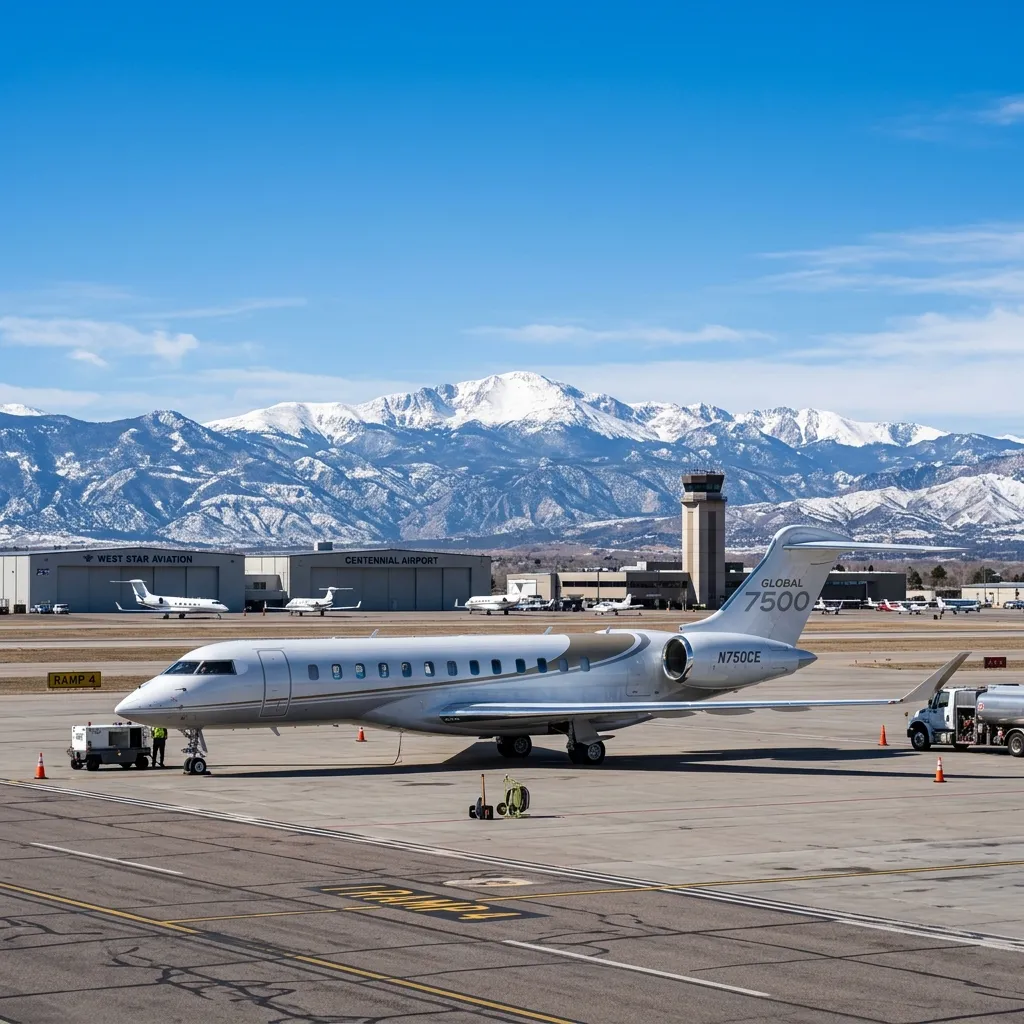
Denver's private aviation market is shaped by two forces: the city's growing tech and energy economy and its position as the staging point for Colorado's ski resorts. Centennial Airport (APA) in the south Denver tech corridor handles over 300,000 annual operations, making it the second-busiest general aviation airport in the country. Rocky Mountain Metropolitan Airport (BJC) northwest of Denver serves Boulder, Broomfield, and provides access to I-70 West toward the ski mountains.
All Denver-area airports operate at high elevation (5,000-6,000 feet), which directly impacts aircraft performance. Takeoff distances increase 15-25% compared to sea level. Summer temperatures (90-100°F) compound the elevation effect, creating density altitudes that can exceed 9,000 feet. Pilots operating into Denver for the first time should calculate high-altitude performance carefully.
Airport Comparison
Centennial Airport (APA) dominates Denver private aviation with three FBOs and a 10,002-foot runway that accommodates any aircraft at any weight, even at high density altitude. Located in the Denver Tech Center corridor, Centennial is 10-15 minutes from major tech companies, financial firms, and the I-25 south corridor. Three FBOs (Signature, TAC Air, and Modern Aviation) compete for business with modern terminals and competitive fuel pricing.
Rocky Mountain Metropolitan (BJC) is the preferred airport for Boulder destinations and ski access. BJC provides the fastest I-70 access for trips to Vail (100 miles), Breckenridge (85 miles), and Winter Park (67 miles). The 9,000-foot runway handles all business jet types. Signature Flight Support and Sheltair operate the FBOs. For passengers heading to the University of Colorado Boulder campus, BJC is 20 minutes closer than Centennial.
High-Altitude Operations and Ski Season
Denver's 5,885-foot elevation increases takeoff distance by 15-25% compared to sea level airports. A Challenger 350 that requires 4,800 feet at sea level needs approximately 5,800-6,200 feet at Centennial during standard conditions. In summer heat (95°F), density altitude can reach 8,500-9,000 feet, pushing takeoff distances even higher. Centennial's 10,002-foot runway provides ample margin for all conditions, but pilots should brief performance limitations when departing at max gross weight.
Ski season (December-April) drives the highest private jet traffic volumes. Centennial and BJC both experience 30-40% traffic increases during ski weekends. Eagle County Regional (EGE, for Vail/Beaver Creek) and Aspen-Pitkin County (ASE) are the mountain destination airports, but many charter clients stage through Denver to avoid mountain airport weather delays. A Denver-based ground transfer to Vail takes 2-2.5 hours via I-70 but avoids the risk of missed approaches and diversions at EGE during winter storms.