How We Ranked: Methodology
These rankings use FAA Air Traffic Activity Data System (ATADS) figures for calendar year 2025, supplemented by AirNav operational data and FAA 5010 airport records. We filtered for airports where business jet operations constitute at least 40% of total traffic, excluding major airline hubs where private aviation is a small fraction of total movements. Itinerant general aviation operations are the primary metric.
Some airports with high total operations, like Van Nuys, handle significant helicopter and piston traffic alongside business jets. Where possible, we weighted toward airports known for turbine traffic density. These rankings reflect business aviation activity specifically, not total GA movements.
The Top 5: Dominant by Volume
1. Teterboro Airport (TEB) — Teterboro, New Jersey
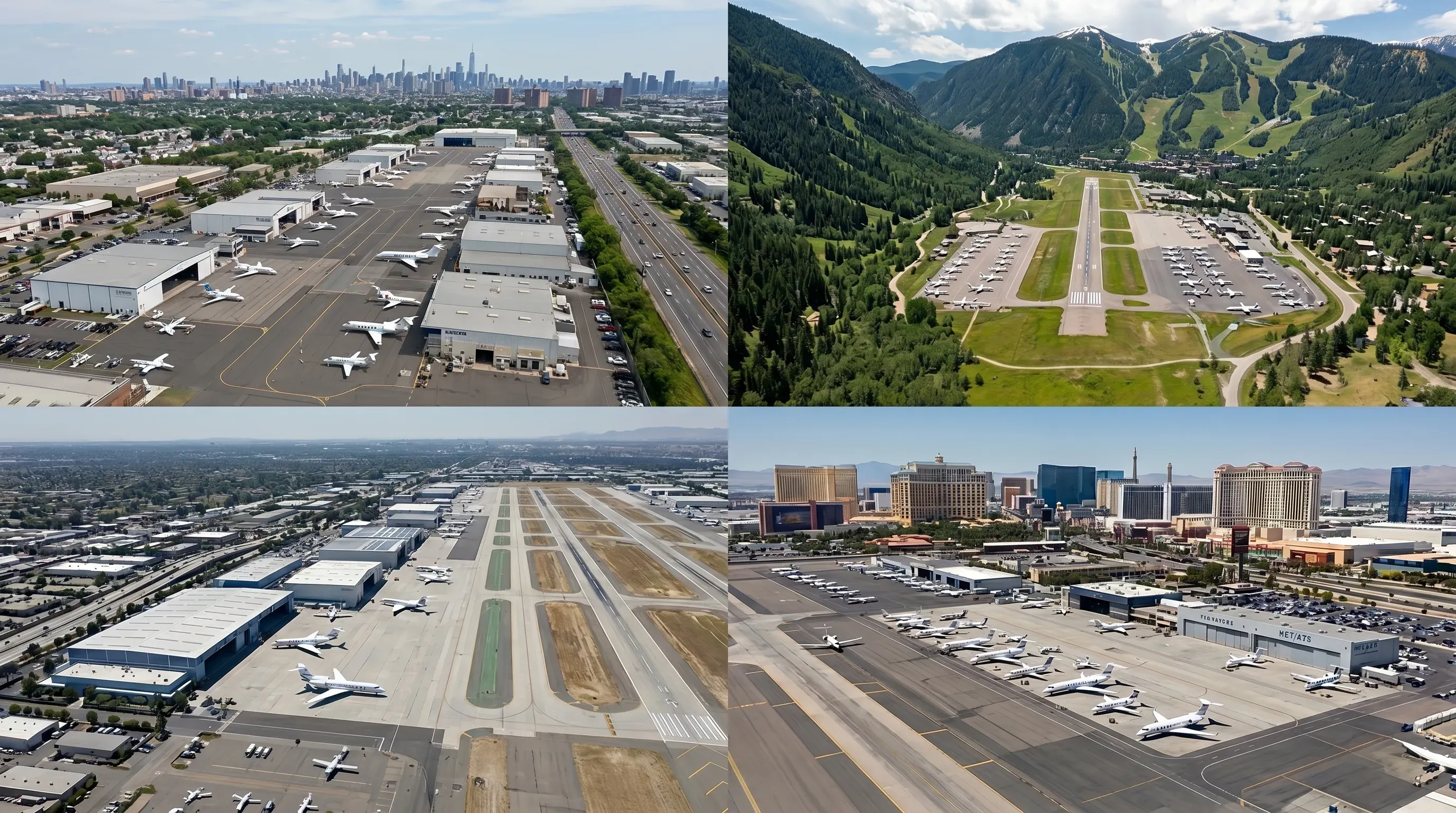
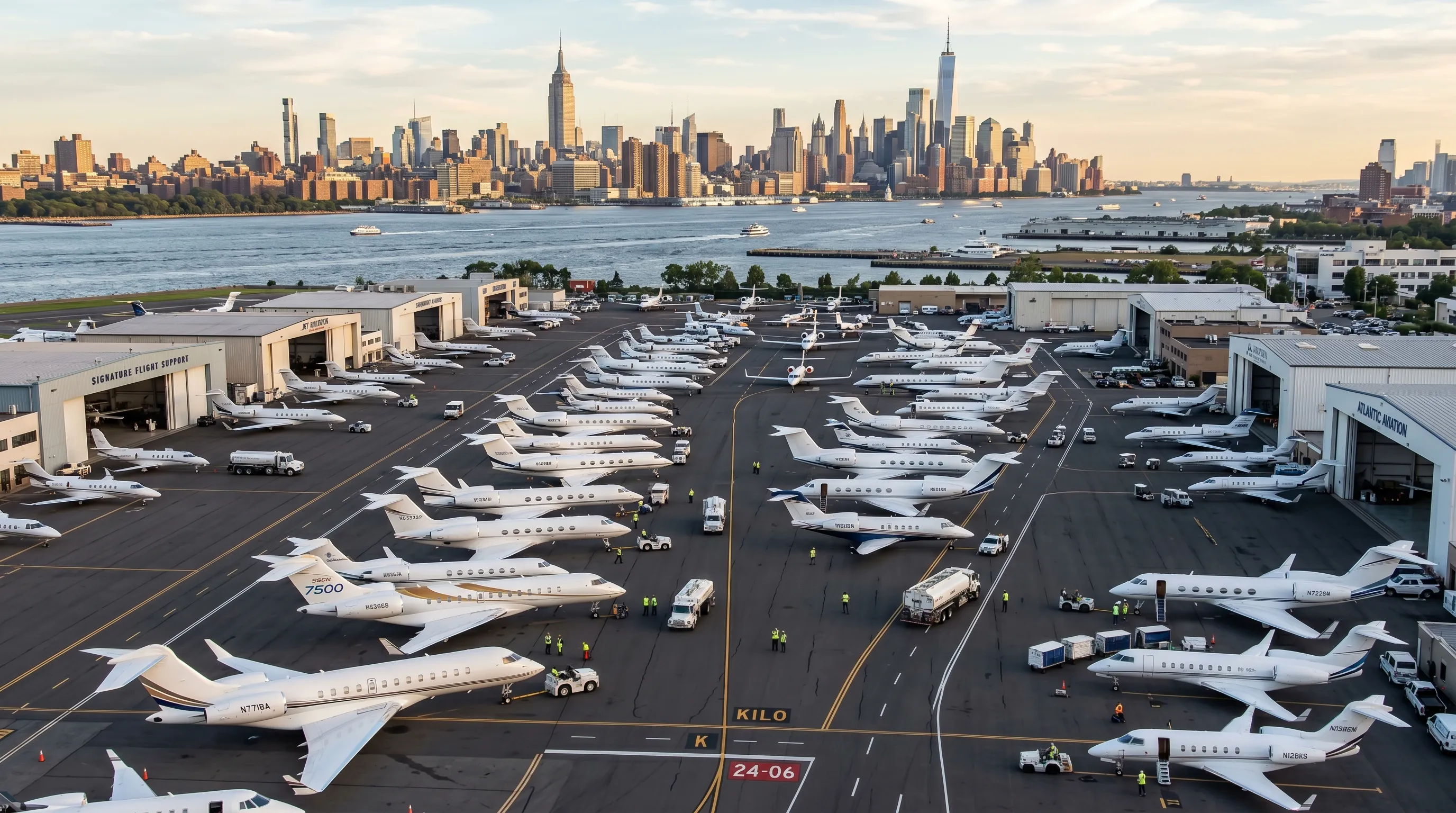
Teterboro logged approximately 167,000 itinerant operations in 2025. The airport serves the New York City metropolitan area with four FBOs: Signature Flight Support, Atlantic Aviation, Jet Aviation, and Meridian. No commercial airline service. Two runways: 6/24 at 7,000 feet and 1/19 at 6,013 feet. Noise restrictions limit operations between 11 PM and 6 AM. TEB handles the highest concentration of ultra-long-range jets (G650, Global 7500, Falcon 8X) of any GA airport in the country.
2. Van Nuys Airport (VNY) — Van Nuys, California
Van Nuys recorded approximately 210,000 total operations in 2025, but roughly 45% were business jet movements. VNY is the busiest general aviation airport in the world by total operations. Five FBOs operate on the field: Signature, Clay Lacy, Castle & Cooke, Jet Aviation, and Helinet. Two runways at 8,001 feet. The airport sits 20 miles from Beverly Hills and 30 miles from downtown LA. Entertainment and tech industries drive demand.
3. Palm Beach County Park Airport (LNA) — Lantana, Florida
Lantana recorded 153,000 operations in 2025, driven by seasonal migration of wealth from the Northeast. December through April, LNA and neighboring PBI (Palm Beach International) see private jet traffic spike 60% above summer levels. Two FBOs serve the field. The 3,908-foot runway limits the airport to light jets and turboprops; larger jets divert to PBI.
4. Fort Lauderdale Executive (FXE) — Fort Lauderdale, Florida
FXE handled 148,000 operations in 2025. The airport is the primary private aviation gateway for Fort Lauderdale and serves as an overflow facility for Miami's business jet traffic. Three FBOs. Runway 9/27 at 6,002 feet handles most midsize and heavy jets. FXE's location near Port Everglades makes it popular with yacht owners coordinating jet-to-yacht transfers.
5. Scottsdale Airport (SDL) — Scottsdale, Arizona
Scottsdale logged 138,000 operations in 2025. The airport anchors the Phoenix metro's private aviation market with two FBOs (Signature and Ross Aviation) and a single 8,249-foot runway. Noise abatement procedures restrict operations after 9 PM. WM Phoenix Open, Barrett-Jackson, and Super Bowl years push SDL to capacity. The airport imposed a new weight restriction in 2024 limiting the largest aircraft types.
Positions 6-10: Regional Powerhouses
Chicago Executive (PWK) serves the northern suburbs and handles charter traffic that avoids Midway's congestion. Addison Airport (ADS) is the Dallas-Fort Worth metro's primary business jet field. Centennial Airport (APA) anchors Denver's private aviation market at 5,885 feet MSL, where density altitude affects summer operations. DeKalb-Peachtree (PDK) is Atlanta's go-to GA airport. Sugar Land (SGR) has emerged as Houston's preferred private jet facility over Hobby and Hooks.