Austin Has One Real Airport and Two Relief Valves
Austin-Bergstrom International (AUS/KAUS) handles roughly 85% of Austin's private jet traffic. Two FBOs, Atlantic Aviation and Signature Flight Support, operate on the south side of the field. The airport has two runways: 17L/35R at 12,250 feet and 17R/35L at 9,000 feet. Both accommodate every aircraft type from a Citation M2 to a Boeing BBJ. AUS is also a commercial hub for Southwest, American, and Delta, which means airline traffic creates taxi delays during peak hours (7-9 AM, 4-7 PM).
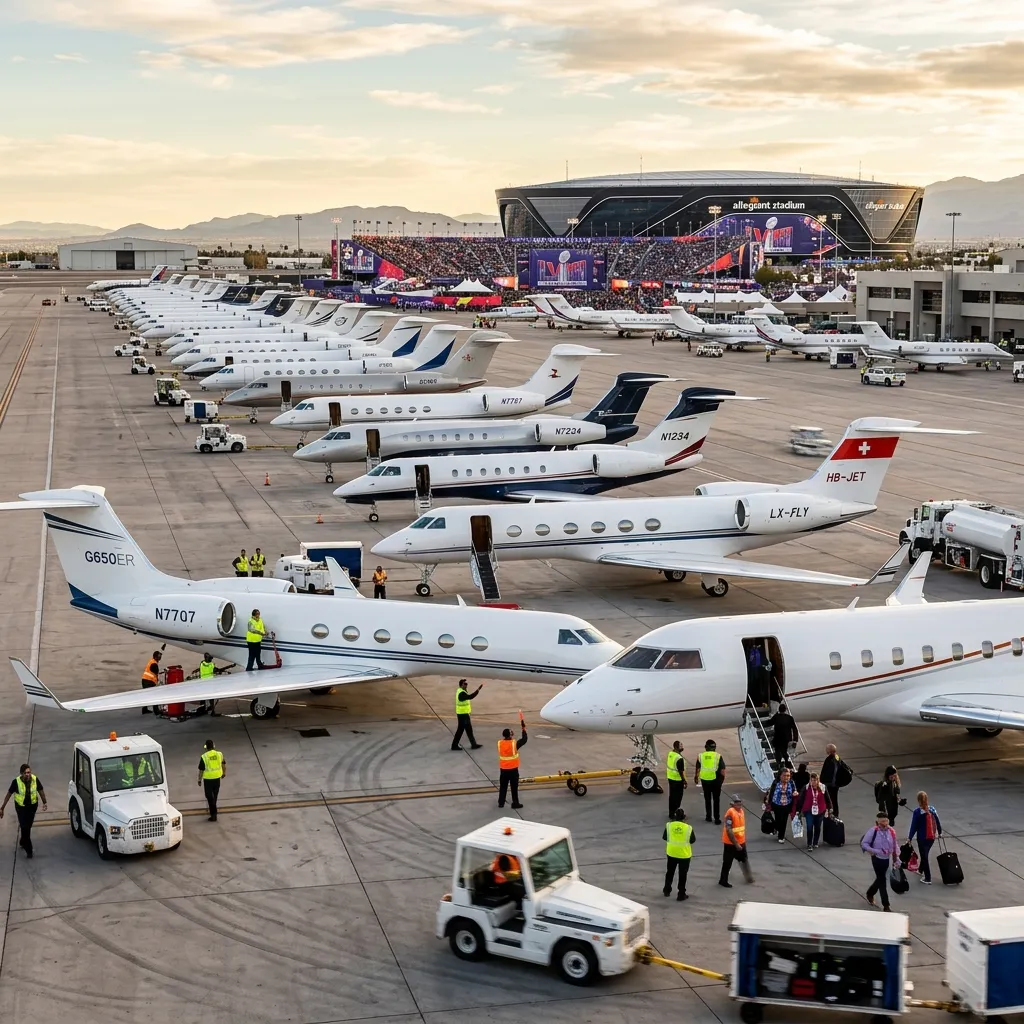
Austin's private aviation growth has tracked the city's economic trajectory. From 2019 to 2025, private jet movements at AUS increased approximately 40%, driven by tech sector expansion (Tesla, Oracle, Samsung), SXSW, F1, and a population boom that brought wealth from the coasts. The infrastructure has not kept pace. Ramp space at both FBOs is constrained, particularly during SXSW (March), F1 (October), and ACL Festival (October). If you are flying into Austin during any of these events, book FBO ramp space separately from your charter, and do it 4-6 weeks out.
Atlantic Aviation vs Signature Flight Support at AUS
Both FBOs provide the standard services: passenger lounge, crew facilities, rental car coordination, and catering arrangement. Atlantic Aviation tends to have slightly lower fuel prices and a more no-frills approach. Signature has a larger ramp footprint and recently upgraded its passenger terminal. For regular Austin visitors, establishing an account with one FBO and buying fuel consistently will get you ramp fee waivers and priority parking during high-demand periods.
The South Terminal at AUS is a separate commercial terminal operated by LoneStar Airport Holdings for ultra-low-cost carriers. It is not an FBO. Do not confuse it with private aviation facilities. Private jet operations go through Atlantic or Signature on the south side of the main airport complex. The South Terminal is relevant only if your ground transport needs to avoid the main terminal's pickup congestion.
Georgetown Municipal (GTU): The Overflow Option
Georgetown Municipal Airport (KGTU) sits 30 miles north of downtown Austin and serves as the primary overflow airport when AUS ramp space is full. Georgetown has a single runway (18/36) at 5,000 feet, which accommodates light jets (Phenom 300, CJ4, Citation XLS) and all turboprops. Super-midsize and larger jets require AUS or San Marcos.
GTU has one FBO: Georgetown Jet Center. Fuel prices are typically $0.50-$1.00 per gallon below AUS rates. Ramp fees are minimal. The trade-off is location: Georgetown to downtown Austin is a 35-45 minute drive under normal conditions, stretching to 60+ minutes during rush hour on I-35. For passengers heading to the Domain, Round Rock, or north Austin tech campuses, Georgetown is actually closer than AUS.
During F1 weekend and SXSW, Georgetown transforms from a quiet reliever airport into a congested parking lot for light jets. The single taxiway limits ground movement. If you are using GTU during events, arrive Thursday and depart Monday. Friday arrivals create bottlenecks.
Need a Charter Quote?
Contact our team for a personalized quote.
Get a Quote →San Marcos Regional (HYI): Midsize-Capable Alternative
San Marcos Regional Airport (KHYI) offers a 5,600-foot runway that handles midsize jets (Challenger 350, Citation Latitude, Gulfstream G280) in addition to light jets and turboprops. The airport sits 30 miles south of downtown Austin and 20 miles northeast of San Marcos, home to Texas State University.
San Marcos is less congested than Georgetown during events because fewer charter clients think of it. That is its advantage. Fuel is competitively priced, ramp space is available, and the drive to downtown Austin via I-35 takes 35-45 minutes. For clients attending Circuit of the Americas events, San Marcos is actually the closest airport: COTA is 15-20 miles northeast of HYI, a 20-30 minute drive.
If you are chartering for F1 at Circuit of the Americas, San Marcos (HYI) is the airport nobody talks about. It is closer to COTA than Austin-Bergstrom, cheaper than Georgetown, and handles midsize jets that Georgetown cannot. The only downside is limited FBO amenities compared to AUS.
Ground Transport: I-35 Is the Problem
Austin's ground transport reality centers on one fact: Interstate 35 is perpetually congested through central Austin. Every airport option (AUS, GTU, HYI) connects to downtown via I-35 or its feeders. During peak hours (7-9 AM, 4-7 PM), a 15-minute airport-to-downtown drive becomes 40-50 minutes.
- AUS to downtown Austin: 15-25 minutes (off-peak), 30-50 minutes (peak). Use Riverside Drive or East Cesar Chavez to bypass I-35 through downtown.
- AUS to Domain/North Austin: 25-40 minutes (off-peak), 45-70 minutes (peak). Consider MoPac Expressway.
- GTU to downtown Austin: 35-45 minutes (off-peak), 60-80 minutes (peak). I-35 southbound through Round Rock is the worst stretch.
- HYI to downtown Austin: 35-45 minutes (off-peak), 50-70 minutes (peak). I-35 northbound through San Marcos-Kyle corridor.
- HYI to COTA: 20-30 minutes (off-peak), 30-45 minutes (F1 weekend).
Helicopter transfers are available through Hill Country Helicopters and charter operators, with landing at downtown helipads or COTA's circuit helipad. Pricing runs $2,500-$5,000 per flight for 4-6 passengers. For time-sensitive arrivals during events, helicopter transfer eliminates the I-35 variable entirely.
Seasonal Demand and When Rates Spike
Austin's private aviation demand follows a distinct calendar. SXSW (mid-March) generates the highest sustained demand period: 10 days of tech executives, musicians, film producers, and venture capitalists arriving from both coasts. Charter rates into Austin increase 30-50% during SXSW, and AUS ramp space fills by the Monday of the festival's first week.
F1 weekend (late October) produces the sharpest single-weekend spike: 300-400% increase in private jet movements over a 72-hour window. ACL Fest (two weekends in October) overlaps with pre-F1 demand, making October Austin's most congested month for private aviation.
January through February is quiet. Summer is moderate. November through December brings Dell, Oracle, and Samsung corporate travel plus University of Texas football. Austin is never truly dead for private aviation, but the off-peak windows (January, February, late August) offer the best pricing and easiest FBO access.