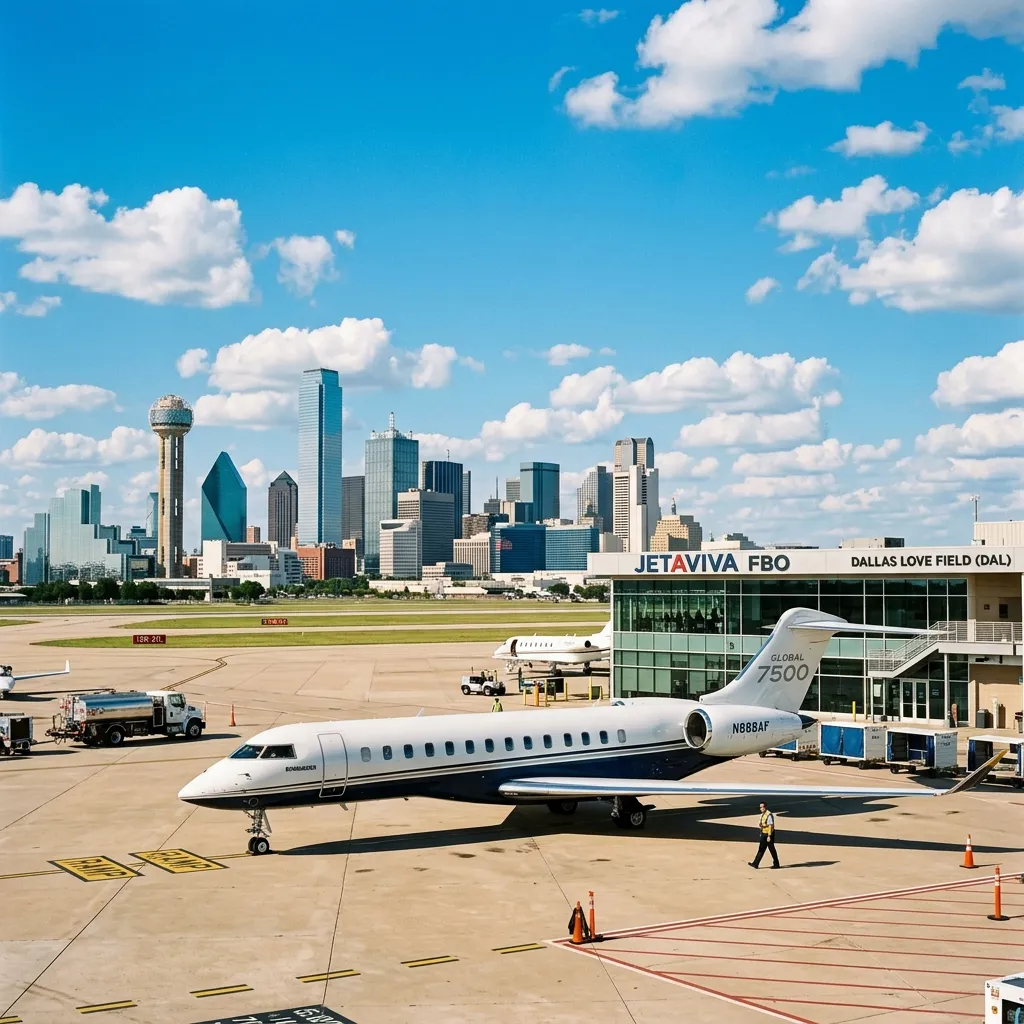
Business jet on the ramp at Dallas Love Field with the downtown Dallas skyline visible behind the FBO

Flying Private to Dallas: Love Field, Addison, and the DFW Metroplex Airport Network

undefined

In This Article

The Dallas-Fort Worth Private Aviation Market Airport Comparison: The Primary Three Secondary Airports and Niche Uses Ground Transport and Traffic Realities Seasonal Demand and Texas Heat Considerations Frequently Asked Questions

The Dallas-Fort Worth Private Aviation Market

The Dallas-Fort Worth Metroplex ranks among the top three private aviation markets in the United States, behind only New York and South Florida. The region's concentration of corporate headquarters (23 Fortune 500 companies), energy sector wealth, and geographic centrality (within 3 hours of 90% of the U.S. population by private jet) drives consistent demand. Seven airports handle private jet traffic across a metro area spanning 9,286 square miles: Dallas Love Field (DAL), Addison Airport (ADS), Dallas Executive (RBD), McKinney National (TKI), Fort Worth Meacham (FTW), Fort Worth Alliance (AFW), and Denton Enterprise (DTO).

DFW International (DFW) technically accepts general aviation traffic, but landing fees ($500-$2,000), congestion delays, and the distance from private aviation FBOs to the terminals make it impractical for most private jet operations. The dedicated general aviation airports around the Metroplex provide faster, cheaper, and more convenient service.

Airport Comparison: The Primary Three

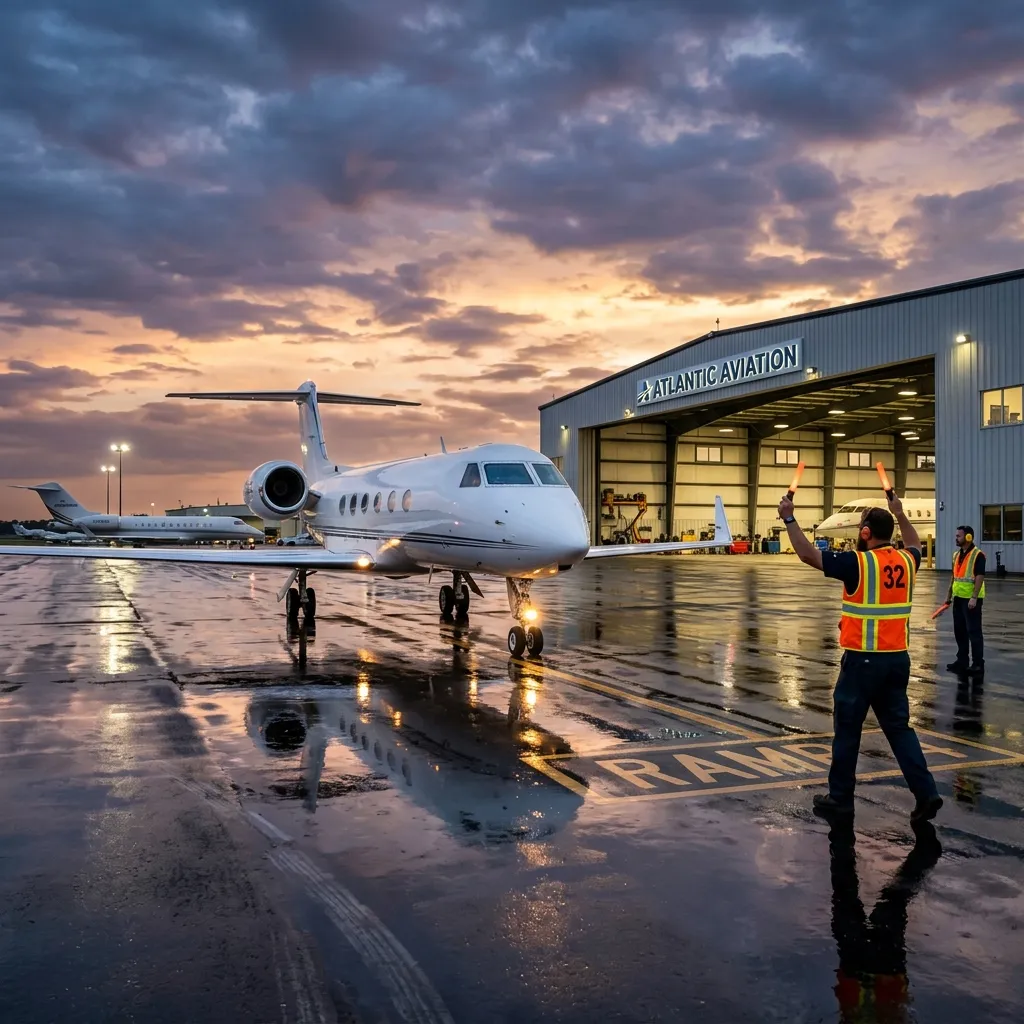
Dallas Love Field (DAL) is the premier private aviation gateway for central Dallas. Located 6 miles northwest of downtown, Love Field puts passengers in Uptown, the Design District, or Highland Park within 10-15 minutes. Business Jet Center operates one of the country's most recognized private FBOs, with a 25,000-square-foot terminal, crew lounges, conference rooms, and direct ramp access. Atlantic Aviation provides a second full-service option. Love Field's 8,800-foot runway accommodates every aircraft in production, from the HondaJet to the Global 7500.

Addison Airport (ADS) in north Dallas is the Metroplex's busiest dedicated general aviation airport, logging over 70,000 annual operations. Located 15 miles north of downtown Dallas, Addison serves the north Dallas corridor: Plano, Frisco, Richardson, and the Telecom Corridor. Atlantic Aviation and Million Air operate competing FBOs with full services. The 7,202-foot runway handles all business jet types, though ultra-long-range jets at max gross weight should verify performance in hot summer conditions (Dallas regularly exceeds 100°F in July-August).

Fort Worth Meacham International (FTW) is the go-to airport for the western half of the Metroplex. Texas Jet operates the primary FBO with a reputation for competitive fuel pricing and no-frills efficiency. Meacham sits 10 minutes from downtown Fort Worth and the Stockyards district. For passengers heading to Fort Worth, TCU, or the I-30/I-20 corridor, Meacham eliminates the 35-50 minute drive from Love Field. The 7,501-foot runway handles all standard business jet operations.

Secondary Airports and Niche Uses

Dallas Executive (RBD) serves south Dallas destinations including Baylor Medical Center, the Convention Center, and the Cedars district. McKinney National (TKI) has expanded significantly to serve the fastest-growing corridor in the Metroplex, with a 7,002-foot runway that handles midsize and super-midsize jets. Fort Worth Alliance (AFW) offers the longest runway in the private aviation network at 9,600 feet, originally built for the adjacent BNSF intermodal facility but available for all aircraft types. Denton Enterprise serves the northern reaches of the Metroplex and the University of North Texas campus.

Need a Charter Quote?

Contact our team for a personalized quote.

Get a Quote

Ground Transport and Traffic Realities

Dallas traffic follows predictable patterns. I-35E (north-south) and I-635 (LBJ Freeway loop) are congested from 7-9 AM and 4-7 PM. The Dallas North Tollway provides a faster but tolled alternative between Love Field/Addison and the north suburbs. For game-day arrivals at AT&T Stadium or Globe Life Field in Arlington, Love Field provides the best positioning: 25-40 minutes via I-30 depending on traffic. Addison adds 10-15 minutes to the Arlington drive.

Unlike coastal cities, Dallas ground transport relies almost entirely on private vehicles and car services. No commercial helicopter shuttle services operate between airports. Uber Black and Lyft Lux are readily available at all FBOs. Several FBOs offer complimentary crew cars for pilots on overnight stays, particularly at Meacham and McKinney where the service culture emphasizes personal relationships.

Seasonal Demand and Texas Heat Considerations

The Dallas private aviation market peaks during Q1 (January-March) corporate travel season, the State Fair of Texas (late September-October), Cowboys and Mavericks home games, and the AT&T Byron Nelson golf tournament (May). The energy sector drives consistent midweek traffic year-round, with Permian Basin shuttle flights (DAL/ADS to Midland, MAF) representing a significant charter market segment.

Texas summer heat (June-September, routinely 100-110°F) affects aircraft performance at every Metroplex airport. High density altitude reduces takeoff performance, particularly for heavy jets at max gross weight. A Global 7500 departing Love Field at 105°F and max takeoff weight uses significantly more runway than the same departure at 60°F. Operators should run hot-day performance calculations for summer departures and consider early-morning or late-evening departure times for maximum-weight operations. FBOs stock de-icing fluid in winter (Dallas ice storms are rare but severe when they occur) and provide ramp shade and GPU cooling in summer.

Dallas is home base for several major charter and fractional operators. Flexjet operates its headquarters from Love Field. NetJets, Wheels Up, and XO maintain positioning fleets across DAL and ADS. This operator density creates above-average empty-leg availability, particularly for eastbound flights to Teterboro and westbound flights to Van Nuys on Sunday evenings and Monday mornings.

Brian Galvan

Written By

Brian Galvan

Founder, The Jet Finder · Private Aviation Operations & Technology

Former Director of Technology at FlyUSA (Inc. 5000 fastest-growing private jet company). Decade of hands-on experience across Part 135 operations, charter sales, fleet management, and aviation data systems.

LinkedInRead Full Profile →
Common Questions

Frequently Asked Questions


8 questions about chartering this aircraft

Yes. Love Field's 8,800-foot runway is more than sufficient for every business jet in production, even at Dallas summer temperatures exceeding 100°F. The Global 7500, the longest-takeoff-distance jet in business aviation, requires approximately 6,000-6,500 feet at max gross weight in hot conditions. Love Field provides ample margin. Light and midsize jets use less than half the available runway. The airport's elevation is 487 feet MSL, which keeps density altitude manageable even at extreme temperatures.

Ramp congestion at Addison is occasional during peak periods (Monday mornings, Friday afternoons, game-day arrivals) but rarely causes delays exceeding 10-15 minutes. Both FBOs (Atlantic and Million Air) manage flow efficiently with dedicated marshalers and pre-arranged parking. The more common constraint is hangar availability for overnight parking: summer heat makes hangar storage essential to avoid cabin temperatures exceeding 140°F, and hangar space fills quickly during high-demand periods. Reserve hangar space in advance for overnight stays.

Dallas Executive (RBD) is the closest airport to AT&T Stadium at approximately 15-20 minutes via I-30 and TX-360. Love Field is second at 25-40 minutes depending on I-30 traffic. Addison is 35-50 minutes. Fort Worth Meacham is 25-35 minutes via I-30 East. For Cowboys games specifically, RBD's proximity advantage is offset by limited FBO services compared to Love Field or Addison. Most charter operators route game-day flights through Love Field, where Business Jet Center handles high-volume game traffic with dedicated ground transport coordination.

Yes. All major FBOs in the Dallas Metroplex provide ground power units (GPU) and pre-conditioned air (PCA) service during summer months. This keeps the aircraft cabin and avionics cool while parked, preventing cabin temperatures from reaching 130-140°F on an unshaded ramp. GPU and PCA service typically costs $50-$150 per use. Hangar storage (when available) eliminates the need entirely. Pilots should request PCA hookup at least 30 minutes before passenger arrival to bring the cabin to comfortable temperature.

Flexjet operates its own facility at Love Field, separate from the public FBOs (Business Jet Center and Atlantic Aviation). Flexjet's operations do not reduce ramp space or FBO access for charter and private operators. If anything, Flexjet's presence increases local infrastructure investment: Love Field's private aviation facilities benefit from the steady demand that Flexjet and other operators generate. Business Jet Center and Atlantic maintain independent ramp areas with dedicated parking for transient aircraft.

Yes. Love Field has a CBP (Customs and Border Protection) facility available for international arrivals. Advance eAPIS filing is required, and the CBP office operates by appointment. Addison (ADS), Meacham (FTW), and the secondary airports do not have CBP facilities. International arrivals must clear customs at Love Field, DFW, or another port of entry before repositioning to other Metroplex airports. Love Field is the standard first stop for private jets arriving from Cancun, Cabo, Mexico City, and Caribbean destinations.

The DAL/ADS to Midland-Odessa (MAF) route is one of the busiest short-haul charter corridors in Texas. Energy executives commute to Permian Basin operations 2-3 times per week during drilling seasons. The flight is approximately 300 NM and takes 55-70 minutes in a light jet (Phenom 300, CJ4). King Air turboprops are common for this routing due to lower hourly costs. Several operators run scheduled-style shuttle service with fixed Monday-morning and Friday-afternoon departures. One-way charter pricing runs $4,000-$7,000 depending on aircraft type.

North Texas ice storms (typically January-February) can close all Metroplex airports simultaneously when freezing rain coats runways, ramps, and taxiways. The region's limited de-icing infrastructure (compared to northern cities) means recovery takes 24-72 hours after a significant ice event. During the February 2021 winter storm, all Dallas-area airports closed for 4-5 days. Private operators should monitor winter weather forecasts closely and consider departing ahead of approaching ice storms. FBOs stock Type I de-icing fluid but often run out during multi-day events.

Continue Reading

Related Articles


Your Next Mission

Ready to Fly?


Whether you need a charter quote or want to explore aircraft options, our team is here.

Contact Us