How Aircraft De-Icing Works
Aircraft de-icing uses two types of fluid applied in sequence. Type I fluid is a heated glycol solution (diluted propylene or ethylene glycol at 140-180 degrees F) sprayed at high pressure to melt and remove existing ice, frost, and snow from the aircraft's surfaces. Type I is orange in color and has a short holdover time: 1-12 minutes depending on conditions. It is a removal fluid, not a prevention fluid.
Type IV fluid is an unheated, thickened glycol solution applied after the Type I treatment. It coats the aircraft's surfaces with a viscous layer that prevents new ice from adhering during taxi and the takeoff roll. Type IV is typically green in color and has a holdover time of 15-80 minutes depending on the precipitation type and temperature. The fluid shears off the wing during the takeoff roll at approximately 100 knots, leaving clean surfaces for flight.
The two-step process (Type I removal followed by Type IV anti-icing) is called a 'two-step treatment.' In light frost conditions with no active precipitation, a one-step treatment using only Type I may suffice. In heavy snow or freezing rain, the two-step treatment is mandatory. The crew and dispatch make this determination based on current conditions and the expected taxi time to the runway.
What De-Icing Costs on a Private Jet
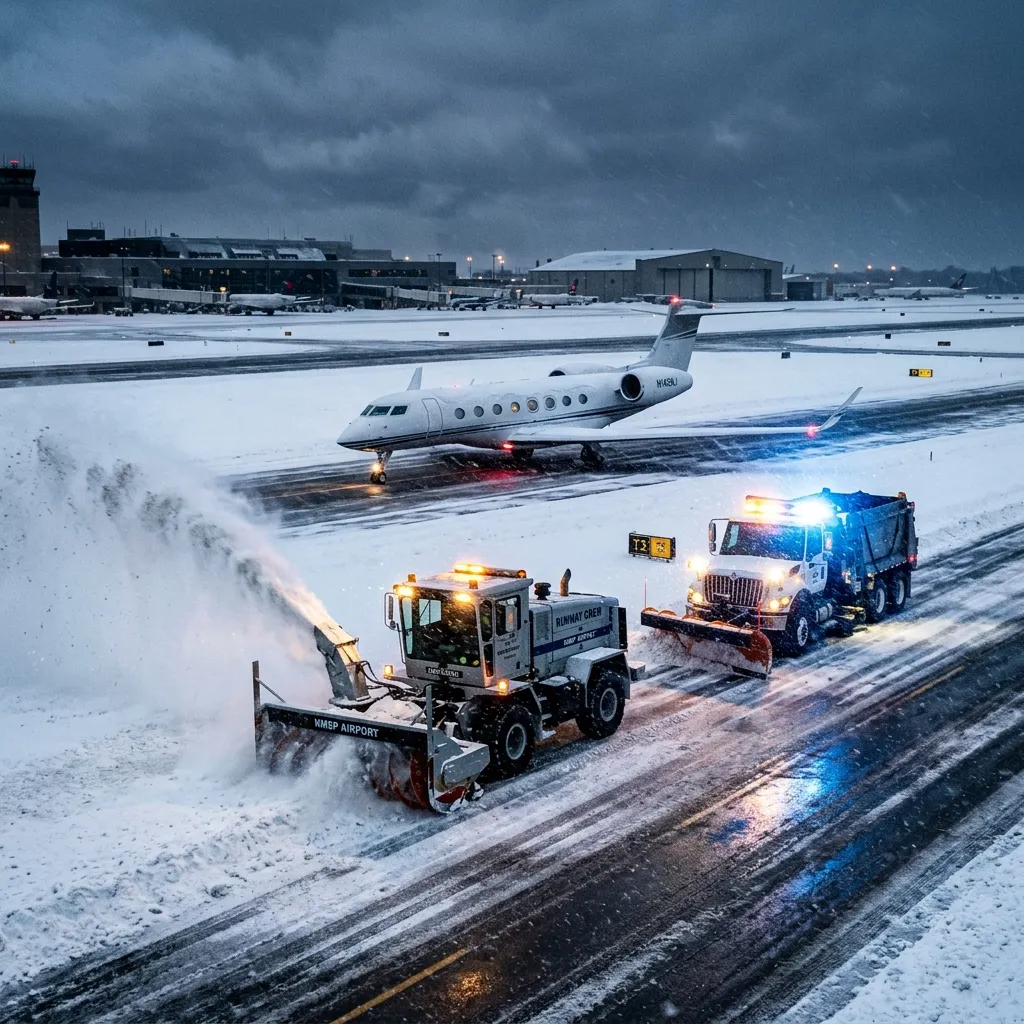
De-icing fluid costs $8-$12 per gallon depending on the airport and type. The FBO or de-icing service provider charges for the fluid plus a truck/operator fee of $500-$1,500. At busy airports during storms (TEB, BOS, DCA, ORD), de-icing trucks may have 30-60 minute queues, adding wait time beyond the application itself. Some FBOs offer priority de-icing for an additional fee.
Holdover Time: The Clock That Controls Your Departure
After the Type IV anti-ice fluid is applied, the holdover clock starts. Holdover time is the window during which the fluid protects the aircraft from re-accumulation. If the aircraft does not begin its takeoff roll before the holdover time expires, the crew must return for re-application. This is non-negotiable. Taking off with expired holdover is a regulatory violation and a genuine safety risk.
Holdover times vary dramatically by condition. Type IV in light freezing drizzle at 20 degrees F: 60-80 minutes. Type IV in moderate snow at 25 degrees F: 30-45 minutes. Type IV in heavy snow at 15 degrees F: 15-20 minutes. Freezing rain collapses holdover times to the shortest ranges. Pilots reference the FAA Holdover Time Guidelines (published annually) before committing to de-icing.
At congested airports, the taxi time from the de-icing pad to the runway can consume most of the holdover window. At TEB during a winter storm, taxi time may exceed 20 minutes due to traffic. If holdover expires during taxi, the aircraft returns to the de-icing pad for re-treatment at full cost. Two de-icing cycles on a super-midsize jet: $5,000-$10,000 and 40-60 minutes of delay. This scenario is common enough that experienced charter passengers budget for it.